


Cosmetic Filling Machines Market Outlook
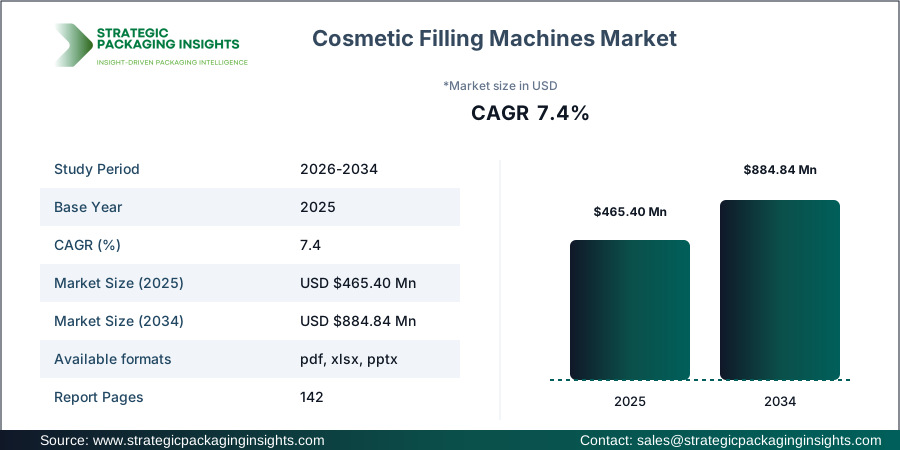
The Cosmetic Filling Machines market was valued at $465.40 million in 2025 and is projected to reach $884.84 million by 2034, growing at a CAGR of 7.4% during the forecast period 2026-2034. This growth is driven by the increasing demand for cosmetic products globally, fueled by rising consumer awareness and disposable incomes. The market is witnessing a surge in demand for advanced filling machines that offer precision, efficiency, and versatility to cater to the diverse needs of the cosmetic industry. The shift towards automation and the integration of IoT and AI technologies in filling machines are further propelling market growth, enabling manufacturers to enhance productivity and reduce operational costs.
However, the market faces challenges such as stringent regulatory standards and high initial investment costs associated with advanced filling machines. Despite these restraints, the market holds significant growth potential due to the increasing trend of personalized and organic cosmetic products, which require specialized filling solutions. The expansion of e-commerce platforms and the growing popularity of online beauty retailers are also contributing to the market's expansion, as they demand efficient and flexible filling solutions to meet diverse consumer preferences.
Report Scope
| Attributes | Details |
| Report Title | Cosmetic Filling Machines Market Size, Future Growth and Forecast 2034 |
| By Machine Type | Liquid Fillers, Cream Fillers, Powder Fillers |
| By Automation | Semi-Automatic, Automatic |
| By Application | Skincare, Haircare, Fragrance, Makeup |
| By End Use | Cosmetic Brands, Contract Manufacturers, Personal Care |
| Region | Asia Pacific, North America, Latin America, Europe, Middle East & Africa |
| Base Year | 2025 |
| Historic Period | 2018-2024 |
| Forecast Period | 2026-2034 |
| Number of Pages | 142 |
| Customization Available | Yes* |
Opportunities & Threats
The Cosmetic Filling Machines market presents numerous opportunities, particularly with the growing trend of customization in the cosmetic industry. As consumers increasingly seek personalized beauty products, manufacturers are investing in advanced filling machines that can handle small batch sizes and diverse formulations. This trend is driving the demand for flexible and adaptable filling solutions that can cater to a wide range of product types and packaging formats. Additionally, the rise of eco-friendly and sustainable packaging solutions is creating opportunities for manufacturers to develop filling machines that can handle biodegradable and recyclable materials, aligning with the industry's sustainability goals.
Another significant opportunity lies in the expansion of the cosmetic industry in emerging markets. As disposable incomes rise and consumer awareness of beauty and personal care products increases, there is a growing demand for cosmetic products in regions such as Asia Pacific and Latin America. This demand is driving the need for efficient and cost-effective filling solutions, providing manufacturers with opportunities to expand their market presence and tap into new customer bases. Furthermore, the integration of digital technologies, such as IoT and AI, in filling machines is opening up new avenues for innovation and efficiency, enabling manufacturers to offer smart and connected solutions that enhance operational performance.
Despite these opportunities, the market faces threats from stringent regulatory standards and compliance requirements. The cosmetic industry is subject to rigorous quality and safety regulations, which can pose challenges for manufacturers in terms of product development and compliance. Additionally, the high initial investment costs associated with advanced filling machines can be a barrier for small and medium-sized enterprises, limiting their ability to adopt new technologies and compete with larger players. The market also faces competition from low-cost manufacturers, particularly in regions with less stringent regulatory environments, which can impact pricing and profitability.
Drivers & Challenges
The Cosmetic Filling Machines market is driven by several key factors, including the increasing demand for cosmetic products and the need for efficient and precise filling solutions. As the cosmetic industry continues to grow, manufacturers are seeking advanced filling machines that can enhance productivity and reduce waste. The shift towards automation and the integration of digital technologies, such as IoT and AI, are also driving market growth, enabling manufacturers to optimize their operations and improve product quality. Additionally, the trend towards sustainable and eco-friendly packaging solutions is driving the demand for filling machines that can handle biodegradable and recyclable materials, aligning with the industry's sustainability goals.
Another significant driver is the expansion of the cosmetic industry in emerging markets. As disposable incomes rise and consumer awareness of beauty and personal care products increases, there is a growing demand for cosmetic products in regions such as Asia Pacific and Latin America. This demand is driving the need for efficient and cost-effective filling solutions, providing manufacturers with opportunities to expand their market presence and tap into new customer bases. Furthermore, the rise of e-commerce platforms and online beauty retailers is contributing to the market's expansion, as they demand flexible and adaptable filling solutions to meet diverse consumer preferences.
However, the market faces challenges such as stringent regulatory standards and high initial investment costs associated with advanced filling machines. The cosmetic industry is subject to rigorous quality and safety regulations, which can pose challenges for manufacturers in terms of product development and compliance. Additionally, the high costs of advanced filling machines can be a barrier for small and medium-sized enterprises, limiting their ability to adopt new technologies and compete with larger players. The market also faces competition from low-cost manufacturers, particularly in regions with less stringent regulatory environments, which can impact pricing and profitability.
Market Share Analysis
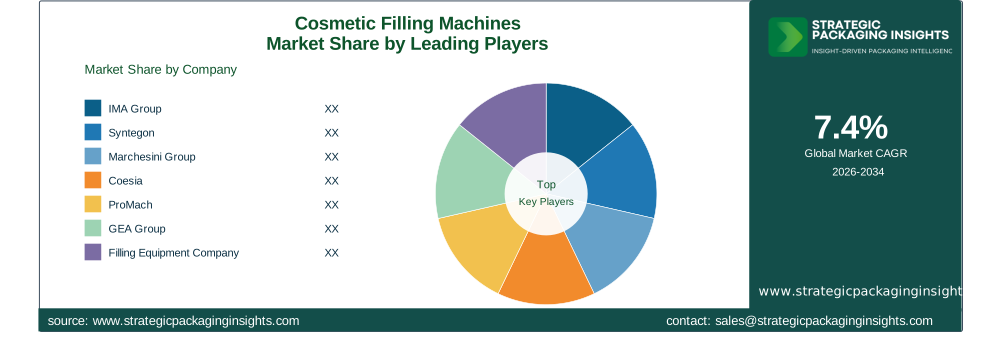
The competitive landscape of the Cosmetic Filling Machines market is characterized by the presence of several key players, each vying for market share through innovation, strategic partnerships, and expansion into new markets. Companies such as IMA Group, Syntegon, Marchesini Group, Coesia, and ProMach are leading the market with their advanced filling solutions and strong global presence. These companies are focusing on developing innovative technologies and expanding their product portfolios to cater to the diverse needs of the cosmetic industry. Additionally, they are investing in research and development to enhance the efficiency and precision of their filling machines, enabling them to maintain a competitive edge in the market.
IMA Group is a prominent player in the market, known for its comprehensive range of filling solutions that cater to various cosmetic applications. The company is focused on innovation and sustainability, offering eco-friendly filling machines that align with the industry's sustainability goals. Syntegon, formerly known as Bosch Packaging Technology, is another key player, offering a wide range of filling solutions that are known for their precision and efficiency. The company is leveraging its expertise in automation and digital technologies to offer smart and connected filling solutions that enhance operational performance.
Marchesini Group is a leading manufacturer of filling machines, known for its innovative solutions and strong focus on customer satisfaction. The company offers a wide range of filling machines that cater to various cosmetic applications, including skincare, haircare, and makeup. Coesia is another major player in the market, offering advanced filling solutions that are known for their reliability and efficiency. The company is focused on expanding its market presence through strategic partnerships and acquisitions, enabling it to tap into new customer bases and enhance its product offerings.
ProMach is a key player in the market, known for its comprehensive range of filling solutions that cater to various cosmetic applications. The company is focused on innovation and sustainability, offering eco-friendly filling machines that align with the industry's sustainability goals. GEA Group is another prominent player, offering a wide range of filling solutions that are known for their precision and efficiency. The company is leveraging its expertise in automation and digital technologies to offer smart and connected filling solutions that enhance operational performance.
Key Highlights
- The Cosmetic Filling Machines market is projected to grow at a CAGR of 7.4% from 2026 to 2034.
- Increasing demand for personalized and organic cosmetic products is driving the market growth.
- Integration of IoT and AI technologies in filling machines is enhancing operational efficiency.
- Emerging markets such as Asia Pacific and Latin America offer significant growth opportunities.
- Stringent regulatory standards pose challenges for manufacturers in terms of compliance.
- High initial investment costs associated with advanced filling machines can be a barrier for SMEs.
- Eco-friendly and sustainable packaging solutions are creating new opportunities for manufacturers.
Top Countries Insights
In the Cosmetic Filling Machines market, the United States stands out with a market size of approximately $150 million and a CAGR of 6%. The country's growth is driven by the high demand for advanced cosmetic products and the presence of major cosmetic brands. The focus on innovation and sustainability is also contributing to the market's expansion, as manufacturers invest in eco-friendly and efficient filling solutions.
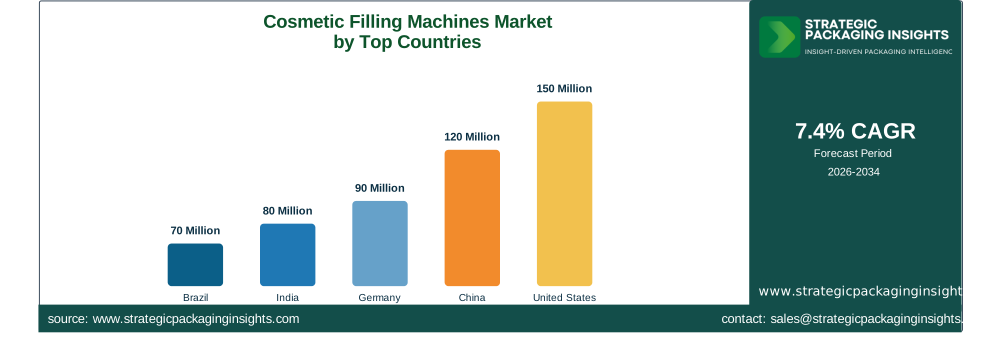
China is another key market, with a market size of around $120 million and a CAGR of 8%. The country's growth is fueled by the rising disposable incomes and increasing consumer awareness of beauty and personal care products. The expansion of e-commerce platforms and the growing popularity of online beauty retailers are also driving the demand for efficient and flexible filling solutions.
Germany, with a market size of approximately $90 million and a CAGR of 5%, is a significant player in the European market. The country's growth is driven by the strong presence of cosmetic brands and the focus on innovation and sustainability. The demand for advanced filling machines that offer precision and efficiency is contributing to the market's expansion.
India, with a market size of around $80 million and a CAGR of 9%, is an emerging market with significant growth potential. The country's growth is driven by the increasing demand for cosmetic products and the expansion of the cosmetic industry. The focus on innovation and sustainability is also contributing to the market's expansion, as manufacturers invest in eco-friendly and efficient filling solutions.
Brazil, with a market size of approximately $70 million and a CAGR of 7%, is a key market in Latin America. The country's growth is driven by the rising disposable incomes and increasing consumer awareness of beauty and personal care products. The expansion of e-commerce platforms and the growing popularity of online beauty retailers are also driving the demand for efficient and flexible filling solutions.
Cosmetic Filling Machines Market Segments Insights

Machine Type Analysis
The machine type segment in the Cosmetic Filling Machines market is categorized into liquid fillers, cream fillers, and powder fillers. Liquid fillers dominate the market due to their widespread application in the cosmetic industry, particularly in skincare and haircare products. The demand for liquid fillers is driven by the need for precision and efficiency in filling liquid-based cosmetic products, which require advanced technologies to ensure accurate dosing and minimal wastage. Cream fillers are also gaining traction, particularly in the skincare segment, where the demand for creams and lotions is on the rise. The trend towards personalized and organic cosmetic products is further driving the demand for cream fillers, as manufacturers seek flexible and adaptable solutions to cater to diverse formulations.
Powder fillers, although a smaller segment, are witnessing growth due to the increasing demand for powdered cosmetic products such as foundations and blushes. The need for precision and efficiency in filling powdered products is driving the demand for advanced powder fillers that offer accurate dosing and minimal wastage. The integration of digital technologies, such as IoT and AI, in filling machines is enhancing operational efficiency and enabling manufacturers to offer smart and connected solutions that cater to the diverse needs of the cosmetic industry.
Automation Analysis
The automation segment in the Cosmetic Filling Machines market is divided into semi-automatic and automatic machines. Automatic machines dominate the market due to their ability to enhance productivity and reduce operational costs. The demand for automatic machines is driven by the need for efficiency and precision in filling cosmetic products, as manufacturers seek to optimize their operations and improve product quality. The integration of digital technologies, such as IoT and AI, in automatic machines is further enhancing their capabilities, enabling manufacturers to offer smart and connected solutions that enhance operational performance.
Semi-automatic machines, although a smaller segment, are witnessing growth due to their cost-effectiveness and flexibility. These machines are particularly popular among small and medium-sized enterprises, which may not have the resources to invest in fully automated solutions. The demand for semi-automatic machines is driven by the need for flexible and adaptable solutions that can cater to a wide range of product types and packaging formats. The trend towards personalized and organic cosmetic products is further driving the demand for semi-automatic machines, as manufacturers seek solutions that can handle small batch sizes and diverse formulations.
Application Analysis
The application segment in the Cosmetic Filling Machines market is categorized into skincare, haircare, fragrance, and makeup. Skincare dominates the market due to the high demand for skincare products and the need for precision and efficiency in filling these products. The demand for skincare filling machines is driven by the trend towards personalized and organic skincare products, as manufacturers seek flexible and adaptable solutions to cater to diverse formulations. Haircare is another significant segment, with the demand for haircare filling machines driven by the increasing demand for haircare products and the need for precision and efficiency in filling these products.
Fragrance and makeup are also significant segments, with the demand for filling machines driven by the increasing demand for fragrance and makeup products and the need for precision and efficiency in filling these products. The trend towards personalized and organic fragrance and makeup products is further driving the demand for filling machines, as manufacturers seek flexible and adaptable solutions to cater to diverse formulations. The integration of digital technologies, such as IoT and AI, in filling machines is enhancing operational efficiency and enabling manufacturers to offer smart and connected solutions that cater to the diverse needs of the cosmetic industry.
End Use Analysis
The end-use segment in the Cosmetic Filling Machines market is divided into cosmetic brands, contract manufacturers, and personal care. Cosmetic brands dominate the market due to their strong presence in the cosmetic industry and the need for precision and efficiency in filling cosmetic products. The demand for filling machines among cosmetic brands is driven by the trend towards personalized and organic cosmetic products, as manufacturers seek flexible and adaptable solutions to cater to diverse formulations. Contract manufacturers are also significant players in the market, with the demand for filling machines driven by the increasing demand for contract manufacturing services and the need for precision and efficiency in filling cosmetic products.
Personal care is another significant segment, with the demand for filling machines driven by the increasing demand for personal care products and the need for precision and efficiency in filling these products. The trend towards personalized and organic personal care products is further driving the demand for filling machines, as manufacturers seek flexible and adaptable solutions to cater to diverse formulations. The integration of digital technologies, such as IoT and AI, in filling machines is enhancing operational efficiency and enabling manufacturers to offer smart and connected solutions that cater to the diverse needs of the cosmetic industry.
Cosmetic Filling Machines Market Segments
The Cosmetic Filling Machines market has been segmented on the basis ofBy Machine Type
- Liquid Fillers
- Cream Fillers
- Powder Fillers
By Automation
- Semi-Automatic
- Automatic
By Application
- Skincare
- Haircare
- Fragrance
- Makeup
By End Use
- Cosmetic Brands
- Contract Manufacturers
- Personal Care
Region
- Asia Pacific
- North America
- Latin America
- Europe
- Middle East & Africa




