


Corn-Based Plastics for Packaging Market Outlook
The Corn-Based Plastics for Packaging market was valued at $2.37 billion in 2025 and is projected to reach $5.38 billion by 2034, growing at a CAGR of 9.5% during the forecast period 2026-2034. This market is witnessing significant growth due to the increasing demand for sustainable and eco-friendly packaging solutions. The shift towards biodegradable materials is driven by consumer awareness and stringent environmental regulations. Corn-based plastics, being biodegradable and derived from renewable resources, are gaining traction as a viable alternative to conventional plastics. The market is further bolstered by advancements in biopolymer technology, which enhance the performance and cost-effectiveness of corn-based plastics, making them more competitive in the packaging industry.
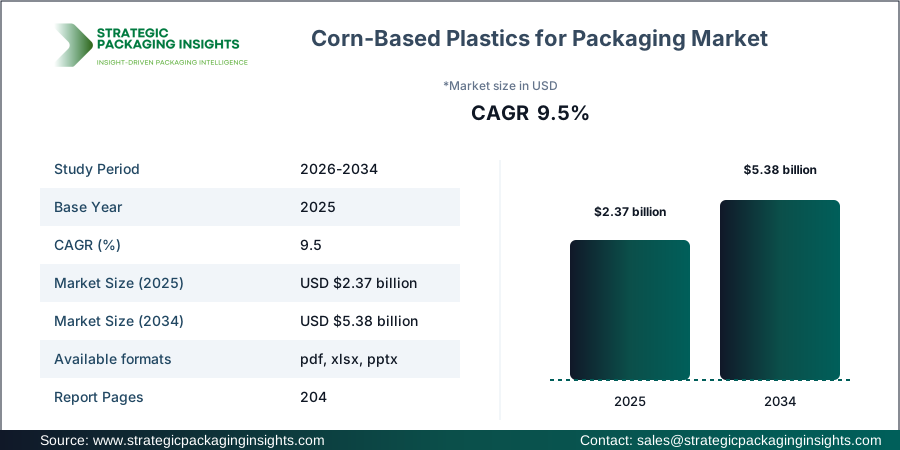
Despite the promising growth trajectory, the market faces challenges such as high production costs and limited raw material availability. Regulatory frameworks across different regions also pose hurdles, as compliance with varying standards can be complex and costly. However, the potential for growth remains substantial, particularly with increasing investments in research and development aimed at improving the properties and applications of corn-based plastics. The market is poised to benefit from collaborations between biopolymer manufacturers and packaging companies, which are expected to drive innovation and expand the application scope of corn-based plastics in packaging.
Report Scope
| Attributes | Details |
| Report Title | Corn-Based Plastics for Packaging Market Size, Future Growth and Forecast 2034 |
| By Material Type | PLA, Starch Blends, Bio-PBS |
| By Packaging Type | Films, Cups, Trays, Pouches |
| By Application | Foodservice, Retail, FMCG |
| By End Use | Food Brands, Retailers, Converters, Institutions |
| Region | Asia Pacific, North America, Latin America, Europe, Middle East & Africa |
| Base Year | 2025 |
| Historic Period | 2018-2024 |
| Forecast Period | 2026-2034 |
| Number of Pages | 204 |
| Customization Available | Yes* |
Opportunities & Threats
The Corn-Based Plastics for Packaging market presents numerous opportunities, primarily driven by the global shift towards sustainable packaging solutions. As consumers become more environmentally conscious, there is a growing demand for packaging materials that are not only biodegradable but also derived from renewable resources. This trend is particularly strong in regions like Europe and North America, where stringent environmental regulations are pushing companies to adopt greener alternatives. Additionally, the food and beverage industry, a major consumer of packaging materials, is increasingly opting for corn-based plastics to align with sustainability goals and reduce their carbon footprint. This shift is creating a lucrative market for manufacturers of corn-based plastics, who are investing in research and development to enhance product performance and expand their application range.
Another significant opportunity lies in the technological advancements in biopolymer production. Innovations in this field are leading to the development of corn-based plastics with improved mechanical properties, making them more competitive with traditional plastics. These advancements are also helping to reduce production costs, which have been a major barrier to the widespread adoption of corn-based plastics. Furthermore, partnerships between biopolymer producers and packaging companies are fostering innovation and facilitating the development of new applications for corn-based plastics, thereby expanding their market potential.
However, the market is not without its threats. One of the primary challenges is the high cost of production, which can make corn-based plastics less competitive compared to conventional plastics. Additionally, the availability of raw materials, such as corn, can be affected by factors like climate change and agricultural policies, leading to supply chain disruptions. The market also faces competition from other types of bioplastics, which may offer similar environmental benefits at a lower cost. Moreover, the regulatory landscape can be complex, with different regions having varying standards for biodegradable materials, which can pose compliance challenges for manufacturers.
Drivers & Challenges
The primary driver of the Corn-Based Plastics for Packaging market is the increasing consumer demand for sustainable and eco-friendly packaging solutions. As awareness about environmental issues grows, consumers are seeking products that minimize their ecological impact. This shift in consumer preferences is compelling companies across various industries to adopt greener packaging alternatives, thereby driving the demand for corn-based plastics. Additionally, government regulations aimed at reducing plastic waste and promoting the use of biodegradable materials are further propelling market growth. These regulations are particularly stringent in regions like Europe, where policymakers are actively encouraging the use of sustainable packaging solutions.
Technological advancements in biopolymer production are also playing a crucial role in driving the market. Innovations in this field are leading to the development of corn-based plastics with enhanced properties, such as improved strength and durability, which make them more suitable for a wider range of packaging applications. These advancements are also helping to reduce production costs, making corn-based plastics more competitive with traditional plastics. Furthermore, collaborations between biopolymer manufacturers and packaging companies are fostering innovation and facilitating the development of new applications for corn-based plastics, thereby expanding their market potential.
Despite these drivers, the market faces several challenges. One of the primary challenges is the high cost of production, which can make corn-based plastics less competitive compared to conventional plastics. Additionally, the availability of raw materials, such as corn, can be affected by factors like climate change and agricultural policies, leading to supply chain disruptions. The market also faces competition from other types of bioplastics, which may offer similar environmental benefits at a lower cost. Moreover, the regulatory landscape can be complex, with different regions having varying standards for biodegradable materials, which can pose compliance challenges for manufacturers.
Market Share Analysis
The Corn-Based Plastics for Packaging market is characterized by a competitive landscape with several key players vying for market share. NatureWorks, a leading producer of polylactic acid (PLA), holds a significant share of the market due to its extensive product portfolio and strong distribution network. The company has been at the forefront of innovation, continuously developing new applications for its corn-based plastics. TotalEnergies Corbion, another major player, is known for its advanced biopolymer technology and commitment to sustainability. The company has been actively expanding its production capacity to meet the growing demand for corn-based plastics.
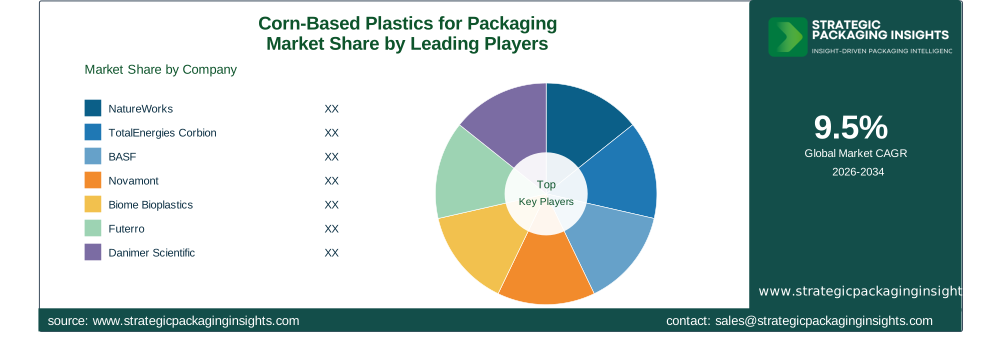
BASF, a global chemical company, is also a prominent player in the market, leveraging its expertise in materials science to develop high-performance corn-based plastics. Novamont, an Italian company, is recognized for its focus on biodegradable and compostable materials, making it a key player in the European market. Biome Bioplastics, a UK-based company, is known for its innovative approach to biopolymer production, offering a range of corn-based plastics for various packaging applications.
Futerro, a joint venture between Galactic and TotalEnergies, is another significant player in the market, specializing in the production of PLA. The company has been investing in research and development to enhance the properties of its corn-based plastics and expand their application range. Danimer Scientific, a US-based company, is known for its focus on sustainable packaging solutions, offering a range of corn-based plastics for the food and beverage industry. Mitsubishi Chemical and Toray Industries, both Japanese companies, are also key players in the market, leveraging their expertise in materials science to develop high-performance corn-based plastics.
Tipa, an Israeli company, is recognized for its innovative approach to sustainable packaging, offering a range of compostable films and bags made from corn-based plastics. The company has been actively expanding its presence in the global market, partnering with leading brands to promote the use of sustainable packaging solutions. Overall, the competitive landscape of the Corn-Based Plastics for Packaging market is characterized by a mix of established players and emerging companies, all striving to capitalize on the growing demand for eco-friendly packaging solutions.
Key Highlights
- The Corn-Based Plastics for Packaging market is projected to grow at a CAGR of 9.5% from 2026 to 2034.
- NatureWorks and TotalEnergies Corbion are leading players in the market, known for their advanced biopolymer technology.
- Technological advancements in biopolymer production are enhancing the properties of corn-based plastics.
- Stringent environmental regulations are driving the demand for sustainable packaging solutions.
- The food and beverage industry is a major consumer of corn-based plastics, aligning with sustainability goals.
- High production costs and raw material availability are key challenges for the market.
- Partnerships between biopolymer producers and packaging companies are fostering innovation.
- Europe and North America are leading regions in terms of market demand and regulatory support.
- Competition from other types of bioplastics poses a threat to market growth.
- Investments in research and development are crucial for expanding the application range of corn-based plastics.
Top Countries Insights
In the Corn-Based Plastics for Packaging market, the United States stands out as a key player, with a market size of approximately $1.2 billion and a CAGR of 8%. The country's strong focus on sustainability and innovation in biopolymer technology drives demand. Government initiatives promoting eco-friendly packaging further bolster market growth. However, challenges such as high production costs and competition from other bioplastics persist.
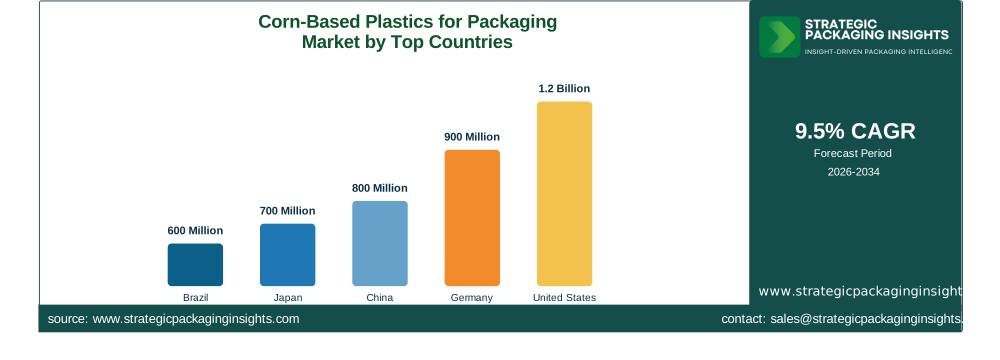
Germany, with a market size of $900 million and a CAGR of 10%, is a leading market in Europe. The country's stringent environmental regulations and consumer preference for sustainable packaging solutions drive demand. Germany's strong manufacturing base and technological advancements in biopolymer production further support market growth. However, regulatory compliance and raw material availability pose challenges.
China, with a market size of $800 million and a CAGR of 12%, is a rapidly growing market in Asia Pacific. The country's large consumer base and increasing awareness of environmental issues drive demand for corn-based plastics. Government policies promoting sustainable packaging solutions further support market growth. However, competition from conventional plastics and regulatory challenges remain significant hurdles.
Japan, with a market size of $700 million and a CAGR of 9%, is another key market in Asia Pacific. The country's focus on innovation and technological advancements in biopolymer production drive demand. Japan's strong manufacturing base and consumer preference for eco-friendly packaging solutions further support market growth. However, high production costs and regulatory compliance pose challenges.
Brazil, with a market size of $600 million and a CAGR of 11%, is a leading market in Latin America. The country's large agricultural base and focus on sustainability drive demand for corn-based plastics. Government initiatives promoting eco-friendly packaging solutions further support market growth. However, competition from other bioplastics and regulatory challenges remain significant hurdles.
Corn-Based Plastics for Packaging Market Segments Insights

By Material Type Analysis
The Corn-Based Plastics for Packaging market is segmented by material type into PLA, starch blends, and bio-PBS. PLA, or polylactic acid, is the most widely used material due to its biodegradability and versatility in various packaging applications. The demand for PLA is driven by its excellent mechanical properties and cost-effectiveness compared to other biopolymers. Starch blends, on the other hand, are gaining popularity due to their renewable nature and ability to be combined with other materials to enhance performance. Bio-PBS, a newer entrant in the market, is known for its superior biodegradability and thermal stability, making it suitable for high-temperature applications.
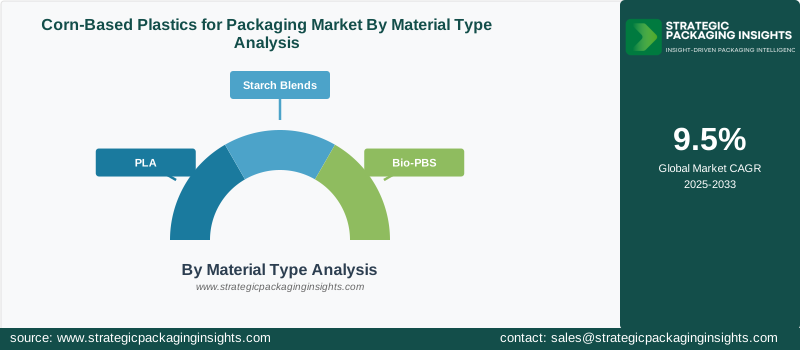
The market for PLA is expected to grow significantly during the forecast period, driven by increasing demand from the food and beverage industry. Starch blends are also expected to witness substantial growth, particularly in regions with strong agricultural bases. Bio-PBS, although currently a smaller segment, is anticipated to gain traction as technological advancements improve its properties and reduce production costs. Overall, the material type segment is characterized by a focus on innovation and sustainability, with manufacturers investing in research and development to enhance the performance and application range of corn-based plastics.
By Packaging Type Analysis
The Corn-Based Plastics for Packaging market is segmented by packaging type into films, cups, trays, and pouches. Films are the most widely used packaging type, driven by their versatility and ability to be used in a wide range of applications. The demand for corn-based plastic films is particularly strong in the food and beverage industry, where they are used for wrapping and preserving products. Cups and trays are also popular packaging types, driven by the increasing demand for sustainable foodservice packaging solutions. Pouches, although currently a smaller segment, are gaining popularity due to their convenience and ability to be used in a variety of applications.
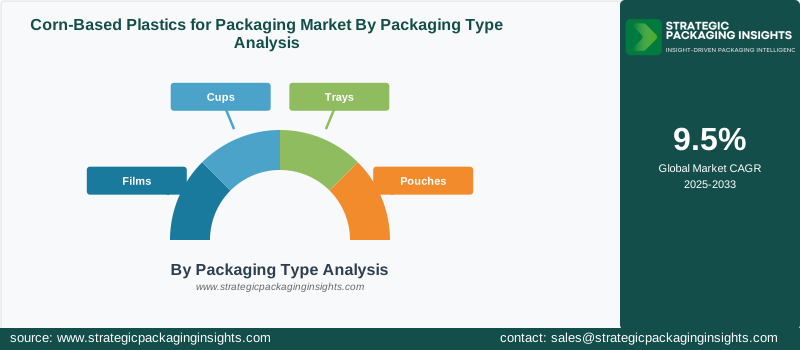
The market for films is expected to grow significantly during the forecast period, driven by increasing demand from the food and beverage industry. Cups and trays are also expected to witness substantial growth, particularly in regions with strong foodservice industries. Pouches, although currently a smaller segment, are anticipated to gain traction as technological advancements improve their properties and reduce production costs. Overall, the packaging type segment is characterized by a focus on innovation and sustainability, with manufacturers investing in research and development to enhance the performance and application range of corn-based plastics.
By Application Analysis
The Corn-Based Plastics for Packaging market is segmented by application into foodservice, retail, and FMCG. The foodservice industry is the largest consumer of corn-based plastics, driven by the increasing demand for sustainable packaging solutions. The demand for corn-based plastics in the foodservice industry is particularly strong in regions with stringent environmental regulations, such as Europe and North America. The retail industry is also a significant consumer of corn-based plastics, driven by the increasing demand for eco-friendly packaging solutions. The FMCG industry, although currently a smaller segment, is gaining traction as companies seek to align with sustainability goals and reduce their carbon footprint.
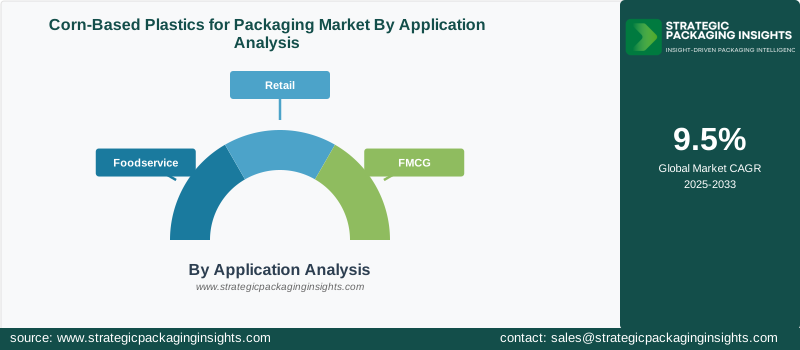
The market for foodservice applications is expected to grow significantly during the forecast period, driven by increasing demand from the food and beverage industry. Retail applications are also expected to witness substantial growth, particularly in regions with strong consumer demand for sustainable packaging solutions. FMCG applications, although currently a smaller segment, are anticipated to gain traction as companies seek to align with sustainability goals and reduce their carbon footprint. Overall, the application segment is characterized by a focus on innovation and sustainability, with manufacturers investing in research and development to enhance the performance and application range of corn-based plastics.
By End Use Analysis
The Corn-Based Plastics for Packaging market is segmented by end use into food brands, retailers, converters, and institutions. Food brands are the largest consumers of corn-based plastics, driven by the increasing demand for sustainable packaging solutions. The demand for corn-based plastics in the food industry is particularly strong in regions with stringent environmental regulations, such as Europe and North America. Retailers are also significant consumers of corn-based plastics, driven by the increasing demand for eco-friendly packaging solutions. Converters, although currently a smaller segment, are gaining traction as companies seek to align with sustainability goals and reduce their carbon footprint.
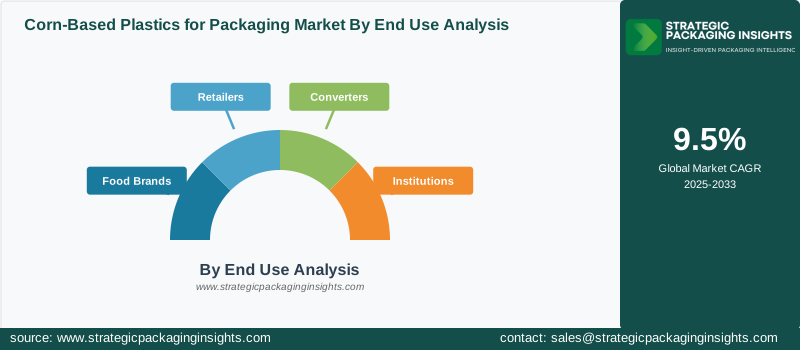
The market for food brands is expected to grow significantly during the forecast period, driven by increasing demand from the food and beverage industry. Retailers are also expected to witness substantial growth, particularly in regions with strong consumer demand for sustainable packaging solutions. Converters, although currently a smaller segment, are anticipated to gain traction as companies seek to align with sustainability goals and reduce their carbon footprint. Overall, the end use segment is characterized by a focus on innovation and sustainability, with manufacturers investing in research and development to enhance the performance and application range of corn-based plastics.
Corn-Based Plastics for Packaging Market Segments
The Corn-Based Plastics for Packaging market has been segmented on the basis ofBy Material Type
- PLA
- Starch Blends
- Bio-PBS
By Packaging Type
- Films
- Cups
- Trays
- Pouches
By Application
- Foodservice
- Retail
- FMCG
By End Use
- Food Brands
- Retailers
- Converters
- Institutions
Region
- Asia Pacific
- North America
- Latin America
- Europe
- Middle East & Africa




