


Continuous Motion Cartoner Market Outlook
The Continuous Motion Cartoner market was valued at $2.79 billion in 2025 and is projected to reach $5.18 billion by 2034, growing at a CAGR of 7.1% during the forecast period 2026-2034. This market is witnessing significant growth due to the increasing demand for efficient and high-speed packaging solutions across various industries. Continuous motion cartoners are preferred for their ability to handle high-volume packaging tasks with precision and speed, making them ideal for sectors such as food, pharmaceuticals, and consumer goods. The market is also driven by advancements in automation technologies, which enhance the operational efficiency and flexibility of cartoning machines. As industries continue to focus on optimizing their packaging processes, the demand for continuous motion cartoners is expected to rise steadily.
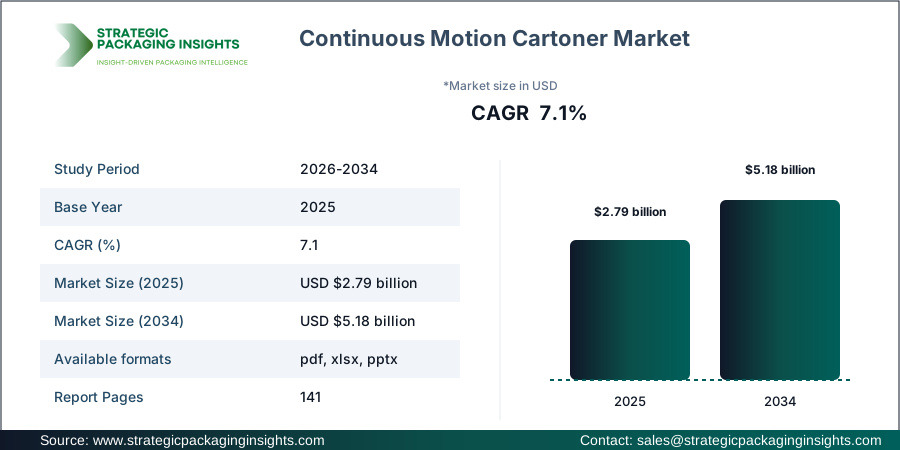
Despite the promising growth prospects, the continuous motion cartoner market faces certain challenges that could hinder its expansion. One of the primary restraints is the high initial investment required for the installation of these advanced machines. Small and medium-sized enterprises may find it difficult to allocate the necessary capital for such investments, which could limit market penetration. Additionally, stringent regulatory standards related to packaging and labeling, particularly in the pharmaceutical and food sectors, pose compliance challenges for manufacturers. However, the growing emphasis on sustainable packaging solutions and the integration of IoT and AI technologies in cartoning machines present significant growth opportunities for market players. By addressing these challenges and leveraging technological advancements, companies can unlock new avenues for growth in the continuous motion cartoner market.
Report Scope
| Attributes | Details |
| Report Title | Continuous Motion Cartoner Market Size, Future Growth and Forecast 2034 |
| Machine Type | Horizontal Cartoners, Vertical Cartoners, Robotic Cartoners |
| Application | Food, Pharma, Personal Care, Consumer Goods |
| Automation | Automatic, High-Speed Automatic |
| End Use | FMCG, Healthcare, Contract Packers, Food Processors |
| Region | Asia Pacific, North America, Latin America, Europe, Middle East & Africa |
| Base Year | 2025 |
| Historic Period | 2018-2024 |
| Forecast Period | 2026-2034 |
| Number of Pages | 141 |
| Customization Available | Yes* |
Opportunities & Threats
The continuous motion cartoner market is poised for substantial growth, driven by several key opportunities. One of the most significant opportunities lies in the increasing demand for automation in packaging processes. As industries strive to enhance efficiency and reduce labor costs, the adoption of automated cartoning solutions is on the rise. Continuous motion cartoners, with their ability to handle high-speed operations, are becoming indispensable in sectors such as food and pharmaceuticals. Additionally, the growing trend of e-commerce and online retailing is boosting the demand for efficient packaging solutions, further propelling the market's growth. Companies that can offer innovative and customizable cartoning solutions are likely to gain a competitive edge in this evolving market landscape.
Another opportunity for the continuous motion cartoner market is the rising focus on sustainability and eco-friendly packaging solutions. With increasing environmental concerns and regulatory pressures, industries are seeking packaging solutions that minimize waste and reduce carbon footprints. Continuous motion cartoners, when integrated with sustainable materials and processes, can help companies meet these demands. The development of biodegradable and recyclable packaging materials, coupled with energy-efficient cartoning machines, presents a lucrative opportunity for market players to cater to environmentally conscious consumers and businesses.
However, the market also faces certain threats that could impact its growth trajectory. One of the primary threats is the high cost associated with the installation and maintenance of continuous motion cartoners. The initial investment required for these advanced machines can be a significant barrier for small and medium-sized enterprises. Additionally, the market is highly competitive, with numerous players vying for market share. This intense competition can lead to price wars and margin pressures, affecting the profitability of companies operating in the market. To mitigate these threats, companies need to focus on innovation, cost optimization, and strategic partnerships to maintain their competitive position.
Drivers & Challenges
The continuous motion cartoner market is driven by several key factors that are contributing to its robust growth. One of the primary drivers is the increasing demand for high-speed and efficient packaging solutions across various industries. As consumer preferences shift towards convenience and quick service, industries such as food and pharmaceuticals are adopting continuous motion cartoners to meet these demands. These machines offer the advantage of high throughput and precision, making them ideal for large-scale production environments. Additionally, advancements in automation technologies are further propelling the market's growth. The integration of IoT and AI in cartoning machines enhances their operational efficiency, enabling real-time monitoring and predictive maintenance, which reduces downtime and improves productivity.
Another significant driver for the continuous motion cartoner market is the growing emphasis on product safety and quality. In sectors such as pharmaceuticals and food, where packaging plays a crucial role in ensuring product integrity, continuous motion cartoners are gaining traction. These machines offer precise and consistent packaging, reducing the risk of contamination and ensuring compliance with stringent regulatory standards. Moreover, the rising trend of personalized and customized packaging solutions is driving the demand for flexible cartoning machines that can accommodate a wide range of product sizes and shapes. As companies strive to differentiate their products in a competitive market, the adoption of continuous motion cartoners is expected to increase.
Despite the positive growth drivers, the continuous motion cartoner market faces certain challenges that could impede its expansion. One of the primary challenges is the high cost associated with the installation and maintenance of these advanced machines. The initial investment required for continuous motion cartoners can be a significant barrier for small and medium-sized enterprises, limiting market penetration. Additionally, the market is characterized by rapid technological advancements, which require companies to continuously innovate and upgrade their offerings. Keeping pace with these advancements can be challenging for manufacturers, particularly those with limited resources. To overcome these challenges, companies need to focus on cost optimization, strategic partnerships, and continuous innovation to maintain their competitive edge in the market.
Market Share Analysis
The continuous motion cartoner market is characterized by a highly competitive landscape, with several key players vying for market share. The market is dominated by established companies that have a strong presence and extensive experience in the packaging industry. These companies are continuously investing in research and development to enhance their product offerings and maintain their competitive edge. The competitive landscape is further intensified by the presence of numerous regional players who are focusing on expanding their market reach through strategic partnerships and collaborations.
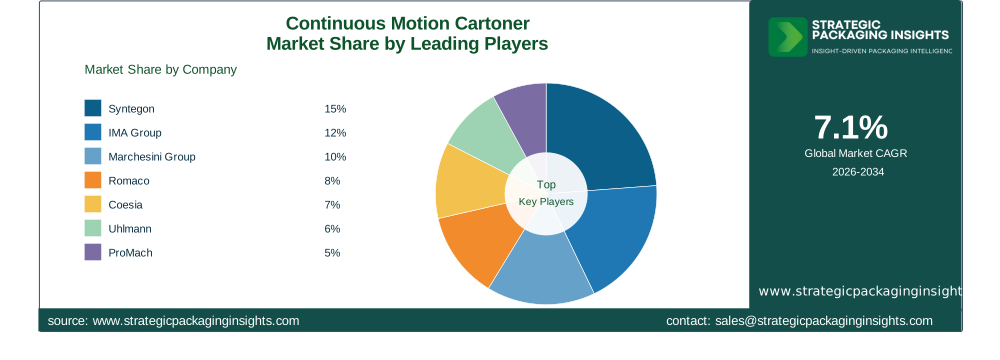
Among the major players in the continuous motion cartoner market, Syntegon holds a significant market share, known for its innovative packaging solutions and strong customer base. The company is focused on expanding its product portfolio and enhancing its technological capabilities to cater to the evolving needs of its customers. IMA Group is another key player, renowned for its comprehensive range of cartoning machines and strong global presence. The company is actively investing in research and development to introduce advanced and sustainable packaging solutions.
Marchesini Group is a prominent player in the continuous motion cartoner market, offering a wide range of cartoning machines for various applications. The company is focused on expanding its market presence through strategic acquisitions and partnerships. Romaco, known for its innovative and high-quality packaging solutions, is also a key player in the market. The company is committed to enhancing its product offerings and expanding its customer base through continuous innovation and technological advancements.
Other notable players in the continuous motion cartoner market include Coesia, Uhlmann, ProMach, Cama Group, R.A Jones, and Bradman Lake. These companies are actively investing in research and development to introduce advanced and efficient cartoning solutions. They are also focusing on expanding their market reach through strategic partnerships and collaborations. The competitive landscape of the continuous motion cartoner market is expected to remain dynamic, with companies striving to enhance their product offerings and expand their market presence to capitalize on the growing demand for efficient packaging solutions.
Key Highlights
- The continuous motion cartoner market is projected to grow at a CAGR of 7.1% from 2026 to 2034.
- Increasing demand for high-speed and efficient packaging solutions is driving market growth.
- Advancements in automation technologies are enhancing the operational efficiency of cartoning machines.
- The market is witnessing a growing emphasis on sustainable and eco-friendly packaging solutions.
- High initial investment costs pose a significant barrier for small and medium-sized enterprises.
- Stringent regulatory standards in the pharmaceutical and food sectors present compliance challenges.
- Key players in the market include Syntegon, IMA Group, Marchesini Group, and Romaco.
- The market is characterized by intense competition and rapid technological advancements.
- Strategic partnerships and collaborations are key strategies for market expansion.
Top Countries Insights
In the continuous motion cartoner market, the United States holds a significant market share, driven by the strong presence of key players and the high demand for efficient packaging solutions in the food and pharmaceutical sectors. The market in the U.S. is expected to grow at a CAGR of 6%, supported by advancements in automation technologies and the increasing focus on sustainable packaging solutions. The regulatory environment in the U.S. also plays a crucial role in shaping the market dynamics, with stringent standards driving the demand for high-quality and compliant packaging solutions.
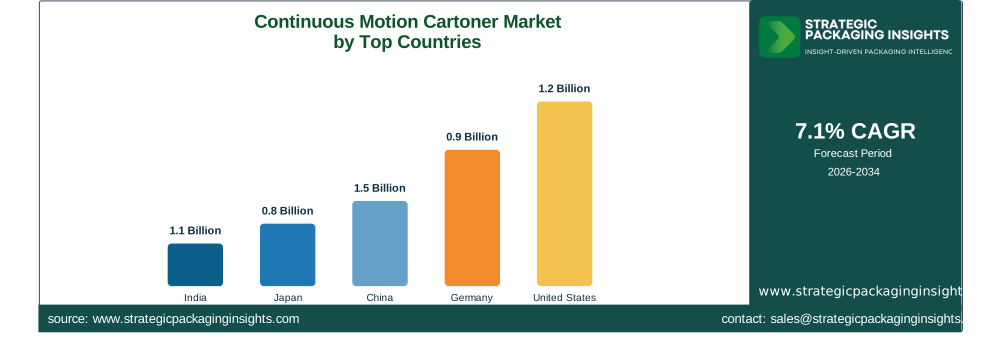
Germany is another key market for continuous motion cartoners, with a strong emphasis on innovation and technological advancements. The market in Germany is projected to grow at a CAGR of 5%, driven by the increasing demand for high-speed and efficient packaging solutions in the pharmaceutical and consumer goods sectors. The country's strong manufacturing base and focus on research and development are key factors contributing to the market's growth. Additionally, the growing trend of personalized and customized packaging solutions is driving the demand for flexible cartoning machines in Germany.
China is emerging as a significant market for continuous motion cartoners, with a projected CAGR of 8%. The rapid growth of the e-commerce sector and the increasing demand for efficient packaging solutions in the food and consumer goods industries are key drivers of market growth in China. The government's focus on promoting domestic manufacturing and technological advancements is also contributing to the market's expansion. However, the market in China faces challenges related to regulatory compliance and the high cost of advanced packaging solutions.
In Japan, the continuous motion cartoner market is expected to grow at a CAGR of 4%, driven by the increasing demand for high-quality and efficient packaging solutions in the pharmaceutical and food sectors. The country's strong focus on innovation and technological advancements is a key factor contributing to market growth. Additionally, the growing emphasis on sustainable packaging solutions is driving the demand for eco-friendly cartoning machines in Japan.
India is witnessing significant growth in the continuous motion cartoner market, with a projected CAGR of 7%. The increasing demand for efficient packaging solutions in the food and pharmaceutical sectors, coupled with the rapid growth of the e-commerce industry, is driving market growth in India. The government's focus on promoting domestic manufacturing and technological advancements is also contributing to the market's expansion. However, the market in India faces challenges related to regulatory compliance and the high cost of advanced packaging solutions.
Continuous Motion Cartoner Market Segments Insights

Machine Type Analysis
The continuous motion cartoner market is segmented by machine type into horizontal cartoners, vertical cartoners, and robotic cartoners. Horizontal cartoners dominate the market due to their versatility and ability to handle a wide range of product sizes and shapes. These machines are widely used in the food and pharmaceutical industries, where high-speed and efficient packaging solutions are essential. The demand for horizontal cartoners is driven by their ability to provide precise and consistent packaging, reducing the risk of contamination and ensuring compliance with stringent regulatory standards. Additionally, advancements in automation technologies are enhancing the operational efficiency of horizontal cartoners, further driving their adoption in various industries.
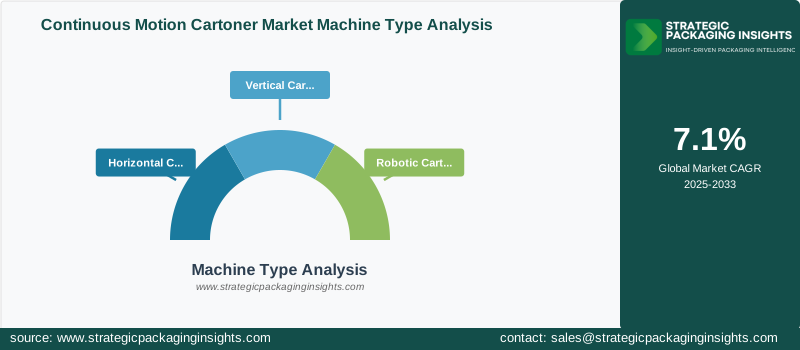
Vertical cartoners are also gaining traction in the continuous motion cartoner market, particularly in the personal care and consumer goods sectors. These machines offer the advantage of compact design and ease of integration into existing production lines, making them ideal for space-constrained environments. The demand for vertical cartoners is driven by the growing trend of personalized and customized packaging solutions, as these machines can accommodate a wide range of product sizes and shapes. Additionally, the increasing focus on sustainability and eco-friendly packaging solutions is driving the demand for vertical cartoners that can handle biodegradable and recyclable materials.
Robotic cartoners are emerging as a significant segment in the continuous motion cartoner market, driven by the increasing demand for automation and flexibility in packaging processes. These machines offer the advantage of high-speed and precise packaging, making them ideal for large-scale production environments. The demand for robotic cartoners is driven by the growing trend of e-commerce and online retailing, as these machines can handle a wide range of product sizes and shapes with ease. Additionally, advancements in robotics and AI technologies are enhancing the operational efficiency of robotic cartoners, further driving their adoption in various industries.
Application Analysis
The continuous motion cartoner market is segmented by application into food, pharma, personal care, and consumer goods. The food industry is a major driver of market growth, with continuous motion cartoners being widely used for packaging a variety of food products, including snacks, confectionery, and ready-to-eat meals. The demand for continuous motion cartoners in the food industry is driven by the increasing demand for high-speed and efficient packaging solutions, as well as the growing trend of convenience and on-the-go consumption. Additionally, the rising focus on product safety and quality is driving the demand for continuous motion cartoners that can provide precise and consistent packaging, reducing the risk of contamination.
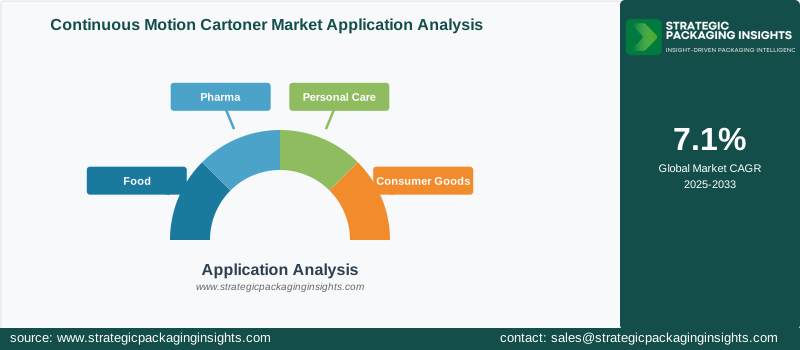
The pharmaceutical industry is another key application segment for continuous motion cartoners, with these machines being widely used for packaging a variety of pharmaceutical products, including tablets, capsules, and vials. The demand for continuous motion cartoners in the pharmaceutical industry is driven by the increasing demand for high-quality and compliant packaging solutions, as well as the growing emphasis on product safety and integrity. Additionally, advancements in automation technologies are enhancing the operational efficiency of continuous motion cartoners, further driving their adoption in the pharmaceutical industry.
The personal care and consumer goods sectors are also significant application segments for continuous motion cartoners, with these machines being widely used for packaging a variety of products, including cosmetics, toiletries, and household goods. The demand for continuous motion cartoners in these sectors is driven by the growing trend of personalized and customized packaging solutions, as well as the increasing focus on sustainability and eco-friendly packaging solutions. Additionally, the rising trend of e-commerce and online retailing is driving the demand for continuous motion cartoners that can provide efficient and flexible packaging solutions for a wide range of product sizes and shapes.
Automation Analysis
The continuous motion cartoner market is segmented by automation into automatic and high-speed automatic cartoners. Automatic cartoners are widely used in various industries, including food, pharmaceuticals, and consumer goods, due to their ability to provide efficient and precise packaging solutions. The demand for automatic cartoners is driven by the increasing demand for high-speed and efficient packaging solutions, as well as the growing trend of automation in packaging processes. Additionally, advancements in automation technologies are enhancing the operational efficiency of automatic cartoners, further driving their adoption in various industries.
High-speed automatic cartoners are gaining traction in the continuous motion cartoner market, particularly in the food and pharmaceutical industries, where high-speed and efficient packaging solutions are essential. These machines offer the advantage of high throughput and precision, making them ideal for large-scale production environments. The demand for high-speed automatic cartoners is driven by the growing trend of convenience and on-the-go consumption, as well as the increasing focus on product safety and quality. Additionally, advancements in automation technologies are enhancing the operational efficiency of high-speed automatic cartoners, further driving their adoption in various industries.
The continuous motion cartoner market is witnessing a growing emphasis on automation and technological advancements, with companies focusing on enhancing the operational efficiency and flexibility of their cartoning machines. The integration of IoT and AI technologies in cartoning machines is enabling real-time monitoring and predictive maintenance, reducing downtime and improving productivity. As industries continue to focus on optimizing their packaging processes, the demand for automated and high-speed automatic cartoners is expected to rise steadily.
End Use Analysis
The continuous motion cartoner market is segmented by end use into FMCG, healthcare, contract packers, and food processors. The FMCG sector is a major driver of market growth, with continuous motion cartoners being widely used for packaging a variety of fast-moving consumer goods, including snacks, beverages, and personal care products. The demand for continuous motion cartoners in the FMCG sector is driven by the increasing demand for high-speed and efficient packaging solutions, as well as the growing trend of convenience and on-the-go consumption. Additionally, the rising focus on product safety and quality is driving the demand for continuous motion cartoners that can provide precise and consistent packaging, reducing the risk of contamination.
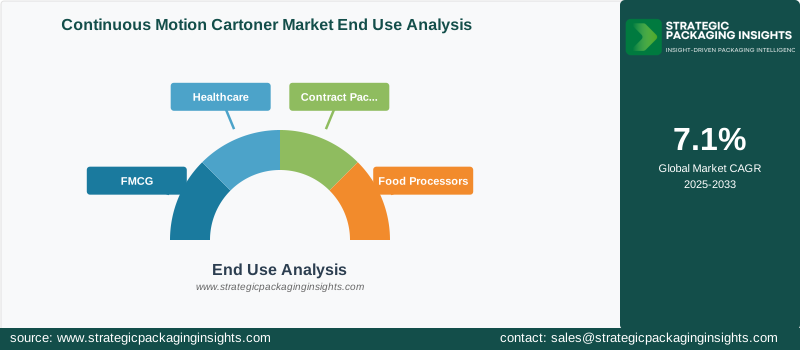
The healthcare sector is another key end-use segment for continuous motion cartoners, with these machines being widely used for packaging a variety of healthcare products, including pharmaceuticals, medical devices, and diagnostic kits. The demand for continuous motion cartoners in the healthcare sector is driven by the increasing demand for high-quality and compliant packaging solutions, as well as the growing emphasis on product safety and integrity. Additionally, advancements in automation technologies are enhancing the operational efficiency of continuous motion cartoners, further driving their adoption in the healthcare sector.
Contract packers and food processors are also significant end-use segments for continuous motion cartoners, with these machines being widely used for packaging a variety of food products, including snacks, confectionery, and ready-to-eat meals. The demand for continuous motion cartoners in these sectors is driven by the increasing demand for high-speed and efficient packaging solutions, as well as the growing trend of convenience and on-the-go consumption. Additionally, the rising focus on sustainability and eco-friendly packaging solutions is driving the demand for continuous motion cartoners that can handle biodegradable and recyclable materials.
Continuous Motion Cartoner Market Segments
The Continuous Motion Cartoner market has been segmented on the basis ofMachine Type
- Horizontal Cartoners
- Vertical Cartoners
- Robotic Cartoners
Application
- Food
- Pharma
- Personal Care
- Consumer Goods
Automation
- Automatic
- High-Speed Automatic
End Use
- FMCG
- Healthcare
- Contract Packers
- Food Processors
Region
- Asia Pacific
- North America
- Latin America
- Europe
- Middle East & Africa




