


Continuous Inkjet Inks Market Outlook
The Continuous Inkjet Inks market size was valued at USD $383.45 Million in 2025 and is anticipated to reach USD $554 Million by 2035, growing at a CAGR of 3.7% % during the forecast period according to Strategic Packaging Insights.
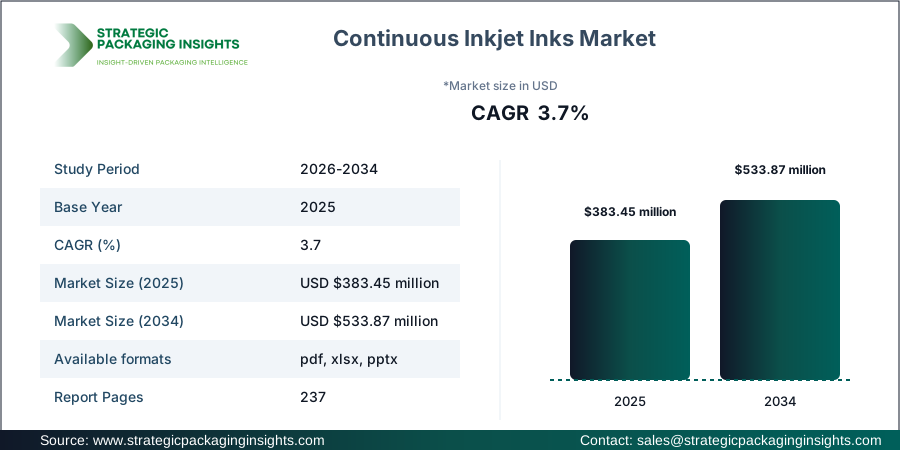
The most impactful driver for this market is the increasing demand for efficient and reliable coding and marking solutions across various industries, including food and beverage, pharmaceuticals, and electronics. The need for traceability and compliance with stringent regulations is pushing manufacturers to adopt advanced inkjet technologies, thereby boosting the market growth.
Report Scope
| Attributes | Details |
| Report Title | Continuous Inkjet Inks Market Projected to Scale to 554 Million by 2035, Assesses Strategic Packaging Insights |
| By Ink Type | MEK-Based Inks, Ethanol-Based Inks, Water-Based Inks, Acetone-Based Inks, UV-Curable Inks, Other Solvent-Based Inks |
| By Application | Date Coding, Batch Coding, Lot Number Printing, Serialization, Product Marking, Barcode and Traceability Printing |
| By Substrate | Plastic, Glass, Metal, Paper and Paperboard, Flexible Packaging Films, Other Substrates |
| By End Use | Food and Beverage, Pharmaceuticals and Healthcare, Electronics, Automotive, Personal Care and Cosmetics, Industrial Manufacturing |
| By Printer Compatibility | Standard CIJ Printers, High-Speed Coding Systems, Specialty CIJ Printers |
| By Region | North America, Europe, Asia-Pacific, Latin America, Middle East and Africa |
| Base Year | 2025 |
| Historic Period | 2018-2024 |
| Forecast Period | 2026-2035 |
| Number of Pages | 216 |
| Customization Available | Yes* |
Market Trends Analysis
Continuous Inkjet Inks are witnessing a shift towards more sustainable and eco-friendly formulations. The demand for water-based and ethanol-based inks is increasing as companies aim to reduce VOC emissions and comply with environmental regulations. This trend is influencing product development and procurement strategies, as manufacturers seek to balance performance with sustainability.
Another significant trend is the integration of digital technologies and automation in printing processes. The adoption of high-speed coding systems and specialty CIJ printers is enhancing operational efficiency and accuracy. This technological evolution is driving competitive differentiation and investment in R&D, as companies strive to offer innovative solutions that meet evolving customer needs.
Industry Transformation Analysis
The Continuous Inkjet Inks industry is undergoing a transformation driven by advancements in manufacturing processes and value-chain optimization. Companies are focusing on enhancing operational efficiency through automation and digitalization, which is reshaping procurement and distribution strategies. The shift towards localized production to reduce supply-chain risks is also notable.
Sustainability integration is becoming a core focus, with manufacturers investing in eco-friendly ink formulations and recycling technologies. This shift is influencing long-term business strategies and operational models, as companies aim to meet regulatory requirements and consumer expectations for sustainable products. The industry is also seeing increased collaboration across the value chain to enhance capacity and innovation.
Trends & Disruptions Impacting Customers' Customers
Downstream customers, particularly in the food and beverage and pharmaceuticals sectors, are increasingly prioritizing traceability and compliance with regulatory standards. This shift is driving demand for advanced coding and marking solutions that offer high precision and reliability. The growing emphasis on sustainability is also influencing purchasing decisions, as companies seek inks that align with their environmental goals.
These changes are impacting product demand and innovation in the Continuous Inkjet Inks market. Suppliers are focusing on developing inks that offer superior performance on diverse substrates, such as plastics and flexible packaging films. The need for customization and rapid response to changing regulations is creating opportunities for market growth and differentiation, as companies strive to meet evolving customer requirements.
Continuous Inkjet Inks Market Ecosystem
The Continuous Inkjet Inks market ecosystem involves a complex interplay of raw material suppliers, ink manufacturers, and printing equipment producers. The value creation process is heavily dependent on the quality and availability of raw materials, which directly impact ink performance and cost.
Supply-chain dependencies are significant, with manufacturers relying on a steady supply of high-quality solvents and pigments. Capacity constraints in ink production can affect market dynamics, especially in regions with high demand. Downstream demand from industries like food and beverage and pharmaceuticals drives innovation and capacity expansion, as companies strive to meet specific application requirements.
Analyst Perspective
Analyst Perspective: The Continuous Inkjet Inks market is poised for steady growth, driven by the increasing demand for efficient coding and marking solutions across diverse industries.
The most important structural change is the shift towards sustainable ink formulations, which is expected to have a long-term impact on product development and market competitiveness. Companies are investing in R&D to develop eco-friendly inks that meet regulatory standards and consumer expectations.
Market participants should closely monitor advancements in digital printing technologies and automation, as these are key drivers of operational efficiency and competitive differentiation. The focus on sustainability and compliance will continue to shape procurement strategies and investment decisions in the coming years.
Opportunities & Threats
The Continuous Inkjet Inks market presents significant opportunities for growth, particularly in emerging markets where industrialization and regulatory compliance are on the rise. The increasing demand for traceability and product authentication in sectors like pharmaceuticals and food and beverage is driving innovation and market expansion.
Technological advancements in ink formulations and printing equipment offer opportunities for differentiation and competitive advantage. Companies that invest in R&D to develop high-performance, eco-friendly inks are likely to capture a larger market share as sustainability becomes a key purchasing criterion.
However, the market faces threats from raw material volatility and supply-chain disruptions. The reliance on specific solvents and pigments can lead to price fluctuations and availability issues, impacting production costs and profitability.
Regulatory uncertainty and compliance challenges also pose risks, as companies must navigate complex and evolving standards across different regions. The need for continuous innovation to meet changing customer requirements and regulatory demands can strain resources and impact long-term growth.
Drivers & Challenges
The primary driver of the Continuous Inkjet Inks market is the growing demand for reliable and efficient coding and marking solutions across various industries. The need for traceability and compliance with stringent regulations is pushing manufacturers to adopt advanced inkjet technologies, thereby boosting market growth. The increasing focus on sustainability and eco-friendly products is also driving demand for water-based and ethanol-based inks.
Another significant driver is the technological advancements in printing equipment, which are enhancing operational efficiency and accuracy. The integration of digital technologies and automation in printing processes is enabling companies to offer innovative solutions that meet evolving customer needs. This trend is driving competitive differentiation and investment in R&D.
Challenges in the market include raw material volatility and supply-chain disruptions, which can impact production costs and profitability. Regulatory uncertainty and compliance challenges also pose risks, as companies must navigate complex and evolving standards across different regions. The need for continuous innovation to meet changing customer requirements and regulatory demands can strain resources and impact long-term growth.
Packaging Market Economics
The economics of Continuous Inkjet Inks in packaging involve several cost components, including raw materials, conversion costs, and logistics. The pricing of solvents and pigments significantly impacts the overall cost structure, as these are critical inputs in ink formulation. Conversion costs are influenced by the efficiency of manufacturing processes and the scale of production.
Energy costs and logistics also play a crucial role in determining the final pricing of inks. Efficient supply-chain management and strategic procurement can help companies optimize costs and improve margins. The focus on sustainability and eco-friendly formulations is driving investment in R&D, which can impact short-term profitability but offers long-term growth potential.
Packaging Value Chain & Cost Analysis
The value chain for Continuous Inkjet Inks in packaging involves several tiers, starting with resin synthesis and additive production. Tier-2 includes film extrusion and substrate production, where inks are applied to various packaging materials. Tier-1 involves converting, printing, and lamination processes, where inks are used for coding and marking applications.
Downstream activities include co-packing, CPG brand filling, and distribution, where inks play a crucial role in product identification and traceability. The value chain is influenced by factors such as resin supply, capacity utilization, and logistics. Efficient management of these factors can enhance operational efficiency and reduce costs.
Unit Economics & Substrate Cost Analysis
The unit economics of Continuous Inkjet Inks are influenced by several factors, including raw material costs, energy consumption, and logistics. The cost of solvents and pigments is a significant component, as these are essential for ink formulation. Energy costs impact the overall production cost, as manufacturing processes require significant power input.
Logistics costs are also a critical factor, as efficient distribution networks can reduce transportation expenses and improve margins. The focus on sustainability and eco-friendly formulations is driving investment in R&D, which can impact short-term profitability but offers long-term growth potential. Companies that optimize their unit economics through strategic procurement and efficient manufacturing processes are likely to gain a competitive advantage.
Packaging Regulatory & Sustainability Analysis
The Continuous Inkjet Inks market is subject to various packaging regulations and sustainability requirements. In the European Union, the European Commission's directives on VOC emissions and packaging waste are influencing ink formulations and production processes. Companies must comply with these regulations to ensure market access and avoid penalties.
In the United States, the Environmental Protection Agency (EPA) regulates VOC emissions and hazardous waste management, impacting the production and disposal of inks. The focus on sustainability is driving companies to develop eco-friendly inks that meet regulatory standards and consumer expectations. Compliance with these regulations is essential for market competitiveness and long-term growth.
Strategic Mergers, Acquisitions & Capacity Expansions
Recent strategic developments in the Continuous Inkjet Inks market include mergers and acquisitions aimed at enhancing product portfolios and expanding geographic presence. Companies are investing in capacity expansions to meet growing demand and improve operational efficiency.
For instance, Videojet Technologies Inc. has been focusing on expanding its product offerings and strengthening its market position through strategic acquisitions. Similarly, Domino Printing Sciences plc has been investing in R&D to develop innovative ink formulations and enhance its competitive advantage.
These strategic initiatives are driven by the need to meet evolving customer requirements and regulatory standards. Companies that successfully execute these strategies are likely to gain a competitive edge and capture a larger market share.
Strategic Action Directives
Brand Packaging Engineers & Sustainability Directors: Focus on developing eco-friendly ink formulations that comply with regulatory standards and meet consumer expectations for sustainability.
Converter Operations & Extrusion Leads: Optimize manufacturing processes to enhance operational efficiency and reduce costs. Invest in automation and digital technologies to improve accuracy and speed.
Procurement & Material Sourcing Managers: Secure reliable supply of high-quality solvents and pigments to ensure consistent ink performance. Diversify supplier base to mitigate supply-chain risks.
Investors: Monitor advancements in digital printing technologies and automation, as these are key drivers of market growth and competitive differentiation. Focus on companies that invest in R&D and sustainability initiatives.
Market Share Analysis
The Continuous Inkjet Inks market is characterized by a competitive landscape with several key players vying for market share. Companies like Videojet Technologies Inc., Domino Printing Sciences plc, and Markem-Imaje are prominent players with strong market positions due to their extensive product portfolios and global presence.
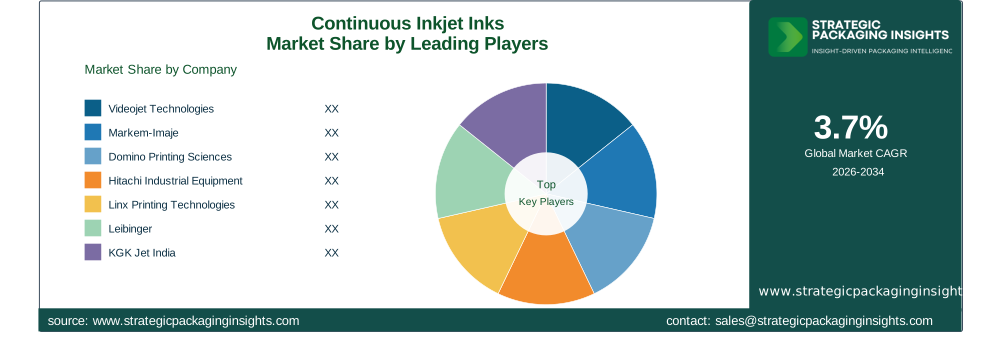
These companies are focusing on innovation and sustainability to differentiate themselves in the market. The development of eco-friendly ink formulations and advanced printing technologies is a key strategy for gaining a competitive edge. The market is also witnessing increased collaboration and partnerships to enhance product offerings and expand geographic reach.
Other notable players include Hitachi Industrial Equipment Systems Co., Ltd., Linx Printing Technologies, and Leibinger Group, which are investing in R&D to develop high-performance inks and printing solutions. The focus on meeting regulatory standards and consumer expectations for sustainability is driving product development and market expansion.
Smaller players like Squid Ink Manufacturing Inc. and Needham Inks Limited are also making significant strides in the market by offering specialized ink formulations and customized solutions. These companies are leveraging their expertise in niche applications to capture market share and drive growth.
Key Highlights
- Largest Region: North America
- Fastest-Growing Region: Asia Pacific
- Largest Segment: MEK-Based Inks
- Fastest-Growing Segment: Water-Based Inks
- Base-year market size: USD 383.45 Million
- Forecast-year market size: USD 554 Million
- CAGR: 3.7%
- Important application: Date Coding
- Major end-use industry: Food and Beverage
- Major market driver: Demand for traceability and compliance
Regional Insights
The Continuous Inkjet Inks market is witnessing varied growth patterns across different regions. North America is the largest market, driven by the strong presence of key players and high demand from the food and beverage industry. The region's focus on sustainability and regulatory compliance is also influencing market dynamics.
North America
North America is the largest market for Continuous Inkjet Inks, with significant demand from the food and beverage and pharmaceuticals sectors. The region's focus on sustainability and regulatory compliance is driving innovation and market growth. Companies are investing in R&D to develop eco-friendly inks that meet stringent standards.
The presence of key players like Videojet Technologies Inc. and Markem-Imaje is contributing to the region's market dominance. The adoption of advanced printing technologies and automation is enhancing operational efficiency and competitive differentiation.
Europe
Europe is a mature market with a strong focus on sustainability and environmental regulations. The demand for eco-friendly ink formulations is driving product development and market expansion. Companies are investing in R&D to meet regulatory standards and consumer expectations for sustainability.
The presence of key players like Domino Printing Sciences plc and Hitachi Industrial Equipment Systems Co., Ltd. is contributing to the region's market growth. The focus on innovation and sustainability is driving competitive differentiation and market expansion.
Asia Pacific
Asia Pacific is the fastest-growing region, driven by rapid industrialization and increasing demand from the food and beverage and pharmaceuticals sectors. The region's focus on regulatory compliance and sustainability is influencing market dynamics and driving innovation.
Companies are investing in capacity expansions and R&D to meet the growing demand for advanced coding and marking solutions. The presence of key players like Linx Printing Technologies and Leibinger Group is contributing to the region's market growth.
Latin America
Latin America is experiencing moderate growth, driven by increasing demand from the food and beverage and pharmaceuticals sectors. The region's focus on regulatory compliance and sustainability is influencing market dynamics and driving innovation.
Companies are investing in R&D to develop eco-friendly inks that meet regulatory standards and consumer expectations for sustainability. The presence of key players like Squid Ink Manufacturing Inc. and Needham Inks Limited is contributing to the region's market growth.
Middle East & Africa
The Middle East & Africa region is witnessing steady growth, driven by increasing demand from the food and beverage and pharmaceuticals sectors. The region's focus on regulatory compliance and sustainability is influencing market dynamics and driving innovation.
Companies are investing in R&D to develop eco-friendly inks that meet regulatory standards and consumer expectations for sustainability. The presence of key players like Aztec Fluids & Machinery and Sun Chemical is contributing to the region's market growth.
Continuous Inkjet Inks Market Segments Insights

By Ink Type Analysis
The Continuous Inkjet Inks market is segmented by ink type, with MEK-Based Inks being the largest segment due to their widespread use in industrial applications. These inks offer excellent adhesion and fast drying times, making them ideal for high-speed printing on various substrates.
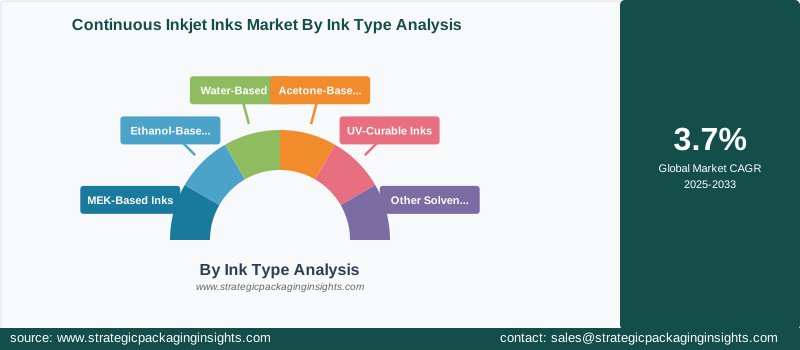
Water-Based Inks are the fastest-growing segment, driven by the increasing demand for eco-friendly and sustainable solutions. These inks are gaining popularity due to their low VOC emissions and compliance with environmental regulations. Companies are investing in R&D to enhance the performance and versatility of water-based inks.
By Application Analysis
The market is segmented by application, with Date Coding being a significant segment due to its critical role in ensuring product traceability and compliance. The demand for reliable and accurate coding solutions is driving innovation and market growth.
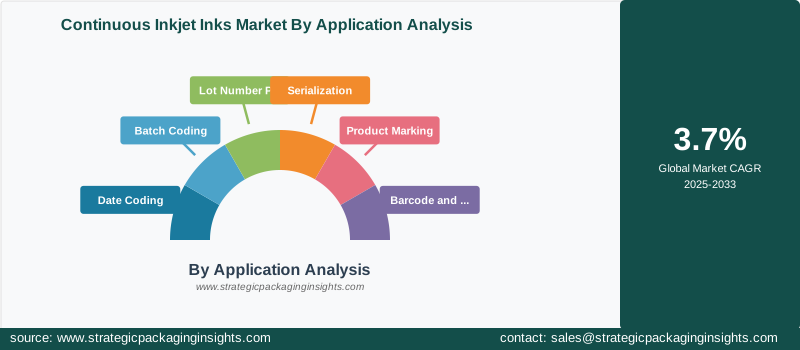
Serialization and Barcode and Traceability Printing are also important applications, driven by the need for product authentication and supply-chain transparency. Companies are focusing on developing advanced printing technologies that offer high precision and reliability.
By Substrate Analysis
The Continuous Inkjet Inks market is segmented by substrate, with Plastic being a major segment due to its widespread use in packaging and industrial applications. The demand for inks that offer excellent adhesion and durability on plastic substrates is driving market growth.
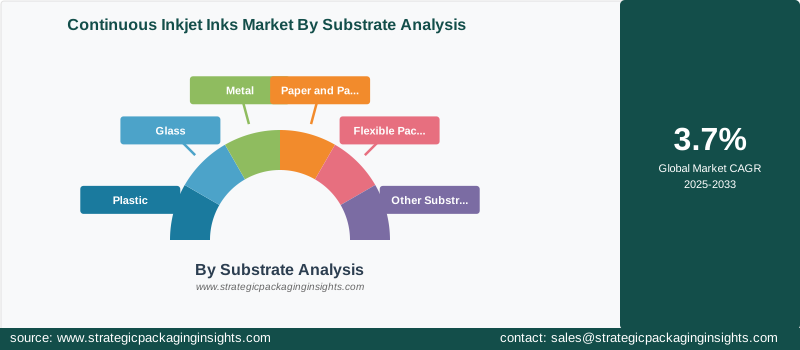
Flexible Packaging Films are also a significant segment, driven by the increasing demand for lightweight and sustainable packaging solutions. Companies are investing in R&D to develop inks that offer superior performance on flexible substrates.
By End Use Analysis
The market is segmented by end use, with the Food and Beverage industry being the largest segment due to its high demand for coding and marking solutions. The need for traceability and compliance with regulatory standards is driving market growth.
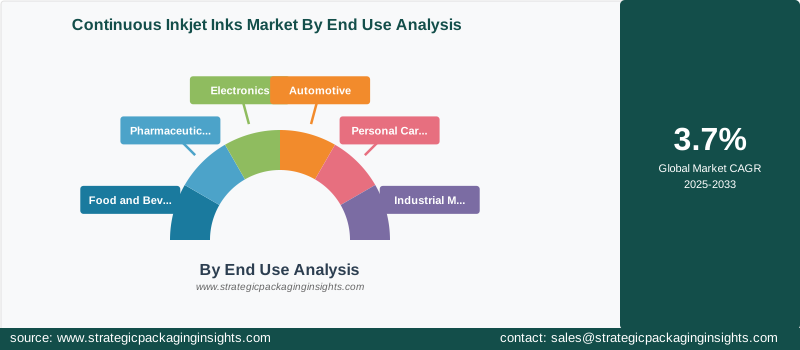
The Pharmaceuticals and Healthcare sector is also a significant segment, driven by the need for product authentication and supply-chain transparency. Companies are focusing on developing inks that meet stringent regulatory requirements and offer high performance on diverse substrates.
By Printer Compatibility Analysis
The market is segmented by printer compatibility, with Standard CIJ Printers being the largest segment due to their widespread use in various industries. These printers offer versatility and reliability, making them ideal for a wide range of applications.
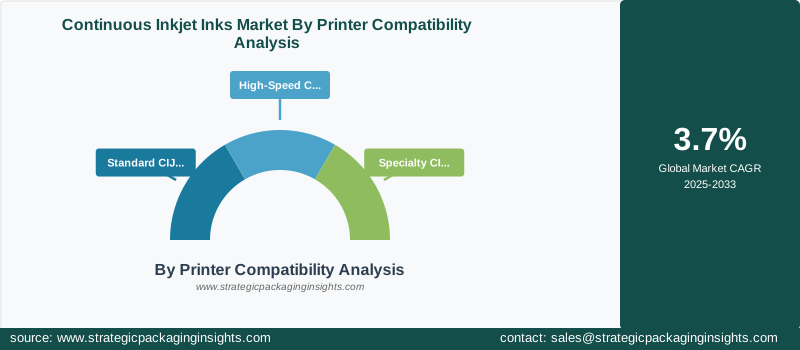
High-Speed Coding Systems are the fastest-growing segment, driven by the increasing demand for efficient and accurate coding solutions. Companies are investing in R&D to develop advanced printing technologies that offer high speed and precision.
Continuous Inkjet Inks Market Segments
The Continuous Inkjet Inks market has been segmented on the basis ofBy Ink Type
- MEK-Based Inks
- Ethanol-Based Inks
- Water-Based Inks
- Acetone-Based Inks
- UV-Curable Inks
- Other Solvent-Based Inks
By Application
- Date Coding
- Batch Coding
- Lot Number Printing
- Serialization
- Product Marking
- Barcode and Traceability Printing
By Substrate
- Plastic
- Glass
- Metal
- Paper and Paperboard
- Flexible Packaging Films
- Other Substrates
By End Use
- Food and Beverage
- Pharmaceuticals and Healthcare
- Electronics
- Automotive
- Personal Care and Cosmetics
- Industrial Manufacturing
By Printer Compatibility
- Standard CIJ Printers
- High-Speed Coding Systems
- Specialty CIJ Printers
By Region
- North America
- Europe
- Asia-Pacific
- Latin America
- Middle East and Africa




