


Container Liner Market Outlook
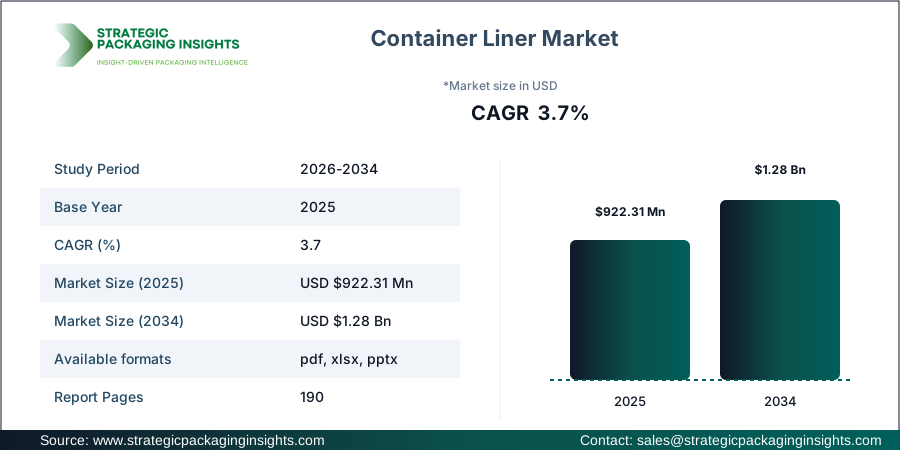
The container liner market was valued at $922.31 million in 2025 and is projected to reach $1.28 billion by 2034, growing at a CAGR of 3.7% during the forecast period 2026-2034. This market is witnessing significant growth due to the increasing demand for efficient and cost-effective packaging solutions in various industries such as chemicals, food ingredients, and agriculture. The rise in global trade and the need for safe transportation of bulk goods are driving the demand for container liners. Additionally, advancements in material technology, such as the development of anti-static and thermal liners, are further propelling market growth. The market is also benefiting from the growing emphasis on sustainability, with manufacturers focusing on producing eco-friendly liners made from recyclable materials.
However, the market faces certain challenges that could hinder its growth potential. Regulatory restrictions related to the use of certain materials in packaging, along with fluctuating raw material prices, pose significant restraints. Moreover, the high initial investment required for setting up manufacturing facilities and the need for continuous innovation to meet changing consumer demands are additional challenges. Despite these hurdles, the container liner market holds immense growth potential, driven by the increasing adoption of liners in emerging economies and the expansion of the e-commerce sector, which requires efficient packaging solutions for safe and secure product delivery.
Report Scope
| Attributes | Details |
| Report Title | Container Liner Market Size, Future Growth and Forecast 2034 |
| Product Type | Dry Bulk Liners, Liquid Liners, Thermal Liners, Anti-Static Liners |
| Material Type | PE, PP, Aluminum Foil, Composite |
| Application | Chemicals, Food Ingredients, Minerals, Agriculture Products |
| End Use | Logistics, Food & Beverage, Chemicals, Agriculture |
| Region | Asia Pacific, North America, Latin America, Europe, Middle East & Africa |
| Base Year | 2025 |
| Historic Period | 2018-2024 |
| Forecast Period | 2026-2034 |
| Number of Pages | 190 |
| Customization Available | Yes* |
Opportunities & Threats
The container liner market presents numerous opportunities for growth, primarily driven by the increasing demand for sustainable packaging solutions. As environmental concerns continue to rise, there is a growing preference for eco-friendly liners made from recyclable and biodegradable materials. This trend is encouraging manufacturers to innovate and develop new products that meet the sustainability criteria, thereby opening up new avenues for market expansion. Additionally, the rapid growth of the e-commerce sector is creating a surge in demand for efficient packaging solutions, further boosting the market for container liners. The increasing globalization of trade and the need for safe and secure transportation of goods across borders are also contributing to the market's growth prospects.
Another significant opportunity lies in the technological advancements in material science, which are enabling the development of advanced liners with enhanced properties such as thermal insulation and anti-static capabilities. These innovations are particularly beneficial for industries such as chemicals and food ingredients, where maintaining product integrity during transportation is crucial. Furthermore, the expansion of the logistics and transportation sector, driven by the rise in global trade, is expected to create additional demand for container liners, providing lucrative opportunities for market players.
Despite the promising opportunities, the container liner market faces certain threats that could impede its growth. One of the primary challenges is the stringent regulatory environment governing the use of specific materials in packaging. Compliance with these regulations can be costly and time-consuming, posing a barrier to market entry for new players. Additionally, the volatility in raw material prices can impact the profitability of manufacturers, as they may struggle to pass on the increased costs to consumers. The intense competition among market players, coupled with the need for continuous innovation to meet evolving consumer demands, further adds to the challenges faced by the industry.
Drivers & Challenges
The container liner market is primarily driven by the increasing demand for efficient and cost-effective packaging solutions across various industries. The rise in global trade and the need for safe transportation of bulk goods are significant drivers of market growth. Container liners offer a practical solution for transporting large quantities of goods, providing protection against contamination and damage during transit. The growing emphasis on sustainability is also driving the demand for eco-friendly liners made from recyclable materials, as consumers and businesses alike seek to reduce their environmental footprint. Additionally, advancements in material technology, such as the development of anti-static and thermal liners, are further propelling market growth by offering enhanced protection for sensitive goods.
Another key driver of the container liner market is the expansion of the e-commerce sector, which requires efficient packaging solutions for safe and secure product delivery. The increasing globalization of trade and the need for reliable transportation of goods across borders are also contributing to the market's growth prospects. Furthermore, the expansion of the logistics and transportation sector, driven by the rise in global trade, is expected to create additional demand for container liners, providing lucrative opportunities for market players. The growing adoption of liners in emerging economies, where industrialization and urbanization are on the rise, is also expected to drive market growth.
Despite the promising growth drivers, the container liner market faces several challenges that could impede its progress. One of the primary challenges is the stringent regulatory environment governing the use of specific materials in packaging. Compliance with these regulations can be costly and time-consuming, posing a barrier to market entry for new players. Additionally, the volatility in raw material prices can impact the profitability of manufacturers, as they may struggle to pass on the increased costs to consumers. The intense competition among market players, coupled with the need for continuous innovation to meet evolving consumer demands, further adds to the challenges faced by the industry. Moreover, the high initial investment required for setting up manufacturing facilities and the need for continuous innovation to meet changing consumer demands are additional challenges.
Market Share Analysis
The container liner market is characterized by a competitive landscape with several key players vying for market share. Companies such as Greif, Thrace Group, LC Packaging, Berry Global, Eceplast, Sinopack, Norseman, Powertex, CorrPakBPS, and Bulk Handling Australia are some of the prominent players in the market. These companies are focusing on strategic initiatives such as mergers and acquisitions, partnerships, and product innovations to strengthen their market position and expand their product offerings. The competitive landscape is further intensified by the presence of numerous regional players who are leveraging their local expertise to gain a competitive edge.
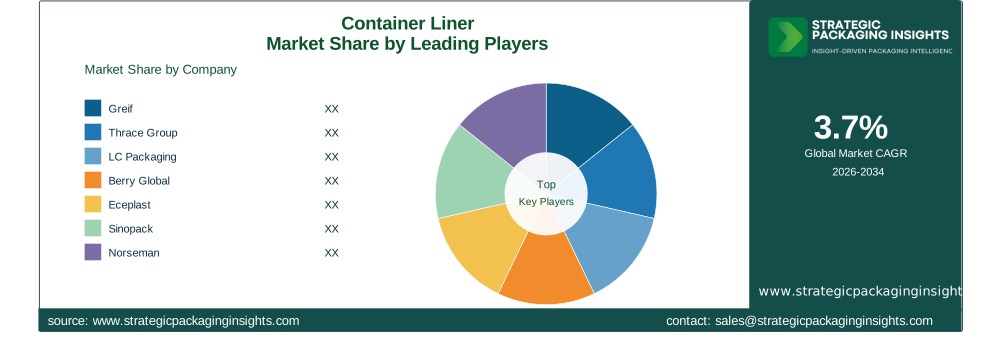
Greif is a leading player in the container liner market, known for its extensive product portfolio and strong distribution network. The company is focused on expanding its presence in emerging markets and enhancing its product offerings through strategic acquisitions and partnerships. Thrace Group is another key player, renowned for its innovative product solutions and commitment to sustainability. The company is investing in research and development to develop eco-friendly liners that meet the evolving needs of consumers and businesses.
LC Packaging is a prominent player in the market, offering a wide range of container liners for various applications. The company is focused on expanding its global footprint and enhancing its product offerings through strategic partnerships and collaborations. Berry Global is another major player, known for its extensive product portfolio and strong focus on sustainability. The company is investing in research and development to develop innovative packaging solutions that meet the changing needs of consumers and businesses.
Eceplast, Sinopack, Norseman, Powertex, CorrPakBPS, and Bulk Handling Australia are also significant players in the container liner market, each with its unique strengths and market strategies. These companies are focusing on expanding their product offerings and enhancing their distribution networks to gain a competitive edge in the market. The competitive landscape is further intensified by the presence of numerous regional players who are leveraging their local expertise to gain a competitive edge.
Key Highlights
- The container liner market is projected to grow at a CAGR of 3.7% from 2026 to 2034.
- Increasing demand for sustainable packaging solutions is driving market growth.
- Advancements in material technology are enabling the development of advanced liners with enhanced properties.
- The expansion of the e-commerce sector is creating a surge in demand for efficient packaging solutions.
- Stringent regulatory environment and volatility in raw material prices pose significant challenges.
- Key players are focusing on strategic initiatives such as mergers and acquisitions to strengthen their market position.
- The market is characterized by intense competition among key players and regional players.
- Emerging economies are expected to drive market growth due to increasing industrialization and urbanization.
- The logistics and transportation sector is expected to create additional demand for container liners.
- Eco-friendly liners made from recyclable materials are gaining popularity among consumers and businesses.
Top Countries Insights
In the container liner market, the United States stands out as a key player, with a market size of approximately $300 million and a CAGR of 4%. The country's robust logistics and transportation infrastructure, coupled with the increasing demand for efficient packaging solutions in the e-commerce sector, are driving market growth. Additionally, the emphasis on sustainability and the adoption of eco-friendly liners are further propelling the market in the United States.
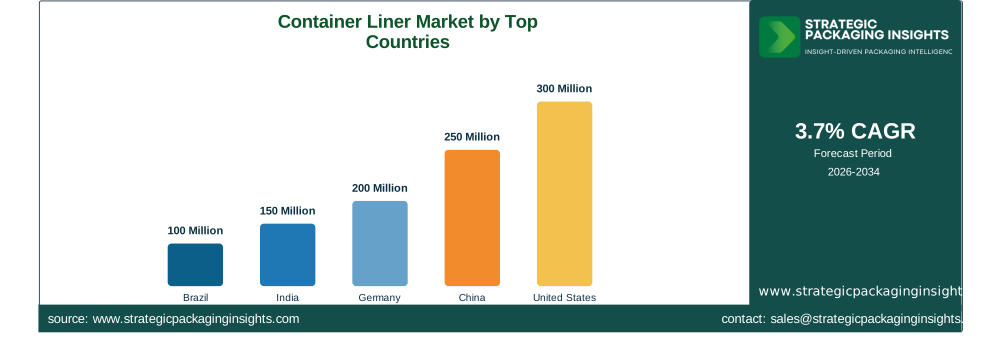
China is another significant market for container liners, with a market size of around $250 million and a CAGR of 5%. The country's rapid industrialization and urbanization, along with the expansion of the logistics and transportation sector, are contributing to the market's growth. The increasing demand for safe and secure transportation of goods across borders is also driving the adoption of container liners in China.
Germany is a prominent market in Europe, with a market size of approximately $200 million and a CAGR of 3%. The country's strong manufacturing base and the emphasis on sustainability are driving the demand for container liners. Additionally, the expansion of the e-commerce sector and the need for efficient packaging solutions are further boosting the market in Germany.
India is emerging as a key market for container liners, with a market size of around $150 million and a CAGR of 6%. The country's growing industrialization and urbanization, along with the expansion of the logistics and transportation sector, are driving market growth. The increasing demand for eco-friendly liners and the emphasis on sustainability are also contributing to the market's expansion in India.
Brazil is another important market in Latin America, with a market size of approximately $100 million and a CAGR of 4%. The country's expanding logistics and transportation sector, coupled with the increasing demand for efficient packaging solutions, are driving market growth. The emphasis on sustainability and the adoption of eco-friendly liners are further propelling the market in Brazil.
Container Liner Market Segments Insights

Product Type Analysis
The container liner market is segmented by product type into dry bulk liners, liquid liners, thermal liners, and anti-static liners. Dry bulk liners are widely used for transporting dry goods such as grains, seeds, and powders, offering protection against contamination and moisture. The demand for dry bulk liners is driven by the increasing need for efficient and cost-effective packaging solutions in the agriculture and food industries. Liquid liners, on the other hand, are designed for transporting liquids such as chemicals and food ingredients, providing a secure and leak-proof solution. The growing demand for safe transportation of liquids across borders is driving the adoption of liquid liners.
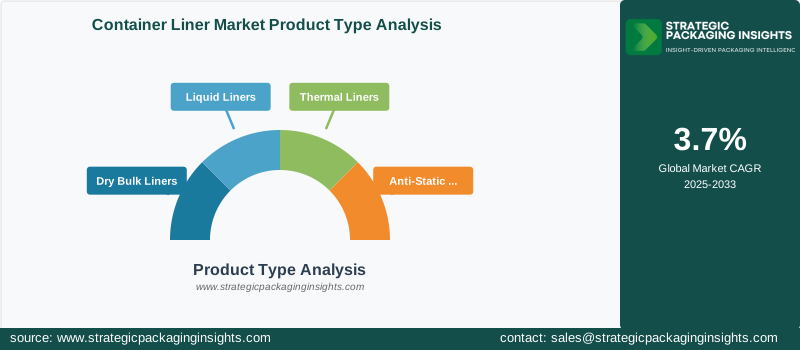
Thermal liners are gaining popularity due to their ability to maintain the temperature of goods during transit, making them ideal for transporting temperature-sensitive products such as pharmaceuticals and food ingredients. The increasing demand for temperature-controlled packaging solutions is driving the growth of thermal liners. Anti-static liners are designed to prevent static electricity buildup, making them suitable for transporting sensitive electronic components and chemicals. The growing emphasis on product safety and the need for specialized packaging solutions are driving the demand for anti-static liners.
Material Type Analysis
The container liner market is segmented by material type into PE, PP, aluminum foil, and composite materials. PE liners are widely used due to their durability, flexibility, and cost-effectiveness, making them suitable for a wide range of applications. The demand for PE liners is driven by the increasing need for efficient and cost-effective packaging solutions in various industries. PP liners, on the other hand, offer excellent chemical resistance and are ideal for transporting chemicals and food ingredients. The growing demand for safe and secure transportation of goods is driving the adoption of PP liners.
Aluminum foil liners are gaining popularity due to their excellent barrier properties, making them suitable for transporting temperature-sensitive products such as pharmaceuticals and food ingredients. The increasing demand for temperature-controlled packaging solutions is driving the growth of aluminum foil liners. Composite liners, which combine multiple materials to offer enhanced properties, are also gaining traction in the market. The growing emphasis on product safety and the need for specialized packaging solutions are driving the demand for composite liners.
Application Analysis
The container liner market is segmented by application into chemicals, food ingredients, minerals, and agriculture products. The chemicals segment is a major driver of market growth, with container liners offering a safe and secure solution for transporting hazardous and non-hazardous chemicals. The increasing demand for safe transportation of chemicals across borders is driving the adoption of container liners in this segment. The food ingredients segment is also witnessing significant growth, driven by the increasing demand for safe and secure transportation of food products.
The minerals segment is another key application area for container liners, with the liners offering protection against contamination and moisture during transit. The growing demand for efficient and cost-effective packaging solutions in the mining industry is driving the adoption of container liners in this segment. The agriculture products segment is also witnessing growth, driven by the increasing need for safe and secure transportation of agricultural goods such as grains, seeds, and fertilizers.
End Use Analysis
The container liner market is segmented by end use into logistics, food & beverage, chemicals, and agriculture. The logistics segment is a major driver of market growth, with container liners offering a practical solution for transporting large quantities of goods. The increasing globalization of trade and the need for reliable transportation of goods across borders are driving the demand for container liners in the logistics sector. The food & beverage segment is also witnessing significant growth, driven by the increasing demand for safe and secure transportation of food products.
The chemicals segment is another key end-use area for container liners, with the liners offering a safe and secure solution for transporting hazardous and non-hazardous chemicals. The growing demand for safe transportation of chemicals across borders is driving the adoption of container liners in this segment. The agriculture segment is also witnessing growth, driven by the increasing need for safe and secure transportation of agricultural goods such as grains, seeds, and fertilizers.
Container Liner Market Segments
The Container Liner market has been segmented on the basis ofProduct Type
- Dry Bulk Liners
- Liquid Liners
- Thermal Liners
- Anti-Static Liners
Material Type
- PE
- PP
- Aluminum Foil
- Composite
Application
- Chemicals
- Food Ingredients
- Minerals
- Agriculture Products
End Use
- Logistics
- Food & Beverage
- Chemicals
- Agriculture
Region
- Asia Pacific
- North America
- Latin America
- Europe
- Middle East & Africa




