


Conipack Pail Market Outlook
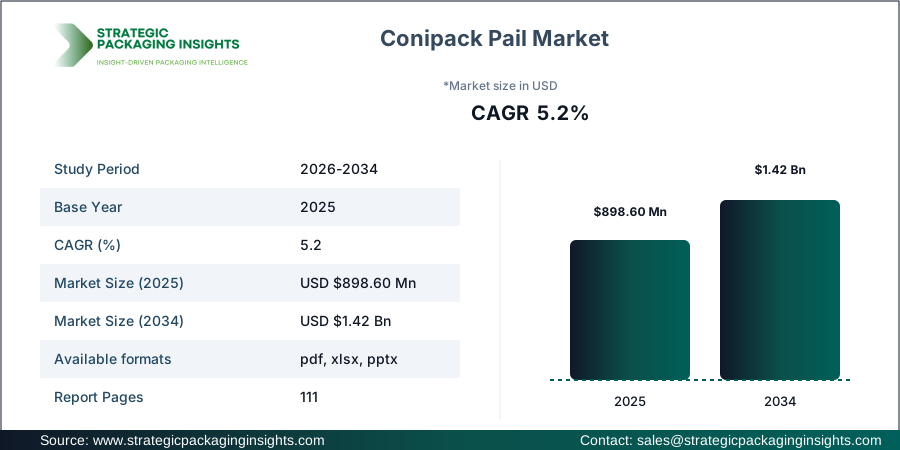
The Conipack Pail market was valued at $898.60 million in 2025 and is projected to reach $1.42 billion by 2034, growing at a CAGR of 5.2% during the forecast period 2026-2034. This market is witnessing significant growth due to the increasing demand for durable and versatile packaging solutions across various industries. Conipack pails, known for their conical shape and stackability, are extensively used in sectors such as chemicals, food, and construction. The rising need for efficient storage and transportation solutions is driving the demand for conipack pails, particularly in emerging economies where industrialization is on the rise. Additionally, the market is benefiting from advancements in material technology, which are enhancing the durability and sustainability of these pails.
Despite the promising growth prospects, the Conipack Pail market faces certain challenges. Regulatory constraints related to the use of plastics and environmental concerns are significant restraining factors. Governments worldwide are implementing stringent regulations to curb plastic usage, which could impact the production and adoption of plastic conipack pails. However, the market holds potential for growth through the development of eco-friendly alternatives and the adoption of recyclable materials. Companies are increasingly focusing on innovation to create sustainable packaging solutions, which is expected to open new avenues for market expansion. The ongoing trend towards lightweight and cost-effective packaging is also anticipated to drive market growth in the coming years.
Report Scope
| Attributes | Details |
| Report Title | Conipack Pail Market Size, Future Growth and Forecast 2034 |
| By Product Type | Plastic Conical Pails, Metal Conical Pails, Lidded Conipack Pails |
| By Material Type | PP, HDPE, Steel |
| By Application | Paints, Chemicals, Food Ingredients, Lubricants |
| By End Use | Industrial, Food, Chemicals, Construction |
| Region | Asia Pacific, North America, Latin America, Europe, Middle East & Africa |
| Base Year | 2025 |
| Historic Period | 2018-2024 |
| Forecast Period | 2026-2034 |
| Number of Pages | 111 |
| Customization Available | Yes* |
Opportunities & Threats
The Conipack Pail market presents numerous opportunities, particularly in the realm of sustainable packaging solutions. As environmental concerns continue to rise, there is a growing demand for eco-friendly packaging options. This trend is pushing manufacturers to innovate and develop conipack pails made from biodegradable or recyclable materials. Companies that can successfully integrate sustainability into their product offerings are likely to gain a competitive edge in the market. Additionally, the increasing industrialization in emerging economies is creating a surge in demand for efficient and durable packaging solutions, providing further growth opportunities for the conipack pail market.
Another significant opportunity lies in the customization of conipack pails to meet specific industry needs. Industries such as chemicals, food, and construction have unique packaging requirements, and the ability to offer tailored solutions can be a major differentiator for companies in this market. The trend towards customization is expected to drive innovation and product development, enabling companies to cater to a broader range of applications and expand their market reach. Furthermore, advancements in manufacturing technologies are facilitating the production of high-quality, cost-effective conipack pails, which is likely to boost market growth.
However, the market is not without its threats. One of the primary challenges is the increasing regulatory pressure on plastic usage. Governments across the globe are implementing stringent regulations to reduce plastic waste, which could impact the production and adoption of plastic conipack pails. Companies need to navigate these regulatory challenges by investing in research and development to create sustainable alternatives. Additionally, the market faces competition from alternative packaging solutions, such as flexible packaging and rigid containers, which offer similar benefits and could potentially limit the growth of the conipack pail market.
Drivers & Challenges
The Conipack Pail market is driven by several key factors, including the growing demand for efficient and durable packaging solutions across various industries. The conical shape and stackability of conipack pails make them ideal for storage and transportation, particularly in sectors such as chemicals, food, and construction. The increasing industrialization in emerging economies is further fueling the demand for these pails, as companies seek reliable packaging solutions to support their operations. Additionally, advancements in material technology are enhancing the durability and sustainability of conipack pails, making them more attractive to environmentally conscious consumers.
Another significant driver is the trend towards lightweight and cost-effective packaging. Conipack pails offer a cost-efficient solution for businesses looking to optimize their packaging processes. The ability to customize these pails to meet specific industry needs is also a major driver, as it allows companies to cater to a broader range of applications. Furthermore, the rise of e-commerce and the increasing demand for convenient packaging solutions are contributing to the growth of the conipack pail market. As online shopping continues to expand, the need for reliable and efficient packaging solutions is expected to rise, driving further demand for conipack pails.
Despite these drivers, the market faces several challenges. One of the primary challenges is the increasing regulatory pressure on plastic usage. Governments worldwide are implementing stringent regulations to reduce plastic waste, which could impact the production and adoption of plastic conipack pails. Companies need to navigate these regulatory challenges by investing in research and development to create sustainable alternatives. Additionally, the market faces competition from alternative packaging solutions, such as flexible packaging and rigid containers, which offer similar benefits and could potentially limit the growth of the conipack pail market. Companies must focus on innovation and differentiation to maintain their competitive edge in this evolving market landscape.
Market Share Analysis
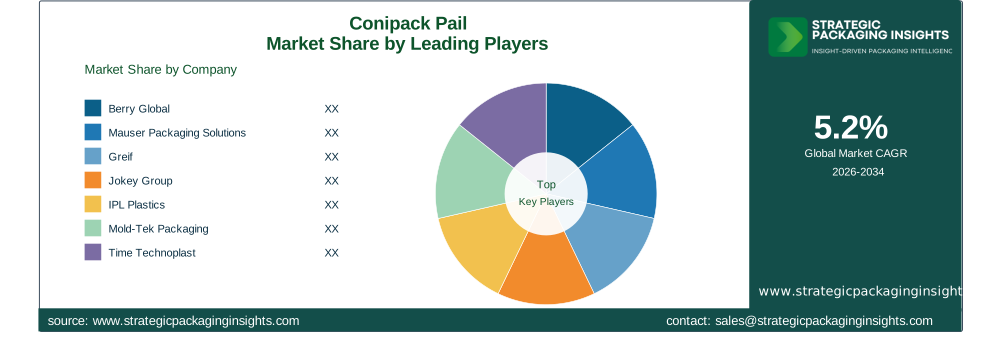
The Conipack Pail market is characterized by a competitive landscape with several key players vying for market share. Companies such as Berry Global, Mauser Packaging Solutions, Greif, Jokey Group, IPL Plastics, Mold-Tek Packaging, Time Technoplast, RPC Group, Balmer Lawrie, and Schutz are prominent players in this market. These companies are focusing on innovation, product development, and strategic partnerships to strengthen their market position and expand their product offerings. The competitive landscape is marked by a mix of global and regional players, each striving to capture a larger share of the market through various strategies.
Berry Global is a leading player in the Conipack Pail market, known for its extensive product portfolio and strong distribution network. The company is focusing on sustainability and innovation to meet the evolving needs of its customers. Mauser Packaging Solutions is another key player, offering a wide range of packaging solutions, including conipack pails. The company is leveraging its global presence and expertise in packaging to expand its market reach. Greif, a global leader in industrial packaging, is also a significant player in the conipack pail market, known for its high-quality products and commitment to sustainability.
Jokey Group is a prominent player in the European market, offering a diverse range of packaging solutions, including conipack pails. The company is focusing on innovation and customization to cater to the specific needs of its customers. IPL Plastics is another key player, known for its innovative packaging solutions and strong focus on sustainability. Mold-Tek Packaging, a leading player in the Indian market, is expanding its product offerings and investing in new technologies to enhance its market position. Time Technoplast, RPC Group, Balmer Lawrie, and Schutz are also significant players in the conipack pail market, each with its unique strengths and strategies.
Key Highlights
- The Conipack Pail market is projected to grow at a CAGR of 5.2% from 2026 to 2034.
- Increasing demand for durable and versatile packaging solutions is driving market growth.
- Advancements in material technology are enhancing the durability and sustainability of conipack pails.
- Regulatory constraints related to plastic usage pose a challenge to market growth.
- Customization and innovation are key trends in the conipack pail market.
- The market is characterized by a competitive landscape with several key players.
- Emerging economies present significant growth opportunities for the conipack pail market.
- The trend towards lightweight and cost-effective packaging is driving demand for conipack pails.
- Companies are focusing on sustainability and eco-friendly packaging solutions.
- The rise of e-commerce is contributing to the demand for efficient packaging solutions.
Top Countries Insights
In the Conipack Pail market, the United States stands out as a key player, with a market size of approximately $300 million and a CAGR of 4%. The country's robust industrial sector and the increasing demand for efficient packaging solutions are driving market growth. The presence of major players and the focus on innovation and sustainability are further contributing to the market's expansion. However, regulatory constraints related to plastic usage pose a challenge, prompting companies to explore eco-friendly alternatives.
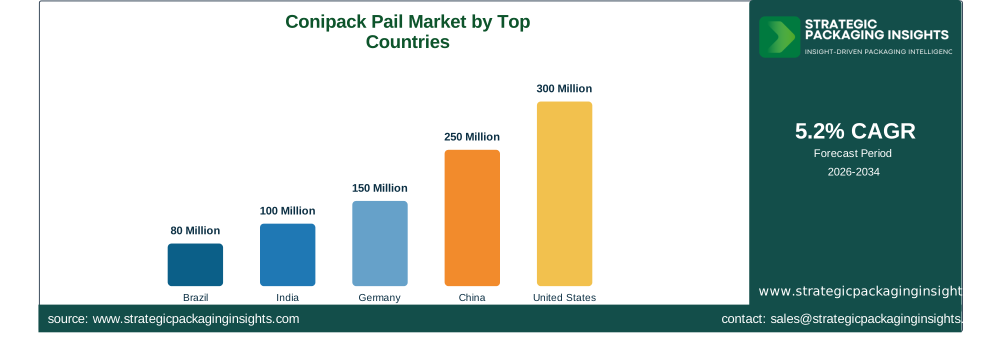
China is another significant market for conipack pails, with a market size of around $250 million and a CAGR of 6%. The country's rapid industrialization and the growing demand for durable packaging solutions are key growth drivers. The government's focus on environmental sustainability is encouraging companies to adopt eco-friendly packaging solutions, which is expected to boost market growth. Additionally, the increasing demand for customized packaging solutions is driving innovation and product development in the Chinese market.
Germany, with a market size of approximately $150 million and a CAGR of 5%, is a prominent player in the European conipack pail market. The country's strong industrial base and the focus on sustainability are driving demand for conipack pails. The presence of key players and the emphasis on innovation and customization are further contributing to market growth. However, regulatory constraints related to plastic usage remain a challenge, prompting companies to explore sustainable alternatives.
India is emerging as a key market for conipack pails, with a market size of around $100 million and a CAGR of 7%. The country's rapid industrialization and the increasing demand for efficient packaging solutions are driving market growth. The government's focus on sustainability and the adoption of eco-friendly packaging solutions are expected to boost market growth. Additionally, the trend towards customization and innovation is driving product development in the Indian market.
Brazil, with a market size of approximately $80 million and a CAGR of 5%, is a significant player in the Latin American conipack pail market. The country's growing industrial sector and the increasing demand for durable packaging solutions are key growth drivers. The focus on sustainability and the adoption of eco-friendly packaging solutions are expected to boost market growth. However, regulatory constraints related to plastic usage remain a challenge, prompting companies to explore sustainable alternatives.
Conipack Pail Market Segments Insights

Product Type Analysis
The Conipack Pail market is segmented by product type into plastic conical pails, metal conical pails, and lidded conipack pails. Plastic conical pails dominate the market due to their lightweight nature and cost-effectiveness. These pails are widely used in industries such as chemicals and food, where efficient storage and transportation are crucial. The demand for plastic conical pails is driven by their versatility and the ability to customize them to meet specific industry needs. However, the increasing regulatory pressure on plastic usage is prompting companies to explore sustainable alternatives, which could impact the growth of this segment.
Metal conical pails, on the other hand, are gaining traction due to their durability and resistance to harsh environmental conditions. These pails are preferred in industries such as construction and chemicals, where robust packaging solutions are required. The demand for metal conical pails is driven by their ability to withstand extreme temperatures and corrosive substances. However, the higher cost of metal pails compared to plastic alternatives could limit their adoption in certain applications. Lidded conipack pails are also witnessing growth, particularly in the food industry, where secure and hygienic packaging is essential. The demand for lidded conipack pails is driven by the need for tamper-proof and airtight packaging solutions.
Material Type Analysis
The Conipack Pail market is segmented by material type into PP, HDPE, and steel. PP (polypropylene) is the most commonly used material due to its lightweight nature and cost-effectiveness. PP conipack pails are widely used in industries such as food and chemicals, where efficient storage and transportation are crucial. The demand for PP conipack pails is driven by their versatility and the ability to customize them to meet specific industry needs. However, the increasing regulatory pressure on plastic usage is prompting companies to explore sustainable alternatives, which could impact the growth of this segment.
HDPE (high-density polyethylene) is another popular material used in the production of conipack pails. HDPE pails are known for their durability and resistance to harsh environmental conditions, making them ideal for industries such as chemicals and construction. The demand for HDPE conipack pails is driven by their ability to withstand extreme temperatures and corrosive substances. However, the higher cost of HDPE pails compared to PP alternatives could limit their adoption in certain applications. Steel conipack pails are also witnessing growth, particularly in industries where robust packaging solutions are required. The demand for steel conipack pails is driven by their durability and resistance to impact and corrosion.
Application Analysis
The Conipack Pail market is segmented by application into paints, chemicals, food ingredients, and lubricants. The paints segment is a major contributor to the market, driven by the increasing demand for efficient and durable packaging solutions in the paints and coatings industry. Conipack pails are preferred in this segment due to their ability to provide secure and airtight packaging, which is essential for preserving the quality of paints. The demand for conipack pails in the paints segment is also driven by the trend towards customization and innovation, as companies seek to differentiate their products in a competitive market.
The chemicals segment is another significant contributor to the Conipack Pail market. The demand for conipack pails in this segment is driven by the need for robust and reliable packaging solutions that can withstand harsh environmental conditions. Conipack pails are preferred in the chemicals industry due to their durability and resistance to corrosive substances. The food ingredients segment is also witnessing growth, driven by the increasing demand for secure and hygienic packaging solutions. Conipack pails are preferred in this segment due to their ability to provide tamper-proof and airtight packaging, which is essential for preserving the quality of food ingredients. The lubricants segment is also contributing to market growth, driven by the need for efficient and durable packaging solutions in the automotive and industrial sectors.
End Use Analysis
The Conipack Pail market is segmented by end use into industrial, food, chemicals, and construction. The industrial segment is a major contributor to the market, driven by the increasing demand for efficient and durable packaging solutions in various industrial applications. Conipack pails are preferred in this segment due to their ability to provide secure and reliable packaging, which is essential for preserving the quality of industrial products. The demand for conipack pails in the industrial segment is also driven by the trend towards customization and innovation, as companies seek to differentiate their products in a competitive market.
The food segment is another significant contributor to the Conipack Pail market. The demand for conipack pails in this segment is driven by the need for secure and hygienic packaging solutions that can preserve the quality of food products. Conipack pails are preferred in the food industry due to their ability to provide tamper-proof and airtight packaging, which is essential for maintaining the freshness and quality of food products. The chemicals segment is also witnessing growth, driven by the need for robust and reliable packaging solutions that can withstand harsh environmental conditions. The construction segment is also contributing to market growth, driven by the increasing demand for durable and versatile packaging solutions in the construction industry.
Conipack Pail Market Segments
The Conipack Pail market has been segmented on the basis ofBy Product Type
- Plastic Conical Pails
- Metal Conical Pails
- Lidded Conipack Pails
By Material Type
- PP
- HDPE
- Steel
By Application
- Paints
- Chemicals
- Food Ingredients
- Lubricants
By End Use
- Industrial
- Food
- Chemicals
- Construction
Region
- Asia Pacific
- North America
- Latin America
- Europe
- Middle East & Africa




