


Compostable Flexible Packaging Market Outlook
The Compostable Flexible Packaging market size was valued at USD 4.36 Billion in 2025 and is anticipated to reach USD 9.84 Billion by 2034, growing at a CAGR of 9.5% during the forecast period according to Strategic Packaging Insights. This growth is driven by increasing consumer awareness and demand for sustainable packaging solutions, as well as stringent government regulations aimed at reducing plastic waste. Companies like Amcor plc and Mondi plc are at the forefront of this market, leveraging their expertise in sustainable materials to meet the rising demand for eco-friendly packaging options. The shift towards compostable materials is not only a response to environmental concerns but also a strategic move to capture a growing segment of environmentally conscious consumers.
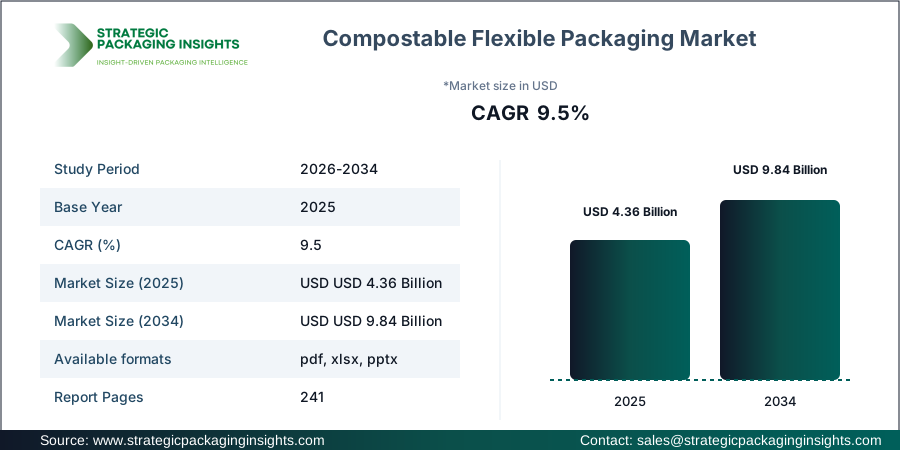
One of the most impactful drivers of the Compostable Flexible Packaging market is the increasing regulatory pressure to reduce plastic waste and promote sustainable practices. Governments worldwide are implementing policies that encourage the use of compostable materials, which is significantly boosting market growth. For instance, the European Union's directive on single-use plastics is pushing manufacturers to adopt compostable alternatives. This regulatory environment is creating opportunities for companies like TIPA Corp and Futamura Group to innovate and expand their product offerings. As a result, the market is witnessing a surge in investments in research and development to create more efficient and cost-effective compostable packaging solutions.
Report Scope
| Attributes | Details |
| Report Title | Compostable Flexible Packaging Market Size, Future Growth and Forecast 2034 |
| By Material | PLA, PHA, Starch Blends, Cellulose-Based Films, PBAT, Other Compostable Polymers |
| By Packaging Type | Pouches, Bags, Films & Wraps, Sachets, Mailer Bags |
| By Application | Food & Beverage, Fresh Produce, Personal Care, Home Care, E-Commerce, Pet Food |
| By End User | Food Manufacturers, Consumer Goods Companies, Retailers, E-Commerce Companies, Packaging Converters |
| Region | Asia Pacific, North America, Latin America, Europe, Middle East & Africa |
| Base Year | 2025 |
| Historic Period | 2018-2024 |
| Forecast Period | 2026-2034 |
| Number of Pages | 241 |
| Customization Available | Yes* |
Sustainability & Circular Economy Analysis
Sustainability initiatives and circular economy practices are profoundly influencing the Compostable Flexible Packaging market. The shift towards recyclable materials and reusable packaging is becoming a cornerstone of the industry's strategy to reduce environmental impact. Companies are investing in eco-friendly material innovations, such as PLA and PHA, which are biodegradable and compostable, aligning with consumer preferences for sustainable products. These materials not only reduce the carbon footprint but also support waste reduction strategies, making them attractive to both manufacturers and consumers.
The emphasis on sustainability is reshaping packaging design and manufacturing processes. Lightweight packaging is gaining traction as it reduces material usage and transportation costs, contributing to a lower carbon footprint. ESG initiatives are becoming integral to corporate strategies, influencing investment decisions and supply chain strategies. Companies are increasingly focusing on regulatory compliance and extended producer responsibility (EPR) to enhance their long-term market competitiveness. This shift is driving innovation in packaging solutions that meet regulatory standards while appealing to environmentally conscious consumers.
Consumer sustainability preferences are driving demand for compostable packaging, prompting companies to adopt waste reduction strategies and invest in eco-friendly materials. Packaging regulations are becoming more stringent, requiring companies to innovate and adapt to new standards. This regulatory landscape is fostering collaboration between manufacturers, brand owners, and policymakers to develop sustainable packaging solutions. As a result, the market is witnessing increased investment in research and development to create packaging that meets both consumer expectations and regulatory requirements.
Packaging Value Chain & Supply Chain Analysis
The packaging value chain and supply chain ecosystem are critical to the performance of the Compostable Flexible Packaging market. Raw material sourcing is a key component, with companies relying on sustainable materials like PLA and PHA to meet consumer demand for eco-friendly packaging. Packaging converters and manufacturers play a vital role in transforming these materials into finished products, while packaging machinery ensures efficient production processes. Logistics and distribution channels are essential for delivering products to brand owners and retailers, who are increasingly prioritizing sustainable packaging solutions.
Supply chain efficiency is crucial for maintaining competitiveness in the Compostable Flexible Packaging market. Raw material availability and transportation capabilities directly impact production capabilities and cost structures. Strategic partnerships between manufacturers, suppliers, and logistics providers are essential for optimizing procurement strategies and inventory management. Localization and global sourcing are becoming more prevalent as companies seek to enhance supply chain resilience and reduce dependency on single-source suppliers.
Recycling networks are becoming an integral part of the packaging value chain, supporting the circular economy by enabling the reuse of materials. Companies are investing in recycling infrastructure to enhance their sustainability credentials and meet regulatory requirements. This focus on recycling is driving innovation in packaging design, with manufacturers developing solutions that are easier to recycle and compost. As a result, the market is witnessing increased collaboration between stakeholders to create a more sustainable and efficient supply chain ecosystem.
Opportunities & Threats
The Compostable Flexible Packaging market presents numerous opportunities for growth and innovation. One significant opportunity lies in the increasing consumer demand for sustainable packaging solutions. As awareness of environmental issues grows, consumers are seeking products that align with their values, driving demand for compostable packaging. Companies that can effectively communicate their sustainability credentials and offer innovative solutions are well-positioned to capture this growing market segment. Additionally, advancements in material science are opening new avenues for developing more efficient and cost-effective compostable materials, providing opportunities for companies to differentiate themselves in the market.
Another opportunity in the market is the potential for collaboration and partnerships. As the demand for compostable packaging grows, companies are increasingly looking to collaborate with suppliers, manufacturers, and retailers to develop integrated solutions that meet consumer needs. These partnerships can lead to the development of new products and services, as well as the sharing of knowledge and resources. Furthermore, government incentives and subsidies for sustainable packaging initiatives present opportunities for companies to invest in research and development and expand their product offerings.
Despite the opportunities, the Compostable Flexible Packaging market also faces several threats. One of the primary challenges is the high cost of compostable materials compared to traditional plastics. This cost differential can be a barrier to adoption, particularly for small and medium-sized enterprises. Additionally, the lack of standardized regulations and certifications for compostable packaging can create confusion and hinder market growth. Companies must navigate these regulatory complexities and invest in educating consumers and stakeholders about the benefits and limitations of compostable packaging.
Drivers & Challenges
The Compostable Flexible Packaging market is driven by several key factors. One of the primary drivers is the increasing consumer awareness and demand for sustainable packaging solutions. As consumers become more environmentally conscious, they are seeking products that align with their values, driving demand for compostable packaging. Companies that can effectively communicate their sustainability credentials and offer innovative solutions are well-positioned to capture this growing market segment. Additionally, advancements in material science are opening new avenues for developing more efficient and cost-effective compostable materials, providing opportunities for companies to differentiate themselves in the market.
Another significant driver of the market is the regulatory environment. Governments worldwide are implementing policies and regulations aimed at reducing plastic waste and promoting sustainable practices. These regulations are creating opportunities for companies to innovate and expand their product offerings. For instance, the European Union's directive on single-use plastics is pushing manufacturers to adopt compostable alternatives. This regulatory environment is fostering collaboration between manufacturers, brand owners, and policymakers to develop sustainable packaging solutions.
Despite the drivers, the Compostable Flexible Packaging market also faces several challenges. One of the primary challenges is the high cost of compostable materials compared to traditional plastics. This cost differential can be a barrier to adoption, particularly for small and medium-sized enterprises. Additionally, the lack of standardized regulations and certifications for compostable packaging can create confusion and hinder market growth. Companies must navigate these regulatory complexities and invest in educating consumers and stakeholders about the benefits and limitations of compostable packaging.
Market Share Analysis
The competitive landscape of the Compostable Flexible Packaging market is characterized by the presence of several key players, each striving to capture a significant share of the market. Companies like Amcor plc and Mondi plc are leading the charge, leveraging their extensive experience and resources to develop innovative and sustainable packaging solutions. These companies are investing heavily in research and development to create compostable materials that meet consumer demand and regulatory requirements. Their strong market presence and strategic partnerships with suppliers and retailers give them a competitive edge in the market.
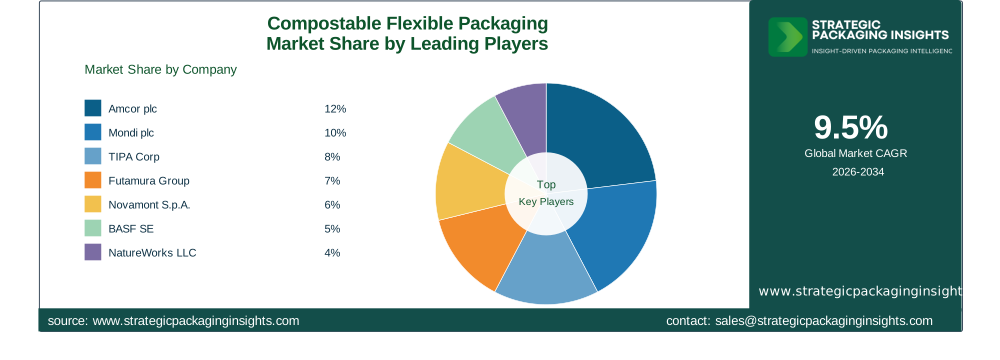
TIPA Corp and Futamura Group are also prominent players in the market, known for their commitment to sustainability and innovation. TIPA Corp specializes in developing fully compostable packaging solutions that offer the same level of protection and functionality as traditional plastics. Futamura Group, on the other hand, is renowned for its cellulose-based films, which are biodegradable and compostable. These companies are continuously expanding their product portfolios and investing in new technologies to maintain their competitive advantage.
Novamont S.p.A. and BASF SE are key players in the market, focusing on the development of biopolymers and compostable materials. Novamont S.p.A. is a leader in the production of bioplastics, with a strong emphasis on sustainability and environmental responsibility. BASF SE, a global chemical company, is investing in the development of innovative compostable materials that meet the needs of various industries. These companies are leveraging their expertise and resources to drive growth and innovation in the Compostable Flexible Packaging market.
Other notable players in the market include NatureWorks LLC, Coveris, ProAmpac, BioBag International, Walki Group, Innovia Films, Taghleef Industries, Berry Global, and Huhtamaki Oyj. These companies are actively involved in the development and production of compostable packaging solutions, focusing on sustainability and innovation. They are investing in research and development to create new materials and technologies that meet consumer demand and regulatory requirements. Their strong market presence and strategic partnerships with suppliers and retailers give them a competitive edge in the market.
Key Highlights
- Market Size: USD 4.36 Billion in 2025, projected to reach USD 9.84 Billion by 2034.
- Growth Rate: Expected CAGR of 9.5% during the forecast period.
- Leading Companies: Amcor plc, Mondi plc, TIPA Corp, Futamura Group, Novamont S.p.A., BASF SE.
- Material Innovation: Focus on PLA, PHA, and cellulose-based films.
- Regulatory Influence: EU directives on single-use plastics driving market growth.
- Consumer Demand: Increasing preference for sustainable packaging solutions.
- Regional Growth: Significant growth expected in Asia Pacific and Europe.
Compostable Flexible Packaging Market Segments Insights

By Material Analysis
The material segment of the Compostable Flexible Packaging market is diverse, with several key materials driving growth and innovation. PLA (Polylactic Acid) is one of the most widely used materials, known for its biodegradability and compostability. It is derived from renewable resources like corn starch, making it an attractive option for environmentally conscious consumers. PHA (Polyhydroxyalkanoates) is another promising material, offering similar benefits to PLA but with enhanced flexibility and durability. Starch blends and cellulose-based films are also gaining traction, providing sustainable alternatives to traditional plastics.
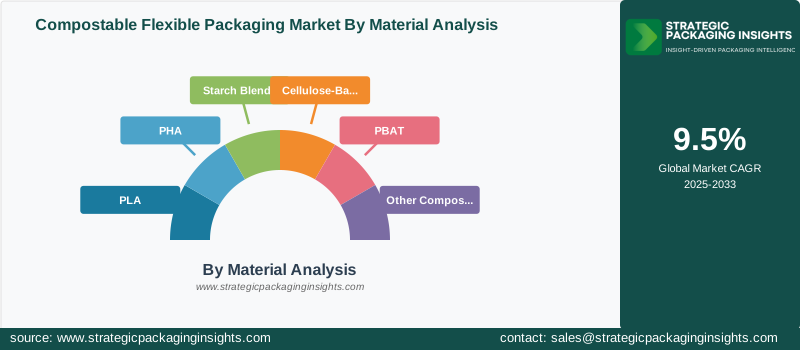
PBAT (Polybutylene Adipate Terephthalate) is a biodegradable polymer that is increasingly being used in compostable packaging applications. It offers excellent flexibility and toughness, making it suitable for a wide range of packaging solutions. Other compostable polymers, such as PBS (Polybutylene Succinate) and PCL (Polycaprolactone), are also being explored for their potential in the market. These materials are driving innovation in packaging design and manufacturing, enabling companies to develop solutions that meet consumer demand for sustainability and functionality.
By Packaging Type Analysis
The packaging type segment of the Compostable Flexible Packaging market includes a variety of solutions designed to meet the needs of different industries and applications. Pouches are one of the most popular packaging types, offering versatility and convenience for both manufacturers and consumers. They are widely used in the food and beverage industry, as well as for personal care and home care products. Bags and films & wraps are also commonly used, providing effective protection and preservation for a wide range of products.
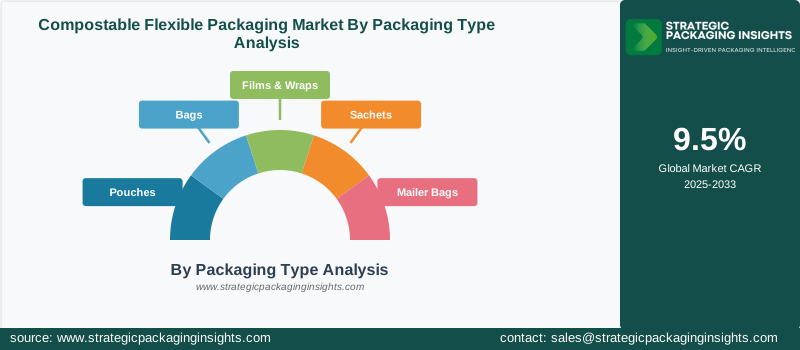
Sachets and mailer bags are gaining popularity in the e-commerce and retail sectors, offering lightweight and cost-effective packaging solutions. These packaging types are designed to reduce material usage and transportation costs, contributing to a lower carbon footprint. Companies are investing in the development of innovative packaging solutions that meet consumer demand for sustainability and convenience, driving growth in this segment.
By Application Analysis
The application segment of the Compostable Flexible Packaging market is diverse, with several key industries driving demand for sustainable packaging solutions. The food and beverage industry is one of the largest consumers of compostable packaging, with companies seeking to reduce their environmental impact and meet consumer demand for eco-friendly products. Fresh produce and personal care products are also significant markets, with consumers increasingly seeking sustainable packaging options for everyday items.
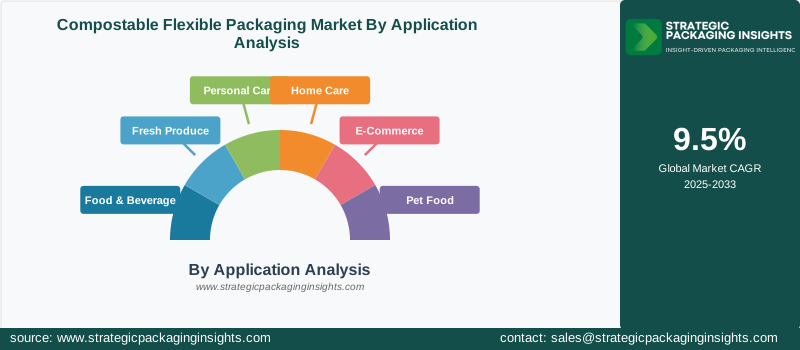
Home care and e-commerce are emerging as important application areas, with companies looking to differentiate themselves by offering sustainable packaging solutions. The pet food industry is also seeing increased demand for compostable packaging, as pet owners become more environmentally conscious. These application areas are driving innovation and investment in the development of new materials and technologies, enabling companies to meet consumer demand and regulatory requirements.
By End User Analysis
The end user segment of the Compostable Flexible Packaging market includes a variety of stakeholders, each with unique needs and requirements. Food manufacturers are one of the largest consumers of compostable packaging, seeking to reduce their environmental impact and meet consumer demand for sustainable products. Consumer goods companies and retailers are also significant end users, with a growing focus on sustainability and corporate social responsibility.
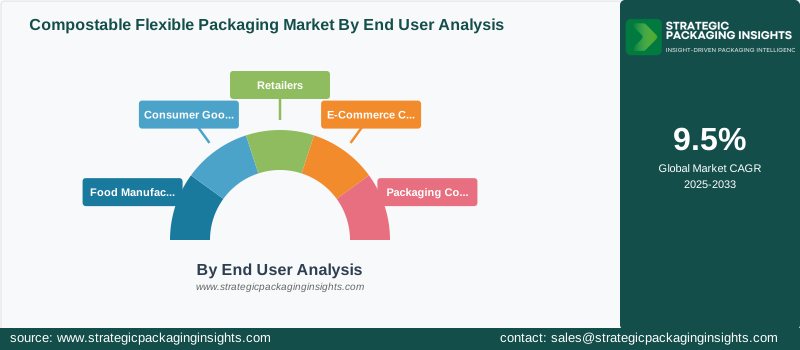
E-commerce companies are increasingly adopting compostable packaging solutions to meet consumer demand for eco-friendly products and reduce their carbon footprint. Packaging converters play a crucial role in the market, transforming raw materials into finished products and ensuring that packaging solutions meet consumer and regulatory requirements. These end users are driving demand for innovative and sustainable packaging solutions, creating opportunities for companies to differentiate themselves in the market.
Compostable Flexible Packaging Market Segments
The Compostable Flexible Packaging market has been segmented on the basis ofBy Material
- PLA
- PHA
- Starch Blends
- Cellulose-Based Films
- PBAT
- Other Compostable Polymers
By Packaging Type
- Pouches
- Bags
- Films & Wraps
- Sachets
- Mailer Bags
By Application
- Food & Beverage
- Fresh Produce
- Personal Care
- Home Care
- E-Commerce
- Pet Food
By End User
- Food Manufacturers
- Consumer Goods Companies
- Retailers
- E-Commerce Companies
- Packaging Converters
Region
- Asia Pacific
- North America
- Latin America
- Europe
- Middle East & Africa




