


Composite Cans Market Outlook
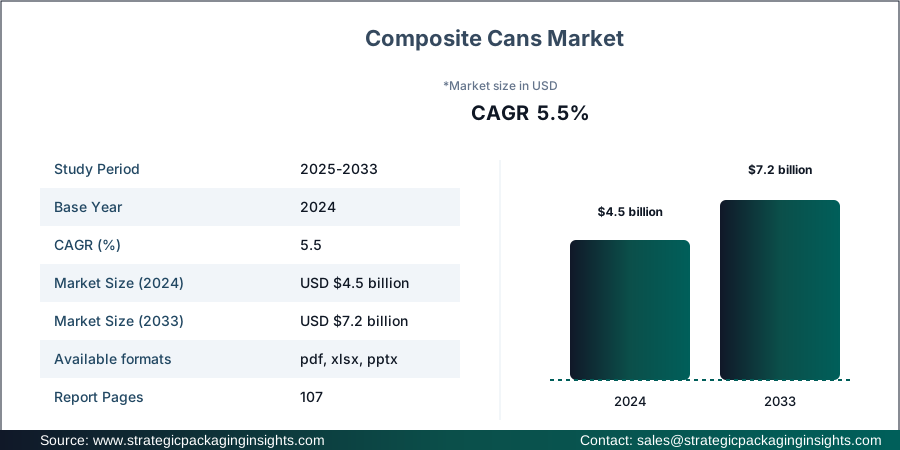
The composite cans market was valued at $4.5 billion in 2024 and is projected to reach $7.2 billion by 2033, growing at a CAGR of 5.5% during the forecast period 2025-2033. Composite cans are gaining traction due to their versatility, lightweight nature, and eco-friendly attributes. These cans are primarily used in the packaging of food and beverages, personal care products, and industrial goods. The market is driven by increasing consumer demand for sustainable packaging solutions and the growing popularity of ready-to-eat food products. Additionally, advancements in manufacturing technologies have enabled the production of composite cans with enhanced barrier properties, further boosting their adoption across various industries.
Despite the promising growth prospects, the composite cans market faces certain challenges. The high cost of raw materials and the complexity of the recycling process are significant restraints. Moreover, stringent regulations regarding packaging waste management in several countries pose a challenge to market growth. However, the increasing focus on research and development to create cost-effective and recyclable composite cans presents lucrative opportunities for market players. The market also benefits from the rising trend of premium packaging, which is expected to drive demand for aesthetically appealing and functional composite cans.
Report Scope
| Attributes | Details |
| Report Title | Composite Cans Market Size, Future Growth and Forecast 2033 |
| Material Type | Paperboard, Plastic, Metal, Others |
| Closure Type | Lids, Caps, Others |
| End-Use Industry | Food & Beverages, Personal Care & Cosmetics, Industrial Goods, Others |
| Region | North America, Europe, Asia Pacific, Latin America, Middle East & Africa |
| Base Year | 2024 |
| Historic Period | 2017-2023 |
| Forecast Period | 2025-2033 |
| Number of Pages | 107 |
| Customization Available | Yes* |
Opportunities & Threats
The composite cans market presents numerous opportunities for growth, primarily driven by the increasing demand for sustainable packaging solutions. As consumers become more environmentally conscious, there is a growing preference for packaging materials that are recyclable and have a lower carbon footprint. Composite cans, made from a combination of paperboard, plastic, and metal, offer an eco-friendly alternative to traditional packaging options. This shift in consumer preferences is encouraging manufacturers to invest in the development of innovative composite can designs that meet sustainability criteria while maintaining functionality and aesthetic appeal. Additionally, the rise of e-commerce and the need for durable packaging solutions that can withstand the rigors of shipping present further opportunities for the composite cans market.
Another significant opportunity lies in the expanding food and beverage industry, which is a major end-user of composite cans. The increasing consumption of ready-to-eat and convenience food products is driving the demand for efficient and attractive packaging solutions. Composite cans, with their excellent barrier properties and ability to preserve product freshness, are well-suited for packaging a wide range of food and beverage products. Furthermore, the trend towards premium and personalized packaging is creating opportunities for manufacturers to offer customized composite can solutions that cater to specific brand requirements and consumer preferences.
However, the composite cans market is not without its challenges. One of the primary threats is the high cost of raw materials, which can impact the overall cost of production and, consequently, the pricing of composite cans. Additionally, the recycling process for composite cans can be complex due to the combination of different materials, posing a challenge to achieving sustainability goals. Regulatory pressures related to packaging waste management and the need to comply with stringent environmental standards further add to the challenges faced by market players. To overcome these threats, companies are focusing on developing innovative solutions that reduce material costs and enhance the recyclability of composite cans.
Market Share Analysis
The composite cans market is characterized by a competitive landscape with several key players vying for market share. The market is dominated by a mix of established companies and emerging players, each striving to enhance their product offerings and expand their customer base. The competitive dynamics are influenced by factors such as product innovation, pricing strategies, and distribution networks. Companies are increasingly focusing on developing sustainable and cost-effective composite can solutions to gain a competitive edge. Additionally, strategic partnerships and collaborations are common strategies adopted by market players to strengthen their market position and expand their geographical reach.
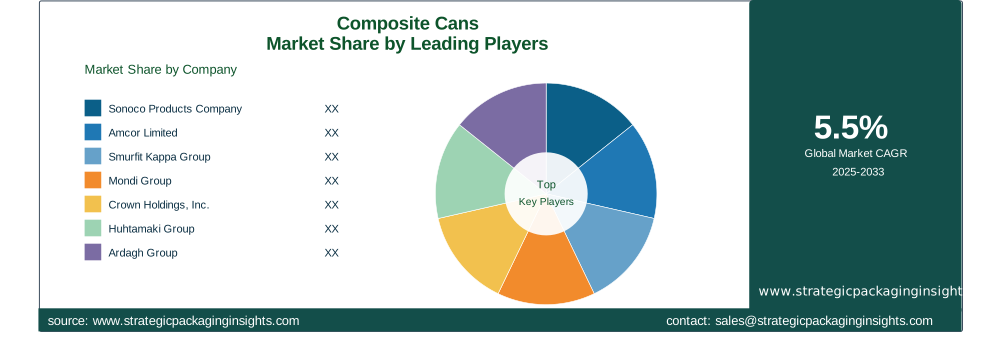
Among the leading companies in the composite cans market, Sonoco Products Company holds a significant market share. Known for its innovative packaging solutions, Sonoco offers a wide range of composite cans catering to various industries, including food and beverages, personal care, and industrial goods. The company's focus on sustainability and its extensive distribution network have contributed to its strong market presence. Another major player, Amcor Limited, is renowned for its advanced packaging technologies and commitment to sustainability. Amcor's composite cans are designed to meet the evolving needs of consumers and industries, offering superior barrier properties and aesthetic appeal.
Smurfit Kappa Group is another key player in the composite cans market, known for its sustainable packaging solutions and innovative product designs. The company's focus on research and development has enabled it to offer composite cans with enhanced functionality and environmental benefits. Similarly, Mondi Group, with its extensive product portfolio and global presence, is a prominent player in the market. Mondi's composite cans are designed to provide optimal protection and shelf appeal, catering to the diverse needs of its customers.
Other notable companies in the composite cans market include Crown Holdings, Inc., which offers a range of packaging solutions with a focus on sustainability and innovation. Crown's composite cans are designed to meet the highest standards of quality and performance. Additionally, Huhtamaki Group, with its strong emphasis on sustainability and customer-centric approach, is a key player in the market. The company's composite cans are designed to offer superior protection and convenience, making them a preferred choice for various industries.
Key Highlights
- The composite cans market is projected to grow at a CAGR of 5.5% from 2025 to 2033.
- Increasing demand for sustainable packaging solutions is a major driver of market growth.
- The food and beverage industry is the largest end-user segment for composite cans.
- Advancements in manufacturing technologies are enhancing the barrier properties of composite cans.
- High raw material costs and recycling complexities are key challenges for the market.
- Strategic partnerships and collaborations are common strategies among market players.
- Customization and premium packaging trends are creating new opportunities for composite can manufacturers.
- Regulatory pressures related to packaging waste management are influencing market dynamics.
- Emerging markets in Asia Pacific and Latin America offer significant growth potential.
- Innovation in design and functionality is a key focus area for market players.
Top Countries Insights
In the composite cans market, the United States stands out as a leading country with a market size of $1.2 billion and a CAGR of 4%. The country's growth is driven by the strong demand for sustainable packaging solutions and the presence of major market players. The increasing consumption of convenience food products and the emphasis on eco-friendly packaging are key growth drivers in the U.S. market. Additionally, regulatory support for sustainable packaging practices further boosts market growth.
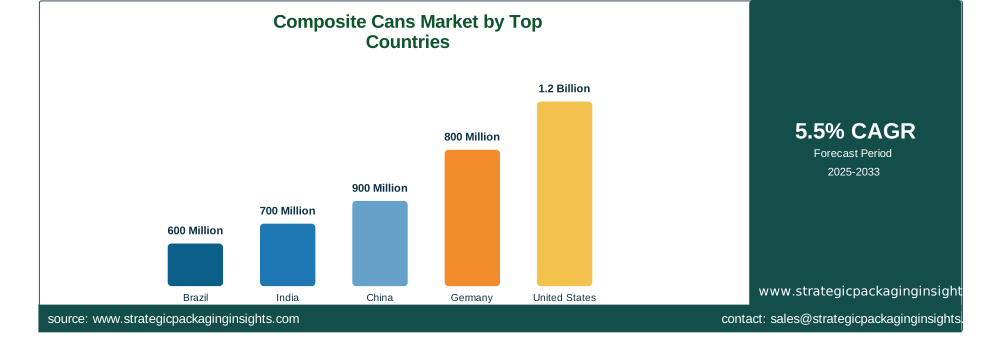
Germany is another significant player in the composite cans market, with a market size of $800 million and a CAGR of 3%. The country's well-established food and beverage industry and the growing trend of premium packaging are driving the demand for composite cans. Germany's focus on sustainability and innovation in packaging solutions is a major growth driver, supported by government initiatives promoting eco-friendly packaging practices.
China, with a market size of $900 million and a CAGR of 6%, is a rapidly growing market for composite cans. The country's expanding middle class and increasing disposable income are driving the demand for packaged food and beverages, boosting the need for efficient packaging solutions. China's focus on reducing packaging waste and promoting sustainable practices is also contributing to market growth.
India, with a market size of $700 million and a CAGR of 7%, is emerging as a key market for composite cans. The country's growing population and increasing urbanization are driving the demand for packaged food products, creating opportunities for composite can manufacturers. India's emphasis on sustainability and the government's initiatives to promote eco-friendly packaging solutions are key growth drivers.
Brazil, with a market size of $600 million and a CAGR of 5%, is a promising market for composite cans. The country's growing food and beverage industry and the increasing demand for sustainable packaging solutions are driving market growth. Brazil's focus on reducing packaging waste and promoting recycling practices is also contributing to the growth of the composite cans market.
Evolving Market Dynamics (2018-2024) and Strategic Foresight (2025-2033)
| Metrics | 2018-2024 | 2025-2033 |
|---|---|---|
| CAGR | 4.2% | 5.5% |
| Market Size Evolution | $3.8 billion to $4.5 billion | $4.5 billion to $7.2 billion |
| Segment Distribution Shifts | Food & Beverages dominant | Increased share of Personal Care |
| Regional Contribution Changes | North America leading | Asia Pacific gaining traction |
| Technological Impact Factors | Basic barrier enhancements | Advanced barrier technologies |
| Client Demand Transformations | Focus on cost-effectiveness | Emphasis on sustainability |
Composite Cans Market Segments Insights

Material Type Analysis
The material type segment of the composite cans market is primarily categorized into paperboard, plastic, metal, and others. Paperboard is the most widely used material due to its lightweight nature and recyclability. The demand for paperboard composite cans is driven by the increasing focus on sustainable packaging solutions. Manufacturers are investing in research and development to enhance the barrier properties of paperboard cans, making them suitable for a wider range of applications. Plastic composite cans, on the other hand, offer superior moisture resistance and are preferred for packaging products that require extended shelf life. The use of metal in composite cans is limited but provides excellent strength and durability, making it suitable for industrial applications.
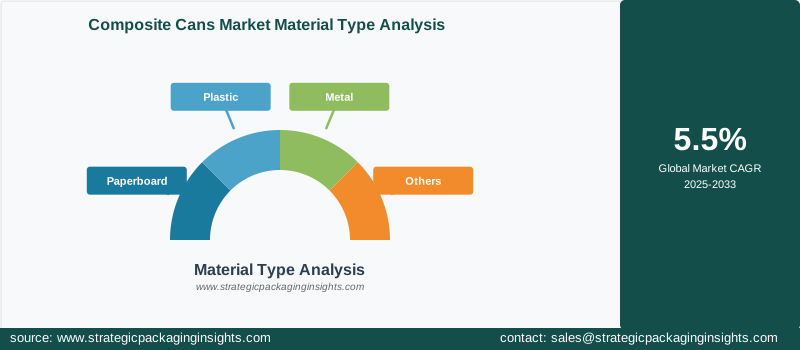
The choice of material in composite cans is influenced by factors such as cost, recyclability, and the specific requirements of the end-use industry. The trend towards eco-friendly packaging is driving the demand for recyclable materials, with paperboard being the preferred choice. However, the high cost of raw materials and the complexity of recycling processes pose challenges to the growth of this segment. To address these challenges, manufacturers are focusing on developing innovative material combinations that offer enhanced performance and sustainability. The increasing demand for premium packaging solutions is also driving the development of composite cans with unique material blends that offer both aesthetic appeal and functionality.
Closure Type Analysis
The closure type segment of the composite cans market includes lids, caps, and others. Lids are the most commonly used closure type, offering convenience and ease of use. The demand for lids is driven by the increasing consumption of ready-to-eat and convenience food products, which require efficient and secure packaging solutions. Caps, on the other hand, are preferred for products that require resealability, such as beverages and personal care items. The trend towards premium packaging is driving the demand for innovative closure designs that enhance the overall consumer experience.
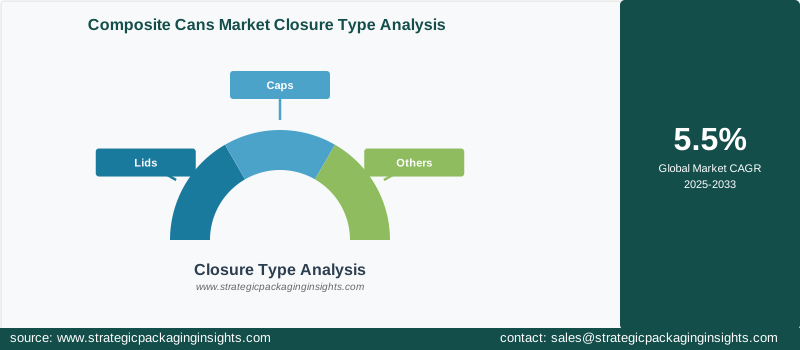
The choice of closure type is influenced by factors such as product type, consumer preferences, and cost considerations. Manufacturers are focusing on developing closures that offer superior functionality and aesthetic appeal, catering to the evolving needs of consumers. The increasing demand for sustainable packaging solutions is also driving the development of closures made from recyclable materials. However, the high cost of innovative closure designs and the complexity of manufacturing processes pose challenges to the growth of this segment. To overcome these challenges, companies are investing in research and development to create cost-effective and sustainable closure solutions.
End-Use Industry Analysis
The end-use industry segment of the composite cans market is categorized into food and beverages, personal care and cosmetics, industrial goods, and others. The food and beverage industry is the largest end-user segment, driven by the increasing consumption of packaged food products and beverages. Composite cans offer excellent barrier properties and are ideal for preserving product freshness, making them a preferred choice for food and beverage packaging. The personal care and cosmetics industry is also a significant end-user, with composite cans offering attractive and functional packaging solutions for a wide range of products.
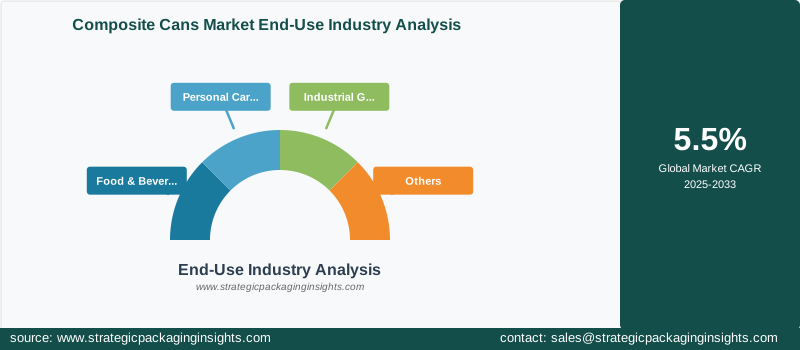
The demand for composite cans in the industrial goods sector is driven by the need for durable and secure packaging solutions. Composite cans provide excellent strength and protection, making them suitable for packaging industrial products. The trend towards premium and personalized packaging is creating opportunities for composite can manufacturers to offer customized solutions that cater to specific brand requirements and consumer preferences. However, the high cost of raw materials and the complexity of recycling processes pose challenges to the growth of this segment. To address these challenges, manufacturers are focusing on developing innovative solutions that offer enhanced performance and sustainability.
Region Analysis
The composite cans market is geographically segmented into North America, Europe, Asia Pacific, Latin America, and the Middle East & Africa. North America is a leading market for composite cans, driven by the strong demand for sustainable packaging solutions and the presence of major market players. The increasing consumption of convenience food products and the emphasis on eco-friendly packaging are key growth drivers in the region. Europe is another significant market, with a focus on sustainability and innovation in packaging solutions. The region's well-established food and beverage industry and the growing trend of premium packaging are driving the demand for composite cans.
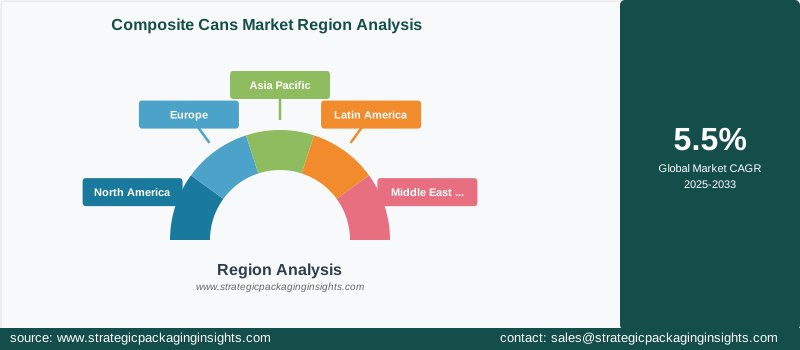
Asia Pacific is a rapidly growing market for composite cans, with countries like China and India offering significant growth potential. The region's expanding middle class and increasing disposable income are driving the demand for packaged food and beverages, boosting the need for efficient packaging solutions. Latin America and the Middle East & Africa are emerging markets for composite cans, with growing food and beverage industries and increasing demand for sustainable packaging solutions. However, the high cost of raw materials and the complexity of recycling processes pose challenges to the growth of these markets. To address these challenges, manufacturers are focusing on developing innovative solutions that offer enhanced performance and sustainability.
Composite Cans Market Segments
The Composite Cans market has been segmented on the basis ofMaterial Type
- Paperboard
- Plastic
- Metal
- Others
Closure Type
- Lids
- Caps
- Others
End-Use Industry
- Food & Beverages
- Personal Care & Cosmetics
- Industrial Goods
- Others
Region
- North America
- Europe
- Asia Pacific
- Latin America
- Middle East & Africa




