


Cold Formed Blister Foil Market Outlook
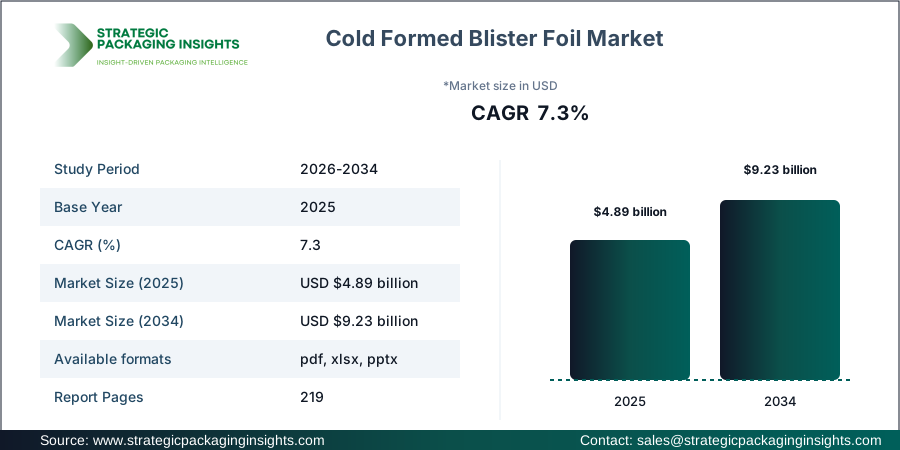
The Cold Formed Blister Foil market was valued at $4.89 billion in 2025 and is projected to reach $9.23 billion by 2034, growing at a CAGR of 7.3% during the forecast period 2026-2034. This market is witnessing significant growth due to the increasing demand for pharmaceutical packaging solutions that offer superior protection against moisture, oxygen, and light. The rise in chronic diseases and the aging population are driving the demand for effective packaging solutions that ensure the integrity and safety of pharmaceutical products. Additionally, the growing trend of self-medication and over-the-counter drugs is further propelling the market growth. The market is also benefiting from technological advancements in packaging materials and the increasing adoption of cold-formed blister foils in emerging economies.
However, the market faces challenges such as stringent regulatory requirements and the high cost of raw materials, which could hinder growth. The regulatory landscape for pharmaceutical packaging is becoming increasingly complex, with stringent guidelines aimed at ensuring patient safety and product efficacy. This has led to increased compliance costs for manufacturers, which could impact profit margins. Despite these challenges, the market holds significant growth potential, driven by the increasing demand for innovative packaging solutions and the expansion of the pharmaceutical industry in emerging markets. The development of eco-friendly and sustainable packaging materials is also expected to create new opportunities for market players.
Report Scope
| Attributes | Details |
| Report Title | Cold Formed Blister Foil Market Size, Future Growth and Forecast 2034 |
| Material Type | Aluminum, PVC-Alu, Nylon-Alu-PVC, High Barrier Laminates |
| Application | Tablets, Capsules, Medical Devices, Diagnostics |
| Barrier Type | Standard Barrier, High Barrier, Ultra-High Barrier |
| End Use | Pharmaceuticals, Healthcare, Nutraceuticals |
| Region | Asia Pacific, North America, Latin America, Europe, Middle East & Africa |
| Base Year | 2025 |
| Historic Period | 2018-2024 |
| Forecast Period | 2026-2034 |
| Number of Pages | 219 |
| Customization Available | Yes* |
Opportunities & Threats
The Cold Formed Blister Foil market presents numerous opportunities, particularly in the realm of technological advancements and innovation. The development of high-barrier materials that offer enhanced protection against environmental factors is a key area of focus for manufacturers. These materials not only extend the shelf life of pharmaceutical products but also ensure their safety and efficacy. Additionally, the growing demand for sustainable and eco-friendly packaging solutions is driving innovation in the market. Companies are investing in research and development to create biodegradable and recyclable blister foils that meet the stringent regulatory requirements of the pharmaceutical industry. This trend is expected to open up new avenues for growth and expansion in the market.
Another significant opportunity lies in the expansion of the pharmaceutical industry in emerging markets. Countries in Asia Pacific, Latin America, and the Middle East & Africa are witnessing rapid growth in their pharmaceutical sectors, driven by increasing healthcare expenditure and the rising prevalence of chronic diseases. This is creating a strong demand for effective packaging solutions that can ensure the safety and integrity of pharmaceutical products. Market players are focusing on expanding their presence in these regions to capitalize on the growing demand and tap into new customer bases. Strategic partnerships and collaborations with local players are also being explored to enhance market penetration and gain a competitive edge.
Despite the promising opportunities, the Cold Formed Blister Foil market faces certain threats that could impact its growth trajectory. One of the primary challenges is the volatility in raw material prices, which can significantly affect production costs and profit margins. The market is heavily reliant on materials such as aluminum and plastics, which are subject to price fluctuations due to changes in supply and demand dynamics. Additionally, the stringent regulatory landscape poses a threat to market growth, as manufacturers must comply with complex guidelines and standards to ensure product safety and efficacy. This can lead to increased compliance costs and operational challenges, particularly for small and medium-sized enterprises.
Drivers & Challenges
The Cold Formed Blister Foil market is primarily driven by the increasing demand for pharmaceutical packaging solutions that offer superior protection and safety. The rise in chronic diseases and the aging population are key factors contributing to the growing demand for effective packaging solutions. Cold-formed blister foils provide excellent barrier properties against moisture, oxygen, and light, ensuring the integrity and safety of pharmaceutical products. Additionally, the growing trend of self-medication and over-the-counter drugs is further propelling the market growth. Consumers are increasingly seeking convenient and easy-to-use packaging solutions that allow them to manage their health independently. This trend is driving the demand for innovative blister packaging solutions that offer convenience and ease of use.
Technological advancements in packaging materials and processes are also playing a crucial role in driving the market growth. Manufacturers are investing in research and development to create high-barrier materials that offer enhanced protection against environmental factors. These materials not only extend the shelf life of pharmaceutical products but also ensure their safety and efficacy. The development of eco-friendly and sustainable packaging solutions is another key driver of market growth. Companies are focusing on creating biodegradable and recyclable blister foils that meet the stringent regulatory requirements of the pharmaceutical industry. This trend is expected to create new opportunities for market players and drive the adoption of cold-formed blister foils in the coming years.
However, the market faces several challenges that could hinder its growth. One of the primary challenges is the high cost of raw materials, which can significantly impact production costs and profit margins. The market is heavily reliant on materials such as aluminum and plastics, which are subject to price fluctuations due to changes in supply and demand dynamics. Additionally, the stringent regulatory landscape poses a challenge to market growth, as manufacturers must comply with complex guidelines and standards to ensure product safety and efficacy. This can lead to increased compliance costs and operational challenges, particularly for small and medium-sized enterprises. Despite these challenges, the market holds significant growth potential, driven by the increasing demand for innovative packaging solutions and the expansion of the pharmaceutical industry in emerging markets.
Market Share Analysis
The Cold Formed Blister Foil market is characterized by a highly competitive landscape, with several key players vying for market share. Companies such as Amcor, Constantia Flexibles, Uflex, ACG Pharmapack, Bilcare, TekniPlex, Essentra Packaging, Svam Packaging, Wipak, and Huhtamaki are some of the major players in the market. These companies are focusing on strategic initiatives such as mergers and acquisitions, partnerships, and collaborations to strengthen their market position and expand their product portfolios. The competitive landscape is further intensified by the presence of numerous regional and local players who are offering innovative and cost-effective packaging solutions to cater to the growing demand.
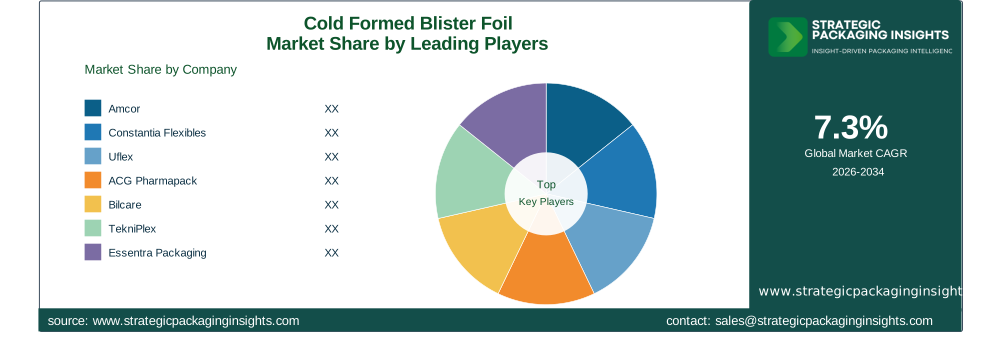
Amcor is one of the leading players in the Cold Formed Blister Foil market, with a strong focus on innovation and sustainability. The company is investing in research and development to create high-barrier materials that offer enhanced protection against environmental factors. Constantia Flexibles is another major player in the market, known for its extensive product portfolio and strong customer base. The company is focusing on expanding its presence in emerging markets to capitalize on the growing demand for pharmaceutical packaging solutions. Uflex, a leading flexible packaging company, is also making significant strides in the market with its innovative and cost-effective packaging solutions.
ACG Pharmapack is a key player in the Cold Formed Blister Foil market, offering a wide range of packaging solutions for the pharmaceutical industry. The company is focusing on expanding its product portfolio and enhancing its production capabilities to meet the growing demand for high-barrier materials. Bilcare, a global leader in pharmaceutical packaging, is also making significant investments in research and development to create innovative and sustainable packaging solutions. TekniPlex, Essentra Packaging, Svam Packaging, Wipak, and Huhtamaki are other notable players in the market, each with their unique strengths and capabilities.
The competitive landscape of the Cold Formed Blister Foil market is characterized by intense competition and rapid technological advancements. Companies are focusing on strategic initiatives such as mergers and acquisitions, partnerships, and collaborations to strengthen their market position and expand their product portfolios. The market is also witnessing increased investments in research and development to create innovative and sustainable packaging solutions that meet the stringent regulatory requirements of the pharmaceutical industry. Despite the challenges posed by the high cost of raw materials and the complex regulatory landscape, the market holds significant growth potential, driven by the increasing demand for effective packaging solutions and the expansion of the pharmaceutical industry in emerging markets.
Key Highlights
- The Cold Formed Blister Foil market is projected to grow at a CAGR of 7.3% from 2026 to 2034.
- Technological advancements in packaging materials are driving market growth.
- Increasing demand for sustainable and eco-friendly packaging solutions.
- Expansion of the pharmaceutical industry in emerging markets is a key growth driver.
- High cost of raw materials poses a challenge to market growth.
- Stringent regulatory requirements impact compliance costs for manufacturers.
- Strategic partnerships and collaborations are key strategies for market players.
- Amcor, Constantia Flexibles, and Uflex are leading players in the market.
- Growing trend of self-medication and over-the-counter drugs is boosting demand.
- Development of high-barrier materials offers new growth opportunities.
Top Countries Insights
In the Cold Formed Blister Foil market, the United States stands out as a key player, with a market size of approximately $1.2 billion and a CAGR of 6%. The country's robust pharmaceutical industry, coupled with a strong focus on research and development, drives demand for advanced packaging solutions. Regulatory policies that emphasize patient safety and product efficacy further bolster the market. However, challenges such as high raw material costs and stringent compliance requirements persist.
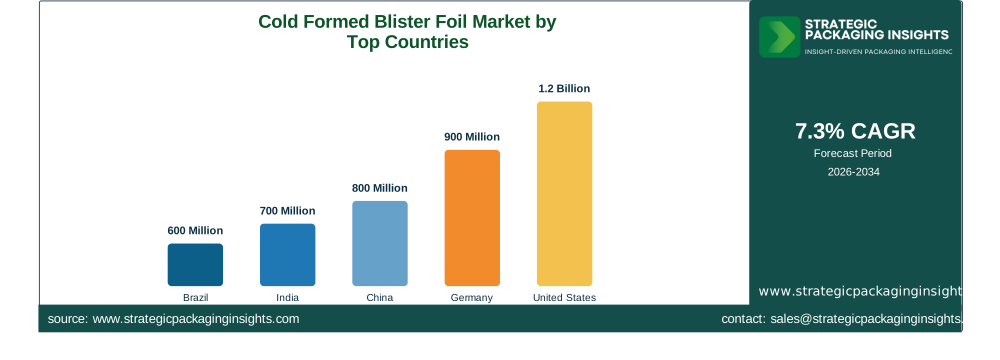
Germany is another significant market, with a size of around $900 million and a CAGR of 5%. The country's well-established healthcare infrastructure and strong pharmaceutical sector contribute to the demand for cold-formed blister foils. Innovation in packaging materials and processes is a key growth driver, while regulatory complexities pose challenges. The focus on sustainability and eco-friendly solutions is also gaining traction in the German market.
China, with a market size of approximately $800 million and a CAGR of 8%, is experiencing rapid growth in the Cold Formed Blister Foil market. The country's expanding pharmaceutical industry, driven by increasing healthcare expenditure and a growing population, fuels demand for effective packaging solutions. Government initiatives to promote domestic manufacturing and innovation further support market growth. However, regulatory hurdles and quality control issues remain challenges.
India, with a market size of about $700 million and a CAGR of 9%, is emerging as a key player in the Cold Formed Blister Foil market. The country's booming pharmaceutical sector, coupled with increasing demand for affordable healthcare solutions, drives market growth. The focus on cost-effective and innovative packaging solutions is a key trend, while regulatory compliance and quality assurance pose challenges.
Brazil, with a market size of approximately $600 million and a CAGR of 7%, is witnessing steady growth in the Cold Formed Blister Foil market. The country's growing healthcare sector and increasing demand for pharmaceutical products drive the market. Government policies aimed at improving healthcare access and infrastructure further support growth. However, economic volatility and regulatory challenges remain concerns for market players.
Cold Formed Blister Foil Market Segments Insights

Material Type Analysis
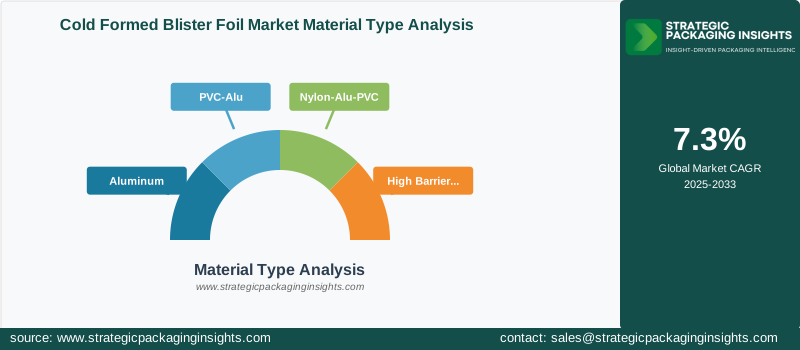
The Cold Formed Blister Foil market is segmented by material type into Aluminum, PVC-Alu, Nylon-Alu-PVC, and High Barrier Laminates. Aluminum remains the most widely used material due to its excellent barrier properties and cost-effectiveness. It provides superior protection against moisture, oxygen, and light, ensuring the safety and efficacy of pharmaceutical products. The demand for PVC-Alu is also significant, driven by its flexibility and ease of forming. Nylon-Alu-PVC is gaining traction due to its enhanced barrier properties and durability. High Barrier Laminates are witnessing increased adoption, particularly in applications requiring ultra-high barrier protection. The development of innovative materials that offer enhanced protection and sustainability is a key trend in this segment.
Manufacturers are focusing on research and development to create advanced materials that meet the stringent regulatory requirements of the pharmaceutical industry. The growing demand for eco-friendly and sustainable packaging solutions is driving innovation in this segment. Companies are investing in the development of biodegradable and recyclable materials that offer superior barrier properties. The increasing focus on sustainability and environmental responsibility is expected to create new opportunities for growth in the material type segment. Additionally, the expansion of the pharmaceutical industry in emerging markets is driving demand for cost-effective and innovative packaging solutions, further propelling the growth of this segment.
Application Analysis
The application segment of the Cold Formed Blister Foil market includes Tablets, Capsules, Medical Devices, and Diagnostics. Tablets and capsules are the largest application segments, driven by the increasing demand for oral dosage forms and the growing trend of self-medication. Cold-formed blister foils provide excellent protection against environmental factors, ensuring the safety and efficacy of these products. The demand for medical devices and diagnostics is also significant, driven by the increasing prevalence of chronic diseases and the growing focus on preventive healthcare. The development of innovative packaging solutions that offer enhanced protection and convenience is a key trend in this segment.
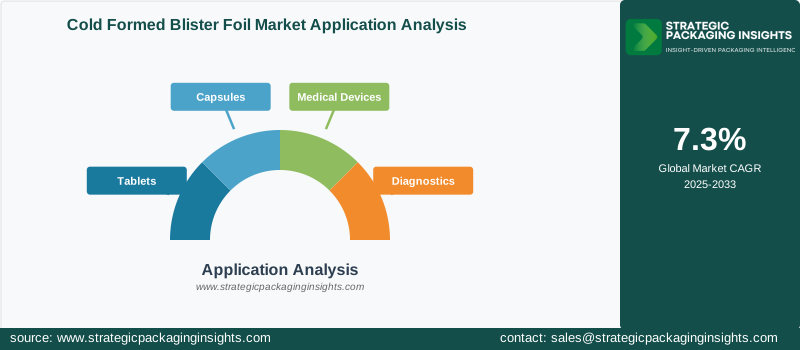
Manufacturers are focusing on creating packaging solutions that meet the specific requirements of different applications. The growing demand for personalized and patient-centric packaging solutions is driving innovation in this segment. Companies are investing in research and development to create packaging solutions that offer convenience, ease of use, and enhanced protection. The increasing focus on patient safety and product efficacy is expected to drive the adoption of cold-formed blister foils in the application segment. Additionally, the expansion of the pharmaceutical industry in emerging markets is creating new opportunities for growth in this segment.
Barrier Type Analysis
The Cold Formed Blister Foil market is segmented by barrier type into Standard Barrier, High Barrier, and Ultra-High Barrier. High Barrier materials are the most widely used, offering superior protection against moisture, oxygen, and light. These materials are ideal for applications requiring extended shelf life and enhanced product safety. The demand for Ultra-High Barrier materials is also significant, driven by the increasing need for advanced protection in sensitive applications. Standard Barrier materials are used in applications where basic protection is sufficient. The development of innovative materials that offer enhanced barrier properties and sustainability is a key trend in this segment.
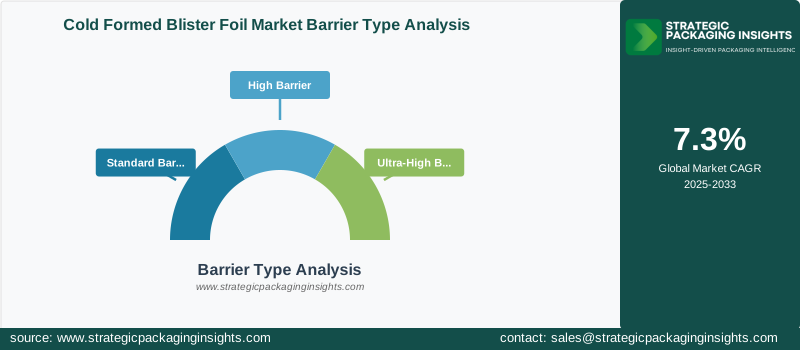
Manufacturers are focusing on creating advanced materials that meet the specific requirements of different barrier types. The growing demand for sustainable and eco-friendly packaging solutions is driving innovation in this segment. Companies are investing in research and development to create materials that offer superior barrier properties and environmental responsibility. The increasing focus on sustainability and regulatory compliance is expected to drive the adoption of high and ultra-high barrier materials in the barrier type segment. Additionally, the expansion of the pharmaceutical industry in emerging markets is creating new opportunities for growth in this segment.
End Use Analysis
The end-use segment of the Cold Formed Blister Foil market includes Pharmaceuticals, Healthcare, and Nutraceuticals. Pharmaceuticals are the largest end-use segment, driven by the increasing demand for effective packaging solutions that ensure the safety and efficacy of pharmaceutical products. The growing prevalence of chronic diseases and the aging population are key factors contributing to the demand for pharmaceutical packaging solutions. The healthcare segment is also significant, driven by the increasing focus on preventive healthcare and the growing demand for medical devices and diagnostics. The nutraceuticals segment is witnessing steady growth, driven by the increasing demand for dietary supplements and functional foods.
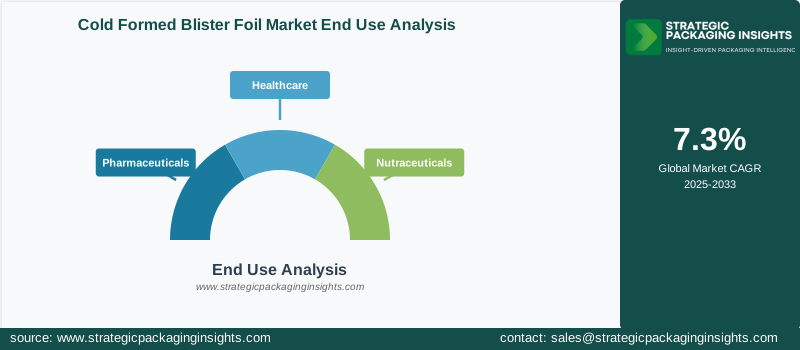
Manufacturers are focusing on creating packaging solutions that meet the specific requirements of different end-use segments. The growing demand for personalized and patient-centric packaging solutions is driving innovation in this segment. Companies are investing in research and development to create packaging solutions that offer convenience, ease of use, and enhanced protection. The increasing focus on patient safety and product efficacy is expected to drive the adoption of cold-formed blister foils in the end-use segment. Additionally, the expansion of the pharmaceutical industry in emerging markets is creating new opportunities for growth in this segment.
Cold Formed Blister Foil Market Segments
The Cold Formed Blister Foil market has been segmented on the basis ofMaterial Type
- Aluminum
- PVC-Alu
- Nylon-Alu-PVC
- High Barrier Laminates
Application
- Tablets
- Capsules
- Medical Devices
- Diagnostics
Barrier Type
- Standard Barrier
- High Barrier
- Ultra-High Barrier
End Use
- Pharmaceuticals
- Healthcare
- Nutraceuticals
Region
- Asia Pacific
- North America
- Latin America
- Europe
- Middle East & Africa




