


Cold Chain Packaging Materials Market Outlook
The Cold Chain Packaging Materials market size was valued at USD $9.5 Billion in 2025 and is anticipated to reach USD $19.9 Billion by 2035, growing at a CAGR of 7.6% during the forecast period according to Strategic Packaging Insights.
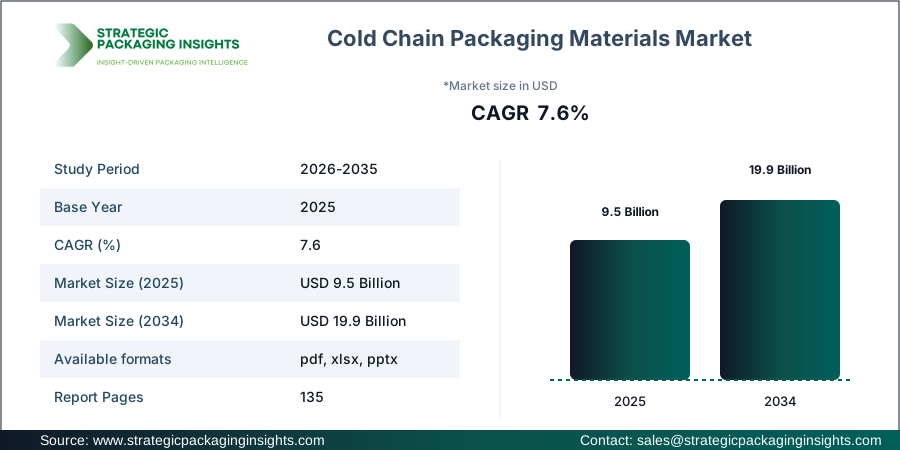
The increasing demand for temperature-sensitive pharmaceuticals and biologics is a significant driver for the market. The pharmaceutical industry, with its stringent regulatory requirements for maintaining product integrity, is pushing the adoption of advanced cold chain packaging solutions. The U.S. FDA and European Medicines Agency have set guidelines that necessitate robust packaging solutions to ensure the efficacy of temperature-sensitive drugs, thereby driving market growth.
Report Scope
| Attributes | Details |
| Report Title | Cold Chain Packaging Materials Market Projected to Scale to 19.9 Billion by 2035, Assesses Strategic Packaging Insights |
| By Material Type | Expanded Polystyrene (EPS), Polyurethane Rigid Foam (PUR), Polyethylene (PE), Vacuum Insulated Panels (VIP), Paper and Paperboard, Recycled Non-Woven Textile, Aerogel, Other Materials |
| By Product Type | Insulated Containers, Insulated Pallet Shippers, Thermal Boxes, Vacuum Insulated Panels, Gel Packs, Phase Change Materials, Thermal Liners, Insulated Bags, Dry Ice Packaging |
| By Temperature Range | Chilled, Frozen, Deep Frozen, Controlled Room Temperature |
| By Packaging Format | Single-Use Packaging, Reusable Packaging, Returnable Packaging |
| By Application | Pharmaceutical Packaging, Food Packaging, Medical Devices, Biological Products, Agricultural Products, Seafood and Meat, Dairy Products, Other Temperature-Sensitive Products |
| By End Use Industry | Pharmaceuticals, Food and Beverage, Healthcare, Biotechnology, Agriculture, Chemical, Industrial |
| By Distribution Channel | Direct Sales, Distributors, Specialty Packaging Suppliers, Online Sales |
| By Region | North America, Europe, Asia-Pacific, Latin America, Middle East and Africa |
| Base Year | 2025 |
| Historic Period | 2018-2024 |
| Forecast Period | 2026-2035 |
| Number of Pages | 135 |
| Customization Available | Yes* |
Market Trends Analysis
One of the major trends in the Cold Chain Packaging Materials market is the shift towards sustainable and eco-friendly packaging solutions. Companies are increasingly adopting recyclable and biodegradable materials to meet consumer demand for environmentally responsible products. This trend is influencing procurement strategies and driving innovation in material science, as manufacturers seek to balance performance with sustainability.
Another significant trend is the integration of IoT and smart technologies in cold chain packaging. These technologies provide real-time monitoring of temperature and humidity, ensuring product integrity throughout the supply chain. This digital transformation is enhancing operational efficiency and reducing waste, thereby offering a competitive edge to companies that invest in these technologies.
Industry Transformation Analysis
The cold chain packaging industry is undergoing significant transformation with advancements in material technology and automation. The development of high-performance insulation materials such as aerogels and vacuum insulated panels is enhancing the thermal efficiency of packaging solutions. This evolution is driven by the need to extend the shelf life of perishable goods and reduce energy consumption during transportation.
Additionally, the industry is witnessing a shift towards localized production to reduce lead times and improve supply chain resilience. This trend is particularly evident in regions like Asia Pacific, where rapid industrialization and urbanization are driving demand for efficient cold chain logistics. Companies are investing in regional manufacturing facilities to cater to local markets and mitigate the risks associated with global supply chain disruptions.
Trends & Disruptions Impacting Customers' Customers
Downstream customers, particularly in the pharmaceutical and food industries, are increasingly prioritizing sustainability and regulatory compliance in their purchasing decisions. The demand for packaging solutions that offer both environmental benefits and compliance with stringent temperature control standards is rising. This shift is driven by consumer awareness and regulatory pressures, compelling companies to adopt innovative packaging solutions that meet these dual requirements.
These changes are influencing product demand and innovation in the cold chain packaging market. Companies are focusing on developing packaging solutions that not only ensure product safety but also align with sustainability goals. This trend is creating opportunities for suppliers to differentiate their offerings through advanced materials and smart technologies, thereby driving market growth and expanding their customer base.
Cold Chain Packaging Materials Market Ecosystem
The cold chain packaging materials ecosystem involves a complex interplay of raw material suppliers, manufacturers, converters, and distributors. The procurement of high-quality polymers and insulation materials is critical for producing effective packaging solutions. Manufacturers convert these materials into various packaging formats, which are then distributed through specialized logistics networks to ensure product integrity.
Recycling and end-of-life processing are becoming increasingly important as companies strive to meet sustainability targets. The integration of closed-loop systems and material recovery processes is enhancing the environmental performance of cold chain packaging solutions. These ecosystem dynamics are shaping the competitive landscape and driving innovation in the market.
Analyst Perspective
Analyst Perspective: The Cold Chain Packaging Materials market is poised for significant growth, driven by the increasing demand for temperature-sensitive pharmaceuticals and food products.
The most important structural change is the shift towards sustainable packaging solutions, which is reshaping procurement strategies and driving innovation in material science. Companies that invest in eco-friendly materials and smart technologies are likely to gain a competitive advantage.
Market participants should closely monitor regulatory developments and consumer preferences, as these factors will influence product demand and innovation. The integration of IoT and smart technologies in packaging solutions is a key area to watch, offering opportunities for enhanced operational efficiency and customer satisfaction.
Opportunities & Threats
The Cold Chain Packaging Materials market presents significant opportunities for growth, particularly in the pharmaceutical and food sectors. The increasing demand for temperature-sensitive products is driving the need for advanced packaging solutions that ensure product integrity and compliance with regulatory standards. Companies that invest in innovative materials and technologies are well-positioned to capitalize on this demand.
Technological advancements in insulation materials and smart packaging solutions offer additional opportunities for market expansion. The integration of IoT and real-time monitoring systems is enhancing supply chain efficiency and reducing waste, providing a competitive edge to companies that adopt these technologies.
However, the market also faces challenges, including raw material volatility and regulatory uncertainty. The fluctuating prices of polymers and insulation materials can impact production costs and profitability. Additionally, evolving regulatory requirements necessitate continuous adaptation and investment in compliance measures.
Competition from alternative packaging solutions and the need for significant capital investment in new technologies pose further threats. Companies must navigate these challenges by optimizing their supply chains and investing in research and development to maintain their competitive position.
Drivers & Challenges
The primary driver of the Cold Chain Packaging Materials market is the growing demand for temperature-sensitive pharmaceuticals and food products. The pharmaceutical industry, in particular, requires robust packaging solutions to maintain the efficacy of drugs and biologics. Regulatory mandates from agencies like the FDA and EMA are further driving the adoption of advanced packaging technologies.
Another significant driver is the increasing focus on sustainability and environmental responsibility. Consumers and regulatory bodies are demanding eco-friendly packaging solutions, prompting companies to invest in recyclable and biodegradable materials. This trend is reshaping procurement strategies and driving innovation in material science.
Challenges in the market include raw material volatility and the high cost of advanced packaging technologies. The fluctuating prices of polymers and insulation materials can impact production costs and profitability. Additionally, the need for significant capital investment in new technologies poses a barrier to entry for smaller companies.
Packaging Market Economics
The economics of cold chain packaging materials are influenced by several factors, including raw material costs, conversion expenses, and logistics. The price of polymers and insulation materials such as EPS and PUR significantly impacts production costs. Conversion costs, including manufacturing and assembly of packaging solutions, also play a crucial role in determining overall expenses.
Energy costs and logistics are additional considerations, as the transportation of temperature-sensitive products requires specialized equipment and infrastructure. Companies must optimize their supply chains to reduce costs and improve efficiency. The integration of smart technologies and IoT solutions can enhance operational efficiency and reduce waste, offering potential cost savings.
Packaging Value Chain & Cost Analysis
The cold chain packaging value chain involves multiple tiers, from raw material procurement to end-of-life processing. Tier-3 includes resin synthesis and additive production, while Tier-2 encompasses film extrusion and substrate production. Tier-1 involves converting, printing, and lamination processes, which are critical for producing effective packaging solutions.
Downstream activities include co-packing, distribution, and recycling. The integration of closed-loop systems and material recovery processes is enhancing the environmental performance of packaging solutions. Companies must navigate complex supply chains and optimize their operations to maintain competitiveness and meet sustainability targets.
Unit Economics & Substrate Cost Analysis
The unit economics of cold chain packaging materials are influenced by raw material costs, energy expenses, and conversion processes. The price of polymers and insulation materials such as EPS and PUR significantly impacts production costs. Energy costs and logistics are additional considerations, as the transportation of temperature-sensitive products requires specialized equipment and infrastructure.
Companies must optimize their supply chains to reduce costs and improve efficiency. The integration of smart technologies and IoT solutions can enhance operational efficiency and reduce waste, offering potential cost savings. The focus on sustainability and eco-friendly materials is also reshaping procurement strategies and driving innovation in material science.
Packaging Regulatory & Sustainability Analysis
The cold chain packaging materials market is subject to stringent regulatory requirements, particularly in the pharmaceutical and food sectors. Agencies such as the FDA and EMA have established guidelines for the transportation and storage of temperature-sensitive products, necessitating robust packaging solutions.
Sustainability is a key focus, with regulatory bodies and consumers demanding eco-friendly packaging solutions. Companies are investing in recyclable and biodegradable materials to meet these demands and enhance their environmental performance. The integration of closed-loop systems and material recovery processes is also gaining traction, offering potential cost savings and environmental benefits.
Strategic Mergers, Acquisitions & Capacity Expansions
Recent strategic developments in the cold chain packaging materials market include mergers, acquisitions, and capacity expansions. Companies are investing in new technologies and expanding their production capabilities to meet growing demand for temperature-sensitive products.
For example, Sonoco ThermoSafe has expanded its production facilities to enhance its capacity for producing advanced packaging solutions. Similarly, Cold Chain Technologies has invested in new technologies to improve its product offerings and meet regulatory requirements.
These strategic developments are reshaping the competitive landscape and driving innovation in the market. Companies that invest in new technologies and expand their production capabilities are well-positioned to capitalize on growing demand and maintain their competitive position.
Strategic Action Directives
Brand Packaging Engineers & Sustainability Directors: Focus on material selection and mono-material qualification to enhance recyclability and meet sustainability targets.
Converter Operations & Extrusion Leads: Optimize line speed and tooling to reduce scrap and improve capacity utilization. Invest in smart technologies to enhance operational efficiency.
Procurement & Material Sourcing Managers: Diversify supplier base and negotiate resin contracts to mitigate raw material volatility. Focus on price indexing and PCR contracts to enhance cost efficiency.
Investors: Monitor capacity expansions and technology investments to identify growth opportunities. Focus on market concentration and margin structure to assess competitive positioning.
Market Share Analysis
The Cold Chain Packaging Materials market is characterized by a competitive landscape with several key players. Companies such as Sonoco ThermoSafe, Cold Chain Technologies, and Cryopak are leading the market with their advanced packaging solutions and strong market presence.
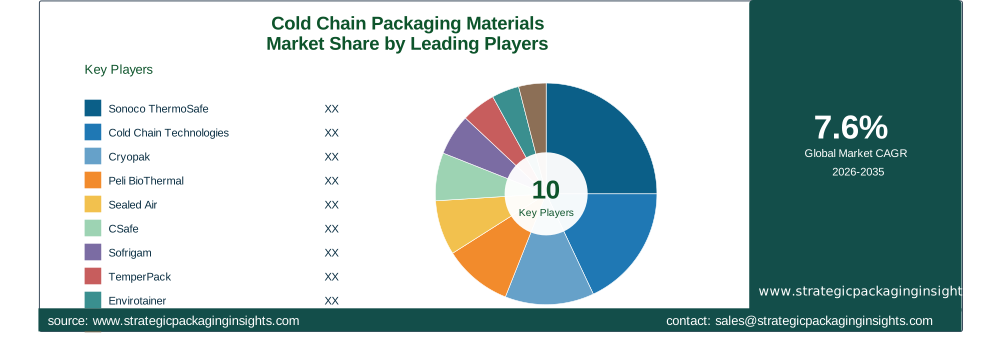
Sonoco ThermoSafe is a prominent player, offering a wide range of temperature-controlled packaging solutions. The company's focus on innovation and sustainability has strengthened its competitive position in the market. Cold Chain Technologies is another key player, known for its high-performance packaging solutions and commitment to regulatory compliance.
Cryopak, a subsidiary of TCP Reliable, is recognized for its expertise in temperature-controlled packaging solutions. The company's focus on research and development has enabled it to offer innovative products that meet the evolving needs of the market.
Other notable players include Peli BioThermal, Sealed Air, and CSafe, each with a strong market presence and a focus on innovation and sustainability. These companies are investing in new technologies and expanding their production capabilities to meet growing demand and maintain their competitive position.
Key Highlights
- Largest Region: North America
- Fastest-Growing Region: Asia Pacific
- Largest Segment: Pharmaceutical Packaging
- Fastest-Growing Segment: Reusable Packaging
- Base-year market size: USD 9.5 Billion
- Forecast-year market size: USD 19.9 Billion
- CAGR: 7.6%
- Important application: Temperature-sensitive pharmaceuticals
- Major end-use industry: Pharmaceuticals
- Major market driver: Regulatory compliance and sustainability
Regional Insights
The Cold Chain Packaging Materials market is witnessing significant growth across major regions, with North America leading in market size due to its advanced pharmaceutical and food industries. The region's focus on regulatory compliance and sustainability is driving demand for innovative packaging solutions.
North America
North America is the largest market for cold chain packaging materials, driven by the presence of major pharmaceutical and food companies. The region's focus on regulatory compliance and sustainability is driving demand for advanced packaging solutions. Companies are investing in new technologies and expanding their production capabilities to meet growing demand.
The U.S. is a key contributor to the market, with its advanced pharmaceutical industry and stringent regulatory requirements. The country's focus on innovation and sustainability is driving demand for eco-friendly packaging solutions.
Europe
Europe is a significant market for cold chain packaging materials, driven by the presence of major pharmaceutical and food companies. The region's focus on regulatory compliance and sustainability is driving demand for advanced packaging solutions. Companies are investing in new technologies and expanding their production capabilities to meet growing demand.
Germany and the UK are key contributors to the market, with their advanced pharmaceutical industries and stringent regulatory requirements. The focus on innovation and sustainability is driving demand for eco-friendly packaging solutions.
Asia Pacific
Asia Pacific is the fastest-growing region for cold chain packaging materials, driven by rapid industrialization and urbanization. The region's focus on regulatory compliance and sustainability is driving demand for advanced packaging solutions. Companies are investing in new technologies and expanding their production capabilities to meet growing demand.
China and India are key contributors to the market, with their rapidly growing pharmaceutical and food industries. The focus on innovation and sustainability is driving demand for eco-friendly packaging solutions.
Latin America
Latin America is a growing market for cold chain packaging materials, driven by the presence of major pharmaceutical and food companies. The region's focus on regulatory compliance and sustainability is driving demand for advanced packaging solutions. Companies are investing in new technologies and expanding their production capabilities to meet growing demand.
Brazil and Mexico are key contributors to the market, with their advanced pharmaceutical industries and stringent regulatory requirements. The focus on innovation and sustainability is driving demand for eco-friendly packaging solutions.
Middle East & Africa
The Middle East & Africa is a growing market for cold chain packaging materials, driven by the presence of major pharmaceutical and food companies. The region's focus on regulatory compliance and sustainability is driving demand for advanced packaging solutions. Companies are investing in new technologies and expanding their production capabilities to meet growing demand.
South Africa and the UAE are key contributors to the market, with their advanced pharmaceutical industries and stringent regulatory requirements. The focus on innovation and sustainability is driving demand for eco-friendly packaging solutions.
Cold Chain Packaging Materials Market Segments Insights

By Material Type Analysis
The material type segment in the Cold Chain Packaging Materials market is diverse, with Expanded Polystyrene (EPS) and Polyurethane Rigid Foam (PUR) being the most commonly used materials. These materials offer excellent insulation properties, making them ideal for temperature-sensitive applications. The demand for sustainable materials such as recycled non-woven textiles and aerogels is also increasing, driven by consumer demand for eco-friendly solutions.
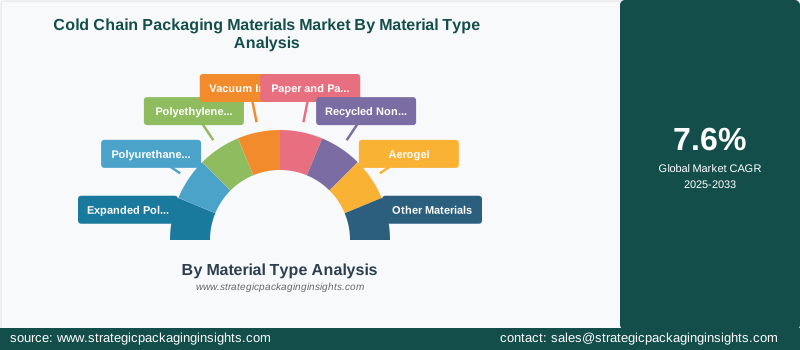
Vacuum Insulated Panels (VIP) and paper and paperboard are gaining traction due to their lightweight and recyclable nature. The focus on sustainability and regulatory compliance is driving innovation in material science, with companies investing in research and development to enhance the performance of these materials.
By Product Type Analysis
The product type segment in the Cold Chain Packaging Materials market includes a wide range of solutions, from insulated containers and pallet shippers to thermal boxes and gel packs. Insulated containers and pallet shippers are the most commonly used products, offering excellent thermal protection for temperature-sensitive goods.
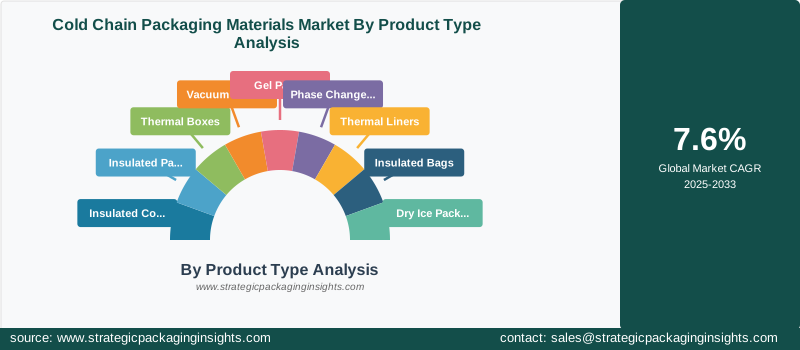
Thermal boxes and vacuum insulated panels are gaining popularity due to their lightweight and efficient insulation properties. The demand for phase change materials and thermal liners is also increasing, driven by the need for advanced packaging solutions that offer enhanced thermal protection and sustainability.
By Temperature Range Analysis
The temperature range segment in the Cold Chain Packaging Materials market is critical, with chilled and frozen applications being the most common. The demand for deep frozen and controlled room temperature solutions is also increasing, driven by the need for advanced packaging solutions that offer precise temperature control.
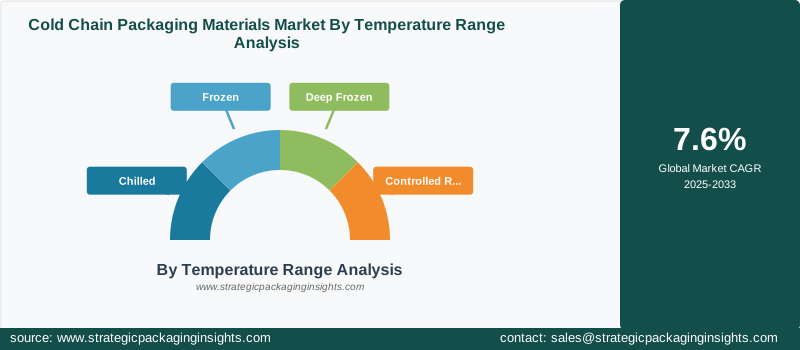
The focus on regulatory compliance and product integrity is driving innovation in temperature control technologies, with companies investing in research and development to enhance the performance of these solutions.
By Packaging Format Analysis
The packaging format segment in the Cold Chain Packaging Materials market includes single-use, reusable, and returnable packaging solutions. Single-use packaging is the most commonly used format, offering convenience and cost-effectiveness for temperature-sensitive goods.
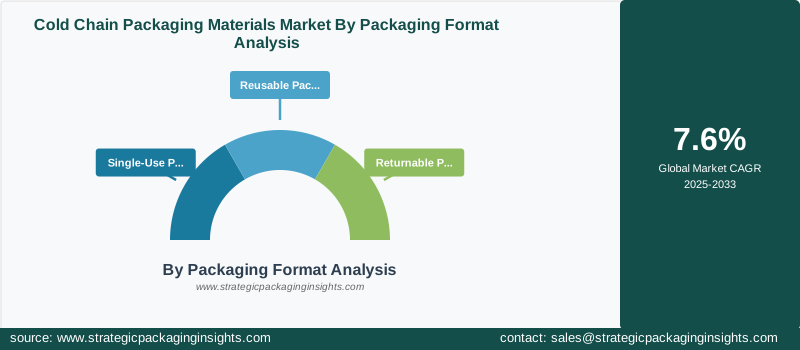
Reusable and returnable packaging solutions are gaining popularity due to their sustainability and cost-saving benefits. The focus on environmental responsibility and regulatory compliance is driving innovation in packaging formats, with companies investing in research and development to enhance the performance of these solutions.
By Application Analysis
The application segment in the Cold Chain Packaging Materials market is diverse, with pharmaceutical packaging being the largest segment. The demand for temperature-sensitive pharmaceuticals and biologics is driving the need for advanced packaging solutions that ensure product integrity and compliance with regulatory standards.
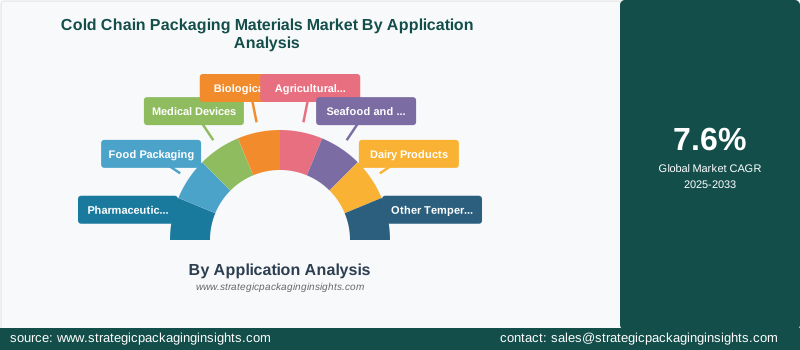
Food packaging is another significant application, driven by the need for temperature control and sustainability. The demand for packaging solutions for medical devices, biological products, and agricultural products is also increasing, driven by the need for advanced packaging solutions that offer enhanced thermal protection and sustainability.
By End Use Industry Analysis
The end-use industry segment in the Cold Chain Packaging Materials market is diverse, with pharmaceuticals being the largest industry. The demand for temperature-sensitive pharmaceuticals and biologics is driving the need for advanced packaging solutions that ensure product integrity and compliance with regulatory standards.
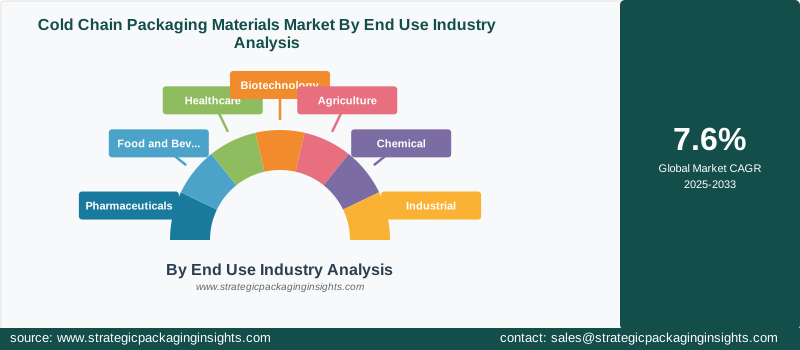
The food and beverage industry is another significant end-use industry, driven by the need for temperature control and sustainability. The demand for packaging solutions for healthcare, biotechnology, agriculture, and chemical industries is also increasing, driven by the need for advanced packaging solutions that offer enhanced thermal protection and sustainability.
By Distribution Channel Analysis
The distribution channel segment in the Cold Chain Packaging Materials market includes direct sales, distributors, specialty packaging suppliers, and online sales. Direct sales and distributors are the most commonly used channels, offering convenience and cost-effectiveness for temperature-sensitive goods.
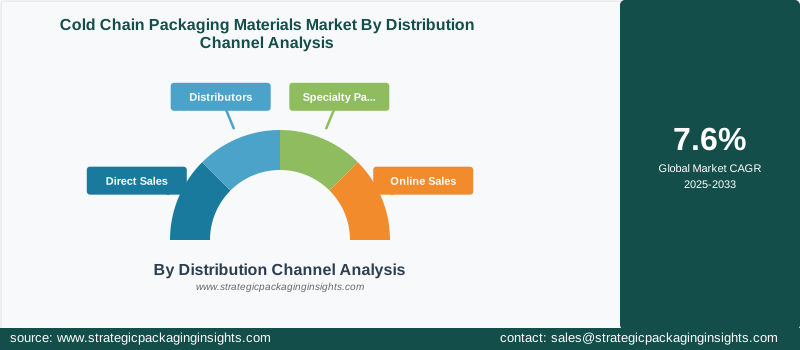
Specialty packaging suppliers and online sales are gaining popularity due to their convenience and cost-saving benefits. The focus on environmental responsibility and regulatory compliance is driving innovation in distribution channels, with companies investing in research and development to enhance the performance of these solutions.
Cold Chain Packaging Materials Market Segments
The Cold Chain Packaging Materials market has been segmented on the basis ofBy Material Type
- Expanded Polystyrene (EPS)
- Polyurethane Rigid Foam (PUR)
- Polyethylene (PE)
- Vacuum Insulated Panels (VIP)
- Paper and Paperboard
- Recycled Non-Woven Textile
- Aerogel
- Other Materials
By Product Type
- Insulated Containers
- Insulated Pallet Shippers
- Thermal Boxes
- Vacuum Insulated Panels
- Gel Packs
- Phase Change Materials
- Thermal Liners
- Insulated Bags
- Dry Ice Packaging
By Temperature Range
- Chilled
- Frozen
- Deep Frozen
- Controlled Room Temperature
By Packaging Format
- Single-Use Packaging
- Reusable Packaging
- Returnable Packaging
By Application
- Pharmaceutical Packaging
- Food Packaging
- Medical Devices
- Biological Products
- Agricultural Products
- Seafood and Meat
- Dairy Products
- Other Temperature-Sensitive Products
By End Use Industry
- Pharmaceuticals
- Food and Beverage
- Healthcare
- Biotechnology
- Agriculture
- Chemical
- Industrial
By Distribution Channel
- Direct Sales
- Distributors
- Specialty Packaging Suppliers
- Online Sales
By Region
- North America
- Europe
- Asia-Pacific
- Latin America
- Middle East and Africa




