


Coffee Capsules Market Outlook
The Coffee Capsules market size was valued at USD 16.70 billion in 2025 and is anticipated to reach USD 34.51 billion by 2034, growing at a CAGR of 8.4% during the forecast period according to Strategic Packaging Insights. The market is witnessing robust growth driven by the increasing demand for convenient and premium coffee experiences at home and in offices. Brands like Nestlé Nespresso and Keurig Dr Pepper are leading the charge, offering a wide range of coffee capsule options that cater to diverse consumer preferences. The rise in disposable incomes and the growing trend of coffee consumption as a lifestyle choice are further propelling market expansion. Additionally, the introduction of innovative flavors and sustainable packaging solutions is attracting environmentally conscious consumers, thereby enhancing market growth.
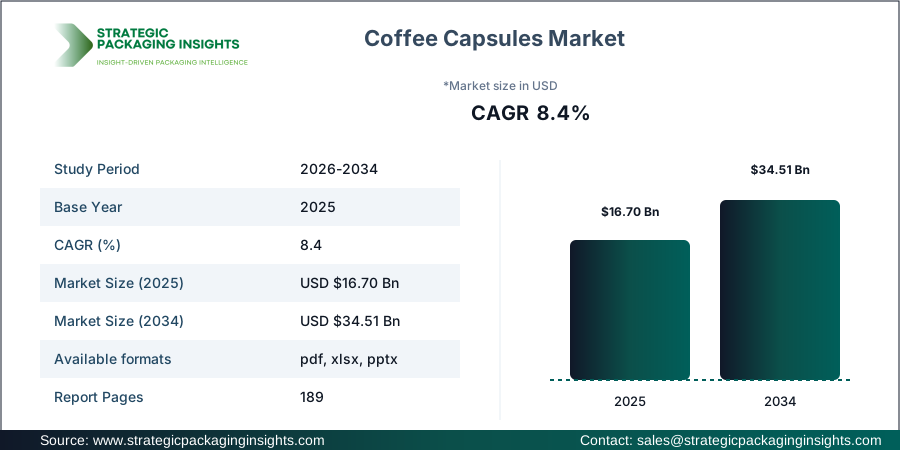
One of the most impactful drivers of the Coffee Capsules market is the increasing consumer preference for single-serve coffee solutions, which offer convenience and consistency in taste. According to recent reports, the busy lifestyles of urban consumers are leading to a surge in demand for quick and easy coffee preparation methods. This trend is supported by the growing number of coffee shops and cafes adopting capsule systems to streamline operations and reduce waste. Furthermore, the emphasis on sustainability is encouraging manufacturers to develop eco-friendly capsules, such as compostable and recyclable options, which align with consumer values and regulatory requirements. This shift towards sustainable practices is expected to drive innovation and growth in the coffee capsules market.
Report Scope
| Attributes | Details |
| Report Title | Coffee Capsules Market Size, Future Growth and Forecast 2034 |
| Material Type | Aluminum, Plastic, Compostable Materials, Paper-Based |
| Product Type | Closed-System Capsules, Open-System Capsules, Compostable Capsules |
| Application | Hot Coffee, Espresso, Specialty Coffee |
| End Use | Households, Offices, HoReCa, Retail |
| Region | Asia Pacific, North America, Latin America, Europe, Middle East & Africa |
| Base Year | 2025 |
| Historic Period | 2018-2024 |
| Forecast Period | 2026-2034 |
| Number of Pages | 189 |
| Customization Available | Yes* |
Sustainability & Circular Economy Analysis
Sustainability initiatives are significantly shaping the coffee capsules market, with a strong focus on reducing environmental impact through innovative packaging solutions. The adoption of recyclable materials and compostable capsules is gaining traction as consumers become more environmentally conscious. Companies like Nestlé Nespresso and Lavazza are leading the way by introducing eco-friendly packaging options that minimize waste and promote circular economy practices. These efforts are not only enhancing brand reputation but also driving consumer loyalty and market competitiveness.
The shift towards lightweight packaging and eco-friendly material innovation is influencing packaging design and manufacturing processes. By reducing the carbon footprint and implementing waste reduction strategies, companies are aligning with ESG initiatives and regulatory compliance. This trend is encouraging investment in sustainable technologies and fostering strategic partnerships to enhance supply chain resilience. As a result, the coffee capsules market is witnessing increased interest from investors and policymakers who prioritize sustainability in their decision-making processes.
Consumer preferences for sustainable products are driving demand for eco-friendly coffee capsules, prompting manufacturers to adopt extended producer responsibility (EPR) practices. This approach ensures that companies take accountability for the entire lifecycle of their products, from production to disposal. By integrating sustainability into their business models, coffee capsule manufacturers are not only meeting regulatory requirements but also gaining a competitive edge in the market. This focus on sustainability is expected to continue shaping the industry's future, influencing packaging design, investment decisions, and long-term market competitiveness.
Packaging Value Chain & Supply Chain Analysis
The coffee capsules market's value chain is a complex ecosystem involving raw material sourcing, packaging converters, manufacturers, and logistics providers. Efficient supply chain management is crucial for maintaining product quality and meeting consumer demand. Companies like JDE Peet’s and Starbucks are optimizing their procurement strategies to ensure a steady supply of high-quality raw materials, such as aluminum and compostable materials, which are essential for producing sustainable coffee capsules. By establishing strategic partnerships with suppliers and investing in advanced packaging machinery, these companies are enhancing their production capabilities and market competitiveness.
Logistics and distribution channels play a vital role in the coffee capsules market, ensuring timely delivery and availability of products across various regions. Brand owners and retailers are focusing on inventory management and supply chain resilience to mitigate disruptions and maintain a competitive edge. The localization of production facilities and global sourcing strategies are enabling companies to adapt to changing market dynamics and consumer preferences. As a result, the coffee capsules market is witnessing increased collaboration between manufacturers, distributors, and retailers to streamline operations and enhance customer satisfaction.
Recycling networks and waste management systems are integral components of the coffee capsules market's supply chain, supporting sustainability initiatives and regulatory compliance. Companies are investing in recycling technologies and collaborating with waste management organizations to promote circular economy practices. By implementing these strategies, coffee capsule manufacturers are reducing their environmental impact and aligning with consumer expectations for sustainable products. This focus on supply chain efficiency and sustainability is driving innovation and growth in the coffee capsules market, positioning it for long-term success.
Opportunities & Threats
The coffee capsules market presents numerous opportunities for growth, driven by the increasing demand for premium and convenient coffee solutions. The rise of specialty coffee and the growing trend of home brewing are creating new avenues for product innovation and market expansion. Companies like illycaffè and Melitta are capitalizing on these opportunities by introducing unique flavors and blends that cater to diverse consumer preferences. Additionally, the adoption of digital technologies and e-commerce platforms is enabling manufacturers to reach a wider audience and enhance customer engagement. This digital transformation is expected to drive sales and market penetration, offering significant growth potential for the coffee capsules market.
Another opportunity lies in the development of sustainable and eco-friendly coffee capsules, which are gaining popularity among environmentally conscious consumers. The shift towards compostable and recyclable packaging solutions is encouraging manufacturers to invest in research and development to create innovative products that align with consumer values and regulatory requirements. By embracing sustainability, companies can differentiate themselves in the market and build brand loyalty, ultimately driving long-term growth and profitability. This focus on sustainability is also attracting investment from stakeholders who prioritize environmental responsibility in their business strategies.
Despite the promising opportunities, the coffee capsules market faces several threats, including regulatory challenges and environmental concerns. The increasing scrutiny on single-use plastics and packaging waste is prompting governments to implement stricter regulations, which could impact production and distribution processes. Companies must navigate these regulatory landscapes and adapt their business models to comply with evolving standards. Additionally, the rising cost of raw materials and supply chain disruptions pose significant challenges for manufacturers, affecting profitability and market competitiveness. To mitigate these threats, companies must invest in sustainable practices and develop resilient supply chain strategies that ensure long-term success.
Drivers & Challenges
The coffee capsules market is driven by several key factors, including the growing demand for convenient and premium coffee experiences. The rise of urbanization and busy lifestyles is leading consumers to seek quick and easy coffee preparation methods, driving the popularity of single-serve coffee solutions. Brands like The Kraft Heinz Company and Caffitaly are capitalizing on this trend by offering a wide range of coffee capsule options that cater to diverse consumer preferences. Additionally, the increasing disposable incomes and the growing trend of coffee consumption as a lifestyle choice are further propelling market growth. This demand for convenience and quality is expected to continue driving the coffee capsules market in the coming years.
Another significant driver is the emphasis on sustainability and eco-friendly packaging solutions. As consumers become more environmentally conscious, there is a growing demand for compostable and recyclable coffee capsules that minimize environmental impact. Companies are investing in research and development to create innovative packaging solutions that align with consumer values and regulatory requirements. This focus on sustainability is not only enhancing brand reputation but also driving consumer loyalty and market competitiveness. By embracing sustainable practices, coffee capsule manufacturers can differentiate themselves in the market and capitalize on the growing demand for eco-friendly products.
Despite the positive drivers, the coffee capsules market faces several challenges, including regulatory hurdles and supply chain disruptions. The increasing scrutiny on single-use plastics and packaging waste is prompting governments to implement stricter regulations, which could impact production and distribution processes. Companies must navigate these regulatory landscapes and adapt their business models to comply with evolving standards. Additionally, the rising cost of raw materials and supply chain disruptions pose significant challenges for manufacturers, affecting profitability and market competitiveness. To overcome these challenges, companies must invest in sustainable practices and develop resilient supply chain strategies that ensure long-term success.
Market Share Analysis
The coffee capsules market is characterized by intense competition, with several key players dominating the landscape. Companies like Nestlé Nespresso, Keurig Dr Pepper, and JDE Peet’s hold significant market shares, driven by their strong brand presence and extensive product offerings. These companies are continuously innovating to meet consumer demands and maintain their competitive edge. The market is also witnessing the entry of new players, further intensifying competition and driving product innovation. As a result, the coffee capsules market is experiencing rapid growth, with companies vying for market share through strategic partnerships, mergers, and acquisitions.
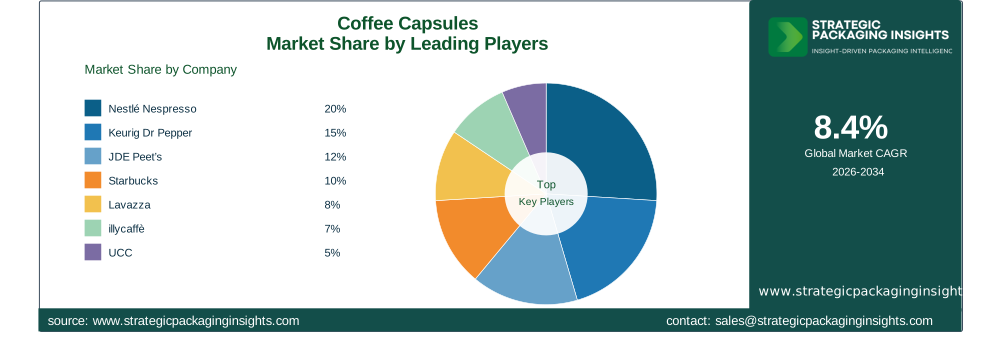
Nestlé Nespresso is a leading player in the coffee capsules market, known for its premium coffee offerings and innovative packaging solutions. The company has a strong global presence and is continuously expanding its product portfolio to cater to diverse consumer preferences. Keurig Dr Pepper is another major player, offering a wide range of coffee capsule options that cater to both household and commercial segments. The company's focus on sustainability and eco-friendly packaging solutions is enhancing its brand reputation and driving consumer loyalty.
JDE Peet’s is a prominent player in the coffee capsules market, known for its extensive product offerings and strong distribution network. The company is investing in research and development to create innovative coffee capsule solutions that align with consumer preferences and regulatory requirements. Starbucks, a well-known brand in the coffee industry, is also making significant strides in the coffee capsules market, offering a range of premium coffee options that cater to diverse consumer tastes. The company's focus on sustainability and ethical sourcing is enhancing its brand reputation and driving market growth.
Other notable players in the coffee capsules market include Lavazza, illycaffè, UCC, Melitta, Caffitaly, and The Kraft Heinz Company. These companies are continuously innovating to meet consumer demands and maintain their competitive edge. By investing in sustainable practices and developing innovative packaging solutions, these companies are positioning themselves for long-term success in the coffee capsules market. The competitive landscape is expected to remain dynamic, with companies vying for market share through strategic partnerships, mergers, and acquisitions.
Key Highlights
- Market Size: The coffee capsules market was valued at USD 16.70 billion in 2025 and is projected to reach USD 34.51 billion by 2034.
- Growth Rate: The market is expected to grow at a CAGR of 8.4% during the forecast period.
- Leading Companies: Key players include Nestlé Nespresso, Keurig Dr Pepper, JDE Peet’s, and Starbucks.
- Sustainability Focus: Increasing demand for eco-friendly and compostable coffee capsules.
- Regional Insights: Asia Pacific and North America are key growth regions.
- Product Innovation: Introduction of unique flavors and blends to cater to diverse consumer preferences.
- Supply Chain Resilience: Companies are investing in sustainable practices and strategic partnerships.
Coffee Capsules Market Segments Insights

Material Type Analysis
The material type segment in the coffee capsules market is crucial, as it directly impacts the sustainability and environmental footprint of the products. Aluminum, plastic, compostable materials, and paper-based options are the primary materials used in manufacturing coffee capsules. Aluminum capsules are popular due to their ability to preserve coffee freshness and aroma, but they pose recycling challenges. In contrast, compostable materials are gaining traction as they align with consumer demand for eco-friendly solutions. Companies like Nestlé Nespresso and Lavazza are investing in research and development to create innovative compostable capsules that reduce environmental impact and enhance brand reputation.
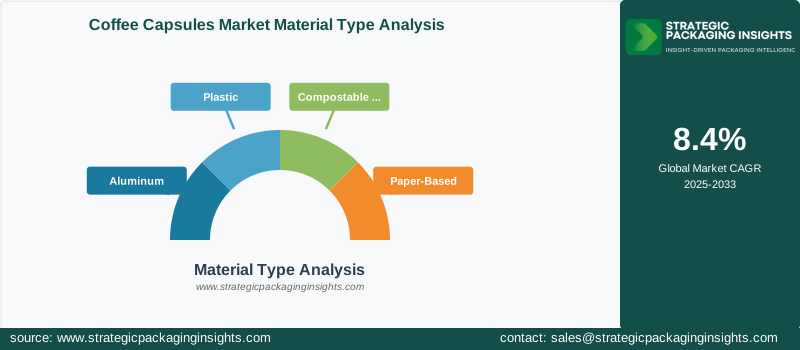
Plastic capsules, while cost-effective, face criticism due to their environmental impact. However, advancements in biodegradable plastics are offering new opportunities for manufacturers to address sustainability concerns. Paper-based capsules are also emerging as a viable alternative, providing a renewable and recyclable option for environmentally conscious consumers. The shift towards sustainable materials is driving innovation in the coffee capsules market, with companies focusing on developing eco-friendly packaging solutions that meet regulatory requirements and consumer preferences. This trend is expected to continue shaping the market, influencing material selection and product design.
Product Type Analysis
The product type segment in the coffee capsules market includes closed-system capsules, open-system capsules, and compostable capsules. Closed-system capsules, such as those offered by Keurig Dr Pepper and JDE Peet’s, are designed for use with specific coffee machines, ensuring consistent quality and taste. These capsules are popular among consumers who prioritize convenience and reliability. Open-system capsules, on the other hand, offer greater flexibility, allowing consumers to use them with various coffee machines. This versatility is driving demand for open-system capsules, as consumers seek customizable coffee experiences.
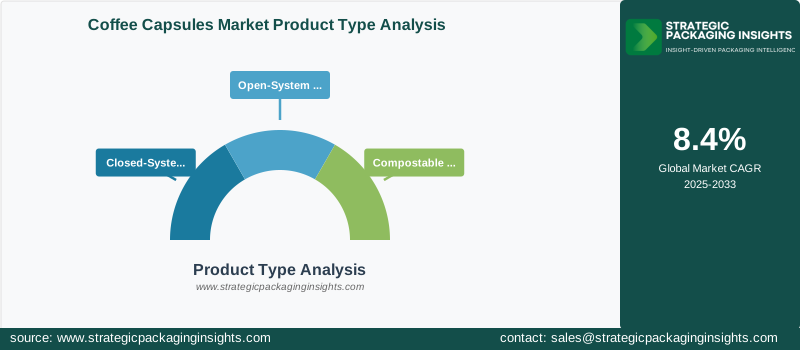
Compostable capsules are gaining popularity due to their environmental benefits, as they decompose naturally and reduce waste. Companies are investing in the development of compostable capsules to meet consumer demand for sustainable products and comply with regulatory requirements. This focus on sustainability is driving innovation in the product type segment, with manufacturers exploring new materials and technologies to enhance the performance and eco-friendliness of their coffee capsules. As consumer preferences continue to evolve, the product type segment is expected to witness significant growth, driven by the demand for convenient, high-quality, and sustainable coffee solutions.
Application Analysis
The application segment in the coffee capsules market includes hot coffee, espresso, and specialty coffee. Hot coffee capsules are the most popular, driven by the widespread consumption of coffee as a daily beverage. Brands like Starbucks and The Kraft Heinz Company are capitalizing on this trend by offering a wide range of hot coffee capsule options that cater to diverse consumer preferences. Espresso capsules are also gaining traction, particularly among consumers who enjoy the rich and intense flavors of espresso. The growing popularity of espresso-based beverages is driving demand for high-quality espresso capsules, prompting manufacturers to innovate and expand their product offerings.
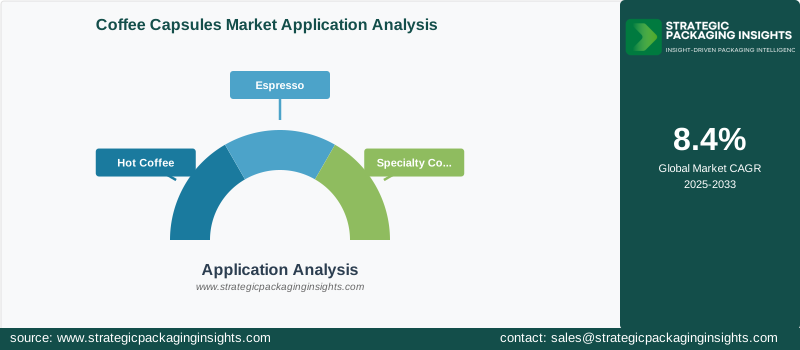
Specialty coffee capsules are emerging as a niche segment, catering to consumers who seek unique and premium coffee experiences. Companies are introducing specialty coffee capsules with exotic flavors and blends to attract discerning consumers and differentiate themselves in the market. This focus on product differentiation and premiumization is driving growth in the application segment, as consumers increasingly seek personalized and high-quality coffee solutions. As the coffee culture continues to evolve, the application segment is expected to witness significant growth, driven by the demand for diverse and innovative coffee experiences.
End Use Analysis
The end-use segment in the coffee capsules market includes households, offices, HoReCa (Hotels, Restaurants, and Cafés), and retail. Households represent the largest end-use segment, driven by the increasing demand for convenient and premium coffee solutions at home. Brands like illycaffè and Melitta are catering to this demand by offering a wide range of coffee capsule options that cater to diverse consumer preferences. The growing trend of home brewing and the rise of specialty coffee are further propelling growth in the household segment.
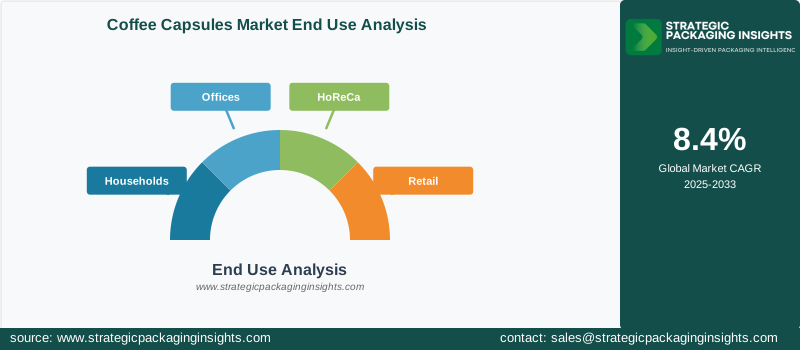
Offices and HoReCa are also significant end-use segments, driven by the demand for convenient and high-quality coffee solutions in commercial settings. Companies are adopting coffee capsule systems to streamline operations and enhance customer satisfaction. The retail segment is witnessing growth as consumers increasingly purchase coffee capsules from supermarkets and online platforms. This trend is driving demand for diverse and innovative coffee capsule options that cater to different consumer preferences and lifestyles. As the coffee culture continues to evolve, the end-use segment is expected to witness significant growth, driven by the demand for convenient, high-quality, and sustainable coffee solutions.
Coffee Capsules Market Segments
The Coffee Capsules market has been segmented on the basis ofMaterial Type
- Aluminum
- Plastic
- Compostable Materials
- Paper-Based
Product Type
- Closed-System Capsules
- Open-System Capsules
- Compostable Capsules
Application
- Hot Coffee
- Espresso
- Specialty Coffee
End Use
- Households
- Offices
- HoReCa
- Retail
Region
- Asia Pacific
- North America
- Latin America
- Europe
- Middle East & Africa




