


Circular Plastic Feedstock Traceability Market Outlook
The Circular Plastic Feedstock Traceability market size was valued at USD 300 million in 2025 and is anticipated to reach USD 1.1 billion by 2034, growing at a CAGR of 15.00% during the forecast period according to Strategic Packaging Insights. This growth is driven by the increasing demand for sustainable packaging solutions and the need for transparency in the supply chain. Companies like Circularise and Security Matters (SMX) are at the forefront, providing innovative traceability solutions that enhance the circular economy by ensuring the authenticity and sustainability of recycled materials. The market's expansion is further fueled by regulatory pressures and consumer demand for eco-friendly products, which are pushing brand owners and manufacturers to adopt traceability technologies.
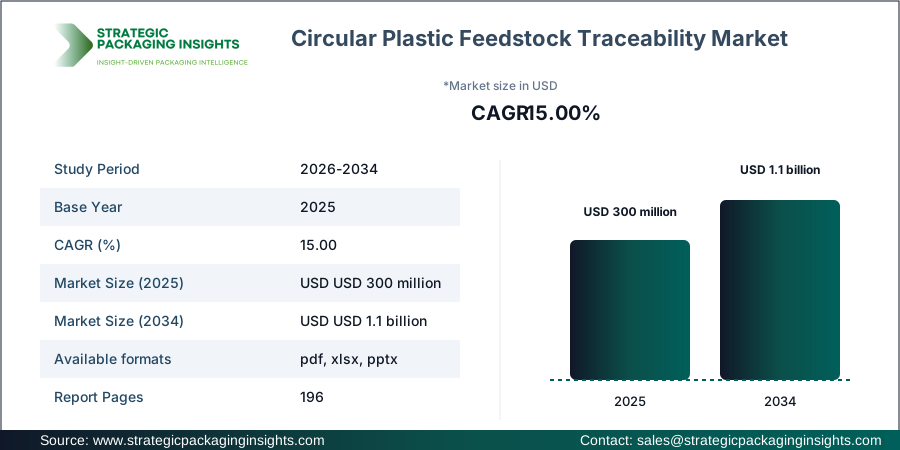
One of the most impactful drivers of this market is the growing emphasis on sustainability and environmental responsibility. Governments worldwide are implementing stringent regulations to reduce plastic waste and promote recycling, which is significantly boosting the demand for traceability solutions. For instance, the European Union's Circular Economy Action Plan aims to make sustainable products the norm in the EU, which includes measures to improve the traceability of plastic feedstock. This regulatory push, combined with increasing consumer awareness about the environmental impact of plastics, is compelling companies to invest in advanced traceability technologies to ensure compliance and enhance their brand image.
Report Scope
| Attributes | Details |
| Report Title | Circular Plastic Feedstock Traceability Market Size, Future Growth and Forecast 2034 |
| By Solution | Blockchain / DLT Traceability Platforms, Digital Product Passports, Mass Balance Certification Software, Marker & Tracer Technologies (Chemical, Digital Watermarks), Chain-of-Custody Auditing |
| By Feedstock | Mechanically Recycled Polymers, Chemically Recycled (Pyrolysis Oil), Bio-Based Feedstock |
| By End Use | Packaging Brand Owners, Polymer Producers, Recyclers, Regulators & Certifiers |
| By Region | North America (U.S., Canada, Mexico), Europe (Germany, UK, France, Italy, Spain, Rest of Europe), Asia Pacific (China, India, Japan, South Korea, Australia, Rest of Asia Pacific), Latin America (Brazil, Argentina, Rest of Latin America), Middle East & Africa (GCC Countries, South Africa, Rest of MEA) |
| Base Year | 2025 |
| Historic Period | 2018-2024 |
| Forecast Period | 2026-2034 |
| Number of Pages | 196 |
| Customization Available | Yes* |
Sustainability & Circular Economy Analysis
Sustainability initiatives and circular economy practices are profoundly influencing the packaging market, particularly in the realm of circular plastic feedstock traceability. The integration of recyclable materials and reusable packaging is becoming a standard practice, driven by consumer demand for eco-friendly products and stringent regulatory requirements. Companies are increasingly investing in lightweight packaging and eco-friendly material innovations to reduce their carbon footprint and align with environmental, social, and governance (ESG) initiatives. These trends are reshaping packaging design and manufacturing processes, as businesses strive to meet sustainability goals while maintaining cost-effectiveness and product integrity.
The adoption of waste reduction strategies and extended producer responsibility (EPR) frameworks is further accelerating the shift towards a circular economy. Packaging manufacturers and brand owners are implementing traceability solutions to monitor and verify the sustainability of their supply chains. This not only helps in regulatory compliance but also enhances long-term market competitiveness by building consumer trust and brand loyalty. As a result, investment decisions are increasingly being influenced by the need to adopt sustainable practices, with companies prioritizing technologies that offer transparency and accountability in their operations.
Moreover, the focus on reducing carbon footprints is driving innovation in packaging materials and processes. Companies are exploring new materials and technologies that minimize environmental impact while maintaining functionality and performance. This shift is influencing supply chain strategies, as businesses seek to source sustainable materials and optimize logistics to reduce emissions. The emphasis on sustainability is also prompting regulatory bodies to introduce new packaging regulations, which are shaping the industry's future landscape. Overall, these sustainability trends are creating opportunities for growth and innovation in the packaging market, as companies strive to meet evolving consumer preferences and regulatory demands.
Packaging Value Chain & Supply Chain Analysis
The packaging value chain and supply chain ecosystem are undergoing significant transformations, driven by the need for efficiency and sustainability. Raw material sourcing is becoming increasingly critical, as companies seek to secure sustainable and reliable supplies of recycled and bio-based feedstocks. Packaging converters and manufacturers are investing in advanced technologies and machinery to enhance production capabilities and meet the growing demand for traceable and sustainable packaging solutions. Strategic partnerships and collaborations are playing a vital role in optimizing supply chain operations and ensuring the availability of high-quality materials.
Logistics and distribution channels are also evolving to support the efficient movement of materials and products across the supply chain. Companies are adopting innovative procurement strategies and inventory management practices to enhance supply chain resilience and minimize disruptions. Localization and global sourcing are being balanced to ensure cost-effectiveness and sustainability, with businesses prioritizing suppliers that align with their environmental and social goals. These efforts are crucial for maintaining competitiveness in the market, as companies strive to meet the increasing demand for traceable and sustainable packaging solutions.
Recycling networks and chain-of-custody auditing are becoming integral components of the packaging value chain, as companies seek to verify the sustainability of their products and operations. The integration of digital technologies, such as blockchain and digital watermarks, is enhancing traceability and transparency across the supply chain. These innovations are enabling companies to track the movement of materials and products, ensuring compliance with regulatory requirements and building consumer trust. Overall, the focus on supply chain efficiency and sustainability is driving significant changes in the packaging industry, as companies adapt to evolving market demands and regulatory pressures.
Opportunities & Threats
The Circular Plastic Feedstock Traceability market presents numerous opportunities for growth and innovation. One of the key opportunities lies in the increasing demand for sustainable packaging solutions, driven by consumer preferences and regulatory requirements. Companies that invest in advanced traceability technologies and sustainable practices are well-positioned to capitalize on this growing demand. Additionally, the integration of digital technologies, such as blockchain and digital watermarks, offers opportunities for enhancing transparency and accountability in the supply chain. These technologies enable companies to verify the authenticity and sustainability of their products, building consumer trust and brand loyalty.
Another significant opportunity is the potential for collaboration and partnerships across the value chain. Companies can leverage strategic alliances to enhance their capabilities and expand their market reach. By working together, businesses can share resources, knowledge, and expertise, driving innovation and efficiency in the packaging industry. Furthermore, the increasing focus on circular economy practices and waste reduction strategies presents opportunities for companies to differentiate themselves in the market. By adopting sustainable practices and investing in traceability solutions, businesses can enhance their competitiveness and meet the evolving demands of consumers and regulators.
However, the market also faces several threats that could hinder its growth. One of the primary challenges is the high cost of implementing advanced traceability technologies and sustainable practices. Companies may face financial constraints in adopting these solutions, particularly small and medium-sized enterprises. Additionally, the complexity of the supply chain and the need for collaboration among multiple stakeholders can pose challenges in achieving full traceability and transparency. Regulatory uncertainties and evolving standards may also create challenges for companies, as they strive to comply with new requirements and maintain competitiveness in the market.
Drivers & Challenges
The Circular Plastic Feedstock Traceability market is driven by several key factors that are shaping its growth and development. One of the primary drivers is the increasing demand for sustainable packaging solutions, driven by consumer preferences and regulatory requirements. As consumers become more environmentally conscious, they are seeking products that align with their values, prompting companies to invest in traceability technologies and sustainable practices. Additionally, regulatory pressures are compelling businesses to adopt circular economy practices and reduce their environmental impact, further driving the demand for traceability solutions.
Another significant driver is the advancement of digital technologies, which are enhancing traceability and transparency in the supply chain. Technologies such as blockchain, digital watermarks, and mass balance certification software are enabling companies to track the movement of materials and products, ensuring compliance with regulatory requirements and building consumer trust. These innovations are also driving efficiency and cost-effectiveness in the supply chain, as companies seek to optimize their operations and reduce waste. Overall, these drivers are creating opportunities for growth and innovation in the Circular Plastic Feedstock Traceability market, as companies strive to meet evolving consumer preferences and regulatory demands.
Despite these drivers, the market also faces several challenges that could hinder its growth. One of the primary challenges is the high cost of implementing advanced traceability technologies and sustainable practices. Companies may face financial constraints in adopting these solutions, particularly small and medium-sized enterprises. Additionally, the complexity of the supply chain and the need for collaboration among multiple stakeholders can pose challenges in achieving full traceability and transparency. Regulatory uncertainties and evolving standards may also create challenges for companies, as they strive to comply with new requirements and maintain competitiveness in the market.
Market Share Analysis
The Circular Plastic Feedstock Traceability market is characterized by a competitive landscape, with several key players driving innovation and growth. Companies such as Circularise, Security Matters (SMX), and Digimarc are leading the market with their advanced traceability solutions and technologies. These companies are investing in research and development to enhance their product offerings and meet the evolving demands of consumers and regulators. Additionally, they are forming strategic partnerships and collaborations to expand their market reach and enhance their capabilities.
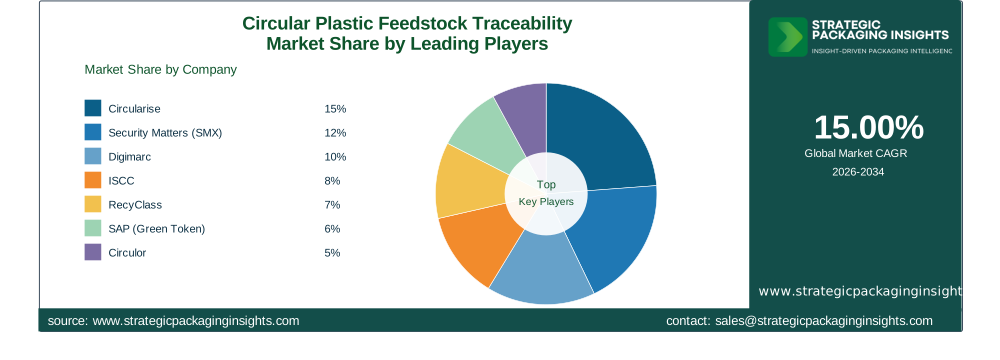
Circularise is a prominent player in the market, known for its blockchain-based traceability solutions that enhance transparency and accountability in the supply chain. The company is focused on providing innovative solutions that enable companies to verify the authenticity and sustainability of their products. Security Matters (SMX) is another key player, offering advanced marker and tracer technologies that enhance traceability and security in the supply chain. The company's solutions are widely used by packaging brand owners and polymer producers to ensure compliance with regulatory requirements and build consumer trust.
Digimarc is also a significant player in the market, known for its digital watermarking technologies that enhance traceability and transparency in the supply chain. The company's solutions are widely used by recyclers and regulators to verify the sustainability of plastic feedstocks and ensure compliance with regulatory requirements. Other key players in the market include ISCC, RecyClass, SAP (Green Token), Circulor, and Polytag, each offering unique solutions and technologies that enhance traceability and sustainability in the packaging industry.
Overall, the competitive landscape of the Circular Plastic Feedstock Traceability market is characterized by innovation and collaboration, as companies strive to meet the evolving demands of consumers and regulators. The market is expected to continue growing, driven by the increasing demand for sustainable packaging solutions and the advancement of digital technologies. Companies that invest in research and development and form strategic partnerships are well-positioned to capitalize on the opportunities in this dynamic market.
Key Highlights
- Market Size: USD 300 million in 2025, projected to reach USD 1.1 billion by 2034.
- Growth Rate: Anticipated CAGR of 15.00% during the forecast period.
- Key Players: Circularise, Security Matters (SMX), Digimarc, ISCC, RecyClass, SAP (Green Token), Circulor, Polytag.
- Growing Segments: Blockchain / DLT Traceability Platforms and Digital Product Passports.
- Leading Region: Europe, driven by regulatory initiatives and consumer demand.
- Technological Advancements: Integration of blockchain and digital watermarking technologies.
- Regulatory Impact: EU's Circular Economy Action Plan driving market growth.
Circular Plastic Feedstock Traceability Market Segments Insights

By Solution Analysis
The Circular Plastic Feedstock Traceability market is segmented by solution, with key categories including Blockchain / DLT Traceability Platforms, Digital Product Passports, Mass Balance Certification Software, Marker & Tracer Technologies, and Chain-of-Custody Auditing. Blockchain and DLT traceability platforms are gaining traction due to their ability to provide secure and transparent tracking of materials across the supply chain. These platforms are particularly popular among packaging brand owners and polymer producers, who are seeking to enhance transparency and accountability in their operations. Digital product passports are also emerging as a key solution, enabling companies to provide detailed information about the sustainability and authenticity of their products.
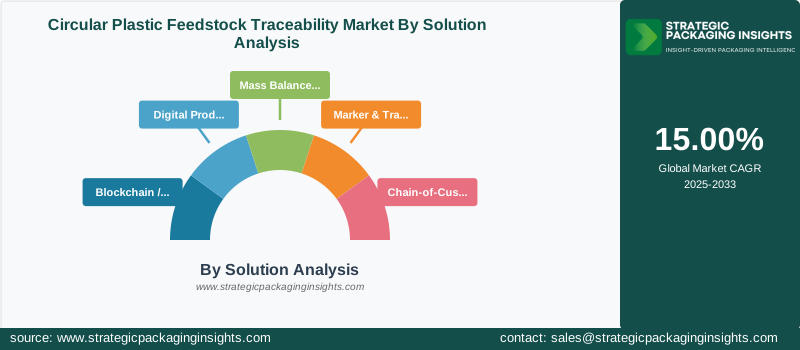
Mass balance certification software is another important segment, offering companies the ability to verify the sustainability of their feedstocks and ensure compliance with regulatory requirements. Marker and tracer technologies, including chemical markers and digital watermarks, are widely used by recyclers and regulators to enhance traceability and security in the supply chain. Chain-of-custody auditing is also gaining importance, as companies seek to verify the authenticity and sustainability of their products and operations. Overall, the solution segment is characterized by innovation and technological advancements, as companies strive to meet the evolving demands of consumers and regulators.
By Feedstock Analysis
The market is also segmented by feedstock, with key categories including Mechanically Recycled Polymers, Chemically Recycled (Pyrolysis Oil), and Bio-Based Feedstock. Mechanically recycled polymers are widely used in the packaging industry, driven by the increasing demand for sustainable and eco-friendly materials. These polymers are popular among packaging brand owners and polymer producers, who are seeking to reduce their environmental impact and enhance their sustainability credentials. Chemically recycled feedstocks, such as pyrolysis oil, are also gaining traction, offering companies the ability to convert plastic waste into valuable resources.
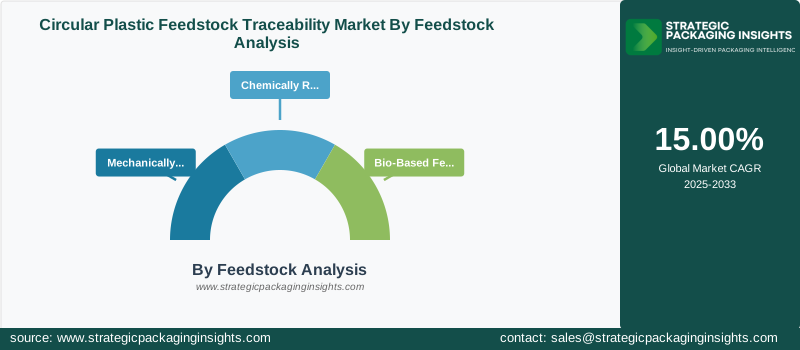
Bio-based feedstocks are emerging as a key segment, driven by the increasing focus on renewable and sustainable materials. These feedstocks are popular among regulators and certifiers, who are seeking to promote the use of sustainable materials and reduce the environmental impact of plastic production. Overall, the feedstock segment is characterized by innovation and sustainability, as companies seek to meet the evolving demands of consumers and regulators. The increasing focus on circular economy practices and waste reduction strategies is driving the demand for sustainable feedstocks, creating opportunities for growth and innovation in the market.
By End Use Analysis
The Circular Plastic Feedstock Traceability market is segmented by end use, with key categories including Packaging Brand Owners, Polymer Producers, Recyclers, and Regulators & Certifiers. Packaging brand owners are a significant segment, driven by the increasing demand for sustainable packaging solutions and the need for transparency in the supply chain. These companies are investing in traceability technologies to enhance their sustainability credentials and meet the evolving demands of consumers and regulators. Polymer producers are also a key segment, seeking to enhance the sustainability of their operations and reduce their environmental impact.
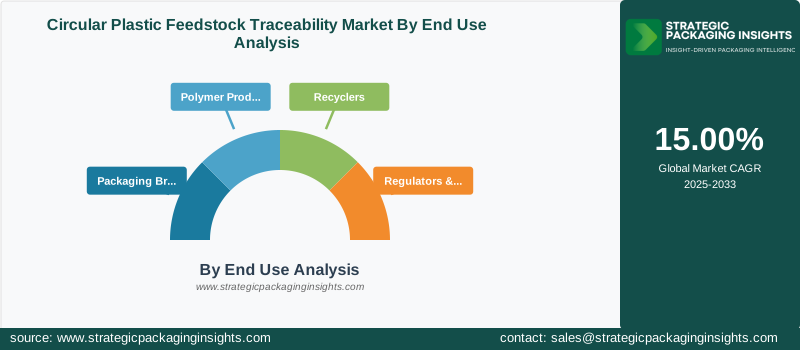
Recyclers are another important segment, driven by the increasing focus on circular economy practices and waste reduction strategies. These companies are investing in advanced traceability technologies to enhance the efficiency and sustainability of their operations. Regulators and certifiers are also a key segment, seeking to promote the use of sustainable materials and ensure compliance with regulatory requirements. Overall, the end-use segment is characterized by innovation and sustainability, as companies strive to meet the evolving demands of consumers and regulators. The increasing focus on circular economy practices and waste reduction strategies is driving the demand for traceability solutions, creating opportunities for growth and innovation in the market.
Circular Plastic Feedstock Traceability Market Segments
The Circular Plastic Feedstock Traceability market has been segmented on the basis ofBy Solution
- Blockchain / DLT Traceability Platforms
- Digital Product Passports
- Mass Balance Certification Software
- Marker & Tracer Technologies (Chemical, Digital Watermarks)
- Chain-of-Custody Auditing
By Feedstock
- Mechanically Recycled Polymers
- Chemically Recycled (Pyrolysis Oil)
- Bio-Based Feedstock
By End Use
- Packaging Brand Owners
- Polymer Producers
- Recyclers
- Regulators & Certifiers
By Region
- North America (U.S., Canada, Mexico)
- Europe (Germany, UK, France, Italy, Spain, Rest of Europe)
- Asia Pacific (China, India, Japan, South Korea, Australia, Rest of Asia Pacific)
- Latin America (Brazil, Argentina, Rest of Latin America)
- Middle East & Africa (GCC Countries, South Africa, Rest of MEA)




