


Centrifuge Tubes Market Outlook
The Centrifuge Tubes market was valued at $2.09 billion in 2025 and is projected to reach $3.74 billion by 2034, growing at a CAGR of 6.7% during the forecast period 2026-2034. This growth is driven by the increasing demand for laboratory consumables in research and clinical settings. The rise in biopharmaceutical research, coupled with advancements in molecular biology techniques, has significantly boosted the need for high-quality centrifuge tubes. Additionally, the growing emphasis on precision medicine and personalized healthcare has further propelled the market, as these applications require precise sample handling and preparation, which centrifuge tubes facilitate. The market is also benefiting from technological advancements in tube materials and designs, enhancing their durability and performance in various laboratory conditions.
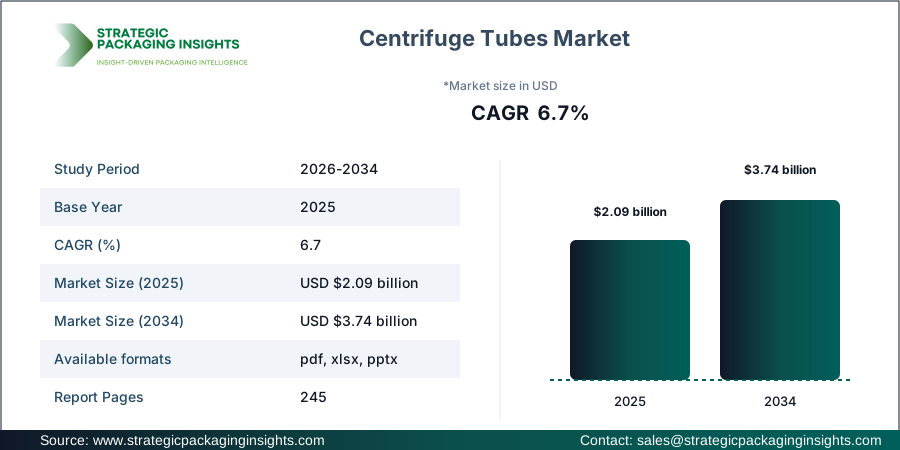
However, the market faces certain restraints, including stringent regulatory requirements for laboratory consumables and the high cost of advanced centrifuge tubes. These factors can limit market growth, particularly in cost-sensitive regions. Despite these challenges, the market holds significant growth potential, driven by the increasing adoption of automation in laboratories and the rising focus on research and development activities across the globe. The ongoing trend of miniaturization in laboratory equipment is also expected to create new opportunities for market players, as smaller, more efficient tubes are required to meet the evolving needs of modern laboratories.
Report Scope
| Attributes | Details |
| Report Title | Centrifuge Tubes Market Size, Future Growth and Forecast 2034 |
| Product Type | 15 ml Tubes, 50 ml Tubes, Microcentrifuge Tubes, Conical Tubes |
| Material Type | Polypropylene, Polycarbonate, Glass |
| Application | Sample Preparation, Cell Culture, Molecular Biology, Clinical Testing |
| End Use | Research Labs, Hospitals, Biopharma Companies, Academic Institutes |
| Region | Asia Pacific, North America, Latin America, Europe, Middle East & Africa |
| Base Year | 2025 |
| Historic Period | 2018-2024 |
| Forecast Period | 2026-2034 |
| Number of Pages | 245 |
| Customization Available | Yes* |
Opportunities & Threats
The Centrifuge Tubes market presents numerous opportunities, particularly in emerging economies where the healthcare infrastructure is rapidly developing. The increasing investment in healthcare and research facilities in countries like India and China is expected to drive the demand for centrifuge tubes. Additionally, the growing focus on biotechnology and pharmaceutical research in these regions offers significant growth prospects for market players. The trend towards personalized medicine and the increasing use of centrifuge tubes in genomic and proteomic research further enhance the market's potential. Companies that can innovate and offer cost-effective solutions are likely to gain a competitive edge in these burgeoning markets.
Another opportunity lies in the development of eco-friendly and sustainable centrifuge tubes. With the increasing awareness of environmental issues, there is a growing demand for laboratory consumables that are biodegradable or made from recycled materials. Companies that invest in sustainable product development can tap into this niche market and cater to environmentally conscious consumers. Furthermore, the integration of smart technologies in laboratory equipment, including centrifuge tubes, presents a new frontier for innovation. Smart tubes that can monitor and report data in real-time could revolutionize laboratory workflows and enhance efficiency.
Despite these opportunities, the market faces threats from fluctuating raw material prices and the availability of low-cost alternatives. The reliance on petroleum-based materials for tube production makes the market vulnerable to price volatility in the oil industry. Additionally, the presence of counterfeit products in the market poses a significant threat to established brands, as these products can undermine consumer trust and affect sales. Companies need to focus on quality assurance and brand protection strategies to mitigate these risks and maintain their market position.
Drivers & Challenges
The primary drivers of the Centrifuge Tubes market include the increasing demand for laboratory consumables in research and clinical applications. The rise in biopharmaceutical research, driven by the growing prevalence of chronic diseases and the need for innovative treatments, has significantly boosted the demand for centrifuge tubes. Additionally, advancements in molecular biology techniques, such as PCR and next-generation sequencing, require precise sample handling and preparation, further driving the market. The growing emphasis on precision medicine and personalized healthcare also contributes to the market's growth, as these applications rely heavily on accurate and reliable laboratory consumables.
Technological advancements in tube materials and designs are another key driver of the market. The development of high-quality, durable tubes that can withstand extreme laboratory conditions has enhanced their performance and expanded their applications. The trend towards automation in laboratories is also driving the demand for centrifuge tubes, as automated systems require standardized consumables for efficient operation. Furthermore, the increasing focus on research and development activities across the globe is expected to create new opportunities for market players, as laboratories seek to optimize their workflows and improve efficiency.
However, the market faces several challenges, including stringent regulatory requirements for laboratory consumables. Compliance with these regulations can be costly and time-consuming, particularly for small and medium-sized enterprises. Additionally, the high cost of advanced centrifuge tubes can limit their adoption in cost-sensitive regions, where budget constraints are a significant concern. The market also faces competition from low-cost alternatives, which can affect the sales of premium products. Companies need to focus on innovation and cost-effective solutions to overcome these challenges and maintain their competitive edge.
Market Share Analysis
The Centrifuge Tubes market is characterized by a competitive landscape with several key players dominating the market. Thermo Fisher Scientific holds a significant market share, leveraging its extensive product portfolio and strong distribution network. The company's focus on innovation and quality has helped it maintain its leadership position in the market. Corning is another major player, known for its high-quality laboratory consumables and strong brand reputation. The company's strategic partnerships and collaborations have further strengthened its market position.
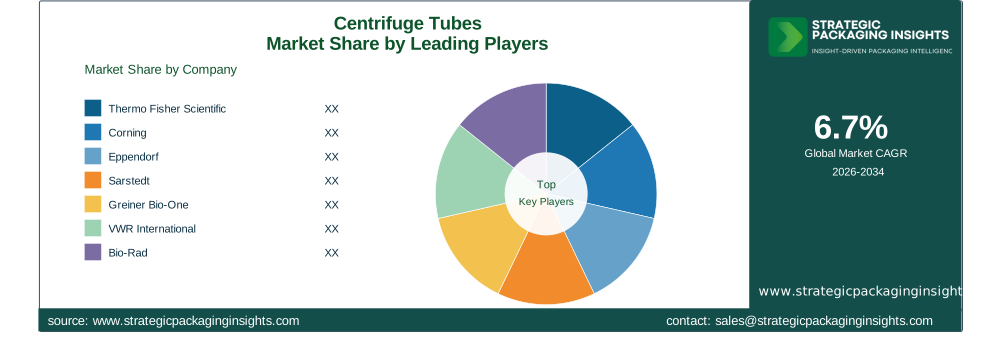
Eppendorf is a leading player in the centrifuge tubes market, known for its innovative products and strong focus on research and development. The company's commitment to quality and customer satisfaction has helped it build a loyal customer base. Sarstedt is another key player, offering a wide range of laboratory consumables and solutions. The company's focus on sustainability and eco-friendly products has helped it differentiate itself in the market.
Greiner Bio-One is a prominent player in the market, known for its high-quality products and strong focus on customer service. The company's extensive product portfolio and global presence have helped it maintain a competitive edge. VWR International, a part of Avantor, is another major player, offering a comprehensive range of laboratory consumables and solutions. The company's strong distribution network and focus on customer satisfaction have helped it build a strong market presence.
Bio-Rad, Merck KGaA, NEST Scientific, and SPL Life Sciences are also significant players in the market, each with its unique strengths and market strategies. Bio-Rad is known for its innovative products and strong focus on research and development, while Merck KGaA is recognized for its high-quality laboratory consumables and strong brand reputation. NEST Scientific and SPL Life Sciences are known for their cost-effective solutions and focus on customer satisfaction, helping them gain a competitive edge in the market.
Key Highlights
- The Centrifuge Tubes market is projected to grow at a CAGR of 6.7% from 2026 to 2034.
- Thermo Fisher Scientific, Corning, and Eppendorf are the leading players in the market.
- Increasing demand for laboratory consumables in research and clinical applications is driving market growth.
- Technological advancements in tube materials and designs are enhancing product performance.
- The market faces challenges from stringent regulatory requirements and high product costs.
- Emerging economies present significant growth opportunities for market players.
- The development of eco-friendly and sustainable centrifuge tubes is a growing trend.
- Automation in laboratories is driving the demand for standardized consumables.
- Fluctuating raw material prices pose a threat to market stability.
- Counterfeit products in the market can undermine consumer trust and affect sales.
Top Countries Insights
In the Centrifuge Tubes market, the United States holds a significant share, driven by its advanced healthcare infrastructure and strong focus on research and development. The market in the U.S. is expected to grow at a CAGR of 5%, supported by the increasing demand for laboratory consumables in biopharmaceutical research and clinical applications. The presence of major market players and the availability of advanced laboratory facilities further contribute to the market's growth.
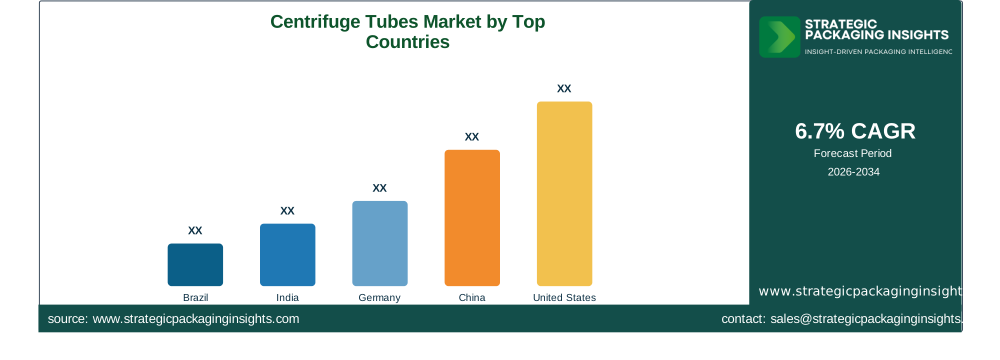
China is another key market for centrifuge tubes, with a projected CAGR of 8%. The country's growing investment in healthcare and research infrastructure, coupled with its focus on biotechnology and pharmaceutical research, is driving market growth. The increasing adoption of automation in laboratories and the rising demand for personalized medicine are also contributing to the market's expansion in China.
Germany is a leading market in Europe, with a CAGR of 6%. The country's strong focus on research and development, along with its advanced healthcare infrastructure, supports the demand for high-quality laboratory consumables. The presence of major market players and the increasing emphasis on precision medicine further drive the market in Germany.
India is emerging as a significant market for centrifuge tubes, with a projected CAGR of 9%. The country's rapidly developing healthcare infrastructure and increasing investment in research facilities are driving market growth. The growing focus on biotechnology and pharmaceutical research, along with the rising demand for laboratory automation, further enhances the market's potential in India.
Brazil is a key market in Latin America, with a CAGR of 7%. The country's expanding healthcare sector and increasing investment in research and development activities are driving the demand for centrifuge tubes. The growing emphasis on precision medicine and the adoption of advanced laboratory techniques further contribute to the market's growth in Brazil.
Centrifuge Tubes Market Segments Insights

Product Type Analysis
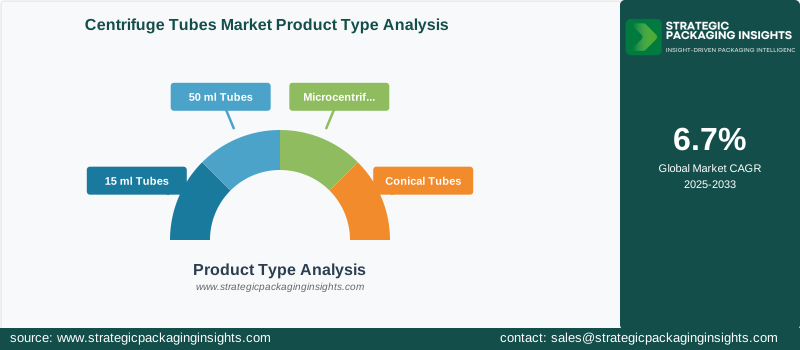
The Centrifuge Tubes market is segmented by product type into 15 ml Tubes, 50 ml Tubes, Microcentrifuge Tubes, and Conical Tubes. The 15 ml and 50 ml tubes are widely used in research and clinical laboratories for sample preparation and storage. These tubes are favored for their versatility and compatibility with various laboratory equipment. The demand for microcentrifuge tubes is driven by the increasing adoption of molecular biology techniques, where precise sample handling is crucial. Conical tubes are preferred for their stability and ease of use in centrifugation processes, making them a popular choice in research and clinical settings.
The market for centrifuge tubes is witnessing a trend towards miniaturization, with smaller tubes gaining popularity due to their efficiency and reduced sample volume requirements. This trend is particularly evident in molecular biology and genomic research, where precise sample handling is essential. The increasing focus on automation in laboratories is also driving the demand for standardized tubes that can seamlessly integrate with automated systems. Companies are investing in the development of high-quality, durable tubes that can withstand extreme laboratory conditions, enhancing their performance and expanding their applications.
Material Type Analysis
The market is segmented by material type into Polypropylene, Polycarbonate, and Glass. Polypropylene tubes are the most commonly used due to their chemical resistance and durability. These tubes are ideal for a wide range of applications, including sample preparation and storage, making them a popular choice in research and clinical laboratories. Polycarbonate tubes are favored for their transparency and strength, making them suitable for high-speed centrifugation processes. Glass tubes, although less common, are used in specific applications where chemical compatibility and thermal resistance are required.

The demand for polypropylene tubes is driven by their cost-effectiveness and versatility, making them suitable for a wide range of laboratory applications. The increasing focus on sustainability is also driving the demand for eco-friendly materials, with companies investing in the development of biodegradable and recyclable tubes. The trend towards automation in laboratories is further enhancing the demand for standardized tubes that can seamlessly integrate with automated systems. Companies are focusing on innovation and quality assurance to meet the evolving needs of modern laboratories and maintain their competitive edge in the market.
Application Analysis
The Centrifuge Tubes market is segmented by application into Sample Preparation, Cell Culture, Molecular Biology, and Clinical Testing. Sample preparation is a critical application, driving the demand for high-quality tubes that ensure accurate and reliable results. The increasing adoption of molecular biology techniques, such as PCR and next-generation sequencing, is driving the demand for precise sample handling and preparation, further boosting the market. Cell culture applications are also contributing to market growth, as these processes require high-quality tubes for cell growth and maintenance.

The demand for centrifuge tubes in clinical testing is driven by the increasing focus on precision medicine and personalized healthcare. These applications require accurate and reliable laboratory consumables to ensure the quality and integrity of test results. The growing emphasis on research and development activities across the globe is expected to create new opportunities for market players, as laboratories seek to optimize their workflows and improve efficiency. Companies are investing in the development of innovative products that meet the evolving needs of modern laboratories and enhance their performance in various applications.
End Use Analysis
The market is segmented by end use into Research Labs, Hospitals, Biopharma Companies, and Academic Institutes. Research labs are the largest end-users of centrifuge tubes, driven by the increasing demand for laboratory consumables in research and development activities. The growing focus on biotechnology and pharmaceutical research is further boosting the demand for high-quality tubes in research labs. Hospitals are also significant end-users, as these facilities require reliable laboratory consumables for clinical testing and diagnostics.
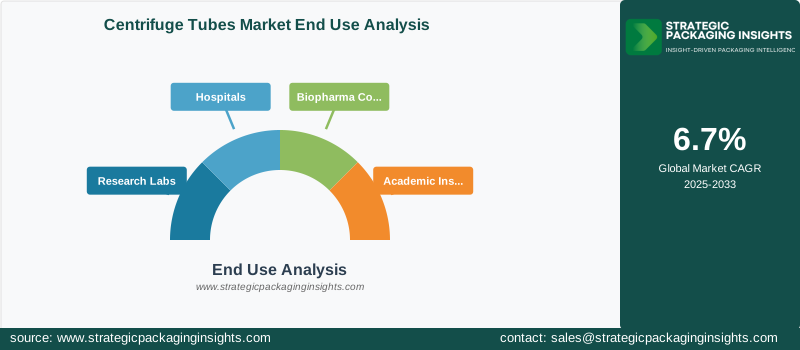
Biopharma companies are driving the demand for centrifuge tubes, as these organizations require high-quality consumables for drug development and testing. The increasing focus on precision medicine and personalized healthcare is further enhancing the demand for reliable laboratory consumables in biopharma companies. Academic institutes are also contributing to market growth, as these organizations require high-quality tubes for research and educational purposes. The increasing investment in research and development activities across the globe is expected to create new opportunities for market players, as laboratories seek to optimize their workflows and improve efficiency.
Centrifuge Tubes Market Segments
The Centrifuge Tubes market has been segmented on the basis ofProduct Type
- 15 ml Tubes
- 50 ml Tubes
- Microcentrifuge Tubes
- Conical Tubes
Material Type
- Polypropylene
- Polycarbonate
- Glass
Application
- Sample Preparation
- Cell Culture
- Molecular Biology
- Clinical Testing
End Use
- Research Labs
- Hospitals
- Biopharma Companies
- Academic Institutes
Region
- Asia Pacific
- North America
- Latin America
- Europe
- Middle East & Africa




