


Cement Packaging Market Outlook
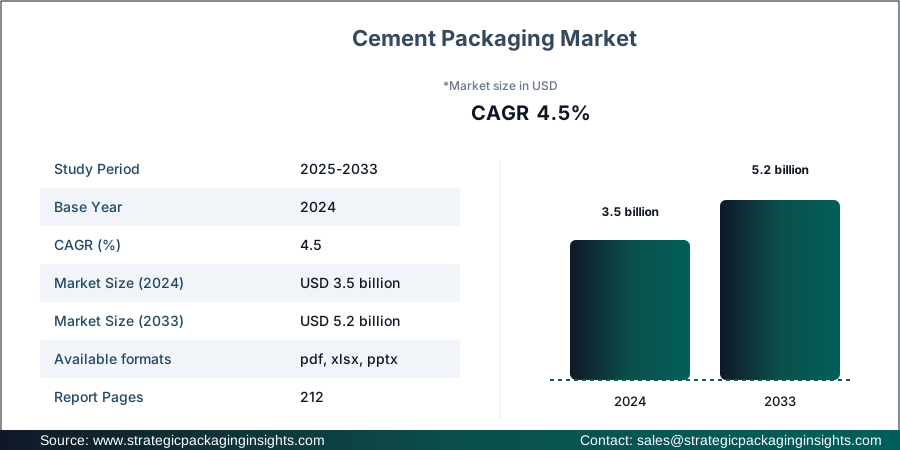
The cement packaging market was valued at $3.5 billion in 2024 and is projected to reach $5.2 billion by 2033, growing at a CAGR of 4.5% during the forecast period 2025-2033. This growth is driven by the increasing demand for sustainable and durable packaging solutions in the construction industry. The rise in urbanization and infrastructure development, particularly in emerging economies, is fueling the demand for cement, thereby boosting the need for efficient packaging solutions. The market is also witnessing a shift towards eco-friendly packaging materials, which is expected to further propel market growth. Additionally, advancements in packaging technologies, such as the development of moisture-resistant and tamper-proof bags, are enhancing the appeal of cement packaging solutions.
Report Scope
| Attributes | Details |
| Report Title | Cement Packaging Market Size, Future Growth and Forecast 2033 |
| Material Type | Paper Bags, Plastic Bags, Composite Bags |
| Capacity | Up to 5 Kg, 5-20 Kg, 20-50 Kg, Above 50 Kg |
| End-User | Residential, Commercial, Industrial |
| Region | Asia Pacific, North America, Latin America, Europe, Middle East & Africa |
| Base Year | 2024 |
| Historic Period | 2017-2023 |
| Forecast Period | 2025-2033 |
| Number of Pages | 212 |
| Customization Available | Yes* |
Opportunities & Threats
The cement packaging market presents significant opportunities for growth, particularly in the realm of sustainable packaging solutions. As environmental concerns continue to rise, there is a growing demand for eco-friendly packaging materials that reduce carbon footprints. Companies that invest in biodegradable and recyclable packaging options are likely to gain a competitive edge. Furthermore, the increasing adoption of digital printing technologies in packaging offers opportunities for customization and branding, allowing companies to differentiate their products in a crowded market. The expansion of the construction industry in developing regions also presents lucrative opportunities for market players to expand their footprint and increase their market share.
Another opportunity lies in the development of smart packaging solutions that enhance the functionality and efficiency of cement packaging. Innovations such as RFID tags and QR codes can provide real-time tracking and inventory management, improving supply chain efficiency. Additionally, the integration of IoT technologies in packaging can offer valuable insights into product usage and customer preferences, enabling companies to tailor their offerings to meet specific market needs. Collaborations and partnerships with technology providers can further enhance the capabilities of cement packaging solutions, opening new avenues for growth.
However, the market also faces certain threats that could hinder its growth. One of the primary challenges is the volatility in raw material prices, which can impact the cost of packaging solutions. Fluctuations in the prices of paper, plastic, and other materials used in cement packaging can affect profit margins and pose a risk to market stability. Additionally, stringent environmental regulations and compliance requirements can increase operational costs for manufacturers, potentially limiting market growth. Companies need to navigate these challenges by adopting cost-effective and sustainable practices to maintain their competitive position in the market.
Drivers & Challenges
The cement packaging market is primarily driven by the robust growth of the construction industry, which is a major consumer of cement. The increasing demand for residential, commercial, and industrial infrastructure is fueling the need for efficient and reliable cement packaging solutions. Additionally, the trend towards urbanization and the development of smart cities are contributing to the rising demand for cement, thereby driving the growth of the packaging market. The emphasis on sustainable construction practices is also encouraging the adoption of eco-friendly packaging materials, further propelling market growth.
Technological advancements in packaging solutions are another key driver of the cement packaging market. Innovations such as moisture-resistant and tamper-proof packaging are enhancing the durability and safety of cement products during transportation and storage. The development of lightweight and cost-effective packaging materials is also contributing to market growth by reducing transportation costs and improving supply chain efficiency. Furthermore, the increasing focus on branding and product differentiation is driving the demand for customized packaging solutions, providing additional growth opportunities for market players.
Despite these drivers, the cement packaging market faces several challenges that could impede its growth. One of the major challenges is the environmental impact of packaging waste, which has led to increased scrutiny and regulatory pressure on manufacturers. Companies are required to comply with stringent environmental regulations, which can increase operational costs and affect profitability. Additionally, the market is highly competitive, with numerous players vying for market share, leading to price wars and margin pressures. To overcome these challenges, companies need to focus on innovation and sustainability to differentiate their offerings and maintain their competitive edge.
Market Share Analysis
The cement packaging market is characterized by a highly competitive landscape, with several key players vying for market share. The market is dominated by a mix of global and regional players, each offering a diverse range of packaging solutions to cater to the varying needs of the construction industry. The competitive landscape is shaped by factors such as product innovation, pricing strategies, and distribution networks. Companies are increasingly focusing on expanding their product portfolios and enhancing their distribution capabilities to gain a competitive edge.
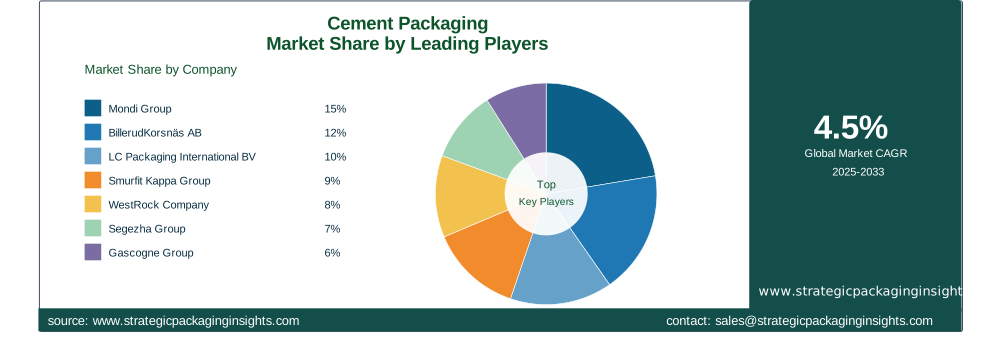
Leading companies in the cement packaging market include Mondi Group, BillerudKorsnäs AB, LC Packaging International BV, and Smurfit Kappa Group. These companies have established a strong presence in the market through strategic acquisitions, partnerships, and collaborations. They are also investing in research and development to introduce innovative and sustainable packaging solutions that meet the evolving needs of the construction industry. Additionally, these companies are leveraging digital technologies to enhance their operational efficiency and customer engagement.
Mondi Group, for instance, is a prominent player in the cement packaging market, known for its extensive range of paper and plastic packaging solutions. The company has a strong focus on sustainability and innovation, offering eco-friendly packaging options that reduce environmental impact. BillerudKorsnäs AB is another key player, renowned for its high-quality paper-based packaging solutions. The company is committed to sustainability and has implemented various initiatives to reduce its carbon footprint and promote circular economy practices.
LC Packaging International BV is a leading provider of flexible packaging solutions, offering a wide range of products for the cement industry. The company has a global presence and is known for its commitment to quality and customer satisfaction. Smurfit Kappa Group, a major player in the packaging industry, offers a comprehensive range of paper-based packaging solutions for the cement market. The company is focused on innovation and sustainability, continuously developing new products to meet the changing needs of its customers.
Key Highlights
- The cement packaging market is projected to grow at a CAGR of 4.5% from 2025 to 2033.
- Increasing demand for sustainable and eco-friendly packaging solutions is driving market growth.
- Technological advancements in packaging solutions are enhancing product durability and safety.
- The construction industry's growth is a major driver of the cement packaging market.
- Volatility in raw material prices poses a challenge to market stability.
- Leading companies are focusing on innovation and sustainability to gain a competitive edge.
- Digital printing technologies offer opportunities for customization and branding in packaging.
- Stringent environmental regulations are impacting operational costs for manufacturers.
- Smart packaging solutions are emerging as a key trend in the market.
Top Countries Insights
In the cement packaging market, China stands out as a dominant player, with a market size of $1.2 billion and a CAGR of 6%. The country's rapid urbanization and infrastructure development are key growth drivers, along with government initiatives to promote sustainable construction practices. India follows closely, with a market size of $900 million and a CAGR of 5%. The booming construction industry and increasing demand for eco-friendly packaging solutions are propelling market growth in the region.
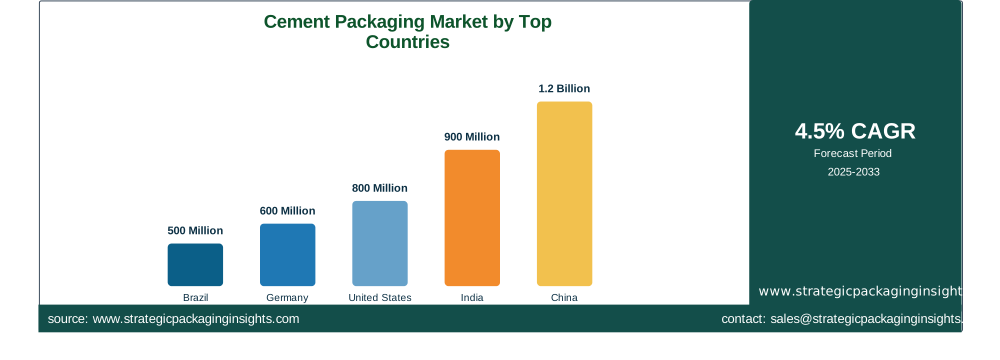
The United States is another significant market, with a size of $800 million and a CAGR of 4%. The country's focus on infrastructure modernization and sustainable building practices is driving the demand for advanced cement packaging solutions. Germany, with a market size of $600 million and a CAGR of 3%, is witnessing growth due to the increasing adoption of eco-friendly packaging materials and technological advancements in packaging solutions.
Brazil, with a market size of $500 million and a CAGR of 4%, is experiencing growth driven by the expansion of the construction industry and the rising demand for sustainable packaging solutions. The country's focus on infrastructure development and urbanization is further contributing to market growth. However, challenges such as regulatory compliance and environmental concerns remain prevalent in these regions, impacting market dynamics.
Evolving Market Dynamics (2018-2024) and Strategic Foresight (2025-2033)
| Metrics | 2018-2024 | 2025-2033 |
|---|---|---|
| CAGR | 3.5% | 4.5% |
| Market Size Evolution | $2.8 billion to $3.5 billion | $3.5 billion to $5.2 billion |
| Segment Distribution Shifts | High demand for paper bags | Increased adoption of eco-friendly materials |
| Regional Contribution Changes | Asia Pacific dominance | Growth in Latin America and Middle East |
| Technological Impact Factors | Introduction of moisture-resistant bags | Integration of smart packaging solutions |
| Client Demand Transformations | Focus on durability | Emphasis on sustainability and customization |
Cement Packaging Market Segments Insights

Material Type Analysis
The material type segment in the cement packaging market is primarily categorized into paper bags, plastic bags, and composite bags. Paper bags are witnessing significant demand due to their eco-friendly nature and biodegradability. The increasing focus on sustainability and environmental conservation is driving the adoption of paper bags in the cement packaging industry. Additionally, paper bags offer excellent printability, allowing for effective branding and marketing, which is further boosting their popularity among manufacturers.
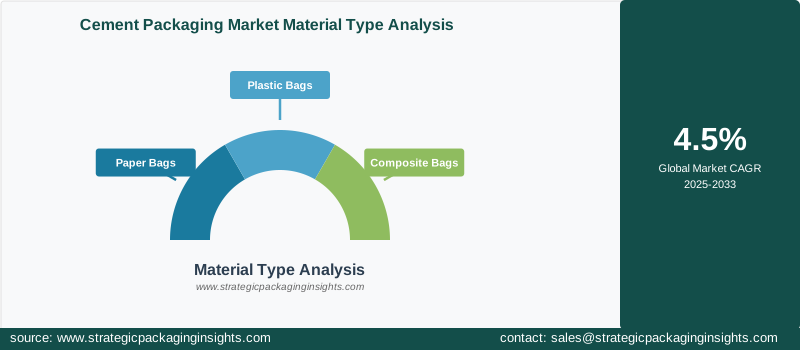
Plastic bags, on the other hand, are favored for their durability and moisture resistance, making them suitable for long-distance transportation and storage. However, the environmental concerns associated with plastic waste are prompting manufacturers to explore alternative materials and innovate in biodegradable plastic solutions. Composite bags, which combine the benefits of both paper and plastic, are gaining traction as they offer enhanced strength and protection against external elements, making them ideal for heavy-duty applications.
Capacity Analysis
The capacity segment of the cement packaging market is divided into up to 5 Kg, 5-20 Kg, 20-50 Kg, and above 50 Kg. The 20-50 Kg segment holds a significant share in the market, driven by the high demand for bulk packaging solutions in the construction industry. These bags are preferred for their ability to accommodate large quantities of cement, reducing the need for frequent refills and enhancing operational efficiency. The increasing trend of bulk purchasing in the construction sector is further propelling the growth of this segment.
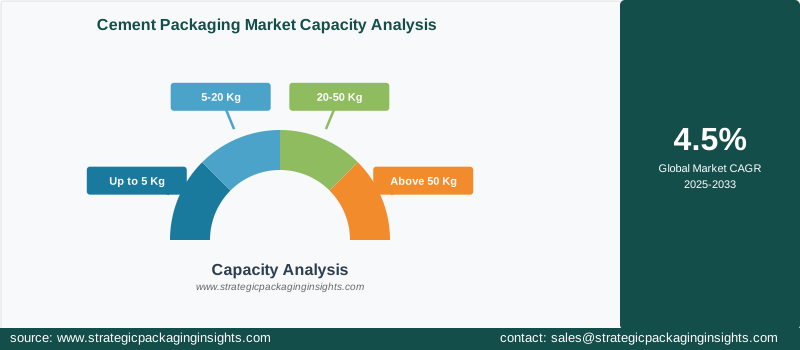
The up to 5 Kg and 5-20 Kg segments are also witnessing growth, particularly in the residential and small-scale construction sectors. These smaller capacity bags offer convenience and ease of handling, making them suitable for DIY projects and small construction activities. The above 50 Kg segment, although smaller in comparison, is gaining traction in industrial applications where large volumes of cement are required. The demand for customized packaging solutions in this segment is also on the rise, driven by the need for efficient logistics and supply chain management.
End-User Analysis
The end-user segment of the cement packaging market is categorized into residential, commercial, and industrial sectors. The residential sector is a major consumer of cement packaging solutions, driven by the increasing demand for housing and urban development projects. The rise in disposable income and changing lifestyle preferences are contributing to the growth of the residential construction industry, thereby boosting the demand for cement packaging solutions.
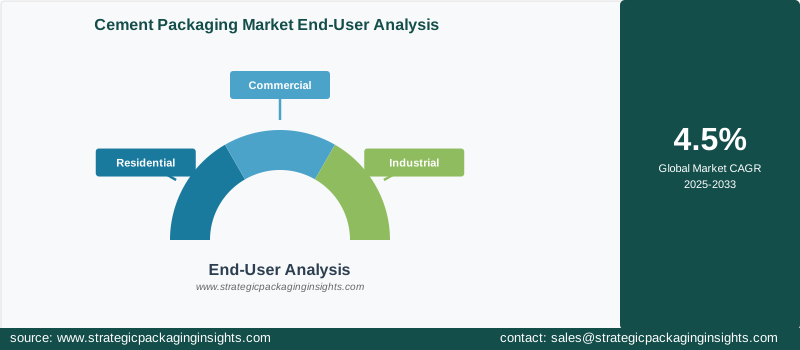
The commercial sector is also witnessing significant growth, fueled by the expansion of retail, hospitality, and office spaces. The increasing focus on sustainable building practices and energy-efficient construction is driving the demand for advanced cement packaging solutions in this sector. The industrial sector, although smaller in comparison, is experiencing growth due to the rising demand for infrastructure development and industrial construction projects. The need for durable and efficient packaging solutions in this sector is driving innovation and product development in the cement packaging market.
Regional Analysis
The regional analysis of the cement packaging market reveals that Asia Pacific holds the largest share, driven by the rapid urbanization and infrastructure development in countries like China and India. The region's focus on sustainable construction practices and government initiatives to promote eco-friendly packaging solutions are further propelling market growth. North America and Europe are also significant markets, with a strong emphasis on innovation and sustainability in packaging solutions.
Latin America and the Middle East & Africa are emerging as lucrative markets for cement packaging solutions, driven by the increasing demand for infrastructure development and urbanization. The focus on sustainable building practices and the adoption of advanced packaging technologies are contributing to the growth of these regions. However, challenges such as regulatory compliance and environmental concerns remain prevalent, impacting market dynamics and growth potential.
Cement Packaging Market Segments
The Cement Packaging market has been segmented on the basis ofMaterial Type
- Paper Bags
- Plastic Bags
- Composite Bags
Capacity
- Up to 5 Kg
- 5-20 Kg
- 20-50 Kg
- Above 50 Kg
End-User
- Residential
- Commercial
- Industrial
Region
- Asia Pacific
- North America
- Latin America
- Europe
- Middle East & Africa




