


Cellulose Fiber Market Outlook
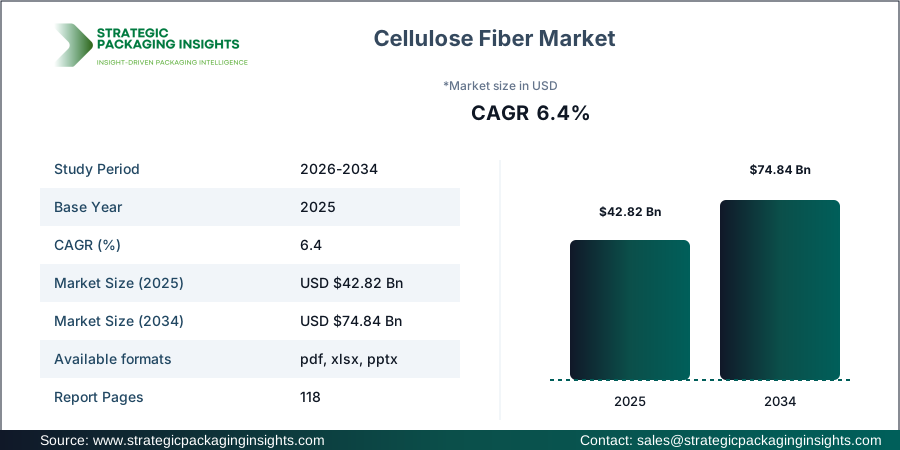
The cellulose fiber market was valued at $42.82 billion in 2025 and is projected to reach $74.84 billion by 2034, growing at a CAGR of 6.4% during the forecast period 2026-2034. This market is driven by the increasing demand for sustainable and biodegradable materials across various industries. The textile industry, in particular, is a significant consumer of cellulose fibers, leveraging their natural properties for producing eco-friendly fabrics. Additionally, the packaging sector is witnessing a shift towards cellulose-based materials as companies aim to reduce their carbon footprint and adhere to stringent environmental regulations. The versatility of cellulose fibers, which can be derived from various sources such as wood pulp and recycled fibers, further enhances their appeal across diverse applications.
Despite the promising growth trajectory, the cellulose fiber market faces certain challenges. Regulatory constraints related to deforestation and the environmental impact of fiber production are significant concerns. However, advancements in technology and the development of innovative production methods are expected to mitigate these issues. The market also presents substantial growth potential, particularly in emerging economies where industrialization and urbanization are driving demand for sustainable materials. As consumer awareness regarding environmental sustainability increases, the cellulose fiber market is poised to capitalize on these trends, offering lucrative opportunities for industry players.
Report Scope
| Attributes | Details |
| Report Title | Cellulose Fiber Market Size, Future Growth and Forecast 2034 |
| Product Type | Wood Pulp Fiber, Regenerated Cellulose Fiber, Microcrystalline Cellulose |
| Application | Paper, Packaging, Textiles, Filtration, Food Additives |
| Source | Softwood, Hardwood, Recycled Fiber |
| End Use | Paper Mills, Textile Producers, Packaging Converters, Food Manufacturers |
| Region | Asia Pacific, North America, Latin America, Europe, Middle East & Africa |
| Base Year | 2025 |
| Historic Period | 2018-2024 |
| Forecast Period | 2026-2034 |
| Number of Pages | 118 |
| Customization Available | Yes* |
Opportunities & Threats
The cellulose fiber market is ripe with opportunities, particularly in the realm of sustainable packaging solutions. As global awareness of environmental issues grows, there is a significant push towards reducing plastic waste, which has opened up avenues for cellulose fibers in the packaging industry. Companies are increasingly investing in research and development to create innovative cellulose-based packaging solutions that are not only biodegradable but also cost-effective. This trend is further supported by government regulations and policies aimed at promoting sustainable practices, providing a conducive environment for the growth of cellulose fiber applications in packaging.
Another opportunity lies in the textile industry, where there is a growing demand for eco-friendly fabrics. Consumers are becoming more conscious of the environmental impact of their purchases, leading to a surge in demand for textiles made from natural and sustainable fibers. Cellulose fibers, with their natural origin and biodegradability, are well-positioned to meet this demand. The development of new technologies that enhance the properties of cellulose fibers, such as improved strength and durability, is expected to further boost their adoption in the textile sector.
However, the cellulose fiber market is not without its threats. One of the primary challenges is the competition from synthetic fibers, which are often cheaper and more readily available. Additionally, the production of cellulose fibers is resource-intensive, requiring significant amounts of water and energy, which can lead to environmental concerns. Companies must navigate these challenges by investing in sustainable production methods and developing innovative solutions to reduce their environmental impact. Furthermore, fluctuations in raw material prices can affect the profitability of cellulose fiber production, posing a risk to market growth.
Drivers & Challenges
The cellulose fiber market is driven by several key factors, including the increasing demand for sustainable and biodegradable materials. As environmental concerns continue to rise, industries are seeking alternatives to traditional materials that contribute to pollution and waste. Cellulose fibers, derived from natural sources, offer a viable solution, making them highly attractive to manufacturers across various sectors. The textile industry, in particular, is a major driver of market growth, as consumers increasingly prefer eco-friendly fabrics. Additionally, advancements in technology have enabled the development of high-performance cellulose fibers, further expanding their applications and driving market demand.
Another significant driver is the growing emphasis on reducing carbon footprints and adhering to environmental regulations. Governments worldwide are implementing policies to promote sustainable practices, encouraging industries to adopt eco-friendly materials. This regulatory push is creating a favorable environment for the growth of the cellulose fiber market. Furthermore, the versatility of cellulose fibers, which can be used in a wide range of applications from textiles to packaging, is a key factor driving their adoption. The ability to produce cellulose fibers from various sources, including recycled materials, also enhances their appeal and supports market growth.
Despite these drivers, the cellulose fiber market faces several challenges. One of the primary challenges is the competition from synthetic fibers, which are often more cost-effective and readily available. Additionally, the production of cellulose fibers is resource-intensive, requiring significant amounts of water and energy, which can lead to environmental concerns. Companies must invest in sustainable production methods and develop innovative solutions to reduce their environmental impact. Furthermore, fluctuations in raw material prices can affect the profitability of cellulose fiber production, posing a risk to market growth. Addressing these challenges will be crucial for the continued expansion of the cellulose fiber market.
Market Share Analysis
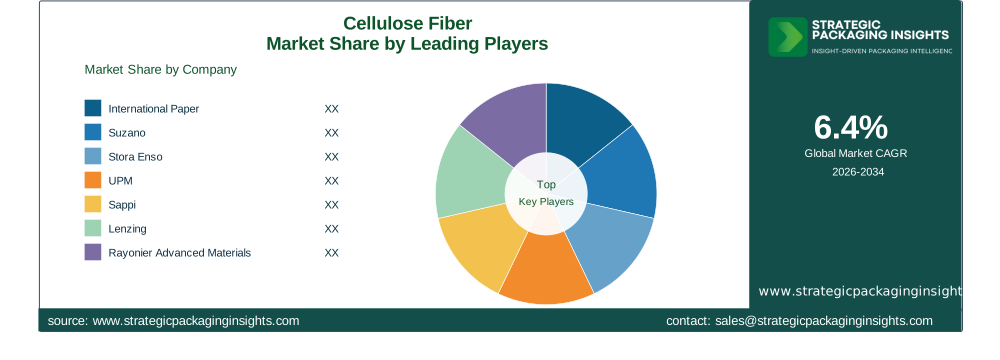
The cellulose fiber market is characterized by a competitive landscape with several key players dominating the industry. Companies such as International Paper, Suzano, Stora Enso, UPM, and Sappi hold significant market shares, leveraging their extensive experience and resources to maintain a strong presence in the market. These companies are actively investing in research and development to enhance their product offerings and meet the evolving demands of consumers. Additionally, they are focusing on expanding their production capacities and exploring new markets to capitalize on the growing demand for cellulose fibers.
International Paper is a leading player in the cellulose fiber market, known for its extensive product portfolio and strong distribution network. The company is committed to sustainability and has implemented various initiatives to reduce its environmental impact. Suzano, another major player, is recognized for its innovative approach to cellulose fiber production, utilizing advanced technologies to enhance the quality and performance of its products. Stora Enso, UPM, and Sappi are also key players in the market, each with a strong focus on sustainability and innovation.
Lenzing is a prominent name in the cellulose fiber market, known for its high-quality products and commitment to sustainability. The company has made significant investments in research and development to create innovative solutions that meet the needs of its customers. Rayonier Advanced Materials and Borregaard are also important players in the market, each with a strong focus on developing sustainable and high-performance cellulose fibers. Domtar and West Fraser are other notable companies in the industry, known for their extensive product offerings and commitment to environmental sustainability.
The competitive landscape of the cellulose fiber market is characterized by a focus on innovation and sustainability. Companies are investing in research and development to create new and improved products that meet the evolving demands of consumers. Additionally, they are expanding their production capacities and exploring new markets to capitalize on the growing demand for cellulose fibers. As the market continues to evolve, companies that prioritize sustainability and innovation are likely to maintain a competitive edge and achieve long-term success.
Key Highlights
- The cellulose fiber market is projected to grow from $42.82 billion in 2025 to $74.84 billion by 2034, at a CAGR of 6.4%.
- Increasing demand for sustainable and biodegradable materials is driving market growth.
- The textile industry is a major consumer of cellulose fibers, leveraging their natural properties for eco-friendly fabrics.
- Advancements in technology are enabling the development of high-performance cellulose fibers.
- Government regulations promoting sustainable practices are creating a favorable environment for market growth.
- Competition from synthetic fibers poses a challenge to market expansion.
- Key players in the market include International Paper, Suzano, Stora Enso, UPM, and Sappi.
- Companies are focusing on innovation and sustainability to maintain a competitive edge.
- The versatility of cellulose fibers enhances their appeal across diverse applications.
- Fluctuations in raw material prices can affect the profitability of cellulose fiber production.
Top Countries Insights
In the cellulose fiber market, China stands out as a leading player, with a market size of approximately $12 billion and a CAGR of 8%. The country's robust textile industry and increasing demand for sustainable materials are key growth drivers. Government initiatives promoting environmental sustainability further support market expansion. However, challenges such as environmental regulations and resource constraints must be addressed to sustain growth.
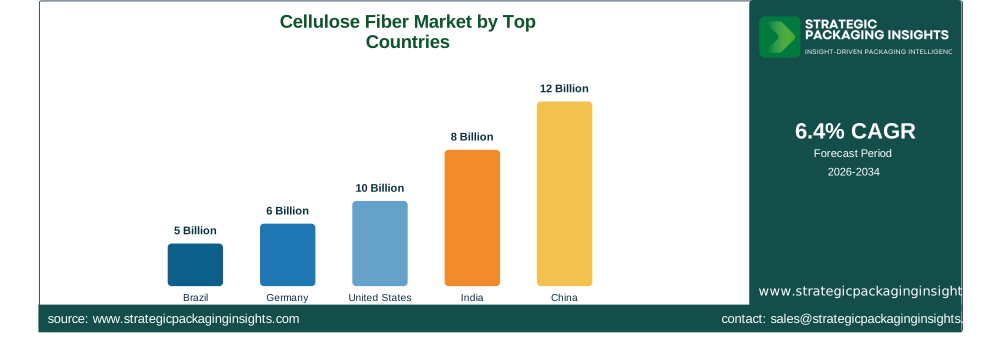
India is another significant market for cellulose fibers, with a market size of around $8 billion and a CAGR of 7%. The country's growing textile industry and increasing consumer awareness of eco-friendly products are driving demand. Government policies supporting sustainable practices and investments in technology are expected to boost market growth. However, competition from synthetic fibers and resource limitations pose challenges.
The United States is a major player in the cellulose fiber market, with a market size of approximately $10 billion and a CAGR of 6%. The country's strong focus on sustainability and innovation is driving demand for cellulose fibers across various industries. Government regulations promoting environmental sustainability and advancements in technology are key growth drivers. However, competition from synthetic fibers and fluctuations in raw material prices are challenges that need to be addressed.
Germany is a key market for cellulose fibers in Europe, with a market size of around $6 billion and a CAGR of 5%. The country's strong emphasis on sustainability and innovation is driving demand for cellulose fibers in the textile and packaging industries. Government policies promoting sustainable practices and investments in research and development are expected to support market growth. However, competition from synthetic fibers and resource constraints pose challenges.
Brazil is an emerging market for cellulose fibers, with a market size of approximately $5 billion and a CAGR of 6%. The country's growing textile industry and increasing demand for sustainable materials are key growth drivers. Government initiatives promoting environmental sustainability and investments in technology are expected to boost market growth. However, challenges such as resource limitations and competition from synthetic fibers must be addressed to sustain growth.
Cellulose Fiber Market Segments Insights

Product Type Analysis
The cellulose fiber market is segmented by product type into wood pulp fiber, regenerated cellulose fiber, and microcrystalline cellulose. Wood pulp fiber is the most widely used type, driven by its extensive applications in the paper and packaging industries. The demand for wood pulp fiber is fueled by the increasing need for sustainable and biodegradable materials, as well as advancements in production technologies that enhance its properties. Regenerated cellulose fiber, known for its versatility and eco-friendly nature, is gaining traction in the textile industry, where it is used to produce high-quality fabrics. Microcrystalline cellulose, with its unique properties, is widely used in the food and pharmaceutical industries as a stabilizer and thickening agent.

Wood pulp fiber dominates the market due to its widespread use in paper production, where it is valued for its strength and durability. The packaging industry also relies heavily on wood pulp fiber, as companies seek to reduce their environmental impact by using sustainable materials. Regenerated cellulose fiber is experiencing significant growth in the textile industry, driven by consumer demand for eco-friendly fabrics. The development of new technologies that enhance the properties of regenerated cellulose fiber is expected to further boost its adoption. Microcrystalline cellulose is gaining popularity in the food and pharmaceutical industries, where it is used as a stabilizer and thickening agent, thanks to its unique properties and versatility.
Application Analysis
The cellulose fiber market is segmented by application into paper, packaging, textiles, filtration, and food additives. The paper industry is the largest consumer of cellulose fibers, driven by the increasing demand for sustainable and biodegradable materials. The packaging industry is also a significant consumer, as companies seek to reduce their carbon footprint by using eco-friendly materials. The textile industry is experiencing significant growth, driven by consumer demand for sustainable and eco-friendly fabrics. Filtration and food additives are emerging applications, where cellulose fibers are valued for their unique properties and versatility.

The paper industry dominates the market, as cellulose fibers are essential for producing high-quality paper products. The packaging industry is also a major consumer, as companies seek to reduce their environmental impact by using sustainable materials. The textile industry is experiencing significant growth, driven by consumer demand for eco-friendly fabrics. Filtration and food additives are emerging applications, where cellulose fibers are valued for their unique properties and versatility. The development of new technologies that enhance the properties of cellulose fibers is expected to further boost their adoption across various applications.
Source Analysis
The cellulose fiber market is segmented by source into softwood, hardwood, and recycled fiber. Softwood is the most widely used source, driven by its availability and cost-effectiveness. Hardwood is also a significant source, valued for its strength and durability. Recycled fiber is gaining popularity, as companies seek to reduce their environmental impact by using sustainable materials. The demand for recycled fiber is fueled by government regulations promoting sustainable practices and consumer demand for eco-friendly products.

Softwood dominates the market due to its availability and cost-effectiveness, making it the preferred choice for many manufacturers. Hardwood is also a significant source, valued for its strength and durability, making it ideal for producing high-quality cellulose fibers. Recycled fiber is gaining popularity, as companies seek to reduce their environmental impact by using sustainable materials. The demand for recycled fiber is fueled by government regulations promoting sustainable practices and consumer demand for eco-friendly products. The development of new technologies that enhance the properties of recycled fiber is expected to further boost its adoption.
End Use Analysis
The cellulose fiber market is segmented by end use into paper mills, textile producers, packaging converters, and food manufacturers. Paper mills are the largest consumers of cellulose fibers, driven by the increasing demand for sustainable and biodegradable materials. Textile producers are also significant consumers, as they seek to meet consumer demand for eco-friendly fabrics. Packaging converters are experiencing significant growth, driven by the increasing demand for sustainable packaging solutions. Food manufacturers are emerging consumers, as they seek to use cellulose fibers as stabilizers and thickening agents in food products.

Paper mills dominate the market, as cellulose fibers are essential for producing high-quality paper products. Textile producers are also significant consumers, as they seek to meet consumer demand for eco-friendly fabrics. Packaging converters are experiencing significant growth, driven by the increasing demand for sustainable packaging solutions. Food manufacturers are emerging consumers, as they seek to use cellulose fibers as stabilizers and thickening agents in food products. The development of new technologies that enhance the properties of cellulose fibers is expected to further boost their adoption across various end-use industries.
Cellulose Fiber Market Segments
The Cellulose Fiber market has been segmented on the basis ofProduct Type
- Wood Pulp Fiber
- Regenerated Cellulose Fiber
- Microcrystalline Cellulose
Application
- Paper
- Packaging
- Textiles
- Filtration
- Food Additives
Source
- Softwood
- Hardwood
- Recycled Fiber
End Use
- Paper Mills
- Textile Producers
- Packaging Converters
- Food Manufacturers
Region
- Asia Pacific
- North America
- Latin America
- Europe
- Middle East & Africa




