


Catheter Tip Syringe Market Outlook
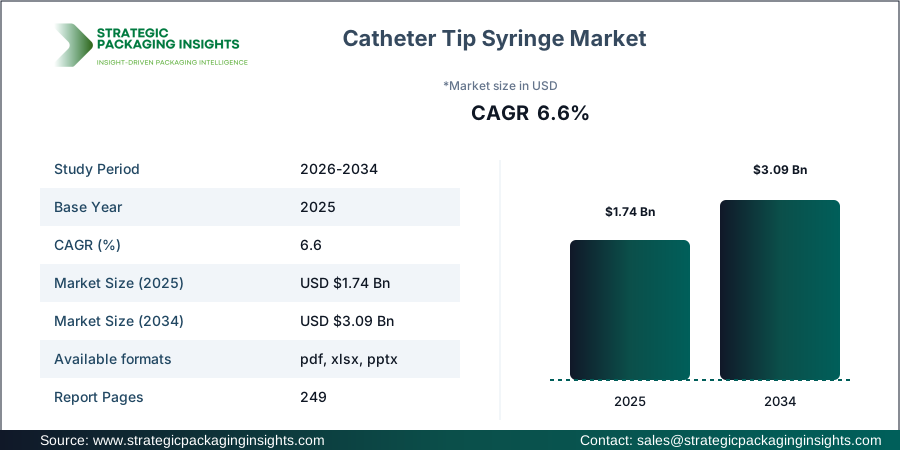
The Catheter Tip Syringe market size was valued at USD 1.74 billion in 2025 and is anticipated to reach USD 3.09 billion by 2034, growing at a CAGR of 6.6% during the forecast period according to Strategic Packaging Insights. The market is witnessing significant growth due to the increasing demand for minimally invasive procedures and the rising prevalence of chronic diseases. Companies like BD and Terumo are at the forefront, driving innovation and expanding their product portfolios to meet the growing needs of healthcare providers. The demand for catheter tip syringes is further fueled by advancements in medical technology and the increasing adoption of these devices in various medical applications.
One of the most impactful drivers of the Catheter Tip Syringe market is the growing geriatric population, which is more susceptible to chronic diseases requiring frequent medical interventions. According to the World Health Organization, the global population aged 60 years and older is expected to double by 2050, reaching 2.1 billion. This demographic shift is leading to an increased demand for healthcare services, including the use of catheter tip syringes for various medical procedures. Additionally, the rise in healthcare expenditure and the increasing focus on improving patient care are contributing to the market's growth. Companies like Cardinal Health and B. Braun are investing in research and development to enhance the efficiency and safety of their products, further driving market expansion.
Report Scope
| Attributes | Details |
| Report Title | Catheter Tip Syringe Market Size, Future Growth and Forecast 2034 |
| By Product Type | Disposable Catheter Tip Syringes, Sterile Syringes, Irrigation Syringes |
| By Material Type | Polypropylene, Polycarbonate, Medical-Grade Plastic |
| By Application | Irrigation, Enteral Feeding, Wound Care, Medical Procedures |
| By End Use | Hospitals, Clinics, Ambulatory Centers, Homecare |
| Region | Asia Pacific, North America, Latin America, Europe, Middle East & Africa |
| Base Year | 2025 |
| Historic Period | 2018-2024 |
| Forecast Period | 2026-2034 |
| Number of Pages | 249 |
| Customization Available | Yes* |
Opportunities & Threats
The Catheter Tip Syringe market presents numerous opportunities for growth, particularly in emerging economies where healthcare infrastructure is rapidly developing. The increasing investment in healthcare facilities and the rising awareness about advanced medical devices are creating a favorable environment for market expansion. Companies like Nipro and Medline Industries are capitalizing on these opportunities by expanding their presence in these regions and offering cost-effective solutions to cater to the growing demand. Furthermore, the trend towards home healthcare is opening new avenues for market players, as more patients prefer receiving medical care in the comfort of their homes.
Another significant opportunity lies in the development of eco-friendly and sustainable products. With the growing concern over environmental impact, there is a rising demand for medical devices made from biodegradable materials. Companies that can innovate and offer environmentally friendly catheter tip syringes are likely to gain a competitive edge in the market. This shift towards sustainability is being driven by both regulatory pressures and consumer preferences, encouraging manufacturers to explore new materials and production processes.
However, the market also faces certain threats, such as stringent regulatory requirements and the high cost of advanced medical devices. Compliance with various international standards and regulations can be challenging for manufacturers, particularly those operating in multiple regions. Additionally, the high cost of research and development, coupled with the need for continuous innovation, can pose financial challenges for smaller companies. Despite these challenges, the market is expected to continue its growth trajectory, driven by the increasing demand for efficient and safe medical devices.
Drivers & Challenges
The primary drivers of the Catheter Tip Syringe market include the increasing prevalence of chronic diseases and the growing demand for minimally invasive procedures. Chronic conditions such as diabetes, cardiovascular diseases, and cancer require frequent medical interventions, leading to a higher demand for catheter tip syringes. Additionally, the shift towards minimally invasive procedures, which offer faster recovery times and reduced risk of complications, is further boosting the market. Companies like Smiths Medical and Hindustan Syringes are focusing on developing innovative products that cater to these evolving healthcare needs.
Technological advancements in medical devices are also playing a crucial role in driving market growth. The development of smart syringes with features such as dose tracking and safety mechanisms is enhancing the efficiency and safety of medical procedures. These innovations are being driven by the need to improve patient outcomes and reduce the risk of infections. As a result, manufacturers are investing heavily in research and development to stay ahead of the competition and meet the growing demand for advanced medical devices.
Despite the positive growth prospects, the Catheter Tip Syringe market faces several challenges. One of the major challenges is the high cost of advanced medical devices, which can limit their adoption, particularly in developing regions. Additionally, the market is highly competitive, with numerous players vying for market share. This intense competition can lead to pricing pressures and reduced profit margins for manufacturers. Furthermore, the need for continuous innovation and compliance with stringent regulatory requirements can pose significant challenges for companies operating in this market.
Market Growth Factors
- U.S. syringe manufacturing capacity is expanding. BD said new production lines installed in Connecticut and Nebraska would increase domestic conventional syringe output by more than 50% and safety-engineered injection device output by more than 40%, improving supply availability for hospital syringe categories that include large-volume and specialty-tip formats.
- Recent FDA clearances are widening approved product availability in the syringe category. In July 2025, FDA cleared the BD Plastipak Syringe in 20 mL and 50 mL eccentric-tip configurations, supporting product refresh cycles and procurement options for large-volume aspiration and injection applications.
- Supplier diversification is improving through new FDA-cleared syringe portfolios. In August 2025, FDA cleared Cardinal Health’s Monoject syringe family across multiple sizes from 1 mL to 60 mL, which supports broader hospital and distributor sourcing options in the general syringe market.
- Medicare coverage continues to support recurring urology-related demand for irrigation syringes. CMS’s current Urological Supplies local coverage determination states that covered supplies for reasonable and necessary non-routine catheter irrigation include either an irrigation tray (A4320) or an irrigation syringe (A4322), along with sterile water or saline.
- Ongoing U.S. investment in syringe manufacturing infrastructure is reinforcing domestic supply chains. In January 2026, BD announced a 0 million investment in Columbus, Nebraska to establish BD Neopak glass prefillable syringe production and enhance cannula manufacturing, adding jobs and expanding line capacity. [BD ]
- Healthcare procurement is increasingly prioritizing supply resilience. Medline and BD’s 2026 program to hold extra inventory for eight high-use syringes shows distributors and manufacturers are building buffer stock and closer-to-customer supply models, which can stabilize ordering and support sustained category demand. [Medline Newsroom ]
Recent Developments
- In January 2025, BD announced additional U.S. manufacturing investments to add capacity for critical medical devices, including syringes, and said new needle and syringe production lines had been installed at its Connecticut and Nebraska plants. BD stated that these lines would raise domestically manufactured conventional syringe capacity by more than 50% and safety-engineered injection device capacity by more than 40%, adding hundreds of millions of units annually.
- In July 2025, the U.S. FDA granted 510(k) clearance to the BD Plastipak Syringe. The cleared device covers 20 mL and 50 mL sterile, single-use syringe configurations with eccentric luer-slip tip designs for general-purpose fluid aspiration and injection, expanding BD’s approved large-volume syringe portfolio.
- In January 2026, Terumo Medical Corporation launched the SurTract Safety Syringe in the United States. Terumo said the product uses Roncadelle Operations’ SafeR passive safety technology, features automatic needle retraction, and began distribution to hospitals, clinics, and emergency-care settings in the first quarter of 2026. [Terumo Medical Corporation ]
- In February 2026, Medline and BD announced a supply-chain collaboration to create an extra supply cushion for eight widely used syringes. Medline said the program pairs BD’s increased syringe production with Medline carrying additional inventory, a move aimed at reinforcing supply resiliency for healthcare providers. [Medline Newsroom ]
Market Share Analysis
The Catheter Tip Syringe market is characterized by a highly competitive landscape, with several key players dominating the market. Companies such as BD, Terumo, and Cardinal Health hold significant market shares, driven by their extensive product portfolios and strong distribution networks. These companies are continuously investing in research and development to enhance their product offerings and maintain their competitive edge. The market is also witnessing the entry of new players, further intensifying the competition.
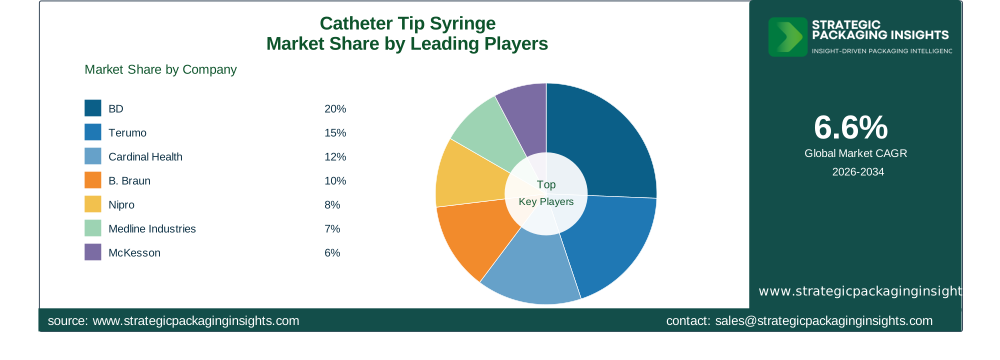
BD, a leading player in the market, is known for its innovative products and strong focus on customer satisfaction. The company has a wide range of catheter tip syringes that cater to various medical applications, making it a preferred choice among healthcare providers. Terumo, another major player, is renowned for its high-quality products and commitment to advancing healthcare through innovation. The company's strong presence in both developed and emerging markets has helped it maintain a competitive position in the industry.
Cardinal Health, B. Braun, and Nipro are also key players in the Catheter Tip Syringe market, each with their unique strengths and market strategies. Cardinal Health is known for its comprehensive product portfolio and strong distribution network, which enables it to effectively reach a wide customer base. B. Braun, on the other hand, focuses on developing innovative solutions that enhance patient safety and improve healthcare outcomes. Nipro is recognized for its cost-effective products and strong presence in the Asia Pacific region, where it continues to expand its market share.
Other notable players in the market include Medline Industries, McKesson, Smiths Medical, Hindustan Syringes, and GBUK Group. These companies are leveraging their expertise and resources to develop advanced medical devices that meet the evolving needs of healthcare providers. The competitive landscape is further shaped by strategic partnerships, mergers, and acquisitions, as companies seek to strengthen their market positions and expand their product offerings.
Key Highlights
- The Catheter Tip Syringe market is projected to grow from USD 1.74 billion in 2025 to USD 3.09 billion by 2034, at a CAGR of 6.6%.
- Key drivers include the increasing prevalence of chronic diseases and the growing demand for minimally invasive procedures.
- Opportunities exist in emerging markets and the development of eco-friendly products.
- Challenges include stringent regulatory requirements and high costs of advanced medical devices.
- BD, Terumo, and Cardinal Health are leading players in the market.
- Technological advancements are driving innovation in smart syringes with enhanced safety features.
- The market is highly competitive, with numerous players vying for market share.
- Strategic partnerships and acquisitions are shaping the competitive landscape.
- The shift towards home healthcare is creating new growth opportunities.
- Environmental sustainability is becoming a key focus for manufacturers.
Catheter Tip Syringe Market Segments Insights

Product Type Analysis
The Catheter Tip Syringe market is segmented by product type into Disposable Catheter Tip Syringes, Sterile Syringes, and Irrigation Syringes. Disposable Catheter Tip Syringes are gaining popularity due to their convenience and reduced risk of cross-contamination. These syringes are widely used in hospitals and clinics for various medical procedures, driving their demand. Sterile Syringes, on the other hand, are preferred for their safety and reliability, particularly in critical medical applications. The growing focus on infection control and patient safety is boosting the demand for sterile syringes. Irrigation Syringes are primarily used in wound care and medical procedures, where precise fluid delivery is essential. The increasing prevalence of chronic wounds and the rising number of surgical procedures are contributing to the growth of this segment.
Companies like BD and Terumo are leading the market with their extensive range of product offerings. These companies are continuously innovating to enhance the safety and efficiency of their syringes, catering to the evolving needs of healthcare providers. The trend towards minimally invasive procedures is further driving the demand for advanced catheter tip syringes, as they offer precise fluid delivery and improved patient outcomes. Additionally, the increasing adoption of these syringes in home healthcare settings is creating new growth opportunities for market players.
Material Type Analysis
The market is also segmented by material type into Polypropylene, Polycarbonate, and Medical-Grade Plastic. Polypropylene is the most commonly used material due to its cost-effectiveness and versatility. It is widely used in the production of disposable syringes, making it a preferred choice among manufacturers. Polycarbonate, known for its durability and transparency, is used in the production of high-quality syringes that require precise fluid delivery. Medical-Grade Plastic is gaining traction due to its biocompatibility and safety, making it suitable for use in critical medical applications.
Manufacturers are focusing on developing syringes made from advanced materials that offer enhanced safety and performance. The growing demand for eco-friendly and sustainable products is encouraging companies to explore new materials and production processes. As a result, the market is witnessing the introduction of syringes made from biodegradable materials, catering to the increasing demand for environmentally friendly medical devices. Companies like B. Braun and Nipro are at the forefront of this trend, leveraging their expertise in material science to develop innovative solutions.
Application Analysis
The Catheter Tip Syringe market is segmented by application into Irrigation, Enteral Feeding, Wound Care, and Medical Procedures. Irrigation syringes are widely used in wound care and surgical procedures, where precise fluid delivery is essential. The increasing prevalence of chronic wounds and the rising number of surgical procedures are driving the demand for irrigation syringes. Enteral Feeding syringes are used for delivering nutrition to patients who cannot consume food orally. The growing focus on patient care and the increasing prevalence of chronic diseases are contributing to the growth of this segment.
Wound Care syringes are used for cleaning and dressing wounds, ensuring optimal healing conditions. The rising incidence of chronic wounds and the growing awareness about advanced wound care solutions are boosting the demand for wound care syringes. Medical Procedures syringes are used in various diagnostic and therapeutic procedures, where precise fluid delivery is crucial. The increasing adoption of minimally invasive procedures and the growing focus on patient safety are driving the demand for advanced catheter tip syringes in this segment.
End Use Analysis
The market is segmented by end use into Hospitals, Clinics, Ambulatory Centers, and Homecare. Hospitals are the largest end-users of catheter tip syringes, driven by the high volume of medical procedures performed in these settings. The increasing prevalence of chronic diseases and the growing demand for advanced medical devices are contributing to the growth of this segment. Clinics and Ambulatory Centers are also significant end-users, as they offer a wide range of medical services, including diagnostic and therapeutic procedures.
The trend towards home healthcare is creating new growth opportunities for market players, as more patients prefer receiving medical care in the comfort of their homes. The increasing availability of advanced medical devices and the growing focus on patient care are driving the demand for catheter tip syringes in homecare settings. Companies like Medline Industries and McKesson are capitalizing on this trend by offering a wide range of products that cater to the needs of home healthcare providers.
Catheter Tip Syringe Market Segments
The Catheter Tip Syringe market has been segmented on the basis ofBy Product Type
- Disposable Catheter Tip Syringes
- Sterile Syringes
- Irrigation Syringes
By Material Type
- Polypropylene
- Polycarbonate
- Medical-Grade Plastic
By Application
- Irrigation
- Enteral Feeding
- Wound Care
- Medical Procedures
By End Use
- Hospitals
- Clinics
- Ambulatory Centers
- Homecare
Region
- Asia Pacific
- North America
- Latin America
- Europe
- Middle East & Africa




