


Case and Box Handling Robots Market Outlook
The Case and Box Handling Robots market was valued at $4.64 billion in 2025 and is projected to reach $11.14 billion by 2034, growing at a CAGR of 10.2% during the forecast period 2026-2034. This market is witnessing significant growth due to the increasing demand for automation in logistics and warehousing sectors. The rise in e-commerce activities has further fueled the need for efficient handling systems, driving the adoption of case and box handling robots. These robots offer enhanced precision, speed, and reliability, which are crucial for meeting the high demands of modern supply chains. Additionally, technological advancements in robotics, such as AI integration and IoT connectivity, are expected to further boost market growth by enhancing the capabilities and efficiency of these robots.
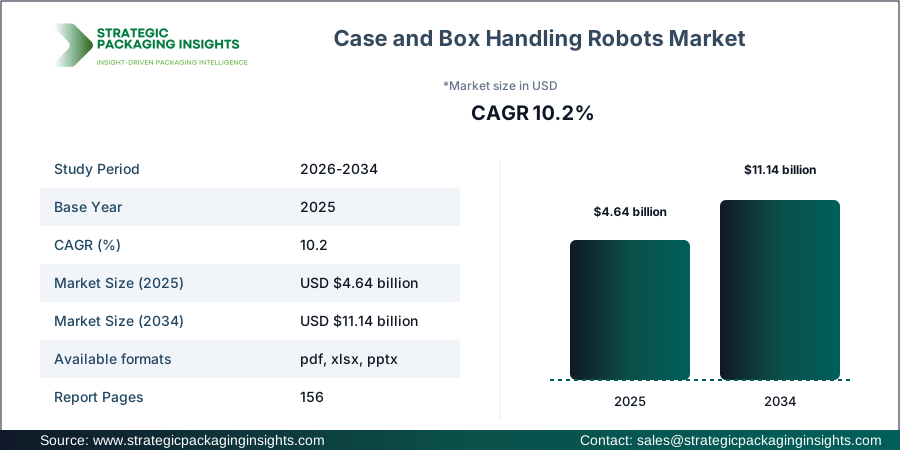
Despite the promising growth prospects, the market faces certain challenges that could hinder its expansion. High initial investment costs and the complexity of integrating these robots into existing systems are significant barriers for many small and medium-sized enterprises. Moreover, the lack of skilled workforce to operate and maintain these advanced robotic systems poses another challenge. However, the potential for cost savings and increased operational efficiency offered by these robots is expected to outweigh these challenges, encouraging more companies to invest in automation solutions. Regulatory frameworks and safety standards are also evolving to support the adoption of robotics in various industries, providing a conducive environment for market growth.
Report Scope
| Attributes | Details |
| Report Title | Case and Box Handling Robots Market Size, Future Growth and Forecast 2034 |
| Robot Type | Pick and Place, Palletizing, Depalletizing |
| Payload | Low, Medium, High |
| Application | Packaging, Warehousing, Fulfillment |
| End Use | Food, Pharma, E-commerce |
| Region | Asia Pacific, North America, Latin America, Europe, Middle East & Africa |
| Base Year | 2025 |
| Historic Period | 2018-2024 |
| Forecast Period | 2026-2034 |
| Number of Pages | 156 |
| Customization Available | Yes* |
Opportunities & Threats
The Case and Box Handling Robots market presents numerous opportunities for growth, primarily driven by the increasing demand for automation in the logistics and warehousing sectors. As e-commerce continues to expand globally, the need for efficient and reliable handling systems becomes more critical. This trend is particularly evident in regions like Asia Pacific and North America, where e-commerce giants are investing heavily in automated solutions to enhance their supply chain operations. Additionally, the integration of advanced technologies such as artificial intelligence and machine learning into robotic systems is creating new opportunities for innovation and efficiency improvements. These technologies enable robots to perform complex tasks with greater precision and adaptability, making them indispensable in modern logistics operations.
Another significant opportunity lies in the growing demand for customized solutions tailored to specific industry needs. Companies are increasingly seeking robots that can handle diverse product types and sizes, requiring manufacturers to develop flexible and adaptable robotic systems. This demand for customization is driving innovation in robot design and functionality, opening up new avenues for market growth. Furthermore, the increasing focus on sustainability and energy efficiency is encouraging the development of eco-friendly robotic solutions, which are expected to gain traction in the coming years.
However, the market also faces certain threats that could impact its growth trajectory. One of the primary challenges is the high initial cost of robotic systems, which can be a significant barrier for small and medium-sized enterprises. Additionally, the complexity of integrating these robots into existing operations and the need for skilled personnel to manage and maintain them pose further challenges. The rapid pace of technological advancements also means that companies must continuously invest in upgrading their systems to remain competitive, which can be a daunting task for many businesses. Moreover, concerns about data security and privacy in automated systems could hinder the adoption of robotics in certain industries.
Drivers & Challenges
The primary drivers of the Case and Box Handling Robots market include the increasing demand for automation in logistics and warehousing, driven by the rapid growth of e-commerce. As online shopping becomes more prevalent, companies are under pressure to optimize their supply chain operations to meet customer expectations for fast and accurate deliveries. Case and box handling robots offer a solution by providing efficient and reliable handling of goods, reducing the need for manual labor and minimizing errors. Additionally, advancements in robotics technology, such as the integration of AI and IoT, are enhancing the capabilities of these robots, making them more versatile and efficient. These technological advancements are expected to drive further adoption of robotic solutions across various industries.
Another significant driver is the increasing focus on operational efficiency and cost reduction. Companies are constantly seeking ways to streamline their operations and reduce costs, and automation offers a viable solution. By automating repetitive and labor-intensive tasks, businesses can achieve significant cost savings and improve productivity. This is particularly important in industries such as food and pharmaceuticals, where precision and speed are critical. The ability of case and box handling robots to operate continuously without fatigue or errors makes them an attractive option for companies looking to enhance their operational efficiency.
Despite these drivers, the market faces several challenges that could impact its growth. One of the primary challenges is the high initial investment required for robotic systems, which can be a significant barrier for many companies, particularly small and medium-sized enterprises. Additionally, the complexity of integrating these robots into existing operations and the need for skilled personnel to manage and maintain them pose further challenges. The rapid pace of technological advancements also means that companies must continuously invest in upgrading their systems to remain competitive, which can be a daunting task for many businesses. Moreover, concerns about data security and privacy in automated systems could hinder the adoption of robotics in certain industries.
Market Share Analysis
The competitive landscape of the Case and Box Handling Robots market is characterized by the presence of several key players who are driving innovation and growth in the industry. Companies such as ABB, Fanuc, KUKA, Yaskawa, and Kawasaki are leading the market with their advanced robotic solutions and extensive industry experience. These companies have established themselves as leaders in the robotics industry by continuously investing in research and development to enhance their product offerings and meet the evolving needs of their customers. Their strong global presence and extensive distribution networks enable them to cater to a wide range of industries and applications, further solidifying their market position.
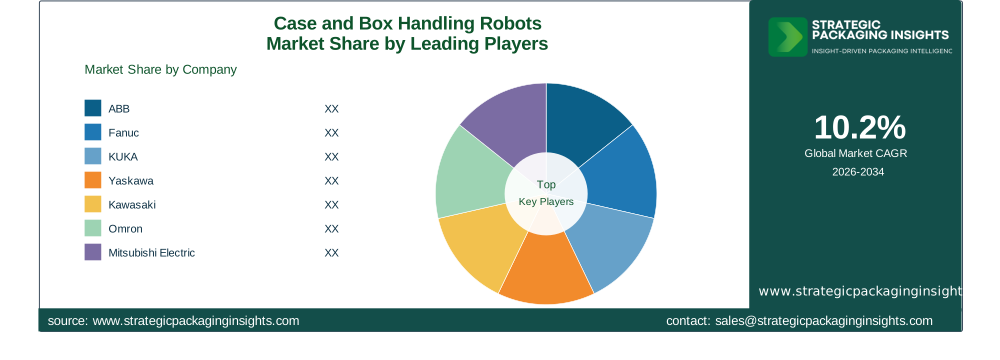
ABB is a prominent player in the market, known for its innovative robotic solutions and strong focus on sustainability. The company offers a wide range of case and box handling robots designed to enhance operational efficiency and reduce environmental impact. Fanuc, another leading player, is renowned for its high-performance robots and advanced automation solutions. The company's extensive product portfolio and strong focus on customer satisfaction have helped it maintain a competitive edge in the market. KUKA, with its cutting-edge technology and strong emphasis on research and development, is also a key player in the market, offering a diverse range of robotic solutions tailored to various industry needs.
Yaskawa and Kawasaki are also significant players in the market, known for their high-quality robotic solutions and strong commitment to innovation. Yaskawa's extensive experience in the robotics industry and its focus on developing advanced automation solutions have helped it establish a strong market presence. Kawasaki, with its robust product offerings and strong focus on customer satisfaction, is also a key player in the market. Other notable companies in the market include Omron, Mitsubishi Electric, Denso, Universal Robots, and Staubli, each offering unique solutions and contributing to the overall growth of the market.
Omron is known for its advanced automation solutions and strong focus on innovation, while Mitsubishi Electric offers a wide range of robotic solutions designed to enhance operational efficiency and reduce costs. Denso, with its extensive experience in the automotive industry, offers high-quality robotic solutions tailored to various industry needs. Universal Robots is renowned for its collaborative robots, which are designed to work alongside humans and enhance productivity. Staubli, with its strong focus on research and development, offers a diverse range of robotic solutions designed to meet the evolving needs of its customers.
Key Highlights
- The Case and Box Handling Robots market is projected to grow at a CAGR of 10.2% from 2026 to 2034.
- Technological advancements in robotics, such as AI integration and IoT connectivity, are driving market growth.
- The increasing demand for automation in logistics and warehousing is a significant driver of market growth.
- High initial investment costs and the complexity of integration are major challenges for the market.
- Key players in the market include ABB, Fanuc, KUKA, Yaskawa, and Kawasaki.
- The market is characterized by the presence of several key players driving innovation and growth.
- Customization and sustainability are emerging trends in the market, driving innovation in robot design and functionality.
- The Asia Pacific region is expected to witness significant growth due to the rapid expansion of e-commerce activities.
- Regulatory frameworks and safety standards are evolving to support the adoption of robotics in various industries.
- Concerns about data security and privacy in automated systems could hinder the adoption of robotics in certain industries.
Top Countries Insights
In the Case and Box Handling Robots market, the United States stands out as a key player, with a market size of approximately $1.2 billion and a CAGR of 8%. The country's robust logistics and warehousing infrastructure, coupled with the rapid growth of e-commerce, are significant drivers of market growth. The increasing focus on automation to enhance operational efficiency and reduce costs is further fueling the demand for case and box handling robots. However, the high initial investment costs and the complexity of integration remain challenges for many companies in the region.
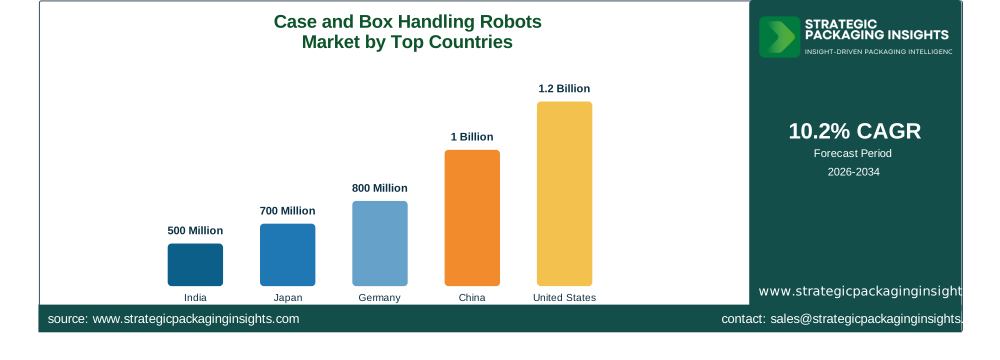
China is another major market for case and box handling robots, with a market size of around $1 billion and a CAGR of 12%. The country's booming e-commerce sector and the increasing demand for efficient logistics solutions are driving the adoption of robotic systems. Additionally, government initiatives to promote automation and technological advancements in robotics are further boosting market growth. However, the lack of skilled workforce and concerns about data security and privacy are potential challenges for the market in China.
Germany, with a market size of approximately $800 million and a CAGR of 9%, is a significant player in the European market. The country's strong manufacturing sector and the increasing focus on automation to enhance productivity and reduce costs are driving the demand for case and box handling robots. The presence of key players such as KUKA and ABB in the region further supports market growth. However, the high initial investment costs and the complexity of integration remain challenges for many companies in Germany.
Japan, with a market size of around $700 million and a CAGR of 10%, is a key player in the Asia Pacific region. The country's advanced robotics industry and the increasing demand for automation in logistics and warehousing are significant drivers of market growth. The presence of key players such as Yaskawa and Fanuc in the region further supports market growth. However, the high initial investment costs and the complexity of integration remain challenges for many companies in Japan.
India, with a market size of approximately $500 million and a CAGR of 15%, is an emerging market for case and box handling robots. The country's rapidly growing e-commerce sector and the increasing demand for efficient logistics solutions are driving the adoption of robotic systems. Additionally, government initiatives to promote automation and technological advancements in robotics are further boosting market growth. However, the lack of skilled workforce and concerns about data security and privacy are potential challenges for the market in India.
Case and Box Handling Robots Market Segments Insights

Robot Type Analysis
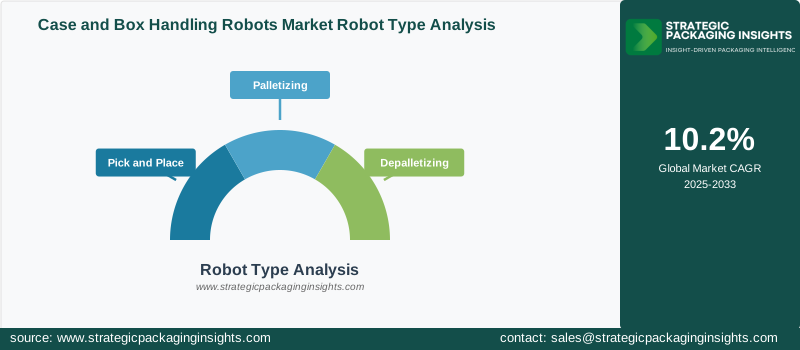
The Case and Box Handling Robots market is segmented by robot type into pick and place, palletizing, and depalletizing robots. Pick and place robots are widely used in various industries due to their ability to handle a wide range of products with precision and speed. These robots are particularly popular in the food and pharmaceutical industries, where precision and hygiene are critical. The increasing demand for automation in these industries is driving the growth of pick and place robots. Palletizing robots, on the other hand, are used for stacking products onto pallets, making them essential in logistics and warehousing operations. The growing e-commerce sector and the need for efficient logistics solutions are driving the demand for palletizing robots. Depalletizing robots, which are used for unloading products from pallets, are also gaining traction in the market due to their ability to handle a wide range of products and improve operational efficiency.
The increasing focus on automation and the need for efficient handling systems are driving the demand for all types of case and box handling robots. Technological advancements in robotics, such as AI integration and IoT connectivity, are further enhancing the capabilities of these robots, making them more versatile and efficient. The ability of these robots to operate continuously without fatigue or errors makes them an attractive option for companies looking to enhance their operational efficiency. However, the high initial investment costs and the complexity of integration remain challenges for many companies, particularly small and medium-sized enterprises.
Payload Analysis
The Case and Box Handling Robots market is segmented by payload into low, medium, and high payload robots. Low payload robots are designed for handling lightweight products and are widely used in industries such as food and pharmaceuticals, where precision and speed are critical. The increasing demand for automation in these industries is driving the growth of low payload robots. Medium payload robots, on the other hand, are used for handling medium-weight products and are popular in industries such as e-commerce and logistics, where efficiency and reliability are crucial. The growing e-commerce sector and the need for efficient logistics solutions are driving the demand for medium payload robots. High payload robots, which are designed for handling heavy products, are also gaining traction in the market due to their ability to handle a wide range of products and improve operational efficiency.
The increasing focus on automation and the need for efficient handling systems are driving the demand for all types of payload robots. Technological advancements in robotics, such as AI integration and IoT connectivity, are further enhancing the capabilities of these robots, making them more versatile and efficient. The ability of these robots to operate continuously without fatigue or errors makes them an attractive option for companies looking to enhance their operational efficiency. However, the high initial investment costs and the complexity of integration remain challenges for many companies, particularly small and medium-sized enterprises.
Application Analysis
The Case and Box Handling Robots market is segmented by application into packaging, warehousing, and fulfillment. Packaging robots are widely used in various industries due to their ability to handle a wide range of products with precision and speed. These robots are particularly popular in the food and pharmaceutical industries, where precision and hygiene are critical. The increasing demand for automation in these industries is driving the growth of packaging robots. Warehousing robots, on the other hand, are used for handling products in warehouses, making them essential in logistics and warehousing operations. The growing e-commerce sector and the need for efficient logistics solutions are driving the demand for warehousing robots. Fulfillment robots, which are used for picking and packing products for shipment, are also gaining traction in the market due to their ability to handle a wide range of products and improve operational efficiency.
The increasing focus on automation and the need for efficient handling systems are driving the demand for all types of application robots. Technological advancements in robotics, such as AI integration and IoT connectivity, are further enhancing the capabilities of these robots, making them more versatile and efficient. The ability of these robots to operate continuously without fatigue or errors makes them an attractive option for companies looking to enhance their operational efficiency. However, the high initial investment costs and the complexity of integration remain challenges for many companies, particularly small and medium-sized enterprises.
End Use Analysis
The Case and Box Handling Robots market is segmented by end use into food, pharma, and e-commerce. The food industry is a major end user of case and box handling robots due to the need for precision and hygiene in handling food products. The increasing demand for automation in the food industry is driving the growth of case and box handling robots. The pharmaceutical industry is another major end user of these robots, where precision and speed are critical. The increasing demand for automation in the pharmaceutical industry is driving the growth of case and box handling robots. The e-commerce industry is also a major end user of these robots, where efficiency and reliability are crucial. The growing e-commerce sector and the need for efficient logistics solutions are driving the demand for case and box handling robots in the e-commerce industry.
The increasing focus on automation and the need for efficient handling systems are driving the demand for all types of end use robots. Technological advancements in robotics, such as AI integration and IoT connectivity, are further enhancing the capabilities of these robots, making them more versatile and efficient. The ability of these robots to operate continuously without fatigue or errors makes them an attractive option for companies looking to enhance their operational efficiency. However, the high initial investment costs and the complexity of integration remain challenges for many companies, particularly small and medium-sized enterprises.
Case and Box Handling Robots Market Segments
The Case and Box Handling Robots market has been segmented on the basis ofRobot Type
- Pick and Place
- Palletizing
- Depalletizing
Payload
- Low
- Medium
- High
Application
- Packaging
- Warehousing
- Fulfillment
End Use
- Food
- Pharma
- E-commerce
Region
- Asia Pacific
- North America
- Latin America
- Europe
- Middle East & Africa




