


Carboy Market Outlook
The carboy market was valued at $1.40 billion in 2025 and is projected to reach $2.22 billion by 2034, growing at a CAGR of 5.2% during the forecast period 2026-2034. This growth is driven by increasing demand across various industries such as pharmaceuticals, chemicals, and food & beverage. The versatility and durability of carboys make them an essential component in these sectors, particularly for storage and transportation of liquids. The market is also witnessing a shift towards more sustainable and eco-friendly materials, which is expected to further fuel growth. Innovations in material technology, such as the development of high-density polyethylene (HDPE) and polypropylene (PP) carboys, are enhancing product performance and expanding application areas.
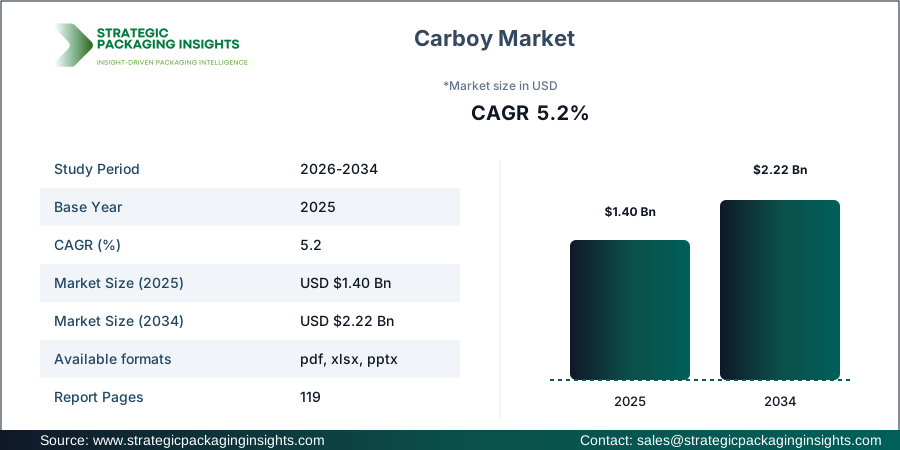
Despite the promising growth trajectory, the carboy market faces certain challenges. Regulatory constraints related to material usage and environmental concerns are significant restraining factors. The industry is under pressure to comply with stringent regulations regarding the use of plastics and other non-biodegradable materials. However, these challenges also present opportunities for innovation, as companies invest in research and development to create more sustainable products. The potential for growth in emerging markets, where industrialization and urbanization are driving demand for efficient storage solutions, is another key factor that could offset these restraints.
Report Scope
| Attributes | Details |
| Report Title | Carboy Market Size, Future Growth and Forecast 2034 |
| By Product Type | Plastic Carboys, Glass Carboys, Collapsible Carboys |
| By Material Type | HDPE, PP, PET, Glass |
| By Capacity | Below 10L, 10–20L, Above 20L |
| By End Use | Laboratories, Chemicals, Food & Beverage, Pharma |
| Region | Asia Pacific, North America, Latin America, Europe, Middle East & Africa |
| Base Year | 2025 |
| Historic Period | 2018-2024 |
| Forecast Period | 2026-2034 |
| Number of Pages | 119 |
| Customization Available | Yes* |
Opportunities & Threats
The carboy market presents numerous opportunities, particularly in the realm of material innovation. As industries increasingly prioritize sustainability, there is a growing demand for carboys made from eco-friendly materials. This trend is driving research and development efforts aimed at producing biodegradable and recyclable carboys. Companies that can successfully innovate in this area stand to gain a significant competitive advantage. Additionally, the expanding pharmaceutical and chemical industries in emerging markets offer substantial growth potential. These sectors require reliable and safe storage solutions, and carboys are well-suited to meet these needs. The increasing focus on safety and compliance in these industries further underscores the importance of high-quality carboy solutions.
Another opportunity lies in the customization of carboys to meet specific industry needs. As industries evolve, there is a growing demand for specialized storage solutions that cater to unique requirements. This has led to the development of carboys with varying capacities, materials, and features. Companies that can offer tailored solutions are likely to capture a larger market share. Furthermore, the rise of e-commerce and online retailing is creating new distribution channels for carboy manufacturers, enabling them to reach a broader customer base. This shift in distribution strategy is expected to drive market growth in the coming years.
However, the carboy market is not without its threats. One of the primary challenges is the increasing competition from alternative storage solutions. As technology advances, new materials and designs are being developed that offer similar or superior performance to traditional carboys. This competition could potentially erode market share for established carboy manufacturers. Additionally, fluctuations in raw material prices, particularly for plastics, can impact production costs and profit margins. Companies must navigate these challenges carefully to maintain their competitive edge.
Drivers & Challenges
The carboy market is driven by several key factors, including the growing demand for efficient and reliable storage solutions across various industries. The pharmaceutical and chemical sectors, in particular, are significant drivers of market growth. These industries require high-quality storage solutions to ensure the safe handling and transportation of liquids. The increasing focus on safety and compliance in these sectors is further boosting demand for carboys. Additionally, the rise of industrialization and urbanization in emerging markets is creating new opportunities for market expansion. As these regions develop, there is a growing need for efficient storage solutions, which is driving demand for carboys.
Technological advancements in material science are also playing a crucial role in driving market growth. The development of new materials, such as high-density polyethylene (HDPE) and polypropylene (PP), is enhancing the performance and durability of carboys. These materials offer superior chemical resistance and strength, making them ideal for use in demanding industrial environments. Furthermore, the trend towards sustainability is encouraging manufacturers to explore eco-friendly materials, which is expected to drive innovation and growth in the market.
Despite these drivers, the carboy market faces several challenges. One of the primary challenges is the regulatory environment, which imposes strict requirements on the use of certain materials. Compliance with these regulations can be costly and time-consuming, posing a barrier to market entry for new players. Additionally, the market is highly competitive, with numerous players vying for market share. This competition can lead to price pressures and reduced profit margins. Companies must continuously innovate and differentiate their products to maintain their competitive edge. Furthermore, fluctuations in raw material prices can impact production costs and profitability, adding another layer of complexity to market operations.
Market Share Analysis
The carboy market is characterized by a competitive landscape with several key players dominating the market. Companies such as Thermo Fisher Scientific, DWK Life Sciences, and Corning hold significant market shares due to their extensive product portfolios and strong distribution networks. These companies have established themselves as leaders in the market by consistently delivering high-quality products and investing in research and development to drive innovation. Their ability to offer a wide range of carboys catering to different industry needs has enabled them to capture a substantial share of the market.
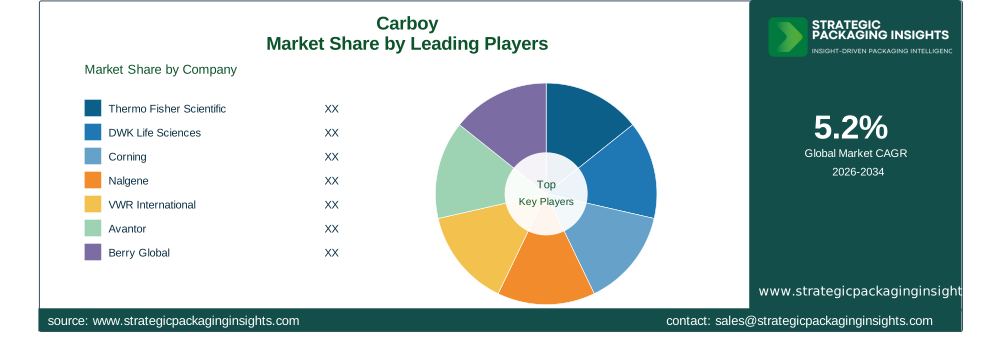
Thermo Fisher Scientific is a major player in the carboy market, known for its comprehensive range of laboratory and industrial products. The company's strong focus on innovation and quality has helped it maintain a leading position in the market. Similarly, DWK Life Sciences is recognized for its high-quality glass and plastic carboys, which are widely used in laboratories and industrial applications. The company's commitment to sustainability and environmental responsibility has further strengthened its market position.
Corning, another key player, is renowned for its expertise in glass manufacturing. The company's carboys are highly regarded for their durability and chemical resistance, making them a preferred choice in the pharmaceutical and chemical industries. Nalgene, a brand under Thermo Fisher Scientific, is also a prominent name in the market, offering a wide range of plastic carboys known for their reliability and performance. VWR International and Avantor are other notable players, providing a diverse range of carboys to meet the needs of various industries.
Berry Global, Qorpak, and Foxx Life Sciences are also significant contributors to the carboy market. Berry Global is known for its innovative packaging solutions, including a range of carboys designed for industrial use. Qorpak offers a comprehensive selection of carboys, catering to the needs of laboratories and industrial customers. Foxx Life Sciences specializes in laboratory and bioprocessing products, with a focus on quality and innovation. United States Plastic Corporation is another key player, offering a wide range of plastic carboys for various applications.
Key Highlights
- The carboy market is projected to grow from $1.40 billion in 2025 to $2.22 billion by 2034, at a CAGR of 5.2%.
- Increasing demand from the pharmaceutical and chemical industries is a major driver of market growth.
- Technological advancements in material science are enhancing the performance and durability of carboys.
- Regulatory constraints and environmental concerns pose challenges to market growth.
- Customization and innovation in carboy design offer significant growth opportunities.
- Emerging markets present substantial growth potential due to industrialization and urbanization.
- Key players include Thermo Fisher Scientific, DWK Life Sciences, Corning, and Nalgene.
- The market is characterized by intense competition and price pressures.
- Fluctuations in raw material prices can impact production costs and profitability.
- Sustainability trends are driving demand for eco-friendly carboy materials.
Top Countries Insights
In the carboy market, the United States stands out as a leading country, with a market size of approximately $500 million and a CAGR of 4%. The country's robust pharmaceutical and chemical industries drive demand for high-quality storage solutions. Regulatory compliance and a focus on safety standards further bolster market growth. In China, the market is experiencing rapid expansion, with a market size of $300 million and a CAGR of 7%. The country's industrialization and urbanization are key growth drivers, along with increasing investments in the pharmaceutical sector.
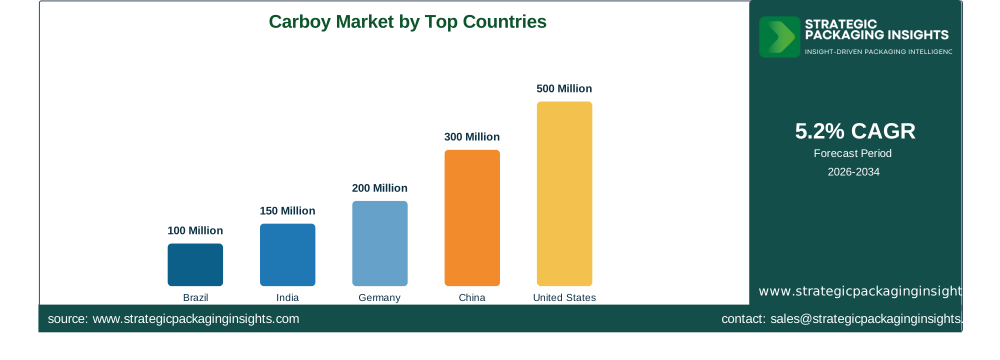
Germany is another significant player in the carboy market, with a market size of $200 million and a CAGR of 5%. The country's strong chemical industry and emphasis on sustainability are driving demand for innovative carboy solutions. In India, the market is growing at a CAGR of 6%, with a market size of $150 million. The country's expanding pharmaceutical industry and increasing focus on quality standards are key growth drivers. Brazil, with a market size of $100 million and a CAGR of 5%, is also witnessing growth due to its developing industrial sector and rising demand for efficient storage solutions.
Carboy Market Segments Insights

Product Type Analysis
The carboy market is segmented by product type into plastic carboys, glass carboys, and collapsible carboys. Plastic carboys dominate the market due to their lightweight nature, durability, and cost-effectiveness. They are widely used in industries such as pharmaceuticals and chemicals, where ease of handling and chemical resistance are crucial. Glass carboys, while heavier, offer superior chemical resistance and are preferred in applications where purity and non-reactivity are essential. Collapsible carboys are gaining popularity due to their space-saving design and ease of storage, making them ideal for industries with limited storage space.
Trends in the product type segment indicate a growing preference for plastic carboys, driven by advancements in material technology that enhance their performance and sustainability. The development of high-density polyethylene (HDPE) and polypropylene (PP) carboys is expanding their application areas, particularly in demanding industrial environments. Glass carboys continue to hold a significant market share in the laboratory and pharmaceutical sectors, where their chemical inertness is highly valued. The collapsible carboy segment is expected to witness steady growth as industries seek efficient storage solutions that optimize space and reduce transportation costs.
Material Type Analysis
The material type segment of the carboy market includes HDPE, PP, PET, and glass. HDPE carboys are favored for their strength, chemical resistance, and durability, making them suitable for a wide range of industrial applications. PP carboys offer similar benefits, with the added advantage of being more lightweight, which is particularly beneficial in applications where weight is a concern. PET carboys are known for their clarity and are often used in the food and beverage industry, where product visibility is important. Glass carboys, while heavier, provide excellent chemical resistance and are preferred in applications requiring high purity.
Trends in the material type segment highlight a shift towards more sustainable and eco-friendly materials. Manufacturers are increasingly focusing on developing biodegradable and recyclable carboys to meet growing environmental concerns. This trend is expected to drive innovation in material technology, leading to the development of new materials that offer enhanced performance and sustainability. The demand for HDPE and PP carboys is expected to remain strong, driven by their versatility and cost-effectiveness. Glass carboys will continue to be used in niche applications where their chemical inertness is a critical requirement.
Capacity Analysis
The carboy market is segmented by capacity into below 10L, 10-20L, and above 20L. Carboys with a capacity of below 10L are commonly used in laboratories and small-scale industrial applications, where precise measurements and ease of handling are important. The 10-20L segment is popular in the pharmaceutical and chemical industries, where they are used for storing and transporting moderate volumes of liquids. Carboys with a capacity of above 20L are used in large-scale industrial applications, where bulk storage and transportation are required.
Trends in the capacity segment indicate a growing demand for larger carboys, driven by the increasing scale of industrial operations and the need for efficient storage solutions. The development of collapsible carboys with larger capacities is also gaining traction, as they offer the advantage of space-saving storage and reduced transportation costs. The demand for smaller carboys remains strong in the laboratory and research sectors, where precision and ease of handling are critical. Manufacturers are focusing on developing carboys with enhanced features, such as improved sealing and chemical resistance, to meet the evolving needs of different industries.
End Use Analysis
The end-use segment of the carboy market includes laboratories, chemicals, food & beverage, and pharma. Laboratories are a major end-use sector, where carboys are used for storing and handling various chemicals and reagents. The chemical industry is another significant end-use sector, where carboys are used for storing and transporting a wide range of chemicals. The food & beverage industry uses carboys for storing and transporting liquids, such as juices and syrups, where product safety and hygiene are critical. The pharmaceutical industry relies on carboys for storing and handling various liquids, where purity and compliance with safety standards are essential.
Trends in the end-use segment highlight the growing demand for carboys in the pharmaceutical and chemical industries, driven by the increasing focus on safety and compliance. The food & beverage industry is also witnessing growth, as manufacturers seek reliable and hygienic storage solutions. The laboratory sector continues to be a key end-use market, where the demand for high-quality carboys is driven by the need for precision and reliability. Manufacturers are focusing on developing carboys with enhanced features, such as improved sealing and chemical resistance, to meet the specific needs of different end-use sectors.
Carboy Market Segments
The Carboy market has been segmented on the basis ofBy Product Type
- Plastic Carboys
- Glass Carboys
- Collapsible Carboys
By Material Type
- HDPE
- PP
- PET
- Glass
By Capacity
- Below 10L
- 10–20L
- Above 20L
By End Use
- Laboratories
- Chemicals
- Food & Beverage
- Pharma
Region
- Asia Pacific
- North America
- Latin America
- Europe
- Middle East & Africa




