


Carbon Steel IBC Market Outlook
The Carbon Steel IBC market size was valued at USD 2.77 billion in 2025 and is anticipated to reach USD 4.33 billion by 2034, growing at a CAGR of 5.1% during the forecast period according to Strategic Packaging Insights. The market is witnessing robust growth driven by the increasing demand for durable and reusable packaging solutions across various industries. Companies like Hoover CS and Thielmann are at the forefront, leveraging their extensive expertise in manufacturing high-quality Intermediate Bulk Containers (IBCs) to cater to the rising needs of sectors such as chemicals, oil & gas, and agriculture. The versatility and cost-effectiveness of carbon steel IBCs make them a preferred choice for transporting and storing bulk liquids and solids, further propelling market expansion.
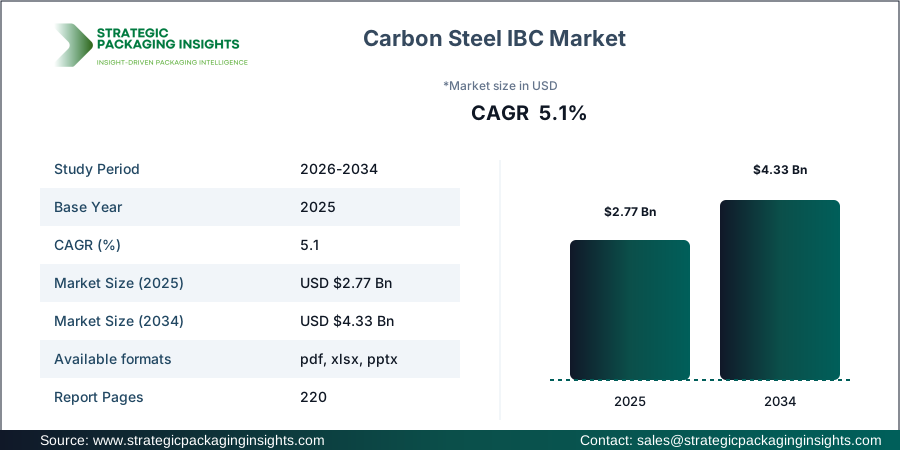
One of the most impactful drivers of the Carbon Steel IBC market is the growing emphasis on sustainability and environmental responsibility. As industries strive to reduce their carbon footprint and adhere to stringent environmental regulations, the demand for eco-friendly packaging solutions is on the rise. According to recent government initiatives, there is a significant push towards adopting sustainable practices, which includes the use of recyclable and reusable packaging materials. This trend is expected to drive the adoption of carbon steel IBCs, as they offer a durable and sustainable alternative to traditional packaging methods. Companies like Precision IBC and Snyder Industries are capitalizing on this trend by developing innovative products that meet the evolving needs of environmentally conscious consumers.
Report Scope
| Attributes | Details |
| Report Title | Carbon Steel IBC Market Size, Future Growth and Forecast 2034 |
| By Capacity | Below 500 Liters, 500–1,000 Liters, Above 1,000 Liters |
| By Product Type | UN-Rated IBC, Standard IBC, Stackable IBC |
| By Application | Chemicals, Solvents, Oils, Industrial Liquids |
| By End Use | Chemicals, Oil & Gas, Industrial, Agriculture |
| Region | Asia Pacific, North America, Latin America, Europe, Middle East & Africa |
| Base Year | 2025 |
| Historic Period | 2018-2024 |
| Forecast Period | 2026-2034 |
| Number of Pages | 220 |
| Customization Available | Yes* |
Sustainability & Circular Economy Analysis
Sustainability initiatives and circular economy practices are significantly influencing the packaging market, particularly in the realm of carbon steel IBCs. The shift towards recyclable materials and reusable packaging is becoming a cornerstone of modern packaging strategies. Companies are increasingly investing in eco-friendly material innovations to reduce waste and minimize environmental impact. This trend is not only driven by consumer preferences but also by stringent packaging regulations and extended producer responsibility (EPR) mandates. As a result, packaging manufacturers are focusing on designing products that are not only functional but also environmentally sustainable, thereby enhancing their market competitiveness.
The integration of sustainability trends into packaging design and manufacturing processes is reshaping investment decisions and supply chain strategies. Companies are prioritizing lightweight packaging solutions that reduce transportation costs and carbon emissions. This shift is encouraging the adoption of carbon steel IBCs, which offer durability and reusability, aligning with the goals of reducing the carbon footprint. Moreover, ESG initiatives are playing a crucial role in shaping corporate strategies, with businesses increasingly being held accountable for their environmental impact. This has led to a surge in demand for packaging solutions that support waste reduction and promote a circular economy.
Regulatory compliance and long-term market competitiveness are closely tied to sustainability trends in the packaging industry. As governments worldwide implement stricter regulations to curb environmental degradation, companies are compelled to adopt sustainable practices to remain compliant and competitive. This has resulted in a growing emphasis on extended producer responsibility, where manufacturers are responsible for the entire lifecycle of their products, including disposal and recycling. By embracing these sustainability trends, packaging manufacturers and brand owners can enhance their brand image, attract environmentally conscious consumers, and secure a competitive edge in the market.
Packaging Value Chain & Supply Chain Analysis
The packaging value chain and supply chain ecosystem for carbon steel IBCs is a complex network involving multiple stakeholders, from raw material sourcing to end-user delivery. Raw material availability plays a crucial role in determining the efficiency and cost-effectiveness of the supply chain. Packaging converters and manufacturers rely on a steady supply of high-quality steel to produce durable IBCs that meet industry standards. Strategic partnerships with suppliers and logistics providers are essential to ensure seamless operations and timely delivery of products to customers across various regions.
Supply chain efficiency is a critical factor influencing the overall performance and competitiveness of the carbon steel IBC market. Companies are adopting advanced procurement strategies and inventory management systems to optimize their supply chain operations. Localization and global sourcing are key strategies employed by manufacturers to mitigate risks associated with raw material shortages and transportation disruptions. By establishing a resilient supply chain, companies can enhance their production capabilities and meet the growing demand for carbon steel IBCs in a timely and cost-effective manner.
Logistics and distribution channels play a vital role in the packaging value chain, ensuring that products reach their intended destinations efficiently. Brand owners and retailers rely on robust distribution networks to deliver carbon steel IBCs to end-users in industries such as chemicals, oil & gas, and agriculture. Recycling networks are also an integral part of the supply chain, facilitating the collection and reuse of IBCs, thereby supporting sustainability initiatives. By focusing on supply chain resilience and strategic partnerships, companies can enhance their market competitiveness and capitalize on growth opportunities in the carbon steel IBC market.
Opportunities & Threats
The Carbon Steel IBC market presents numerous opportunities for growth, driven by the increasing demand for durable and sustainable packaging solutions. One significant opportunity lies in the expansion of the chemicals and oil & gas industries, which require robust and reliable packaging for the safe transportation and storage of hazardous materials. As these industries continue to grow, the demand for carbon steel IBCs is expected to rise, providing manufacturers with lucrative opportunities to expand their product offerings and capture a larger market share. Additionally, the growing emphasis on sustainability and environmental responsibility presents an opportunity for companies to develop innovative, eco-friendly packaging solutions that meet the evolving needs of environmentally conscious consumers.
Another opportunity in the Carbon Steel IBC market is the increasing adoption of advanced technologies and automation in manufacturing processes. By leveraging cutting-edge technologies, companies can enhance the efficiency and precision of their production processes, resulting in high-quality products that meet industry standards. Automation also enables manufacturers to scale their operations and meet the growing demand for carbon steel IBCs in a cost-effective manner. Furthermore, the integration of smart technologies, such as IoT and RFID, into IBCs offers opportunities for companies to provide value-added services, such as real-time tracking and monitoring, to their customers.
Despite the numerous opportunities, the Carbon Steel IBC market also faces certain threats that could hinder its growth. One of the primary threats is the volatility in raw material prices, particularly steel, which can significantly impact production costs and profit margins. Fluctuations in steel prices can create uncertainty for manufacturers, making it challenging to maintain competitive pricing and profitability. Additionally, stringent environmental regulations and compliance requirements pose a threat to companies that fail to adopt sustainable practices. Non-compliance with these regulations can result in hefty fines and damage to a company's reputation, underscoring the importance of sustainability in the packaging industry.
Drivers & Challenges
The Carbon Steel IBC market is driven by several key factors, including the growing demand for durable and reusable packaging solutions across various industries. The versatility and cost-effectiveness of carbon steel IBCs make them a preferred choice for transporting and storing bulk liquids and solids, particularly in the chemicals, oil & gas, and agriculture sectors. As these industries continue to expand, the demand for carbon steel IBCs is expected to rise, driving market growth. Additionally, the increasing emphasis on sustainability and environmental responsibility is a significant driver, as companies seek eco-friendly packaging solutions that align with their sustainability goals.
Another driver of the Carbon Steel IBC market is the advancements in manufacturing technologies and processes. The adoption of automation and smart technologies in production processes has enabled manufacturers to enhance the efficiency and precision of their operations, resulting in high-quality products that meet industry standards. These technological advancements also allow companies to scale their operations and meet the growing demand for carbon steel IBCs in a cost-effective manner. Furthermore, the integration of IoT and RFID technologies into IBCs offers opportunities for companies to provide value-added services, such as real-time tracking and monitoring, to their customers.
Despite the positive drivers, the Carbon Steel IBC market faces several challenges that could hinder its growth. One of the primary challenges is the volatility in raw material prices, particularly steel, which can significantly impact production costs and profit margins. Fluctuations in steel prices create uncertainty for manufacturers, making it challenging to maintain competitive pricing and profitability. Additionally, stringent environmental regulations and compliance requirements pose a challenge for companies that fail to adopt sustainable practices. Non-compliance with these regulations can result in hefty fines and damage to a company's reputation, underscoring the importance of sustainability in the packaging industry.
Market Share Analysis
The competitive landscape of the Carbon Steel IBC market is characterized by the presence of several key players, each striving to capture a significant share of the market. Companies such as Hoover CS, Thielmann, and Precision IBC are leading the market with their extensive expertise in manufacturing high-quality Intermediate Bulk Containers (IBCs). These companies have established themselves as industry leaders by offering a wide range of products that cater to the diverse needs of various industries, including chemicals, oil & gas, and agriculture. Their strong market presence and commitment to innovation have enabled them to maintain a competitive edge in the market.
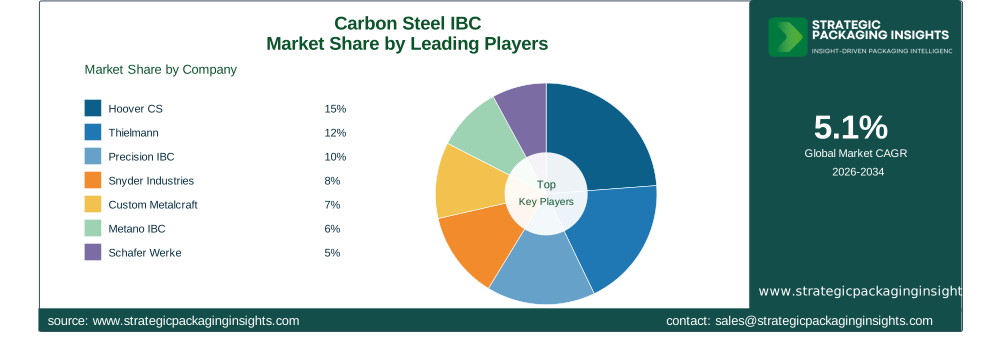
Hoover CS is a prominent player in the Carbon Steel IBC market, known for its comprehensive range of IBC solutions that meet the stringent requirements of the chemicals and oil & gas industries. The company's focus on quality and customer satisfaction has earned it a strong reputation in the market. Thielmann, another key player, is renowned for its expertise in manufacturing stainless steel containers, including carbon steel IBCs. The company's commitment to innovation and sustainability has positioned it as a leader in the market, with a strong focus on developing eco-friendly packaging solutions.
Precision IBC is a leading manufacturer of carbon steel IBCs, offering a wide range of products that cater to the needs of various industries. The company's emphasis on quality and innovation has enabled it to capture a significant share of the market. Snyder Industries is another key player, known for its extensive range of IBC solutions that meet the diverse needs of its customers. The company's focus on sustainability and environmental responsibility has positioned it as a leader in the market, with a strong commitment to developing eco-friendly packaging solutions.
Other notable players in the Carbon Steel IBC market include Custom Metalcraft, Metano IBC, Schafer Werke, Finncont, Hawman Container, and Titan IBC. These companies have established themselves as key players in the market by offering a wide range of products that cater to the diverse needs of various industries. Their strong market presence and commitment to innovation have enabled them to maintain a competitive edge in the market. As the demand for carbon steel IBCs continues to grow, these companies are well-positioned to capitalize on the opportunities presented by the expanding market.
Key Highlights
- Market Size: The Carbon Steel IBC market was valued at USD 2.77 billion in 2025 and is projected to reach USD 4.33 billion by 2034.
- Growth Rate: The market is expected to grow at a CAGR of 5.1% during the forecast period.
- Leading Companies: Key players include Hoover CS, Thielmann, and Precision IBC.
- Regional Growth: Asia Pacific is anticipated to witness significant growth due to increasing industrial activities.
- Sustainability Trends: Growing emphasis on eco-friendly packaging solutions is driving market demand.
- Technological Advancements: Integration of IoT and RFID technologies in IBCs offers value-added services.
- Regulatory Compliance: Stringent environmental regulations are influencing market dynamics.
Carbon Steel IBC Market Segments Insights

By Capacity Analysis
The Carbon Steel IBC market is segmented by capacity into three categories: Below 500 Liters, 500-1, 000 Liters, and Above 1, 000 Liters. The segment of 500-1, 000 Liters is witnessing significant demand due to its versatility and suitability for a wide range of industrial applications. These IBCs are particularly favored in the chemicals and oil & gas industries, where they provide an optimal balance between capacity and ease of handling. The demand for larger capacity IBCs, particularly those Above 1, 000 Liters, is also on the rise, driven by the need for efficient bulk storage solutions in large-scale industrial operations. Companies like Hoover CS and Thielmann are focusing on expanding their product offerings in this segment to cater to the growing demand.
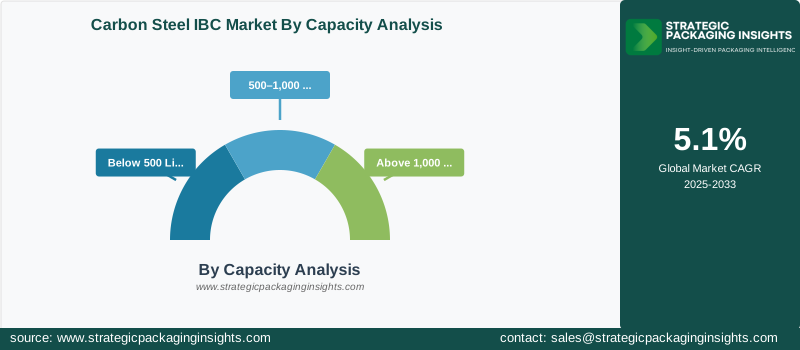
The Below 500 Liters segment, while smaller in comparison, is gaining traction in niche applications where space constraints and specific handling requirements are critical. These smaller IBCs are often used in specialized industries such as pharmaceuticals and food processing, where precise volume control and contamination prevention are paramount. The increasing emphasis on sustainability and waste reduction is also influencing the demand for smaller capacity IBCs, as they offer a more manageable solution for industries looking to minimize their environmental impact. Overall, the capacity segmentation of the Carbon Steel IBC market reflects the diverse needs of various industries and the adaptability of IBCs to meet these requirements.
By Product Type Analysis
The Carbon Steel IBC market is categorized by product type into UN-Rated IBC, Standard IBC, and Stackable IBC. UN-Rated IBCs are designed to meet stringent international standards for the transportation of hazardous materials, making them a preferred choice in the chemicals and oil & gas industries. These IBCs offer enhanced safety features and compliance with regulatory requirements, ensuring the safe handling and transport of dangerous goods. Companies like Precision IBC and Snyder Industries are leading the market in this segment, offering a wide range of UN-Rated IBCs that cater to the specific needs of their customers.
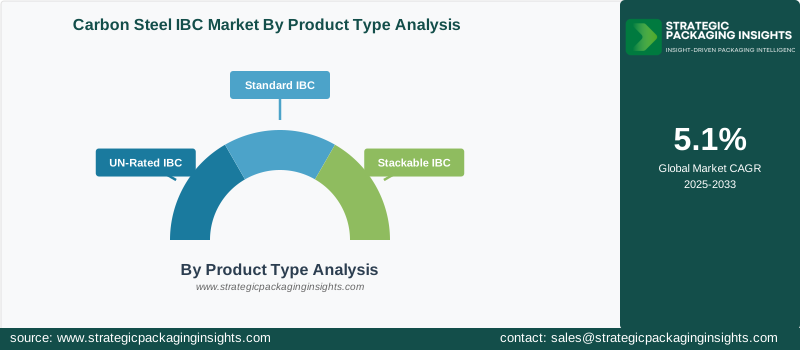
Standard IBCs, on the other hand, are widely used for the storage and transportation of non-hazardous materials across various industries. Their cost-effectiveness and versatility make them a popular choice for businesses looking to optimize their packaging solutions. The Stackable IBC segment is gaining traction due to its space-saving design, which allows for efficient storage and transportation. These IBCs are particularly favored in industries with limited storage space, such as agriculture and food processing. The growing demand for stackable solutions is driving innovation in this segment, with companies focusing on developing products that offer enhanced durability and ease of handling.
By Application Analysis
The Carbon Steel IBC market is segmented by application into Chemicals, Solvents, Oils, and Industrial Liquids. The chemicals segment is the largest application area, driven by the need for safe and efficient packaging solutions for hazardous materials. Carbon steel IBCs offer the durability and compliance required for the transportation and storage of chemicals, making them a preferred choice in this industry. The solvents and oils segments are also significant contributors to market demand, as these industries require robust packaging solutions that can withstand the rigors of transportation and handling.
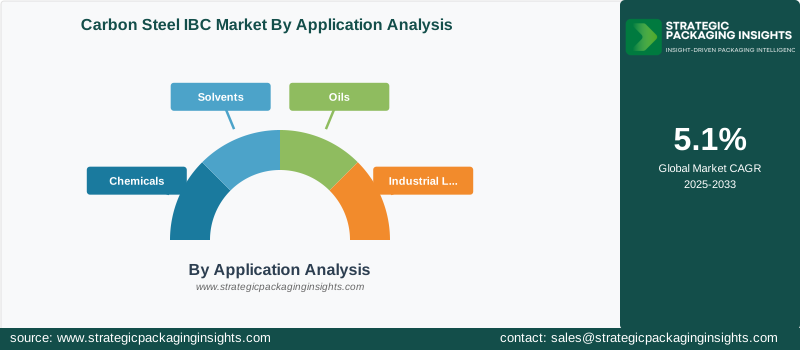
Industrial liquids, which encompass a wide range of products used in manufacturing and processing, represent a growing application area for carbon steel IBCs. The versatility and adaptability of these IBCs make them suitable for a variety of industrial applications, from bulk storage to precise dispensing. As industries continue to expand and diversify, the demand for carbon steel IBCs in these application areas is expected to grow, providing manufacturers with opportunities to develop innovative solutions that meet the evolving needs of their customers.
By End Use Analysis
The Carbon Steel IBC market is segmented by end use into Chemicals, Oil & Gas, Industrial, and Agriculture. The chemicals industry is the largest end-user segment, driven by the need for safe and compliant packaging solutions for hazardous materials. Carbon steel IBCs offer the durability and regulatory compliance required for the transportation and storage of chemicals, making them a preferred choice in this industry. The oil & gas sector is another significant end-user, as these industries require robust packaging solutions that can withstand harsh environmental conditions and ensure the safe handling of hazardous materials.
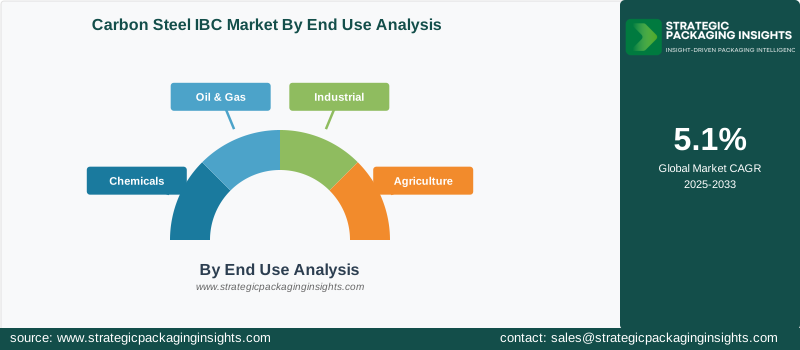
The industrial segment, which includes a wide range of manufacturing and processing industries, represents a growing end-user market for carbon steel IBCs. The versatility and adaptability of these IBCs make them suitable for a variety of industrial applications, from bulk storage to precise dispensing. The agriculture sector is also a key end-user, as farmers and agricultural businesses require durable and reliable packaging solutions for the storage and transportation of fertilizers, pesticides, and other agricultural products. As these industries continue to expand and diversify, the demand for carbon steel IBCs in these end-use segments is expected to grow, providing manufacturers with opportunities to develop innovative solutions that meet the evolving needs of their customers.
Carbon Steel IBC Market Segments
The Carbon Steel IBC market has been segmented on the basis ofBy Capacity
- Below 500 Liters
- 500–1,000 Liters
- Above 1,000 Liters
By Product Type
- UN-Rated IBC
- Standard IBC
- Stackable IBC
By Application
- Chemicals
- Solvents
- Oils
- Industrial Liquids
By End Use
- Chemicals
- Oil & Gas
- Industrial
- Agriculture
Region
- Asia Pacific
- North America
- Latin America
- Europe
- Middle East & Africa




