


Candle Jar Market Outlook
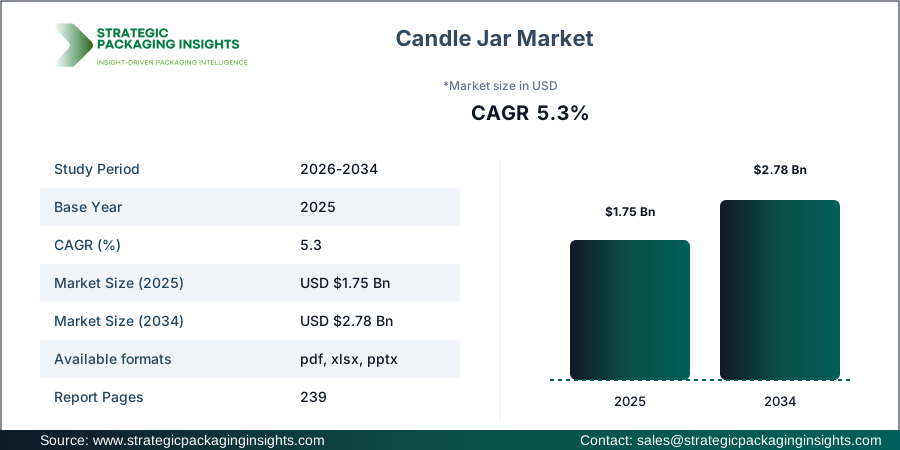
The Candle Jar market size was valued at USD 1.2 billion in 2025 and is anticipated to reach USD 1.9 billion by 2034, growing at a CAGR of 5.20% during the forecast period according to Strategic Packaging Insights. The market is witnessing a surge in demand driven by the increasing popularity of home fragrances and the growing trend of personalized and artisanal candle products. Companies like O-I Glass and Ardagh Group are capitalizing on this trend by offering innovative and aesthetically pleasing candle jar designs that cater to consumer preferences for both functionality and style.
One of the most impactful drivers of the Candle Jar market is the rising consumer inclination towards eco-friendly and sustainable products. This shift is supported by increasing awareness about environmental issues and the desire to reduce carbon footprints. Government regulations promoting sustainable packaging solutions further bolster this trend, encouraging manufacturers to adopt recyclable and biodegradable materials. As a result, companies like Verescence and Piramal Glass are investing in sustainable production processes and materials, aligning their strategies with consumer demand for environmentally responsible products.
Report Scope
| Attributes | Details |
| Report Title | Candle Jar Market Size, Future Growth and Forecast 2034 |
| By Material | Glass (Clear, Frosted, Colored, Amber), Ceramic, Metal Tins, Concrete |
| By Capacity | Below 4 oz, 4-8 oz, 8-16 oz, Above 16 oz / 3-Wick |
| By Closure | With Lid (Metal, Wood, Glass, Cork), Without Lid |
| By End Use | Home Fragrance Brands, Private Label / Contract Fillers, Artisan & Craft Makers, Hospitality & Spa |
| By Distribution Channel | B2B / Bulk Packaging Distributors, Retail, Online |
| By Region | North America (U.S., Canada, Mexico), Europe (Germany, UK, France, Italy, Spain, Rest of Europe), Asia Pacific (China, India, Japan, South Korea, Australia, Rest of Asia Pacific), Latin America (Brazil, Argentina, Rest of Latin America), Middle East & Africa (GCC Countries, South Africa, Rest of MEA) |
| Base Year | 2025 |
| Historic Period | 2018-2024 |
| Forecast Period | 2026-2034 |
| Number of Pages | 140 |
| Customization Available | Yes* |
Sustainability & Circular Economy Analysis
Sustainability initiatives are significantly shaping the Candle Jar market, with a strong emphasis on recyclable materials and eco-friendly innovations. Companies are increasingly adopting lightweight packaging solutions to minimize material usage and reduce transportation emissions. This trend is driven by consumer preferences for sustainable products and stringent packaging regulations that mandate the use of environmentally friendly materials. As a result, manufacturers are investing in research and development to create innovative packaging designs that meet these requirements while maintaining product integrity and aesthetic appeal.
The circular economy is gaining traction in the Candle Jar market, with companies implementing waste reduction strategies and extended producer responsibility (EPR) programs. These initiatives aim to minimize waste generation and promote the reuse and recycling of packaging materials. By adopting circular economy practices, companies can enhance their brand image, meet regulatory compliance, and achieve long-term market competitiveness. This approach not only benefits the environment but also offers cost savings and operational efficiencies for manufacturers and brand owners.
Consumer sustainability preferences are driving investment decisions and supply chain strategies in the Candle Jar market. Companies are prioritizing eco-friendly material innovation and carbon footprint reduction to align with consumer expectations and regulatory requirements. This shift is influencing packaging design and manufacturing processes, with a focus on creating sustainable and visually appealing products. As a result, companies that embrace sustainability and circular economy practices are well-positioned to capture market share and drive growth in the competitive Candle Jar market.
Packaging Value Chain & Supply Chain Analysis
The packaging value chain in the Candle Jar market is a complex ecosystem involving raw material sourcing, packaging converters, manufacturers, and logistics providers. Efficient supply chain management is crucial for maintaining product quality and meeting consumer demand. Companies like Libbey and Anchor Hocking are optimizing their procurement strategies and inventory management to ensure a steady supply of raw materials and minimize production disruptions. Strategic partnerships with suppliers and distributors further enhance supply chain resilience and enable companies to respond quickly to market changes.
Raw material availability and transportation play a critical role in the overall performance of the Candle Jar market. Manufacturers are focusing on securing reliable sources of materials such as glass, ceramic, and metal to ensure consistent production capabilities. Logistics and distribution channels are also key components of the supply chain, with companies investing in advanced packaging machinery and technology to streamline operations and reduce lead times. By enhancing supply chain efficiency, companies can improve their competitiveness and deliver high-quality products to consumers.
Global sourcing and localization strategies are influencing the Candle Jar market, with companies balancing the benefits of cost-effective production with the need for localized supply chains. This approach allows manufacturers to reduce transportation costs and carbon emissions while meeting regional consumer preferences. Recycling networks and sustainable packaging solutions are also integral to the supply chain, enabling companies to meet regulatory compliance and consumer demand for eco-friendly products. By adopting a holistic approach to supply chain management, companies can achieve long-term success in the dynamic Candle Jar market.
Opportunities & Threats
The Candle Jar market presents numerous opportunities for growth, driven by the increasing demand for personalized and artisanal candle products. Consumers are seeking unique and aesthetically pleasing candle jars that reflect their personal style and preferences. This trend is creating opportunities for manufacturers to innovate and offer a diverse range of designs and materials, such as frosted and colored glass, ceramic, and metal tins. Additionally, the growing popularity of home fragrances and wellness products is driving demand for candle jars in the hospitality and spa sectors, providing further growth opportunities for market players.
Another significant opportunity in the Candle Jar market is the rising consumer awareness and demand for sustainable and eco-friendly products. Companies that invest in sustainable packaging solutions and adopt circular economy practices are well-positioned to capture market share and drive growth. The increasing focus on reducing carbon footprints and promoting environmental responsibility is encouraging manufacturers to develop innovative packaging designs that meet consumer expectations and regulatory requirements. By aligning their strategies with sustainability trends, companies can enhance their brand image and achieve long-term success in the competitive Candle Jar market.
Despite the growth opportunities, the Candle Jar market faces several threats, including fluctuating raw material prices and supply chain disruptions. The availability and cost of materials such as glass, ceramic, and metal can impact production capabilities and profitability for manufacturers. Additionally, stringent packaging regulations and environmental standards pose challenges for companies, requiring them to invest in sustainable production processes and materials. To mitigate these threats, companies must adopt proactive strategies, such as securing reliable sources of raw materials and optimizing supply chain management, to ensure consistent production and meet consumer demand.
Drivers & Challenges
One of the primary drivers of the Candle Jar market is the increasing consumer demand for home fragrances and wellness products. The growing trend of creating personalized and relaxing home environments is driving the popularity of candles and, consequently, the demand for aesthetically pleasing and functional candle jars. Companies like CandleScience and Berlin Packaging are capitalizing on this trend by offering a wide range of candle jar designs and materials that cater to diverse consumer preferences. This demand is further supported by the rising disposable incomes and changing lifestyles of consumers, which are fueling the growth of the Candle Jar market.
Another significant driver of the Candle Jar market is the shift towards sustainable and eco-friendly packaging solutions. Consumers are increasingly prioritizing products that align with their environmental values, leading to a growing demand for recyclable and biodegradable materials. This trend is encouraging manufacturers to invest in sustainable production processes and materials, such as recycled glass and eco-friendly coatings. By adopting sustainable packaging solutions, companies can enhance their brand image, meet regulatory compliance, and achieve long-term market competitiveness in the Candle Jar market.
Despite the positive drivers, the Candle Jar market faces several challenges, including intense competition and fluctuating raw material prices. The market is highly competitive, with numerous players vying for market share, leading to price pressures and the need for continuous innovation. Additionally, the availability and cost of raw materials, such as glass and ceramic, can impact production capabilities and profitability for manufacturers. To overcome these challenges, companies must focus on differentiating their products through innovative designs and materials, optimizing supply chain management, and securing reliable sources of raw materials.
Market Share Analysis
The competitive landscape of the Candle Jar market is characterized by the presence of several key players, each striving to capture a significant share of the market. Companies like O-I Glass, Ardagh Group, and Verescence are leading the market with their innovative product offerings and strong focus on sustainability. These companies are investing in research and development to create unique and aesthetically pleasing candle jar designs that cater to consumer preferences for both functionality and style. Their commitment to sustainability and eco-friendly packaging solutions further enhances their competitive position in the market.
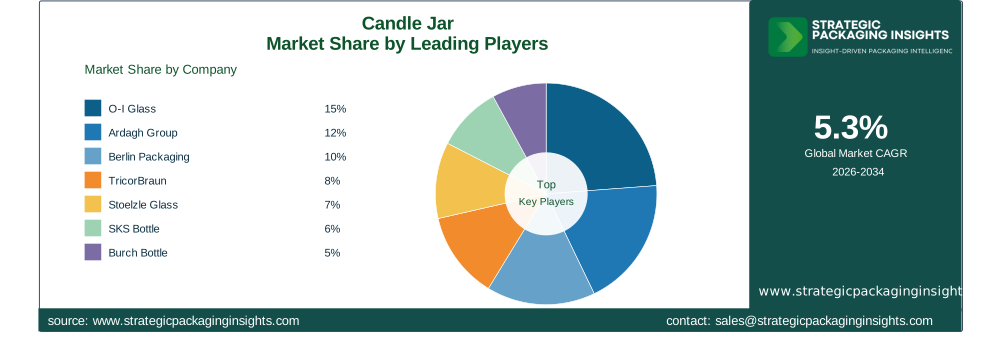
O-I Glass is a prominent player in the Candle Jar market, known for its high-quality glass packaging solutions. The company is focused on sustainability and innovation, offering a wide range of glass candle jars that meet consumer demand for eco-friendly products. Ardagh Group is another key player, providing a diverse range of packaging solutions, including glass and metal candle jars. The company's commitment to sustainability and circular economy practices has positioned it as a leader in the market, with a strong focus on reducing carbon footprints and promoting environmental responsibility.
Verescence is a leading manufacturer of glass packaging solutions, specializing in high-end and luxury candle jars. The company's focus on innovation and sustainability has enabled it to capture a significant share of the Candle Jar market. Piramal Glass, also known as PGP Glass, is a key player in the market, offering a wide range of glass packaging solutions for the candle industry. The company's commitment to quality and sustainability has positioned it as a trusted partner for leading candle brands and manufacturers.
Other notable players in the Candle Jar market include Anchor Hocking, Libbey, and CandleScience. Anchor Hocking is known for its high-quality glassware and candle jars, offering a diverse range of designs and materials to meet consumer preferences. Libbey is a leading provider of glassware and candle jars, with a strong focus on innovation and sustainability. CandleScience is a prominent distributor of candle making supplies, including candle jars, catering to the growing demand for artisanal and craft candle products. These companies, along with others like Berlin Packaging, Vidrala, and Stolzle Glass, are driving the growth and competitiveness of the Candle Jar market.
Key Highlights
- Market Size: The Candle Jar market was valued at USD 1.2 billion in 2025 and is projected to reach USD 1.9 billion by 2034.
- Growth Rate: The market is expected to grow at a CAGR of 5.20% during the forecast period.
- Material Segment: Glass, including clear, frosted, colored, and amber, is the most popular material for candle jars.
- Capacity Segment: The 8-16 oz capacity segment is experiencing significant growth due to consumer preference for medium-sized candles.
- Distribution Channel: Online sales are rapidly increasing, driven by the convenience and variety offered to consumers.
- Regional Growth: Asia Pacific is expected to witness the highest growth rate, driven by increasing consumer demand and disposable incomes.
- Sustainability Focus: Companies are investing in eco-friendly packaging solutions to meet consumer demand for sustainable products.
Candle Jar Market Segments Insights

By Material Analysis
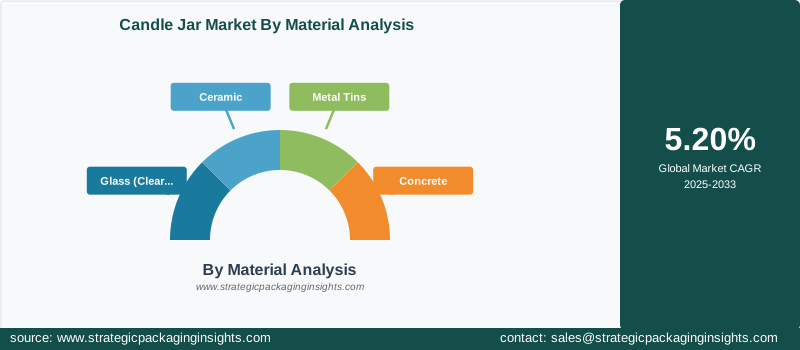
The Candle Jar market is segmented by material into glass, ceramic, metal tins, and concrete, with glass being the most popular choice among consumers. Glass candle jars, including clear, frosted, colored, and amber variants, are favored for their aesthetic appeal and versatility. Companies like O-I Glass and Verescence are leading the market with their innovative glass packaging solutions, offering a wide range of designs and finishes to cater to diverse consumer preferences. The demand for ceramic and metal tins is also growing, driven by the trend of artisanal and handcrafted candle products that emphasize unique and personalized designs.
Concrete candle jars are gaining popularity in the market, particularly among consumers seeking minimalist and industrial-style home decor. The use of concrete as a material for candle jars offers a unique texture and appearance, appealing to consumers looking for distinctive and modern designs. Manufacturers are investing in research and development to create innovative concrete candle jar designs that meet consumer demand for both functionality and style. The growing trend of eco-friendly and sustainable packaging solutions is also influencing material choices, with companies focusing on recyclable and biodegradable materials to align with consumer preferences and regulatory requirements.
By Capacity Analysis
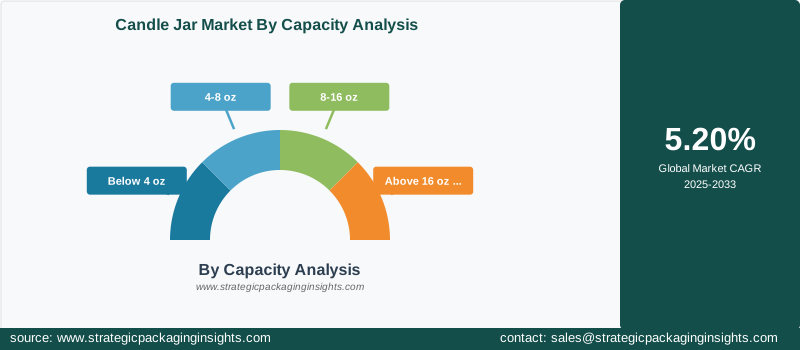
The Candle Jar market is segmented by capacity into below 4 oz, 4-8 oz, 8-16 oz, and above 16 oz / 3-wick, with the 8-16 oz segment experiencing significant growth. This segment is favored by consumers for its balance between size and burn time, offering a medium-sized candle that is suitable for various settings and occasions. Companies are capitalizing on this trend by offering a wide range of 8-16 oz candle jars in different materials and designs, catering to diverse consumer preferences and enhancing their product offerings.
The below 4 oz segment is popular among consumers seeking travel-sized or sample candles, offering a convenient and portable option for fragrance enthusiasts. The above 16 oz / 3-wick segment is also gaining traction, driven by the demand for larger candles that provide extended burn times and enhanced fragrance diffusion. Manufacturers are focusing on creating innovative designs and materials for these segments, offering unique and aesthetically pleasing candle jars that meet consumer demand for both functionality and style. The growing trend of personalized and artisanal candle products is further driving demand for diverse capacity options in the Candle Jar market.
By Closure Analysis
The Candle Jar market is segmented by closure into with lid and without lid, with the with lid segment being the most popular choice among consumers. Candle jars with lids, including metal, wood, glass, and cork options, offer added functionality and protection, preserving the fragrance and quality of the candle. Companies are investing in innovative lid designs and materials to enhance the aesthetic appeal and functionality of their candle jars, catering to consumer preferences for both style and practicality.
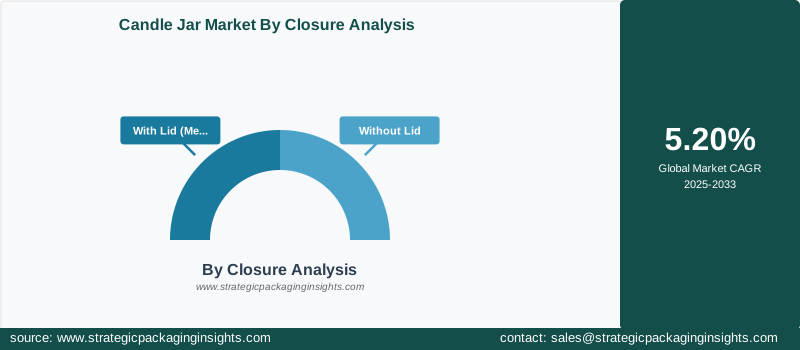
The without lid segment is also gaining popularity, particularly among consumers seeking minimalist and contemporary candle designs. These candle jars offer a sleek and modern appearance, appealing to consumers looking for unique and stylish home decor options. Manufacturers are focusing on creating innovative designs and materials for both segments, offering a diverse range of candle jars that meet consumer demand for both functionality and style. The growing trend of eco-friendly and sustainable packaging solutions is also influencing closure choices, with companies focusing on recyclable and biodegradable materials to align with consumer preferences and regulatory requirements.
By End Use Analysis
The Candle Jar market is segmented by end use into home fragrance brands, private label / contract fillers, artisan & craft makers, and hospitality & spa, with home fragrance brands being the largest segment. The growing popularity of home fragrances and wellness products is driving demand for candle jars in this segment, with consumers seeking unique and aesthetically pleasing designs that reflect their personal style and preferences. Companies are capitalizing on this trend by offering a wide range of candle jar designs and materials that cater to diverse consumer preferences and enhance their product offerings.
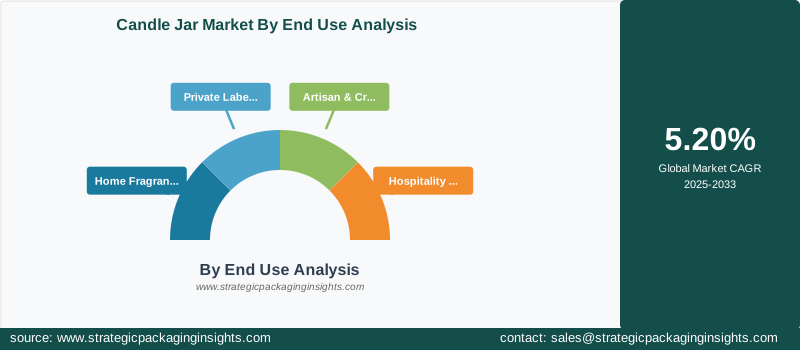
The artisan & craft makers segment is also experiencing significant growth, driven by the trend of personalized and handcrafted candle products. Consumers are seeking unique and artisanal candle jars that emphasize creativity and individuality, providing opportunities for manufacturers to innovate and offer a diverse range of designs and materials. The hospitality & spa segment is also gaining traction, driven by the demand for candles in wellness and relaxation settings. Manufacturers are focusing on creating innovative designs and materials for these segments, offering unique and aesthetically pleasing candle jars that meet consumer demand for both functionality and style.
By Distribution Channel Analysis
The Candle Jar market is segmented by distribution channel into B2B / bulk packaging distributors, retail, and online, with the online segment experiencing rapid growth. The convenience and variety offered by online sales are driving consumer demand for candle jars, with companies investing in e-commerce platforms and digital marketing strategies to enhance their online presence and reach a wider audience. The growing trend of personalized and artisanal candle products is also influencing distribution channel choices, with consumers seeking unique and aesthetically pleasing candle jars that reflect their personal style and preferences.
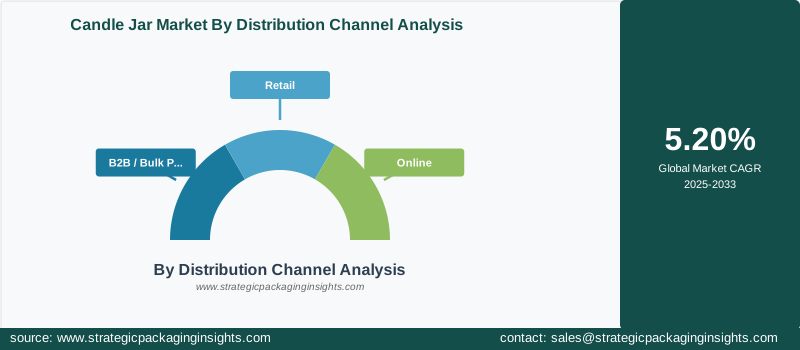
The retail segment is also a significant distribution channel, with consumers seeking the tactile experience of purchasing candle jars in-store. Companies are focusing on creating innovative designs and materials for this segment, offering a diverse range of candle jars that meet consumer demand for both functionality and style. The B2B / bulk packaging distributors segment is also gaining traction, driven by the demand for candle jars in the hospitality and spa sectors. Manufacturers are focusing on creating innovative designs and materials for these segments, offering unique and aesthetically pleasing candle jars that meet consumer demand for both functionality and style.
Candle Jar Market Segments
The Candle Jar market has been segmented on the basis ofBy Material
- Glass (Clear, Frosted, Colored, Amber)
- Ceramic
- Metal Tins
- Concrete
By Capacity
- Below 4 oz
- 4-8 oz
- 8-16 oz
- Above 16 oz / 3-Wick
By Closure
- With Lid (Metal, Wood, Glass, Cork)
- Without Lid
By End Use
- Home Fragrance Brands
- Private Label / Contract Fillers
- Artisan & Craft Makers
- Hospitality & Spa
By Distribution Channel
- B2B / Bulk Packaging Distributors
- Retail
- Online
By Region
- North America (U.S., Canada, Mexico)
- Europe (Germany, UK, France, Italy, Spain, Rest of Europe)
- Asia Pacific (China, India, Japan, South Korea, Australia, Rest of Asia Pacific)
- Latin America (Brazil, Argentina, Rest of Latin America)
- Middle East & Africa (GCC Countries, South Africa, Rest of MEA)




