


Can Seamers Market Outlook
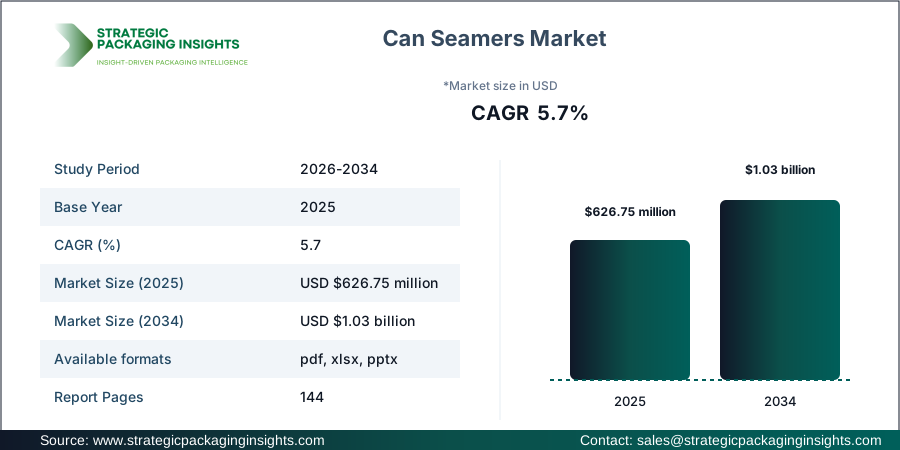
The Can Seamers market was valued at $626.75 million in 2025 and is projected to reach $1.03 billion by 2034, growing at a CAGR of 5.7% during the forecast period 2026-2034. This growth is driven by the increasing demand for canned products across various sectors, including food and beverages, chemicals, and pharmaceuticals. The rise in urbanization and changing consumer lifestyles have led to a surge in demand for convenient and long-lasting packaging solutions, further propelling the market. Additionally, advancements in can seaming technology, such as the development of high-speed seamers and automation, are expected to enhance production efficiency and reduce operational costs, thereby boosting market growth.
However, the market faces certain restraints, including stringent regulatory standards related to food safety and packaging materials, which may pose challenges for manufacturers. Despite these challenges, the market holds significant growth potential, particularly in emerging economies where the demand for packaged food and beverages is rapidly increasing. The growing trend of sustainable packaging solutions and the adoption of eco-friendly materials in can manufacturing are also expected to create new opportunities for market players. Furthermore, the increasing focus on reducing food wastage and extending the shelf life of products is likely to drive the demand for advanced can seaming technologies.
Report Scope
| Attributes | Details |
| Report Title | Can Seamers Market Size, Future Growth and Forecast 2034 |
| Machine Type | Manual Seamers, Semi-Automatic Seamers, Automatic Seamers, High-Speed Seamers |
| Can Type | Beverage Cans, Food Cans, Aerosol Cans, Specialty Cans |
| Application | Food Canning, Beverage Canning, Chemical Canning, Pharma Packaging |
| End Use | Food & Beverage, Chemicals, Packaging Plants, Contract Packers |
| Region | Asia Pacific, North America, Latin America, Europe, Middle East & Africa |
| Base Year | 2025 |
| Historic Period | 2018-2024 |
| Forecast Period | 2026-2034 |
| Number of Pages | 144 |
| Customization Available | Yes* |
Opportunities & Threats
The Can Seamers market presents numerous opportunities, particularly with the rising demand for canned beverages and food products. As consumers increasingly prefer ready-to-eat meals and beverages, the need for efficient and reliable can seaming solutions is on the rise. This trend is further supported by the growing popularity of craft beverages, such as craft beer and artisanal sodas, which require specialized canning solutions. Additionally, the expansion of the food and beverage industry in emerging markets offers significant growth prospects for can seamer manufacturers. These regions are witnessing a surge in demand for packaged food products due to increasing urbanization, rising disposable incomes, and changing consumer preferences.
Another opportunity lies in the development of sustainable and eco-friendly canning solutions. With increasing environmental concerns and regulatory pressures, manufacturers are focusing on reducing the environmental impact of their products. This has led to the adoption of recyclable materials and energy-efficient technologies in can seaming processes. Companies that invest in sustainable practices and innovative technologies are likely to gain a competitive edge in the market. Furthermore, the integration of IoT and automation in can seaming machines is expected to enhance operational efficiency and reduce downtime, providing additional growth opportunities for market players.
Despite the promising opportunities, the Can Seamers market faces certain threats, including the volatility of raw material prices and the availability of alternative packaging solutions. Fluctuations in the prices of metals used in can manufacturing, such as aluminum and steel, can impact production costs and profit margins for manufacturers. Additionally, the increasing popularity of alternative packaging solutions, such as flexible packaging and PET bottles, poses a challenge to the growth of the can seaming market. These alternatives offer advantages such as lightweight, cost-effectiveness, and ease of transportation, which may limit the demand for traditional canning solutions.
Drivers & Challenges
One of the primary drivers of the Can Seamers market is the growing demand for canned food and beverages. As consumers seek convenient and long-lasting packaging solutions, the demand for canned products continues to rise. This trend is particularly evident in urban areas, where busy lifestyles and the need for on-the-go consumption drive the demand for ready-to-eat meals and beverages. Additionally, the increasing focus on food safety and hygiene has led to the adoption of advanced can seaming technologies that ensure airtight and secure packaging, further boosting market growth.
Technological advancements in can seaming machines are also driving market growth. The development of high-speed seamers and automated solutions has significantly improved production efficiency and reduced operational costs for manufacturers. These advancements enable companies to meet the growing demand for canned products while maintaining high-quality standards. Moreover, the integration of IoT and smart technologies in can seaming machines allows for real-time monitoring and predictive maintenance, enhancing operational efficiency and reducing downtime.
However, the Can Seamers market faces several challenges, including stringent regulatory standards and the availability of alternative packaging solutions. Regulatory bodies impose strict guidelines on food safety and packaging materials, which can pose challenges for manufacturers in terms of compliance and cost. Additionally, the increasing popularity of alternative packaging solutions, such as flexible packaging and PET bottles, presents a challenge to the growth of the can seaming market. These alternatives offer advantages such as lightweight, cost-effectiveness, and ease of transportation, which may limit the demand for traditional canning solutions.
Market Share Analysis
The Can Seamers market is characterized by a competitive landscape with several key players vying for market share. Companies such as Ferrum, Angelus, Pneumatic Scale, CFT Group, and Dixie Canner are among the leading players in the market. These companies have established a strong presence through their extensive product portfolios, technological expertise, and strategic partnerships. Ferrum, for instance, is known for its high-speed can seamers that cater to the needs of large-scale production facilities. Angelus, on the other hand, offers a wide range of can seaming solutions, including semi-automatic and automatic seamers, to meet the diverse needs of its customers.
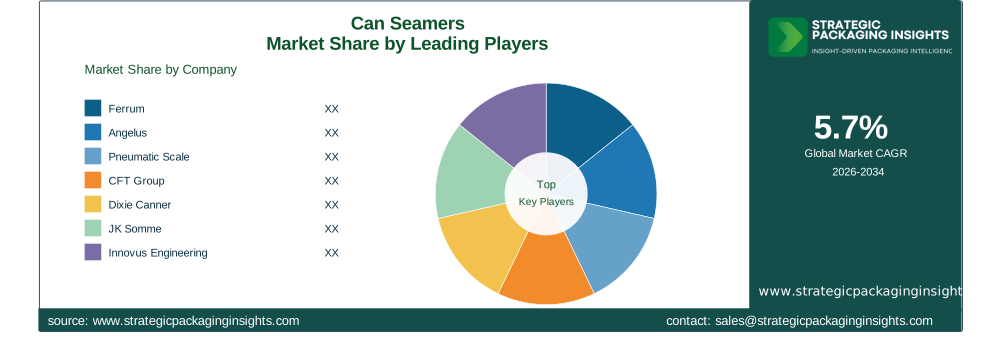
Pneumatic Scale, a division of Barry-Wehmiller, is another prominent player in the market, offering innovative can seaming solutions that integrate advanced technologies for enhanced performance and efficiency. CFT Group, with its focus on research and development, has introduced several cutting-edge can seaming machines that cater to the evolving needs of the food and beverage industry. Dixie Canner, known for its versatile canning equipment, serves a wide range of industries, including food, beverage, and pharmaceuticals.
Other notable players in the market include JK Somme, Innovus Engineering, Bubber Machine Tools, SHIN I Machinery, and JBT. These companies are continuously investing in research and development to introduce innovative products and expand their market presence. JK Somme, for example, is known for its high-quality can seamers that offer precision and reliability. Innovus Engineering focuses on providing customized canning solutions to meet the specific requirements of its clients. Bubber Machine Tools, with its extensive experience in the industry, offers a wide range of can seaming machines that cater to various applications.
SHIN I Machinery and JBT are also key players in the market, offering a diverse range of can seaming solutions that cater to the needs of different industries. These companies are focused on expanding their product portfolios and enhancing their technological capabilities to maintain a competitive edge in the market. Overall, the competitive landscape of the Can Seamers market is characterized by continuous innovation, strategic partnerships, and a focus on meeting the evolving needs of customers.
Key Highlights
- The Can Seamers market is projected to grow from $626.75 million in 2025 to $1.03 billion by 2034, at a CAGR of 5.7%.
- Increasing demand for canned food and beverages is a major driver of market growth.
- Technological advancements in can seaming machines are enhancing production efficiency and reducing operational costs.
- Emerging markets offer significant growth opportunities due to rising urbanization and disposable incomes.
- Sustainable and eco-friendly canning solutions are gaining traction in the market.
- Stringent regulatory standards pose challenges for manufacturers in terms of compliance and cost.
- Alternative packaging solutions, such as flexible packaging and PET bottles, present a challenge to the growth of the can seaming market.
Top Countries Insights
In the Can Seamers market, the United States holds a significant share, driven by the robust demand for canned beverages and food products. The market size in the U.S. is substantial, with a CAGR of 5%, supported by the presence of major manufacturers and a well-established food and beverage industry. The country's focus on innovation and technological advancements in can seaming machines further propels market growth. However, regulatory standards related to food safety and packaging materials pose challenges for manufacturers.
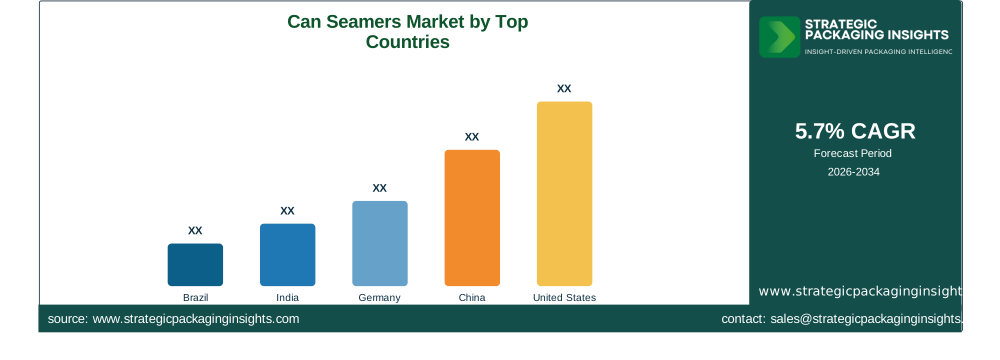
China is another key market for can seamers, with a high CAGR of 7%. The country's rapid urbanization and increasing disposable incomes have led to a surge in demand for packaged food and beverages. Additionally, the government's focus on sustainable packaging solutions and the adoption of eco-friendly materials in can manufacturing are driving market growth. However, the volatility of raw material prices and the availability of alternative packaging solutions pose challenges for market players.
Germany is a prominent market for can seamers in Europe, with a CAGR of 4%. The country's strong food and beverage industry, coupled with a focus on innovation and sustainability, drives the demand for advanced can seaming solutions. However, stringent regulatory standards related to food safety and packaging materials pose challenges for manufacturers. The increasing popularity of alternative packaging solutions also presents a challenge to market growth.
India is an emerging market for can seamers, with a CAGR of 6%. The country's growing population and rising disposable incomes have led to an increase in demand for packaged food and beverages. Additionally, the government's focus on reducing food wastage and extending the shelf life of products is driving the demand for advanced can seaming technologies. However, the availability of alternative packaging solutions and the volatility of raw material prices pose challenges for market players.
Brazil is a key market for can seamers in Latin America, with a CAGR of 5%. The country's expanding food and beverage industry, coupled with a focus on innovation and sustainability, drives the demand for can seaming solutions. However, regulatory standards related to food safety and packaging materials pose challenges for manufacturers. The increasing popularity of alternative packaging solutions also presents a challenge to market growth.
Can Seamers Market Segments Insights

Machine Type Analysis
The Can Seamers market is segmented by machine type into Manual Seamers, Semi-Automatic Seamers, Automatic Seamers, and High-Speed Seamers. Manual seamers are typically used in small-scale operations where production volumes are low, and precision is critical. These machines are favored for their cost-effectiveness and ease of use, making them ideal for small businesses and startups. Semi-automatic seamers, on the other hand, offer a balance between manual and fully automated operations, providing increased efficiency and consistency in canning processes. They are widely used in medium-sized production facilities where flexibility and scalability are essential.
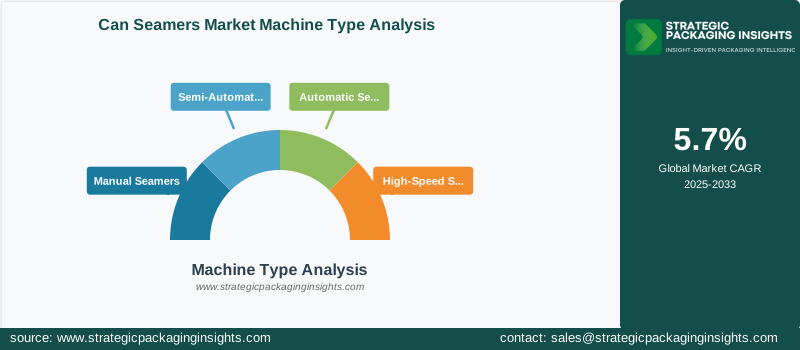
Automatic seamers are gaining popularity due to their ability to handle large production volumes with minimal human intervention. These machines are equipped with advanced features such as real-time monitoring and predictive maintenance, enhancing operational efficiency and reducing downtime. High-speed seamers, designed for large-scale production facilities, offer the highest level of automation and speed, enabling manufacturers to meet the growing demand for canned products. The increasing focus on automation and efficiency in canning processes is driving the demand for automatic and high-speed seamers in the market.
Can Type Analysis
The Can Seamers market is also segmented by can type into Beverage Cans, Food Cans, Aerosol Cans, and Specialty Cans. Beverage cans are the most widely used type, driven by the increasing demand for canned beverages such as soft drinks, energy drinks, and alcoholic beverages. The growing popularity of craft beverages, such as craft beer and artisanal sodas, is further boosting the demand for beverage cans. Food cans, used for packaging a wide range of food products, are also witnessing significant demand due to the increasing consumption of ready-to-eat meals and canned fruits and vegetables.
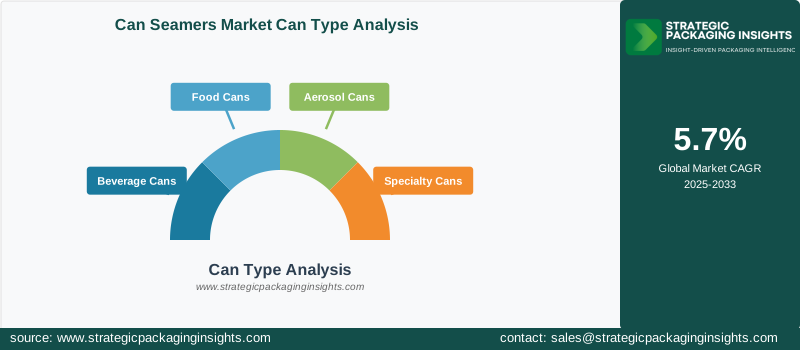
Aerosol cans, used for packaging products such as deodorants, insecticides, and household cleaners, are gaining traction due to their convenience and ease of use. Specialty cans, designed for specific applications such as paint cans and chemical cans, are also witnessing growth due to the increasing demand for customized packaging solutions. The diverse applications of different can types and the growing demand for canned products across various industries are driving the growth of the can type segment in the Can Seamers market.
Application Analysis
The Can Seamers market is segmented by application into Food Canning, Beverage Canning, Chemical Canning, and Pharma Packaging. Food canning is a major application segment, driven by the increasing demand for convenient and long-lasting food packaging solutions. The growing consumption of ready-to-eat meals and canned fruits and vegetables is boosting the demand for food canning solutions. Beverage canning, another significant application segment, is witnessing growth due to the increasing demand for canned beverages such as soft drinks, energy drinks, and alcoholic beverages.
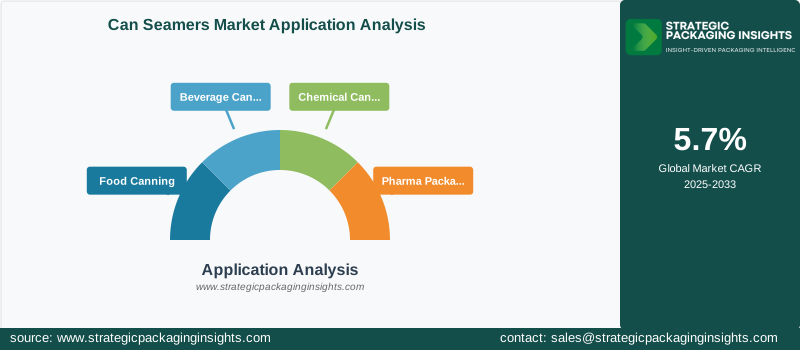
Chemical canning, used for packaging products such as paints, lubricants, and adhesives, is also witnessing growth due to the increasing demand for safe and secure packaging solutions. Pharma packaging, used for packaging pharmaceutical products, is gaining traction due to the increasing focus on product safety and hygiene. The diverse applications of can seaming solutions across various industries and the growing demand for canned products are driving the growth of the application segment in the Can Seamers market.
End Use Analysis
The Can Seamers market is segmented by end use into Food & Beverage, Chemicals, Packaging Plants, and Contract Packers. The food and beverage industry is the largest end-use segment, driven by the increasing demand for canned food and beverages. The growing consumption of ready-to-eat meals and canned beverages is boosting the demand for can seaming solutions in this segment. The chemicals industry, another significant end-use segment, is witnessing growth due to the increasing demand for safe and secure packaging solutions for chemical products.
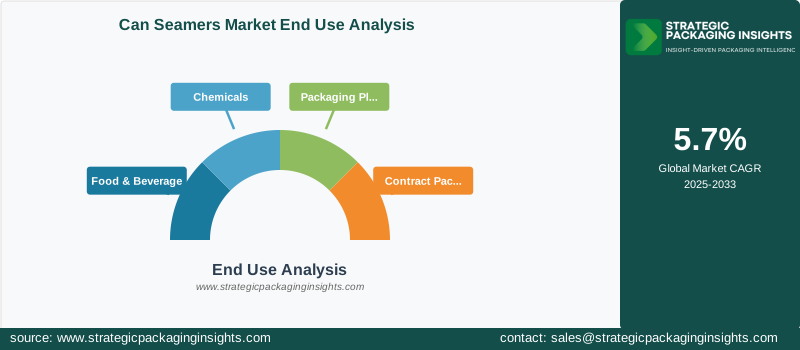
Packaging plants, which provide packaging solutions for various industries, are also witnessing growth due to the increasing demand for customized packaging solutions. Contract packers, which offer packaging services to manufacturers, are gaining traction due to the increasing focus on outsourcing packaging operations to reduce costs and improve efficiency. The diverse end-use applications of can seaming solutions and the growing demand for canned products across various industries are driving the growth of the end-use segment in the Can Seamers market.
Can Seamers Market Segments
The Can Seamers market has been segmented on the basis ofMachine Type
- Manual Seamers
- Semi-Automatic Seamers
- Automatic Seamers
- High-Speed Seamers
Can Type
- Beverage Cans
- Food Cans
- Aerosol Cans
- Specialty Cans
Application
- Food Canning
- Beverage Canning
- Chemical Canning
- Pharma Packaging
End Use
- Food & Beverage
- Chemicals
- Packaging Plants
- Contract Packers
Region
- Asia Pacific
- North America
- Latin America
- Europe
- Middle East & Africa




