


Business Card Holder Market Outlook
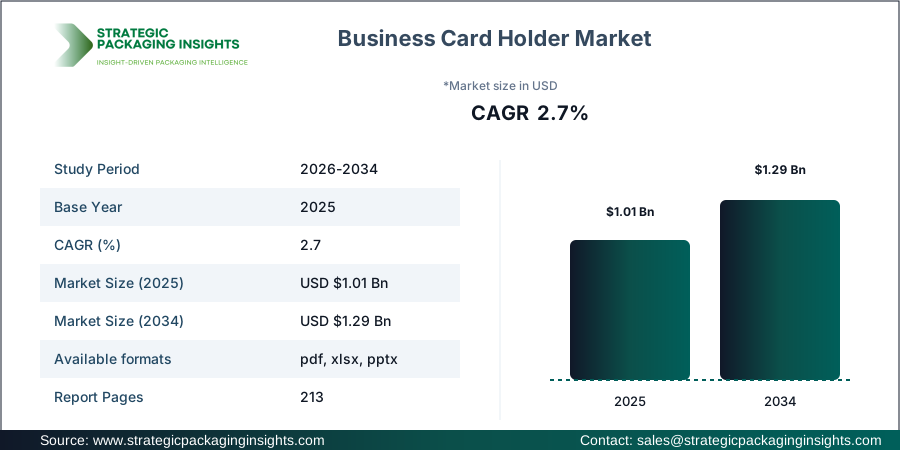
The Business Card Holder market size was valued at USD 1.01 billion in 2025 and is anticipated to reach USD 1.29 billion by 2034, growing at a CAGR of 2.7% during the forecast period according to Strategic Packaging Insights. The market is witnessing a steady demand driven by the increasing need for organized and professional presentation of business cards in corporate settings. Staples and Office Depot are among the key players capitalizing on this trend by offering a wide range of innovative and stylish business card holders that cater to both personal and professional needs. The market's growth is further supported by the rising number of business events and networking activities, which necessitate the use of business card holders for efficient contact management.
One of the most impactful drivers of the Business Card Holder market is the growing emphasis on personal branding and professional networking. As reported by various industry experts, the importance of making a lasting impression in business interactions has led to an increased demand for aesthetically pleasing and functional business card holders. This trend is particularly evident in regions like North America and Europe, where business professionals prioritize high-quality accessories that reflect their personal brand. Additionally, the rise of entrepreneurship and small businesses has contributed to the market's expansion, as these entities seek cost-effective solutions to enhance their professional image. Staples and Office Depot continue to innovate in this space, offering customizable and eco-friendly options that align with consumer preferences for sustainable products.
Report Scope
| Attributes | Details |
| Report Title | Business Card Holder Market Size, Future Growth and Forecast 2034 |
| By Material Type | Plastic, Metal, Leather, Wood |
| By Product Type | Desktop Holders, Pocket Holders, Display Holders, Multi-Slot Holders |
| By Application | Office Use, Retail Display, Events, Personal Use |
| By Distribution Channel | Online, Stationery Stores, Office Supplies, Corporate Sales |
| Region | Asia Pacific, North America, Latin America, Europe, Middle East & Africa |
| Base Year | 2025 |
| Historic Period | 2018-2024 |
| Forecast Period | 2026-2034 |
| Number of Pages | 213 |
| Customization Available | Yes* |
Sustainability & Circular Economy Analysis
Sustainability initiatives are increasingly shaping the Business Card Holder market, as consumers and businesses alike prioritize eco-friendly products. The use of recyclable materials such as metal and wood in the production of business card holders is gaining traction, driven by the growing awareness of environmental impact. Companies like Avery and Durable are leading the charge by incorporating sustainable practices into their manufacturing processes, thereby reducing waste and minimizing carbon footprints. These efforts not only appeal to environmentally conscious consumers but also align with broader corporate ESG initiatives, enhancing brand reputation and market competitiveness.
The circular economy model is influencing packaging design and manufacturing strategies within the Business Card Holder market. By focusing on the lifecycle of products, companies are investing in reusable and durable materials that extend the longevity of business card holders. This approach not only reduces the need for frequent replacements but also supports waste reduction strategies. As a result, businesses are able to optimize their supply chain operations, reduce costs, and meet regulatory compliance requirements related to packaging waste. The integration of circular economy principles is becoming a key differentiator for companies like Fellowes and Esselte, who are committed to sustainable innovation.
Consumer preferences for sustainable products are driving investment decisions and shaping supply chain strategies in the Business Card Holder market. As more consumers demand eco-friendly options, companies are compelled to adopt sustainable sourcing practices and invest in lightweight packaging solutions. This shift is evident in the growing popularity of business card holders made from biodegradable materials, which offer a compelling alternative to traditional plastic options. By aligning with consumer values and regulatory requirements, companies can enhance their market position and ensure long-term competitiveness. The emphasis on sustainability is not only a response to consumer demand but also a strategic move to future-proof business operations in an increasingly eco-conscious market.
Packaging Value Chain & Supply Chain Analysis
The packaging value chain for the Business Card Holder market involves a complex ecosystem of raw material suppliers, manufacturers, and distributors. Raw material sourcing is a critical component, with companies like Muji and Osco relying on high-quality materials such as metal, leather, and wood to produce durable and aesthetically pleasing products. Packaging converters and manufacturers play a pivotal role in transforming these materials into finished products, utilizing advanced machinery and production techniques to ensure efficiency and quality. Strategic partnerships with suppliers and logistics providers are essential for maintaining a resilient supply chain and meeting consumer demand in a timely manner.
Supply chain efficiency is a key determinant of market performance in the Business Card Holder industry. The availability of raw materials, coupled with effective transportation and distribution channels, influences the ability of companies to meet market demand and maintain competitive pricing. Companies like Deflecto and Rolodex are leveraging global sourcing strategies to access a diverse range of materials and optimize production capabilities. By investing in robust inventory management systems and localized distribution networks, these companies can enhance supply chain resilience and mitigate potential disruptions, ensuring a steady supply of products to retailers and consumers.
Strategic partnerships and collaborations are instrumental in driving innovation and competitiveness within the Business Card Holder market. By working closely with suppliers, manufacturers, and logistics providers, companies can streamline procurement strategies and enhance production efficiency. This collaborative approach enables businesses to respond swiftly to market trends and consumer preferences, ensuring that their product offerings remain relevant and appealing. Additionally, the integration of recycling networks into the supply chain supports sustainability goals and aligns with regulatory compliance requirements. As the market continues to evolve, companies that prioritize supply chain optimization and strategic partnerships will be well-positioned to capitalize on emerging opportunities and maintain a competitive edge.
Opportunities & Threats
The Business Card Holder market presents several opportunities for growth, driven by the increasing demand for personalized and customizable products. As consumers seek unique and distinctive business card holders that reflect their personal style, companies have the opportunity to expand their product offerings and cater to diverse consumer preferences. The rise of e-commerce platforms and online retail channels further enhances market accessibility, enabling companies to reach a broader audience and tap into new customer segments. By leveraging digital marketing strategies and enhancing their online presence, businesses can capitalize on the growing trend of online shopping and drive sales growth.
Another significant opportunity lies in the expansion of the corporate gifting market, where business card holders are increasingly being used as promotional items and corporate gifts. Companies can capitalize on this trend by offering customizable options that allow businesses to imprint their logos and branding on business card holders. This not only enhances brand visibility but also strengthens customer relationships and loyalty. Additionally, the growing emphasis on sustainability presents an opportunity for companies to differentiate themselves by offering eco-friendly and ethically sourced products. By aligning with consumer values and regulatory requirements, businesses can enhance their market position and drive long-term growth.
Despite the opportunities, the Business Card Holder market faces certain threats that could impact its growth trajectory. One of the primary challenges is the increasing competition from digital alternatives, such as mobile apps and digital business cards, which offer a convenient and paperless solution for contact management. As technology continues to advance, traditional business card holders may face declining demand, particularly among tech-savvy consumers. Additionally, fluctuations in raw material prices and supply chain disruptions pose a risk to market stability and profitability. Companies must navigate these challenges by investing in innovation and adapting to changing consumer preferences to remain competitive in the evolving market landscape.
Drivers & Challenges
The Business Card Holder market is driven by several key factors, including the growing emphasis on professional networking and personal branding. As business professionals seek to make a lasting impression in their interactions, the demand for high-quality and aesthetically pleasing business card holders continues to rise. This trend is particularly evident in regions like North America and Europe, where business professionals prioritize accessories that reflect their personal brand. Additionally, the rise of entrepreneurship and small businesses has contributed to the market's expansion, as these entities seek cost-effective solutions to enhance their professional image. Companies like Staples and Office Depot are capitalizing on this trend by offering innovative and customizable products that cater to diverse consumer preferences.
Another significant driver of the Business Card Holder market is the increasing number of business events and networking activities, which necessitate the use of business card holders for efficient contact management. As reported by various industry experts, the importance of making a lasting impression in business interactions has led to an increased demand for aesthetically pleasing and functional business card holders. This trend is particularly evident in regions like North America and Europe, where business professionals prioritize high-quality accessories that reflect their personal brand. Additionally, the rise of entrepreneurship and small businesses has contributed to the market's expansion, as these entities seek cost-effective solutions to enhance their professional image.
Despite the positive drivers, the Business Card Holder market faces several challenges that could impact its growth trajectory. One of the primary challenges is the increasing competition from digital alternatives, such as mobile apps and digital business cards, which offer a convenient and paperless solution for contact management. As technology continues to advance, traditional business card holders may face declining demand, particularly among tech-savvy consumers. Additionally, fluctuations in raw material prices and supply chain disruptions pose a risk to market stability and profitability. Companies must navigate these challenges by investing in innovation and adapting to changing consumer preferences to remain competitive in the evolving market landscape.
Market Share Analysis
The Business Card Holder market is characterized by a competitive landscape with several key players vying for market share. Companies like Staples, Office Depot, and Avery are among the leading players, offering a diverse range of products that cater to both personal and professional needs. These companies have established a strong presence in the market through strategic partnerships, innovative product offerings, and a focus on customer satisfaction. Staples, for instance, has leveraged its extensive retail network and online presence to reach a wide audience and drive sales growth. Similarly, Office Depot has capitalized on its strong brand reputation and customer loyalty to maintain a competitive edge in the market.
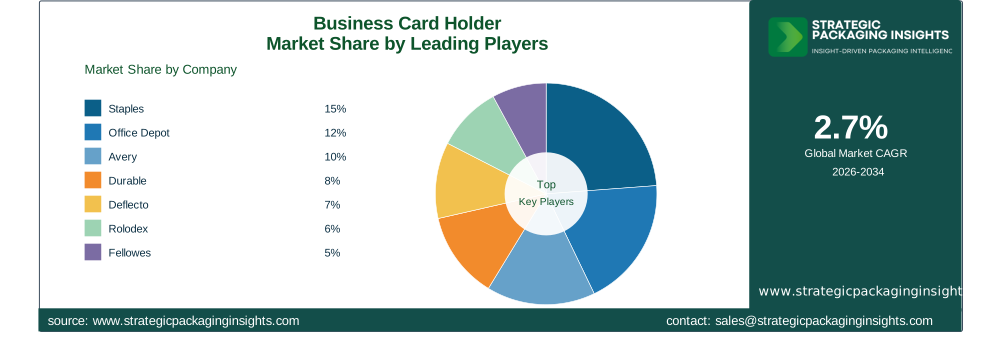
Durable and Deflecto are also prominent players in the Business Card Holder market, known for their high-quality and durable products. These companies have invested in research and development to enhance their product offerings and meet the evolving needs of consumers. By focusing on innovation and sustainability, Durable and Deflecto have been able to differentiate themselves in the market and capture a significant share of the business card holder segment. Additionally, companies like Rolodex and Fellowes have leveraged their expertise in office supplies to expand their product portfolios and strengthen their market position.
Esselte, Muji, and Osco are other notable players in the Business Card Holder market, each with its unique strengths and market strategies. Esselte, for example, has focused on expanding its product offerings to include a wide range of business card holders that cater to different consumer preferences. Muji, known for its minimalist design and eco-friendly products, has gained a loyal customer base by offering sustainable and aesthetically pleasing business card holders. Osco, on the other hand, has capitalized on its strong distribution network and partnerships with retailers to enhance its market reach and drive sales growth.
Overall, the competitive landscape of the Business Card Holder market is characterized by a mix of established players and emerging companies, each striving to capture a larger share of the market. The focus on innovation, sustainability, and customer satisfaction is driving competition and shaping the future of the market. As companies continue to invest in research and development and expand their product offerings, the Business Card Holder market is poised for steady growth and increased competitiveness in the coming years.
Key Highlights
- Market Size: The Business Card Holder market was valued at USD 1.01 billion in 2025 and is projected to reach USD 1.29 billion by 2034.
- Growth Rate: The market is expected to grow at a CAGR of 2.7% during the forecast period.
- Key Players: Staples, Office Depot, Avery, Durable, Deflecto, Rolodex, Fellowes, Esselte, Muji, Osco.
- Material Type: Plastic, Metal, Leather, and Wood are the primary materials used in business card holders.
- Product Type: Desktop Holders, Pocket Holders, Display Holders, and Multi-Slot Holders are popular product types.
- Application: Business card holders are widely used for Office Use, Retail Display, Events, and Personal Use.
- Distribution Channel: Online, Stationery Stores, Office Supplies, and Corporate Sales are key distribution channels.
- Regional Insights: North America and Europe are leading regions in terms of market share and growth potential.
- Sustainability: Increasing demand for eco-friendly and sustainable business card holders.
Business Card Holder Market Segments Insights

By Material Type Analysis
The Business Card Holder market is segmented by material type, with plastic, metal, leather, and wood being the primary materials used in the production of business card holders. Plastic business card holders are popular due to their affordability and versatility, making them a preferred choice for budget-conscious consumers. However, the growing emphasis on sustainability has led to an increased demand for eco-friendly materials such as metal and wood. Metal business card holders are favored for their durability and sleek design, appealing to professionals who prioritize quality and aesthetics. Leather business card holders, on the other hand, offer a premium look and feel, making them a popular choice for corporate gifting and high-end consumers.
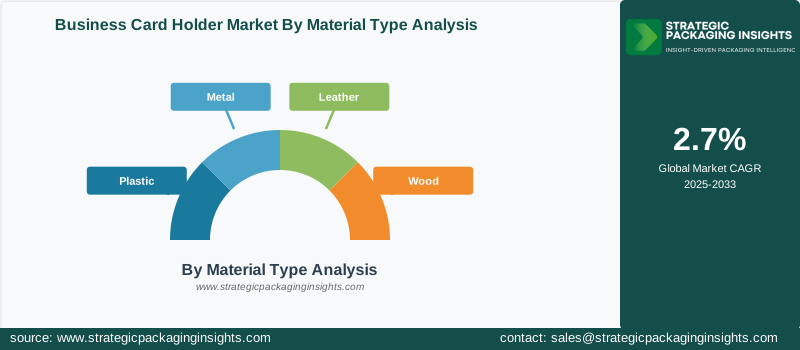
Wooden business card holders are gaining traction as consumers seek sustainable and biodegradable options. The use of wood not only aligns with eco-friendly practices but also adds a touch of elegance and sophistication to the product. Companies like Avery and Durable are capitalizing on this trend by offering a range of wooden business card holders that cater to environmentally conscious consumers. The shift towards sustainable materials is also driven by regulatory requirements and consumer preferences for products that minimize environmental impact. As a result, companies are investing in research and development to innovate and expand their product offerings in line with these trends.
By Product Type Analysis
The Business Card Holder market is segmented by product type, with desktop holders, pocket holders, display holders, and multi-slot holders being the key categories. Desktop holders are widely used in office settings, providing a convenient and organized way to store and display business cards. These holders are often designed to complement office decor and are available in various materials and styles. Pocket holders, on the other hand, are designed for portability and convenience, making them ideal for professionals who frequently travel or attend networking events. The compact design of pocket holders allows users to carry their business cards with ease, ensuring they are always prepared for business interactions.
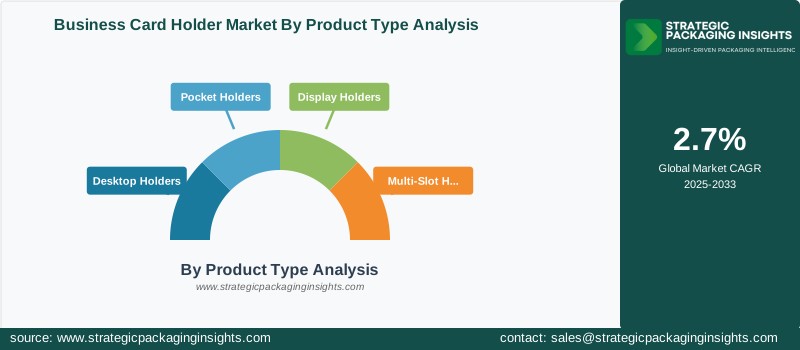
Display holders are commonly used in retail and event settings, where businesses seek to showcase their products and services to potential customers. These holders are designed to attract attention and enhance brand visibility, making them an effective marketing tool. Multi-slot holders offer versatility and functionality, allowing users to organize multiple sets of business cards in a single holder. This type of holder is particularly popular among professionals who manage a large network of contacts and require an efficient way to organize their business cards. Companies like Staples and Office Depot offer a wide range of product types to cater to diverse consumer needs and preferences.
By Application Analysis
The Business Card Holder market is segmented by application, with office use, retail display, events, and personal use being the primary categories. Office use is the largest application segment, driven by the need for organized and professional presentation of business cards in corporate settings. Business card holders are an essential accessory for professionals who seek to make a lasting impression in their interactions. Retail display is another significant application segment, where business card holders are used to showcase products and services in retail environments. These holders are designed to attract attention and enhance brand visibility, making them an effective marketing tool for businesses.
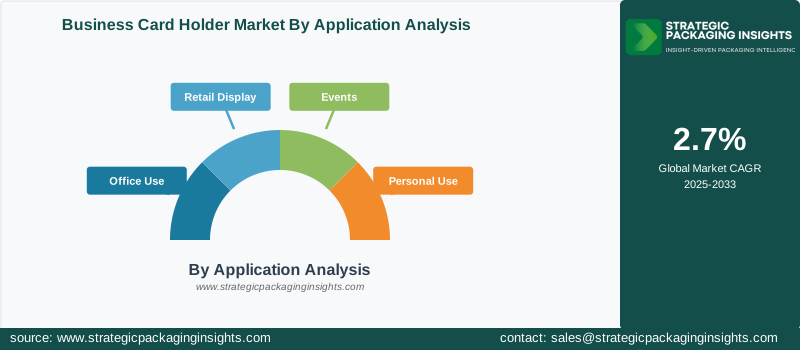
Events and personal use are also important application segments in the Business Card Holder market. Business card holders are commonly used at events such as trade shows, conferences, and networking events, where professionals seek to expand their network and establish new business connections. Personal use is driven by the growing emphasis on personal branding and the desire for unique and distinctive business card holders that reflect individual style. Companies like Avery and Durable offer a wide range of products to cater to these diverse application needs, ensuring that consumers have access to high-quality and functional business card holders that meet their specific requirements.
By Distribution Channel Analysis
The Business Card Holder market is segmented by distribution channel, with online, stationery stores, office supplies, and corporate sales being the key channels. Online sales have gained significant traction in recent years, driven by the convenience and accessibility of e-commerce platforms. Consumers can easily browse and purchase a wide range of business card holders from the comfort of their homes, making online shopping a preferred choice for many. Companies like Staples and Office Depot have capitalized on this trend by enhancing their online presence and offering a seamless shopping experience for their customers.
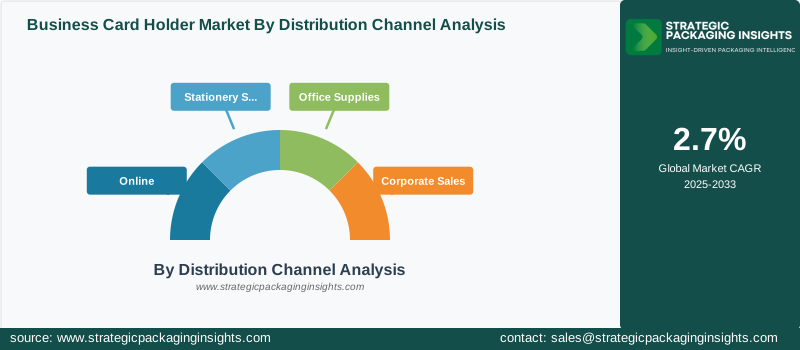
Stationery stores and office supplies are traditional distribution channels that continue to play a significant role in the Business Card Holder market. These channels offer consumers the opportunity to physically examine products before making a purchase, providing a tactile shopping experience that online platforms cannot replicate. Corporate sales are another important distribution channel, where businesses purchase business card holders in bulk for their employees or as corporate gifts. This channel is particularly relevant for companies that seek to enhance their brand visibility and strengthen customer relationships through promotional items. By leveraging a multi-channel distribution strategy, companies can reach a broader audience and drive sales growth in the competitive Business Card Holder market.
Business Card Holder Market Segments
The Business Card Holder market has been segmented on the basis ofBy Material Type
- Plastic
- Metal
- Leather
- Wood
By Product Type
- Desktop Holders
- Pocket Holders
- Display Holders
- Multi-Slot Holders
By Application
- Office Use
- Retail Display
- Events
- Personal Use
By Distribution Channel
- Online
- Stationery Stores
- Office Supplies
- Corporate Sales
Region
- Asia Pacific
- North America
- Latin America
- Europe
- Middle East & Africa




