


Burger Wrap Paper Market Outlook
The Burger Wrap Paper market size was valued at USD 450 million in 2025 and is anticipated to reach USD 710 million by 2034, growing at a CAGR of 5.20% during the forecast period according to Strategic Packaging Insights. This growth trajectory is driven by the increasing demand for sustainable and eco-friendly packaging solutions in the fast-food industry. Companies like Nordic Paper and Ahlstrom are leading the charge by innovating in biodegradable and recyclable materials, which are becoming increasingly popular among environmentally conscious consumers. The market is also benefiting from the rising trend of customization in packaging, with businesses seeking to enhance brand visibility through unique and personalized wrap designs.
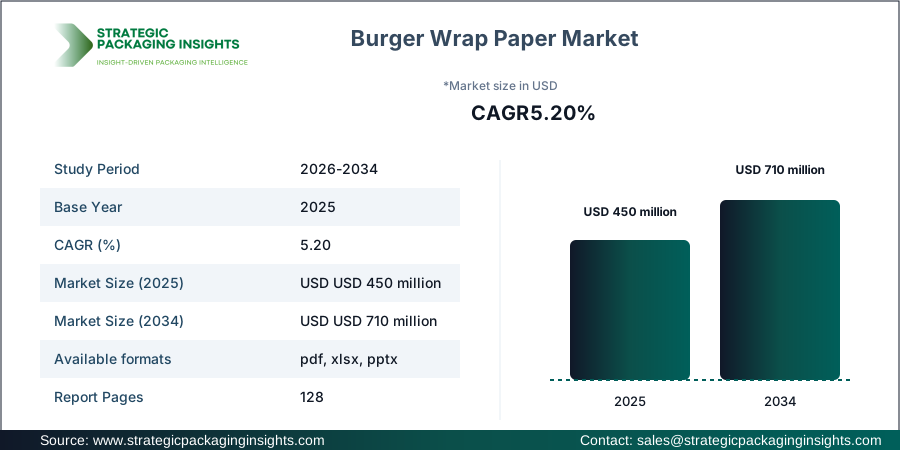
One of the most impactful drivers of the Burger Wrap Paper market is the growing consumer preference for sustainable packaging solutions. According to recent environmental reports, there is a significant shift towards reducing plastic waste, which has led to increased adoption of paper-based packaging. This trend is further supported by government regulations aimed at minimizing environmental impact, encouraging the use of recyclable and biodegradable materials. Companies like Vegware and Dispapali are capitalizing on this trend by offering innovative products that meet both consumer demands and regulatory requirements, thereby enhancing their market position and driving overall growth.
Report Scope
| Attributes | Details |
| Report Title | Burger Wrap Paper Market Size, Future Growth and Forecast 2034 |
| By Material | Greaseproof Paper, Wax-Coated Paper, PE-Coated (Declining), Aluminum-Laminated, PFAS-Free Barrier Paper |
| By Print | Custom Printed, Stock Designs, Plain |
| By End Use | QSR Chains, Burger Restaurants & Food Trucks, Institutional Catering, Retail Deli |
| By Region | North America (U.S., Canada, Mexico), Europe (Germany, UK, France, Italy, Spain, Rest of Europe), Asia Pacific (China, India, Japan, South Korea, Australia, Rest of Asia Pacific), Latin America (Brazil, Argentina, Rest of Latin America), Middle East & Africa (GCC Countries, South Africa, Rest of MEA) |
| Base Year | 2025 |
| Historic Period | 2018-2024 |
| Forecast Period | 2026-2034 |
| Number of Pages | 128 |
| Customization Available | Yes* |
Sustainability & Circular Economy Analysis
Sustainability initiatives are profoundly influencing the Burger Wrap Paper market, as companies strive to align with circular economy practices. The shift towards recyclable materials is evident, with manufacturers increasingly using greaseproof and wax-coated papers that are biodegradable. This not only reduces waste but also aligns with consumer preferences for eco-friendly packaging. Companies like Detpak and Hotpack are investing in lightweight packaging solutions that minimize material usage while maintaining product integrity, thus reducing the carbon footprint associated with production and transportation.
Eco-friendly material innovation is at the forefront of the market, with a focus on developing PFAS-free barrier papers that offer the same grease resistance as traditional options without harmful chemicals. This innovation is crucial for regulatory compliance, as governments worldwide impose stricter packaging regulations. Extended Producer Responsibility (EPR) schemes are also gaining traction, pushing companies to take accountability for the lifecycle of their products. This has led to increased investment in waste reduction strategies and recycling networks, ensuring long-term market competitiveness.
Consumer sustainability preferences are driving changes in packaging design and manufacturing processes. Brand owners and converters are prioritizing ESG initiatives, which are becoming a key factor in investment decisions. The emphasis on reducing carbon footprints is influencing supply chain strategies, with companies opting for localized sourcing to minimize transportation emissions. This trend not only enhances regulatory compliance but also strengthens brand reputation, as consumers increasingly favor companies that demonstrate a commitment to sustainability.
Packaging Value Chain & Supply Chain Analysis
The packaging value chain for Burger Wrap Paper involves a complex ecosystem of raw material sourcing, manufacturing, and distribution. Raw materials such as greaseproof and wax-coated papers are sourced from sustainable suppliers, ensuring a steady supply of eco-friendly inputs. Packaging converters play a crucial role in transforming these materials into finished products, with companies like Oren International leading the way in innovative design and production techniques. The availability of raw materials and the efficiency of manufacturing processes directly impact market performance and competitiveness.
Logistics and distribution channels are vital components of the supply chain, ensuring that products reach end-users efficiently. Strategic partnerships between manufacturers and logistics providers enhance supply chain resilience, enabling companies to respond swiftly to market demands. Inventory management practices are evolving, with a focus on just-in-time delivery systems that reduce storage costs and improve cash flow. This approach is particularly beneficial for brand owners and retailers, who rely on timely deliveries to maintain product availability and customer satisfaction.
Global sourcing strategies are being re-evaluated in light of recent disruptions, with a shift towards localization to mitigate risks associated with international supply chains. This trend is supported by advancements in packaging machinery, which enhance production capabilities and enable manufacturers to meet diverse customer requirements. Recycling networks are also integral to the value chain, facilitating the recovery and reuse of materials. Companies are increasingly adopting procurement strategies that prioritize sustainability, ensuring long-term market viability and alignment with consumer expectations.
Opportunities & Threats
The Burger Wrap Paper market presents significant opportunities for growth, driven by the increasing demand for sustainable packaging solutions. As consumers become more environmentally conscious, there is a growing preference for biodegradable and recyclable materials. This trend is creating opportunities for companies to innovate and develop new products that meet these demands. Additionally, the rise of quick-service restaurants (QSRs) and food delivery services is boosting the demand for convenient and eco-friendly packaging options, providing further growth potential for the market.
Another opportunity lies in the customization of packaging solutions. Businesses are increasingly seeking unique and personalized wrap designs to enhance brand visibility and differentiate themselves in a competitive market. This trend is driving demand for custom printed and stock design wraps, offering companies the chance to expand their product offerings and capture a larger market share. Furthermore, advancements in printing technology are enabling more cost-effective and efficient production processes, making customization more accessible to a wider range of businesses.
However, the market also faces certain threats, primarily related to regulatory challenges and the availability of raw materials. Stricter packaging regulations aimed at reducing environmental impact are increasing compliance costs for manufacturers. Additionally, fluctuations in the availability and cost of raw materials, such as paper and coatings, can impact production capabilities and profitability. Companies must navigate these challenges by investing in sustainable sourcing practices and developing innovative solutions that meet regulatory requirements while maintaining cost-effectiveness.
Drivers & Challenges
One of the primary drivers of the Burger Wrap Paper market is the increasing consumer demand for sustainable and eco-friendly packaging solutions. As awareness of environmental issues grows, consumers are seeking alternatives to traditional plastic packaging, driving demand for paper-based options. This trend is supported by government regulations aimed at reducing plastic waste, which are encouraging the adoption of biodegradable and recyclable materials. Companies that can effectively meet these demands are well-positioned to capture a larger share of the market and drive growth.
Another key driver is the growth of the fast-food industry, particularly the expansion of quick-service restaurants (QSRs) and food delivery services. These sectors require convenient and efficient packaging solutions that can maintain product quality during transportation. The demand for burger wrap paper is increasing as these businesses seek to enhance customer experience and brand visibility through innovative packaging designs. Companies that can offer customized and high-quality wrap solutions are likely to benefit from this growing demand and strengthen their market position.
Despite these drivers, the market faces several challenges, including regulatory compliance and raw material availability. Stricter packaging regulations are increasing compliance costs for manufacturers, requiring them to invest in sustainable sourcing and production practices. Additionally, fluctuations in the availability and cost of raw materials, such as paper and coatings, can impact production capabilities and profitability. Companies must navigate these challenges by developing innovative solutions that meet regulatory requirements while maintaining cost-effectiveness and ensuring a steady supply of materials.
Market Share Analysis
The competitive landscape of the Burger Wrap Paper market is characterized by the presence of several key players, each striving to capture a significant share of the market. Companies like Nordic Paper, Ahlstrom, and Delfort are leading the market with their innovative product offerings and strong focus on sustainability. These companies have established themselves as leaders by investing in research and development to create eco-friendly and high-performance packaging solutions that meet the evolving demands of consumers and regulatory bodies.
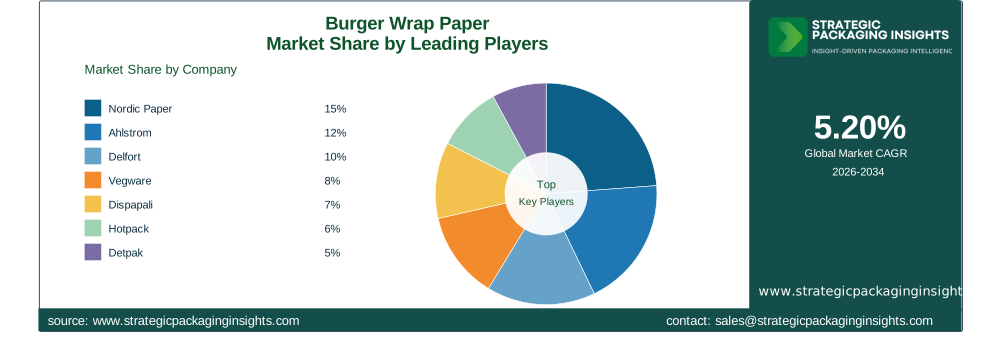
Nordic Paper is renowned for its high-quality greaseproof paper products, which are widely used in the food packaging industry. The company's commitment to sustainability and innovation has enabled it to maintain a strong market position and expand its customer base. Ahlstrom, on the other hand, is a global leader in fiber-based materials, offering a wide range of sustainable packaging solutions. The company's focus on innovation and customer-centric approach has helped it to capture a significant share of the market and establish itself as a trusted partner for packaging manufacturers and brand owners.
Delfort is another key player in the market, known for its advanced paper solutions that cater to the needs of the food packaging industry. The company's emphasis on sustainability and innovation has enabled it to develop a diverse product portfolio that meets the demands of environmentally conscious consumers. Vegware, a leading provider of compostable packaging solutions, is also making significant strides in the market by offering products that align with the growing demand for eco-friendly packaging options.
Other notable companies in the market include Dispapali, Hotpack, Detpak, Oren International, and GM Packaging. These companies are leveraging their expertise in packaging design and production to offer innovative solutions that meet the needs of the fast-food industry. By focusing on sustainability and customization, these companies are well-positioned to capture a larger share of the market and drive growth in the coming years.
Key Highlights
- Market Size: USD 450 million in 2025, projected to reach USD 710 million by 2034.
- Growth Rate: CAGR of 5.20% during the forecast period.
- Leading Companies: Nordic Paper, Ahlstrom, Delfort, Vegware, Dispapali.
- Material Trends: Increasing demand for greaseproof and PFAS-free barrier papers.
- Customization: Rising trend of custom printed and stock design wraps.
- Regional Growth: Significant growth expected in Asia Pacific and North America.
- Regulatory Impact: Stricter packaging regulations driving demand for sustainable solutions.
Burger Wrap Paper Market Segments Insights

By Material Analysis
The Burger Wrap Paper market is witnessing significant growth in the 'By Material' segment, driven by the increasing demand for sustainable and eco-friendly packaging solutions. Greaseproof paper is gaining popularity due to its biodegradable nature and excellent grease resistance, making it an ideal choice for fast-food packaging. Companies like Nordic Paper and Ahlstrom are leading the way in developing innovative greaseproof paper products that meet the evolving demands of consumers and regulatory bodies. Wax-coated paper is also in demand, offering a cost-effective solution for moisture and grease resistance, while aluminum-laminated paper provides superior barrier properties for premium packaging applications.
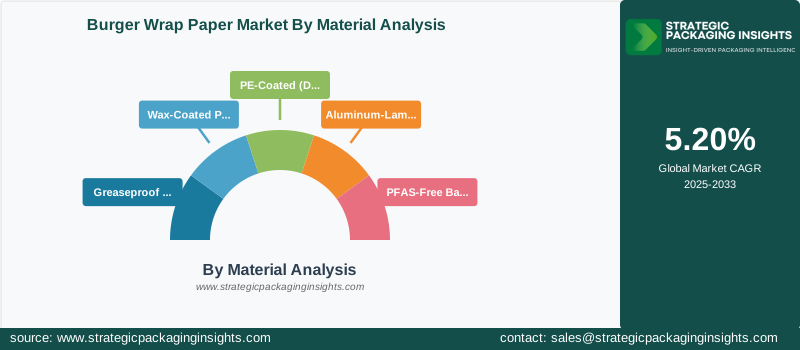
However, the market is witnessing a decline in the use of PE-coated paper due to environmental concerns and regulatory pressures. As a result, companies are shifting their focus towards PFAS-free barrier papers, which offer similar performance without the environmental impact. This shift is driven by the growing consumer preference for eco-friendly packaging options and the need for compliance with stricter packaging regulations. The emphasis on sustainability is encouraging manufacturers to invest in research and development to create innovative materials that meet these demands while maintaining cost-effectiveness and product performance.
By Print Analysis
The 'By Print' segment of the Burger Wrap Paper market is experiencing robust growth, fueled by the rising trend of customization in packaging. Custom printed wraps are becoming increasingly popular among businesses seeking to enhance brand visibility and differentiate themselves in a competitive market. This trend is driving demand for unique and personalized wrap designs, offering companies the opportunity to expand their product offerings and capture a larger market share. Advancements in printing technology are enabling more cost-effective and efficient production processes, making customization more accessible to a wider range of businesses.
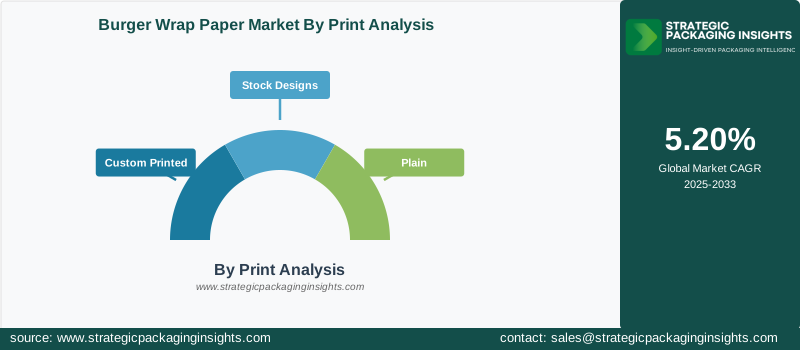
Stock designs and plain wraps also hold a significant share of the market, catering to businesses that prioritize cost-effectiveness and simplicity in their packaging solutions. These options are particularly popular among small and medium-sized enterprises (SMEs) and food trucks, which require affordable and versatile packaging solutions. The emphasis on customization and branding is encouraging companies to invest in innovative printing techniques and materials that enhance the visual appeal and functionality of their products, driving growth in this segment.
By End Use Analysis
The 'By End Use' segment of the Burger Wrap Paper market is characterized by diverse applications across various sectors, including quick-service restaurants (QSRs), burger restaurants and food trucks, institutional catering, and retail delis. The growth of the fast-food industry, particularly the expansion of QSRs and food delivery services, is driving demand for convenient and efficient packaging solutions that maintain product quality during transportation. Companies that can offer customized and high-quality wrap solutions are likely to benefit from this growing demand and strengthen their market position.
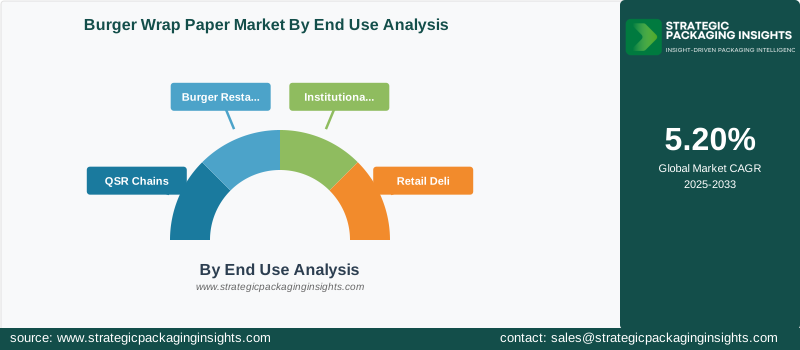
Burger restaurants and food trucks are also significant contributors to the market, requiring versatile and durable packaging solutions that enhance customer experience and brand visibility. Institutional catering and retail delis represent additional growth opportunities, as these sectors seek eco-friendly and cost-effective packaging options that align with consumer preferences and regulatory requirements. The emphasis on sustainability and customization is encouraging companies to develop innovative products that meet the diverse needs of these end-use sectors, driving growth in this segment.
Burger Wrap Paper Market Segments
The Burger Wrap Paper market has been segmented on the basis ofBy Material
- Greaseproof Paper
- Wax-Coated Paper
- PE-Coated (Declining)
- Aluminum-Laminated
- PFAS-Free Barrier Paper
By Print
- Custom Printed
- Stock Designs
- Plain
By End Use
- QSR Chains
- Burger Restaurants & Food Trucks
- Institutional Catering
- Retail Deli
By Region
- North America (U.S., Canada, Mexico)
- Europe (Germany, UK, France, Italy, Spain, Rest of Europe)
- Asia Pacific (China, India, Japan, South Korea, Australia, Rest of Asia Pacific)
- Latin America (Brazil, Argentina, Rest of Latin America)
- Middle East & Africa (GCC Countries, South Africa, Rest of MEA)




