


Bundling Film Market Outlook
The bundling film market was valued at $15.50 billion in 2025 and is projected to reach $23.55 billion by 2034, growing at a CAGR of 4.8% during the forecast period 2026-2034. This market is driven by the increasing demand for efficient packaging solutions across various industries, including food and beverage, logistics, and manufacturing. The versatility of bundling films, which offer protection, stability, and ease of handling, makes them a preferred choice for packaging applications. The market is also benefiting from advancements in film technology, such as the development of high-performance materials that enhance durability and sustainability. As industries continue to seek cost-effective and environmentally friendly packaging solutions, the bundling film market is poised for significant growth.
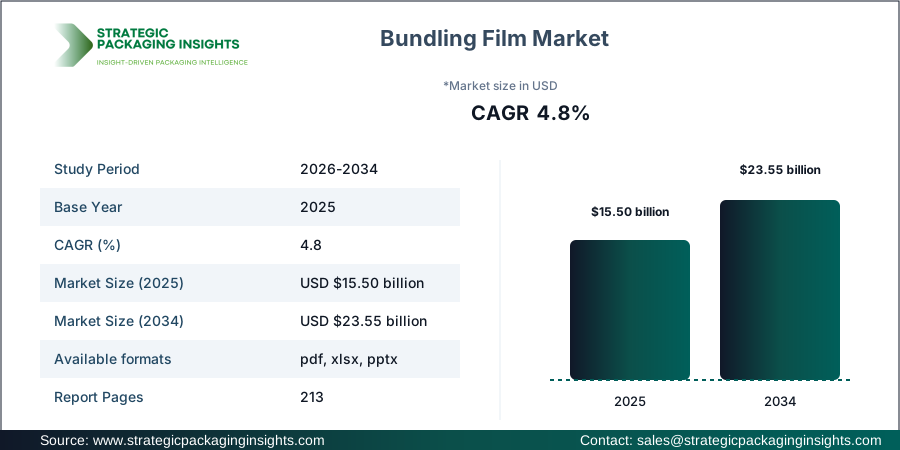
However, the market faces challenges such as stringent environmental regulations and the rising cost of raw materials. Regulatory bodies are imposing strict guidelines on the use of plastic packaging, which could hinder market growth. Despite these challenges, the market holds substantial growth potential due to the increasing adoption of bundling films in emerging economies. These regions are witnessing rapid industrialization and urbanization, leading to a surge in demand for packaging solutions. Additionally, the growing trend of e-commerce and online retailing is expected to further boost the demand for bundling films, as they provide secure and efficient packaging for goods during transportation.
Report Scope
| Attributes | Details |
| Report Title | Bundling Film Market Size, Future Growth and Forecast 2034 |
| By Material Type | LDPE, LLDPE, Shrink Film, Stretch Film |
| By Application | Multipack Bundling, Beverage Bundling, Industrial Goods, Retail Packs |
| By Film Type | Printed Films, Clear Films, Perforated Films |
| By End Use | Food & Beverage, Logistics, FMCG, Manufacturing |
| Region | Asia Pacific, North America, Latin America, Europe, Middle East & Africa |
| Base Year | 2025 |
| Historic Period | 2018-2024 |
| Forecast Period | 2026-2034 |
| Number of Pages | 213 |
| Customization Available | Yes* |
Opportunities & Threats
The bundling film market presents numerous opportunities, particularly in the realm of sustainable packaging solutions. As environmental concerns continue to rise, there is a growing demand for eco-friendly packaging materials. This trend is driving innovation in the development of biodegradable and recyclable bundling films, which offer a sustainable alternative to traditional plastic films. Companies that invest in research and development to create such products are likely to gain a competitive edge in the market. Additionally, the increasing adoption of bundling films in the food and beverage industry presents significant growth opportunities. These films provide excellent protection and preservation of products, making them ideal for packaging perishable goods.
Another opportunity lies in the expansion of the e-commerce sector. With the rise of online shopping, there is a growing need for efficient packaging solutions that ensure the safe delivery of products. Bundling films offer a cost-effective and reliable option for packaging goods, making them an attractive choice for e-commerce companies. Furthermore, the increasing focus on reducing packaging waste is driving the demand for lightweight and efficient bundling films. Companies that can offer innovative solutions to meet these demands are likely to experience significant growth in the coming years.
Despite these opportunities, the bundling film market faces several threats. One of the primary challenges is the increasing competition from alternative packaging materials, such as paper and biodegradable plastics. These materials are gaining popularity due to their environmental benefits, posing a threat to the traditional bundling film market. Additionally, fluctuations in raw material prices can impact the profitability of companies operating in this market. The volatility of oil prices, in particular, can affect the cost of producing bundling films, leading to increased production costs and reduced profit margins.
Drivers & Challenges
The bundling film market is driven by several key factors, including the growing demand for efficient and cost-effective packaging solutions. As industries continue to expand, there is an increasing need for packaging materials that offer protection, stability, and ease of handling. Bundling films provide these benefits, making them a preferred choice for various applications. Additionally, advancements in film technology are driving market growth. The development of high-performance materials that enhance the durability and sustainability of bundling films is attracting significant attention from manufacturers and consumers alike. These innovations are expected to drive the adoption of bundling films across various industries.
Another significant driver of the bundling film market is the increasing focus on sustainability. As environmental concerns continue to rise, there is a growing demand for eco-friendly packaging solutions. Bundling films that are biodegradable and recyclable offer a sustainable alternative to traditional plastic films, making them an attractive choice for environmentally conscious consumers. Furthermore, the rise of e-commerce and online retailing is driving the demand for bundling films, as they provide secure and efficient packaging for goods during transportation. This trend is expected to continue, further boosting the growth of the bundling film market.
Despite these drivers, the bundling film market faces several challenges. One of the primary challenges is the stringent environmental regulations imposed by regulatory bodies. These regulations are aimed at reducing the use of plastic packaging, which could hinder market growth. Additionally, the rising cost of raw materials, particularly oil, can impact the profitability of companies operating in this market. Fluctuations in raw material prices can lead to increased production costs, affecting the overall profitability of the market. Companies need to find innovative solutions to overcome these challenges and maintain their competitive edge in the market.
Market Share Analysis
The competitive landscape of the bundling film market is characterized by the presence of several key players, each striving to gain a significant share of the market. Companies such as Berry Global, Amcor, Mondi, and Sealed Air are leading the market with their extensive product portfolios and strong distribution networks. These companies are focusing on expanding their product offerings and enhancing their production capabilities to meet the growing demand for bundling films. Additionally, they are investing in research and development to create innovative and sustainable packaging solutions that cater to the evolving needs of consumers.
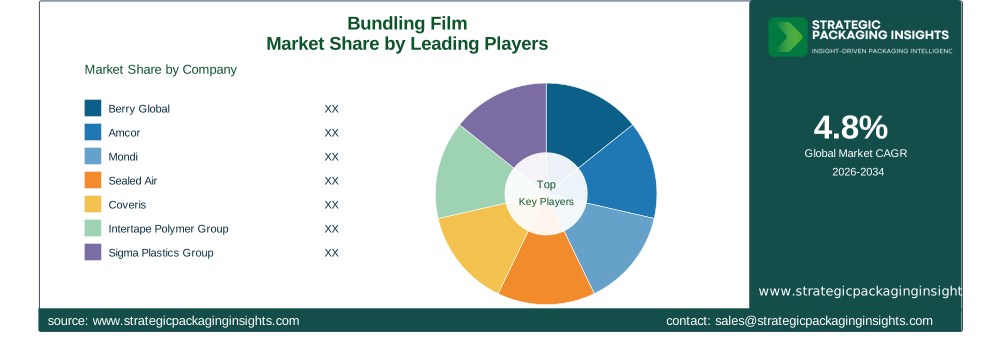
Berry Global is one of the leading players in the bundling film market, known for its wide range of packaging solutions. The company has a strong presence in the market, with a focus on sustainability and innovation. Amcor, another major player, is recognized for its commitment to developing eco-friendly packaging solutions. The company has a diverse product portfolio and a strong global presence, making it a key player in the market. Mondi is also a significant player, offering a range of high-quality bundling films that cater to various industries. The company is focused on expanding its product offerings and enhancing its production capabilities to meet the growing demand for bundling films.
Sealed Air is a prominent player in the bundling film market, known for its innovative packaging solutions. The company has a strong focus on sustainability and is committed to reducing its environmental impact. Coveris, Intertape Polymer Group, and Sigma Plastics Group are also key players in the market, each offering a range of bundling films that cater to different industries. These companies are focused on expanding their product offerings and enhancing their production capabilities to meet the growing demand for bundling films. Additionally, they are investing in research and development to create innovative and sustainable packaging solutions that cater to the evolving needs of consumers.
Inteplast Group, Dow, and ExxonMobil Chemical are also significant players in the bundling film market. These companies have a strong presence in the market, with a focus on innovation and sustainability. They are investing in research and development to create high-performance bundling films that cater to the evolving needs of consumers. Additionally, they are expanding their production capabilities and enhancing their distribution networks to meet the growing demand for bundling films. Overall, the competitive landscape of the bundling film market is characterized by the presence of several key players, each striving to gain a significant share of the market.
Key Highlights
- The bundling film market is projected to grow from $15.50 billion in 2025 to $23.55 billion by 2034, at a CAGR of 4.8%.
- Key drivers include the demand for efficient packaging solutions and advancements in film technology.
- Environmental regulations and raw material price fluctuations pose challenges to market growth.
- Opportunities exist in sustainable packaging solutions and the expansion of the e-commerce sector.
- Berry Global, Amcor, and Mondi are leading players in the market, focusing on innovation and sustainability.
- The market is characterized by the presence of several key players, each striving to gain a significant share.
- Emerging economies present significant growth potential due to rapid industrialization and urbanization.
- The rise of online shopping is driving the demand for bundling films in the e-commerce sector.
- Companies are investing in research and development to create innovative and sustainable packaging solutions.
Top Countries Insights
In the bundling film market, the United States stands out as a key player, with a market size of approximately $4.5 billion and a CAGR of 5%. The country's robust manufacturing sector and the growing demand for efficient packaging solutions are driving market growth. Additionally, the increasing focus on sustainability and the adoption of eco-friendly packaging materials are contributing to the market's expansion. However, stringent environmental regulations and the rising cost of raw materials pose challenges to market growth.
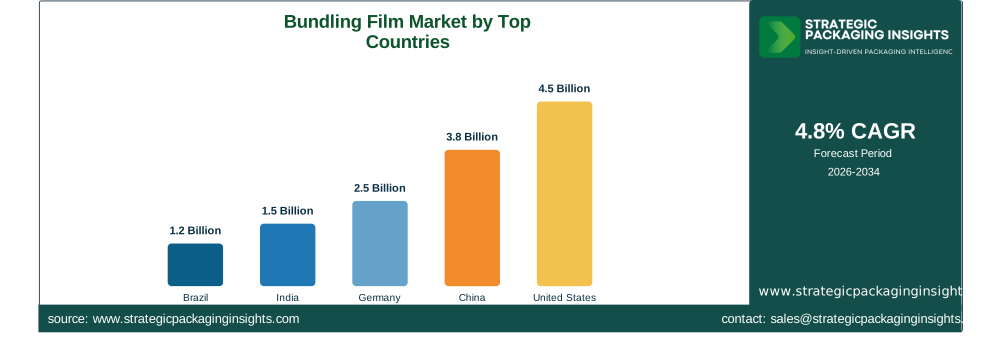
China is another significant market for bundling films, with a market size of around $3.8 billion and a CAGR of 6%. The country's rapid industrialization and urbanization are driving the demand for packaging solutions, particularly in the food and beverage and logistics sectors. Additionally, the growing e-commerce sector is boosting the demand for bundling films, as they provide secure and efficient packaging for goods during transportation. However, the market faces challenges such as environmental regulations and competition from alternative packaging materials.
Germany is a key market in Europe, with a market size of approximately $2.5 billion and a CAGR of 4%. The country's strong manufacturing sector and the increasing demand for sustainable packaging solutions are driving market growth. Additionally, the growing focus on reducing packaging waste is boosting the demand for lightweight and efficient bundling films. However, the market faces challenges such as stringent environmental regulations and the rising cost of raw materials.
India is an emerging market for bundling films, with a market size of around $1.5 billion and a CAGR of 7%. The country's rapid industrialization and urbanization are driving the demand for packaging solutions, particularly in the food and beverage and logistics sectors. Additionally, the growing e-commerce sector is boosting the demand for bundling films, as they provide secure and efficient packaging for goods during transportation. However, the market faces challenges such as environmental regulations and competition from alternative packaging materials.
Brazil is another significant market for bundling films, with a market size of approximately $1.2 billion and a CAGR of 5%. The country's growing manufacturing sector and the increasing demand for efficient packaging solutions are driving market growth. Additionally, the growing focus on sustainability and the adoption of eco-friendly packaging materials are contributing to the market's expansion. However, the market faces challenges such as stringent environmental regulations and the rising cost of raw materials.
Bundling Film Market Segments Insights

By Material Type Analysis
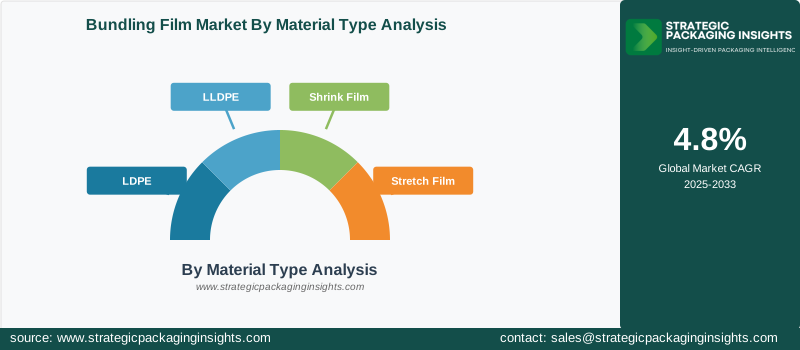
The bundling film market is segmented by material type into LDPE, LLDPE, shrink film, and stretch film. LDPE and LLDPE are the most commonly used materials due to their excellent flexibility, durability, and cost-effectiveness. These materials are widely used in various applications, including food and beverage packaging, logistics, and manufacturing. The demand for shrink film is also growing, driven by its ability to provide a tight and secure packaging solution. Stretch film, on the other hand, is gaining popularity due to its ability to provide excellent load stability and protection during transportation.
Advancements in material technology are driving the growth of this segment, with manufacturers focusing on developing high-performance materials that enhance the durability and sustainability of bundling films. The increasing focus on sustainability is also driving the demand for biodegradable and recyclable materials, which offer a sustainable alternative to traditional plastic films. Companies that invest in research and development to create such products are likely to gain a competitive edge in the market. Additionally, the growing demand for lightweight and efficient packaging solutions is boosting the demand for high-performance materials in the bundling film market.
By Application Analysis
The bundling film market is segmented by application into multipack bundling, beverage bundling, industrial goods, and retail packs. Multipack bundling is the largest segment, driven by the increasing demand for efficient packaging solutions in the food and beverage industry. These films provide excellent protection and preservation of products, making them ideal for packaging perishable goods. Beverage bundling is another significant segment, driven by the growing demand for convenient and cost-effective packaging solutions in the beverage industry.
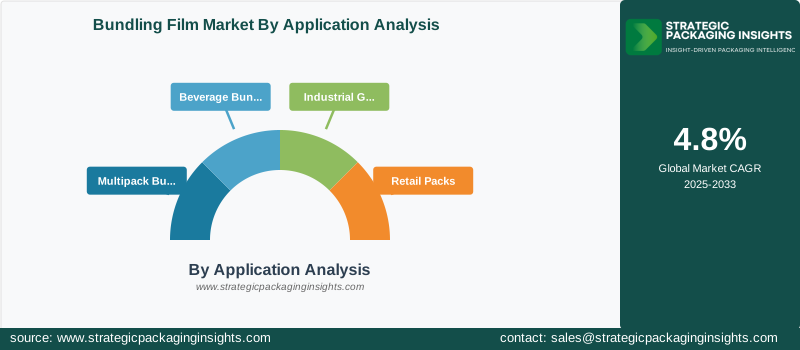
The industrial goods segment is also experiencing significant growth, driven by the increasing demand for secure and efficient packaging solutions in the logistics and manufacturing sectors. Retail packs, on the other hand, are gaining popularity due to the growing trend of online shopping and the need for efficient packaging solutions that ensure the safe delivery of products. Companies that can offer innovative solutions to meet these demands are likely to experience significant growth in the coming years. Additionally, the increasing focus on reducing packaging waste is driving the demand for lightweight and efficient bundling films in the market.
By Film Type Analysis
The bundling film market is segmented by film type into printed films, clear films, and perforated films. Clear films are the most commonly used type, offering excellent visibility and protection for packaged products. These films are widely used in various applications, including food and beverage packaging, logistics, and manufacturing. Printed films are gaining popularity due to their ability to enhance brand visibility and provide a unique packaging solution. Perforated films, on the other hand, are used in applications where breathability is required, such as in the packaging of fresh produce.
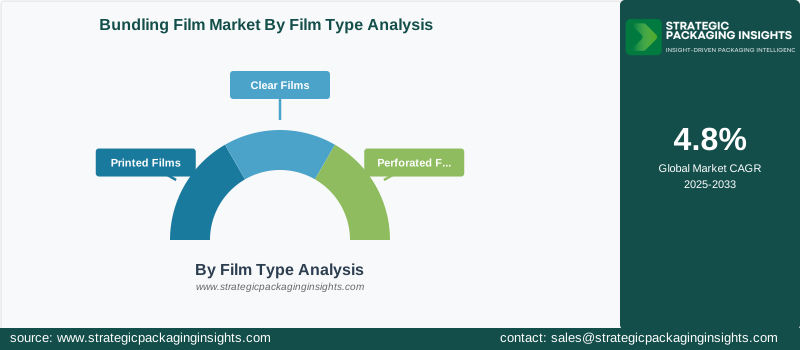
Advancements in film technology are driving the growth of this segment, with manufacturers focusing on developing high-performance films that enhance the durability and sustainability of bundling films. The increasing focus on sustainability is also driving the demand for biodegradable and recyclable films, which offer a sustainable alternative to traditional plastic films. Companies that invest in research and development to create such products are likely to gain a competitive edge in the market. Additionally, the growing demand for lightweight and efficient packaging solutions is boosting the demand for high-performance films in the bundling film market.
By End Use Analysis
The bundling film market is segmented by end use into food & beverage, logistics, FMCG, and manufacturing. The food & beverage segment is the largest, driven by the increasing demand for efficient packaging solutions in the industry. These films provide excellent protection and preservation of products, making them ideal for packaging perishable goods. The logistics segment is also experiencing significant growth, driven by the increasing demand for secure and efficient packaging solutions in the transportation and storage of goods.
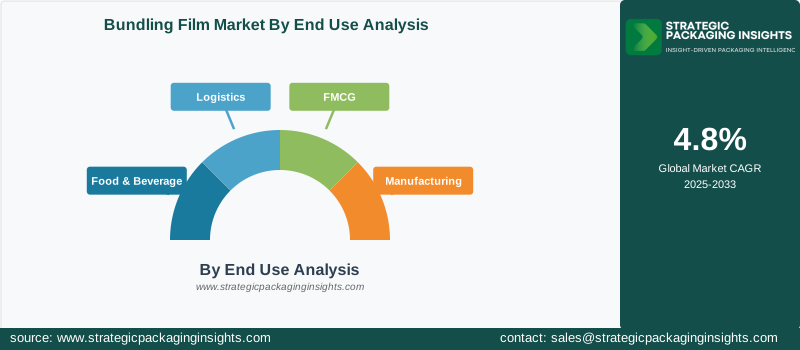
The FMCG segment is gaining popularity due to the growing trend of online shopping and the need for efficient packaging solutions that ensure the safe delivery of products. The manufacturing segment, on the other hand, is driven by the increasing demand for bundling films in the packaging of industrial goods. Companies that can offer innovative solutions to meet these demands are likely to experience significant growth in the coming years. Additionally, the increasing focus on reducing packaging waste is driving the demand for lightweight and efficient bundling films in the market.
Bundling Film Market Segments
The Bundling Film market has been segmented on the basis ofBy Material Type
- LDPE
- LLDPE
- Shrink Film
- Stretch Film
By Application
- Multipack Bundling
- Beverage Bundling
- Industrial Goods
- Retail Packs
By Film Type
- Printed Films
- Clear Films
- Perforated Films
By End Use
- Food & Beverage
- Logistics
- FMCG
- Manufacturing
Region
- Asia Pacific
- North America
- Latin America
- Europe
- Middle East & Africa




