


BPA-Free Thermal Paper Market Outlook
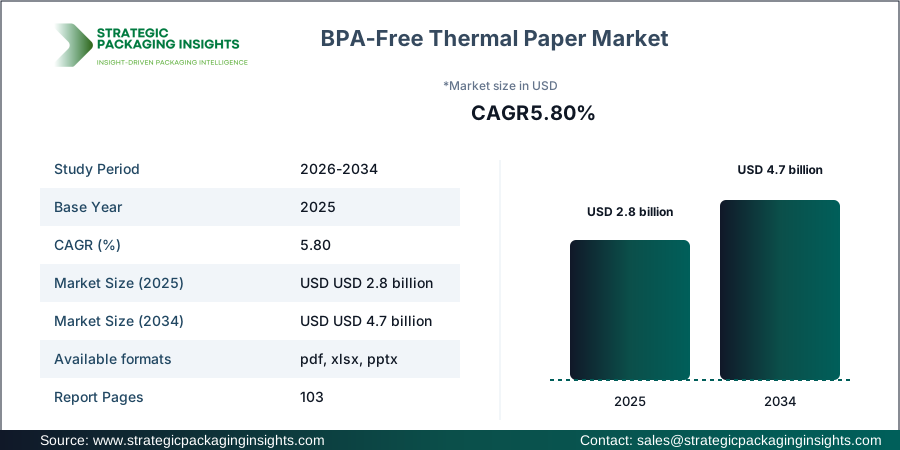
The BPA-Free Thermal Paper market size was valued at USD 2.8 billion in 2025 and is anticipated to reach USD 4.7 billion by 2034, growing at a CAGR of 5.80% during the forecast period according to Strategic Packaging Insights. The market is witnessing significant growth due to increasing consumer awareness about the health hazards associated with BPA, leading to a shift towards BPA-free alternatives. Companies like Koehler Paper and Oji Holdings are at the forefront, innovating in phenol-free and vitamin C-based thermal paper solutions, which are gaining traction in various applications such as POS receipts and medical charting. The demand is further fueled by stringent regulations in regions like Europe and North America, where the use of BPA in thermal paper is being phased out, prompting a surge in the adoption of safer alternatives.
One of the most impactful drivers of the BPA-Free Thermal Paper market is the growing regulatory pressure to eliminate BPA from consumer products. According to recent government initiatives, several countries have imposed bans or restrictions on BPA usage, particularly in thermal paper, due to its potential health risks. This regulatory landscape is compelling manufacturers to innovate and develop BPA-free solutions, thereby driving market growth. Additionally, the increasing consumer preference for eco-friendly and health-conscious products is bolstering the demand for BPA-free thermal paper. This trend is supported by a growing body of scientific research highlighting the adverse effects of BPA exposure, which is influencing both consumer behavior and regulatory policies globally.
Report Scope
| Attributes | Details |
| Report Title | BPA-Free Thermal Paper Market Size, Future Growth and Forecast 2034 |
| By Developer Chemistry | Phenol-Free (e.g., Pergafast, Urea-Based), BPS-Based (Transitional), Vitamin C / Ascorbic Acid Based |
| By Weight | Below 60 GSM, 60-80 GSM, Above 80 GSM |
| By Application | POS Receipts, Labels & Logistics, Tickets & Gaming, ATM & Banking, Medical Charting |
| By Region | North America (U.S., Canada, Mexico), Europe (Germany, UK, France, Italy, Spain, Rest of Europe), Asia Pacific (China, India, Japan, South Korea, Australia, Rest of Asia Pacific), Latin America (Brazil, Argentina, Rest of Latin America), Middle East & Africa (GCC Countries, South Africa, Rest of MEA) |
| Base Year | 2025 |
| Historic Period | 2018-2024 |
| Forecast Period | 2026-2034 |
| Number of Pages | 103 |
| Customization Available | Yes* |
Sustainability & Circular Economy Analysis
Sustainability initiatives are significantly shaping the BPA-Free Thermal Paper market, as companies strive to align with circular economy principles. The focus on recyclable materials and reusable packaging is driving innovation in thermal paper production, with manufacturers like Appvion and Hansol investing in eco-friendly material innovations. These efforts are aimed at reducing waste and minimizing the carbon footprint associated with thermal paper production. The adoption of lightweight packaging solutions is also gaining momentum, as it contributes to lower transportation emissions and enhances supply chain efficiency.
Extended Producer Responsibility (EPR) regulations are further influencing the market, compelling companies to take accountability for the entire lifecycle of their products. This has led to the development of waste reduction strategies and the implementation of ESG initiatives, which are becoming integral to business operations. As a result, packaging design and manufacturing processes are evolving to meet these sustainability standards, ensuring long-term market competitiveness. Companies are also focusing on reducing their carbon footprint by optimizing production processes and sourcing sustainable raw materials.
Consumer preferences for sustainable products are driving demand for BPA-free thermal paper, as environmentally conscious consumers seek products that align with their values. This shift is prompting companies to invest in sustainable packaging solutions and adopt circular economy practices. Regulatory compliance is also a key factor, as governments worldwide implement stricter packaging regulations to promote sustainability. These trends are influencing investment decisions and supply chain strategies, as companies aim to enhance their sustainability credentials and meet the growing demand for eco-friendly products.
Packaging Value Chain & Supply Chain Analysis
The packaging value chain for BPA-Free Thermal Paper involves several key components, including raw material sourcing, manufacturing, and distribution. Raw material availability is crucial, as it directly impacts production capabilities and supply chain efficiency. Companies like Mitsubishi Paper Mills and Ricoh are focusing on securing sustainable raw materials to ensure a steady supply and maintain competitive pricing. Packaging converters and manufacturers play a vital role in transforming these raw materials into finished products, with a focus on quality and sustainability.
Logistics and distribution channels are critical to the success of the BPA-Free Thermal Paper market, as they ensure timely delivery of products to end-users. Efficient transportation and inventory management strategies are essential to minimize costs and enhance supply chain resilience. Companies are increasingly adopting localization strategies to reduce transportation emissions and improve supply chain efficiency. Strategic partnerships with logistics providers and distributors are also being formed to optimize distribution networks and expand market reach.
Recycling networks are becoming an integral part of the packaging value chain, as companies aim to close the loop and promote circular economy practices. Brand owners and retailers are collaborating with recycling partners to ensure the proper disposal and recycling of thermal paper products. This collaboration is essential to meet regulatory requirements and enhance brand reputation. Overall, the packaging value chain for BPA-Free Thermal Paper is evolving to meet the demands of sustainability and efficiency, with a focus on innovation and strategic partnerships.
Opportunities & Threats
The BPA-Free Thermal Paper market presents numerous opportunities for growth, driven by increasing consumer awareness and regulatory support. The shift towards eco-friendly and health-conscious products is creating a demand for innovative thermal paper solutions that are free from harmful chemicals. Companies that invest in research and development to create new, sustainable products are likely to gain a competitive edge. Additionally, the expansion of e-commerce and digital transactions is boosting the demand for POS receipts and labels, further driving market growth.
Emerging markets in Asia Pacific and Latin America offer significant growth potential for the BPA-Free Thermal Paper market. As these regions experience economic growth and urbanization, the demand for thermal paper in applications such as banking, logistics, and retail is expected to rise. Companies that establish a strong presence in these markets and adapt their products to meet local needs are likely to benefit from increased sales and market share. Furthermore, advancements in printing technology and the development of new applications for thermal paper are creating additional opportunities for market expansion.
Despite the growth opportunities, the BPA-Free Thermal Paper market faces several threats, including the high cost of raw materials and production. The transition from traditional BPA-based thermal paper to BPA-free alternatives requires significant investment in research and development, which can be a barrier for smaller companies. Additionally, the market is highly competitive, with numerous players vying for market share. Companies must continuously innovate and differentiate their products to maintain a competitive edge. Regulatory changes and environmental concerns also pose challenges, as companies must comply with evolving standards and address sustainability issues.
Drivers & Challenges
The primary drivers of the BPA-Free Thermal Paper market include increasing consumer awareness and regulatory support for BPA-free products. As consumers become more health-conscious, there is a growing demand for products that do not contain harmful chemicals. This trend is supported by government regulations that restrict the use of BPA in thermal paper, prompting manufacturers to develop safer alternatives. Companies like Jujo Thermal and Nakagawa are leading the way in creating innovative, BPA-free solutions that meet consumer and regulatory demands.
Technological advancements in printing and packaging are also driving the market, as they enable the development of high-quality, durable thermal paper products. The integration of digital technologies in retail and banking is increasing the demand for thermal paper in applications such as POS receipts and ATM transactions. Additionally, the rise of e-commerce and online shopping is boosting the demand for labels and logistics applications, further driving market growth. Companies that leverage these technological advancements to create innovative products are likely to gain a competitive advantage.
However, the BPA-Free Thermal Paper market faces several challenges, including the high cost of production and raw materials. The transition to BPA-free alternatives requires significant investment in research and development, which can be a barrier for smaller companies. Additionally, the market is highly competitive, with numerous players vying for market share. Companies must continuously innovate and differentiate their products to maintain a competitive edge. Regulatory changes and environmental concerns also pose challenges, as companies must comply with evolving standards and address sustainability issues.
Market Share Analysis
The BPA-Free Thermal Paper market is characterized by a competitive landscape with several key players vying for market share. Companies like Koehler Paper, Oji Holdings, and Appvion are leading the market with their innovative product offerings and strong distribution networks. These companies have established themselves as leaders in the industry by focusing on research and development to create high-quality, sustainable thermal paper solutions. Their commitment to innovation and sustainability has enabled them to capture a significant share of the market.
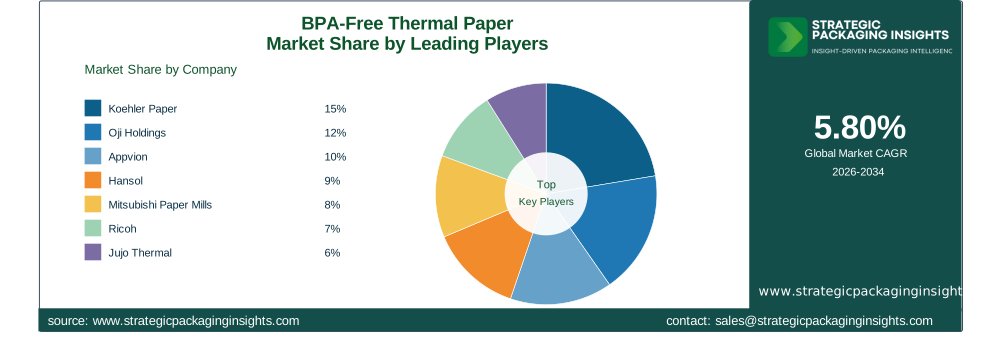
Hansol and Mitsubishi Paper Mills are also prominent players in the BPA-Free Thermal Paper market, known for their extensive product portfolios and global presence. These companies have invested in advanced manufacturing technologies and strategic partnerships to enhance their market position. Their focus on sustainability and eco-friendly products has resonated with consumers and regulatory bodies, further strengthening their market share. Additionally, their strong distribution networks and customer-centric approach have contributed to their success in the market.
Ricoh and Jujo Thermal are key players in the market, recognized for their commitment to innovation and quality. These companies have developed a range of BPA-free thermal paper products that cater to various applications, including POS receipts, labels, and medical charting. Their focus on research and development has enabled them to stay ahead of the competition and meet the evolving needs of consumers. Their strong brand reputation and customer loyalty have further solidified their position in the market.
Nakagawa and Gold Huasheng are emerging players in the BPA-Free Thermal Paper market, gaining traction with their innovative product offerings and strategic partnerships. These companies have focused on expanding their product portfolios and enhancing their distribution networks to capture a larger share of the market. Their emphasis on sustainability and eco-friendly products has resonated with consumers, driving demand for their products. As the market continues to evolve, these companies are well-positioned to capitalize on emerging opportunities and strengthen their market presence.
Key Highlights
- Market Size: The BPA-Free Thermal Paper market was valued at USD 2.8 billion in 2025 and is projected to reach USD 4.7 billion by 2034.
- Growth Rate: The market is expected to grow at a CAGR of 5.80% during the forecast period.
- Leading Companies: Key players include Koehler Paper, Oji Holdings, and Appvion.
- Regional Insights: North America and Europe are leading regions due to stringent regulations.
- Application Growth: POS receipts and medical charting are major growth segments.
- Innovation Focus: Companies are investing in phenol-free and vitamin C-based solutions.
- Sustainability Trends: Eco-friendly and recyclable materials are gaining traction.
BPA-Free Thermal Paper Market Segments Insights

By Developer Chemistry Analysis
The BPA-Free Thermal Paper market is segmented by developer chemistry, with phenol-free options such as Pergafast and urea-based solutions gaining significant traction. These alternatives are favored due to their non-toxic nature and compliance with stringent environmental regulations. Companies like Koehler Paper and Appvion are leading the charge in developing innovative phenol-free solutions that cater to the growing demand for safer thermal paper products. The transition from BPS-based (transitional) solutions to more sustainable options is also evident, as manufacturers strive to meet consumer and regulatory expectations.
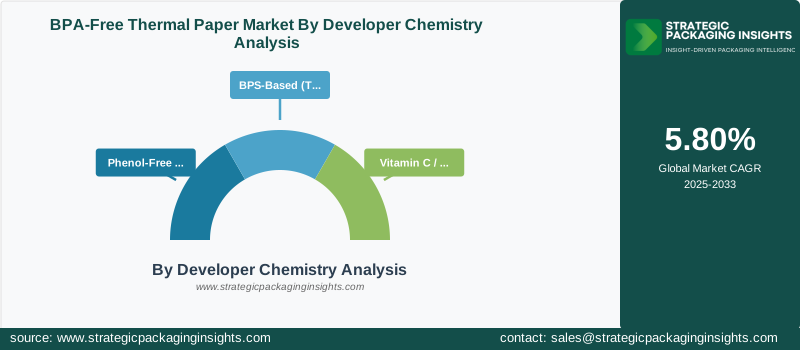
Vitamin C / Ascorbic Acid-based thermal paper is emerging as a promising segment, driven by its eco-friendly properties and compatibility with existing printing technologies. This segment is gaining popularity in applications such as POS receipts and medical charting, where safety and sustainability are paramount. The increasing consumer awareness of the health risks associated with traditional thermal paper is propelling the demand for vitamin C-based solutions. As a result, companies are investing in research and development to enhance the performance and cost-effectiveness of these alternatives.
By Weight Analysis
The BPA-Free Thermal Paper market is also segmented by weight, with options ranging from below 60 GSM to above 80 GSM. The below 60 GSM segment is gaining popularity due to its lightweight nature, which reduces transportation costs and environmental impact. This segment is particularly favored in applications such as labels and logistics, where efficiency and sustainability are key considerations. Companies are focusing on developing high-quality, lightweight thermal paper solutions that meet the demands of modern supply chains.
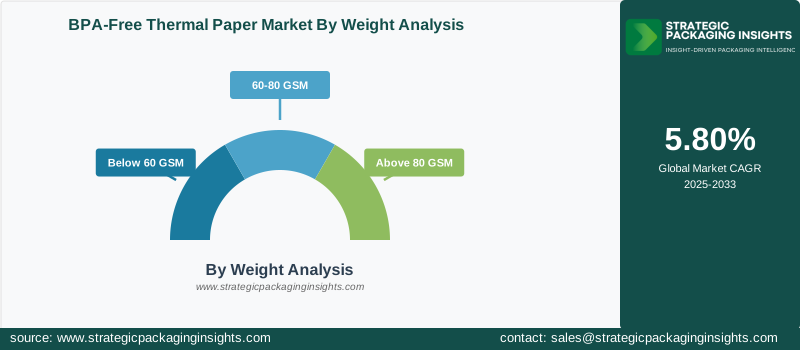
The 60-80 GSM segment remains a dominant choice for applications such as POS receipts and tickets, where durability and print quality are essential. This segment is characterized by a balance between performance and cost, making it a popular choice among consumers and businesses alike. The above 80 GSM segment is primarily used in specialized applications such as medical charting and banking, where robustness and longevity are critical. As the market evolves, companies are exploring new technologies and materials to enhance the performance of thermal paper across all weight categories.
By Application Analysis
The BPA-Free Thermal Paper market is segmented by application, with POS receipts, labels & logistics, and tickets & gaming being the primary segments. The POS receipts segment is experiencing significant growth due to the increasing adoption of digital payment systems and the expansion of the retail sector. Companies are focusing on developing high-quality, BPA-free thermal paper solutions that offer excellent print quality and durability, catering to the needs of modern retail environments.
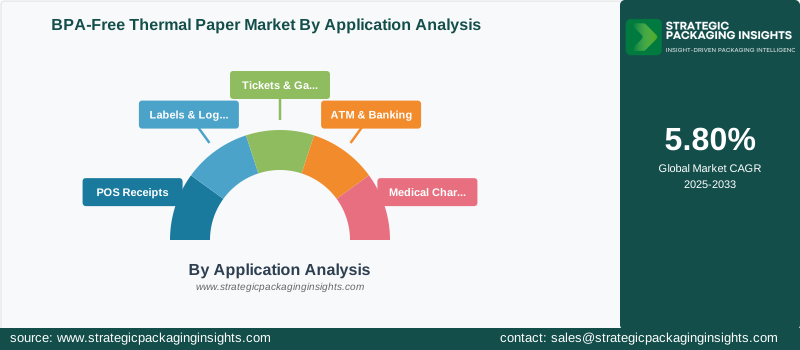
Labels & logistics is another key segment, driven by the growth of e-commerce and the need for efficient supply chain management. BPA-free thermal paper is favored in this segment due to its compatibility with existing printing technologies and its ability to withstand various environmental conditions. The tickets & gaming segment is also witnessing growth, as the entertainment industry continues to expand and innovate. Companies are investing in research and development to create thermal paper solutions that meet the unique requirements of this dynamic sector.
By Region Analysis
The BPA-Free Thermal Paper market is segmented by region, with North America, Europe, and Asia Pacific being the leading markets. North America is characterized by stringent regulations and a strong focus on sustainability, driving the demand for BPA-free thermal paper solutions. Companies in this region are investing in research and development to create innovative products that meet regulatory requirements and consumer expectations. The presence of key players such as Koehler Paper and Oji Holdings further strengthens the market in this region.
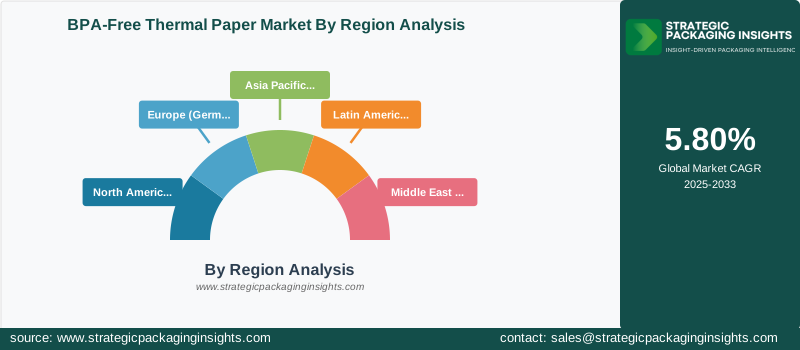
Europe is another significant market, driven by the increasing consumer awareness of the health risks associated with BPA and the implementation of strict environmental regulations. The demand for eco-friendly and sustainable thermal paper solutions is on the rise, prompting companies to invest in new technologies and materials. Asia Pacific is emerging as a lucrative market, with rapid economic growth and urbanization driving the demand for thermal paper in various applications. Companies are focusing on expanding their presence in this region to capitalize on the growing opportunities and strengthen their market position.
BPA-Free Thermal Paper Market Segments
The BPA-Free Thermal Paper market has been segmented on the basis ofBy Developer Chemistry
- Phenol-Free (e.g., Pergafast, Urea-Based)
- BPS-Based (Transitional)
- Vitamin C / Ascorbic Acid Based
By Weight
- Below 60 GSM
- 60-80 GSM
- Above 80 GSM
By Application
- POS Receipts
- Labels & Logistics
- Tickets & Gaming
- ATM & Banking
- Medical Charting
By Region
- North America (U.S., Canada, Mexico)
- Europe (Germany, UK, France, Italy, Spain, Rest of Europe)
- Asia Pacific (China, India, Japan, South Korea, Australia, Rest of Asia Pacific)
- Latin America (Brazil, Argentina, Rest of Latin America)
- Middle East & Africa (GCC Countries, South Africa, Rest of MEA)




