


Bowl Cans Market Outlook
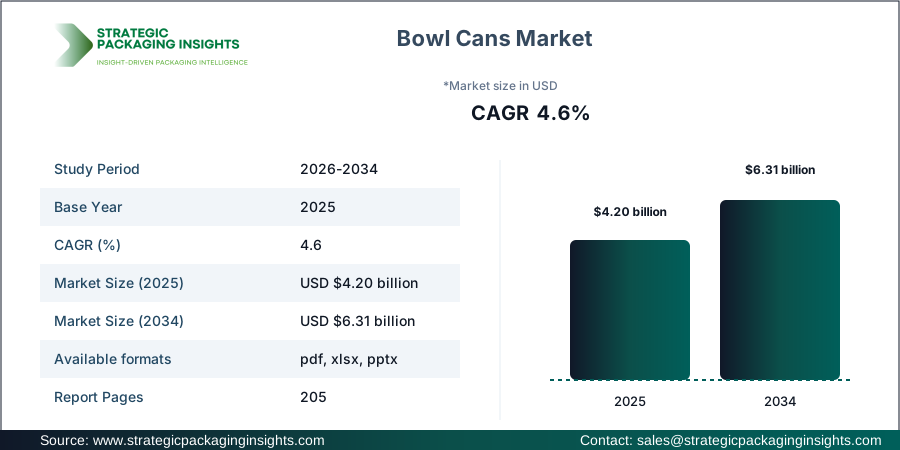
The Bowl Cans market was valued at $4.20 billion in 2025 and is projected to reach $6.31 billion by 2034, growing at a CAGR of 4.6% during the forecast period 2026-2034. This market is witnessing significant growth due to the increasing demand for convenient and sustainable packaging solutions. The rise in urbanization and changing consumer lifestyles have led to a surge in demand for ready-to-eat meals and processed foods, which in turn is driving the demand for bowl cans. Additionally, the growing pet food industry is also contributing to the market growth as pet owners increasingly prefer canned food for its convenience and longer shelf life. The market is also benefiting from technological advancements in can manufacturing, which are improving the quality and functionality of bowl cans.
Report Scope
| Attributes | Details |
| Report Title | Bowl Cans Market Size, Future Growth and Forecast 2034 |
| By Material Type | Aluminum, Steel, Tinplate |
| By Product Type | Food Bowl Cans, Pet Food Bowl Cans, Ready Meal Bowl Cans |
| By Application | Processed Foods, Soups, Pet Food, Ready-to-Eat Meals |
| By End Use | Food & Beverage, Pet Food, Retail, Foodservice |
| Region | Asia Pacific, North America, Latin America, Europe, Middle East & Africa |
| Base Year | 2025 |
| Historic Period | 2018-2024 |
| Forecast Period | 2026-2034 |
| Number of Pages | 205 |
| Customization Available | Yes* |
Opportunities & Threats
One of the significant opportunities in the Bowl Cans market is the increasing consumer preference for sustainable and eco-friendly packaging solutions. As environmental concerns continue to rise, consumers are becoming more conscious of the packaging materials used in their products. This shift in consumer behavior is encouraging manufacturers to innovate and develop bowl cans made from recyclable and biodegradable materials. Additionally, the growing trend of premiumization in the food and beverage industry is creating opportunities for high-quality, aesthetically pleasing packaging solutions, further driving the demand for bowl cans.
Another opportunity lies in the expanding pet food market. With the increasing number of pet owners worldwide, there is a growing demand for convenient and nutritious pet food options. Bowl cans offer an ideal packaging solution for pet food, providing convenience, portion control, and extended shelf life. Manufacturers can capitalize on this trend by developing specialized bowl cans for different types of pet food, catering to the diverse needs of pet owners.
However, the Bowl Cans market faces certain threats, such as the volatility in raw material prices. The prices of metals like aluminum and steel, which are commonly used in can manufacturing, are subject to fluctuations due to various factors, including geopolitical tensions and supply chain disruptions. These price fluctuations can impact the profitability of manufacturers and pose a challenge to market growth. Additionally, the increasing competition from alternative packaging solutions, such as flexible packaging and plastic containers, could also hinder the growth of the bowl cans market.
Drivers & Challenges
The primary driver of the Bowl Cans market is the growing demand for convenient and ready-to-eat food products. As consumers lead increasingly busy lifestyles, there is a rising preference for food products that are easy to prepare and consume. Bowl cans offer a convenient packaging solution for such products, providing ease of use and portability. This trend is particularly prominent in urban areas, where consumers are more likely to opt for quick meal solutions.
Another significant driver is the increasing focus on sustainability and environmental responsibility. Consumers are becoming more aware of the environmental impact of packaging waste and are demanding more sustainable packaging options. Bowl cans, being recyclable and often made from eco-friendly materials, align with this consumer demand, driving their adoption in the market. Additionally, regulatory bodies are implementing stricter guidelines on packaging waste, further encouraging the use of sustainable packaging solutions like bowl cans.
Despite these drivers, the Bowl Cans market faces challenges such as the high cost of production. The manufacturing process for bowl cans involves several stages, including material sourcing, shaping, and coating, which can be costly. These costs are often passed on to consumers, making bowl cans a more expensive packaging option compared to alternatives like plastic containers. Additionally, the market is highly competitive, with numerous players vying for market share, which can lead to price wars and reduced profit margins for manufacturers.
Market Share Analysis
The competitive landscape of the Bowl Cans market is characterized by the presence of several key players, each striving to enhance their market position through strategic initiatives such as mergers, acquisitions, and product innovations. Crown Holdings, a leading player in the market, holds a significant share due to its extensive product portfolio and strong distribution network. The company focuses on sustainability and innovation, offering a range of eco-friendly bowl cans to meet the growing consumer demand for sustainable packaging solutions.
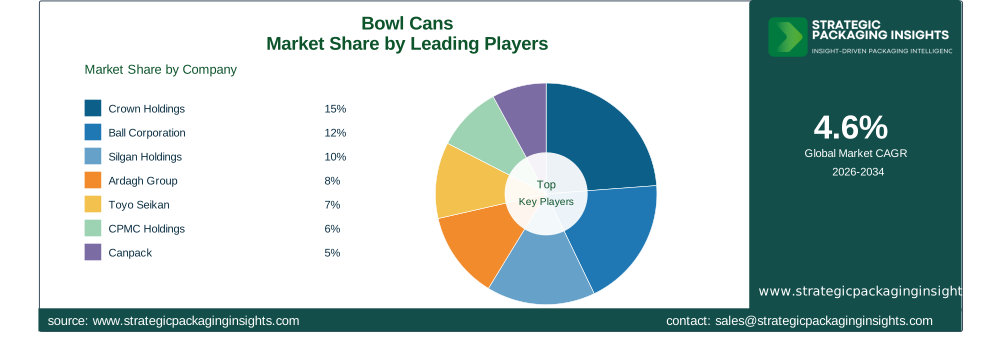
Ball Corporation is another major player in the Bowl Cans market, known for its advanced manufacturing capabilities and commitment to sustainability. The company has been investing in research and development to create innovative packaging solutions that cater to the evolving needs of consumers. Ball Corporation's strong focus on sustainability and its efforts to reduce its environmental footprint have helped it maintain a competitive edge in the market.
Silgan Holdings, Ardagh Group, and Toyo Seikan are also prominent players in the market, each with a significant market share. Silgan Holdings is known for its diverse product offerings and strong customer relationships, while Ardagh Group focuses on innovation and sustainability to drive growth. Toyo Seikan, a leading player in the Asian market, has been expanding its presence globally through strategic partnerships and acquisitions.
Other notable companies in the Bowl Cans market include CPMC Holdings, Canpack, Envases Group, Daiwa Can, and Trivium Packaging. These companies are focusing on expanding their product portfolios and enhancing their manufacturing capabilities to cater to the growing demand for bowl cans. The competitive landscape is expected to remain dynamic, with companies continuously striving to innovate and differentiate their offerings to gain a competitive advantage.
Key Highlights
- The Bowl Cans market is projected to grow at a CAGR of 4.6% from 2026 to 2034.
- Increasing demand for sustainable and eco-friendly packaging solutions is driving market growth.
- The rise in urbanization and changing consumer lifestyles are boosting the demand for ready-to-eat meals and processed foods.
- The growing pet food industry is contributing to the demand for bowl cans.
- Technological advancements in can manufacturing are improving the quality and functionality of bowl cans.
- Volatility in raw material prices poses a challenge to market growth.
- Increasing competition from alternative packaging solutions could hinder market growth.
- Key players in the market include Crown Holdings, Ball Corporation, and Silgan Holdings.
- Companies are focusing on sustainability and innovation to gain a competitive edge.
- The market is characterized by a dynamic competitive landscape with numerous players.
Top Countries Insights
In the Bowl Cans market, the United States holds a significant share, driven by the high demand for convenient and sustainable packaging solutions. The market in the U.S. is expected to grow at a CAGR of 5%, supported by the increasing consumption of ready-to-eat meals and processed foods. The presence of major market players and the focus on innovation and sustainability are key growth drivers in the country.
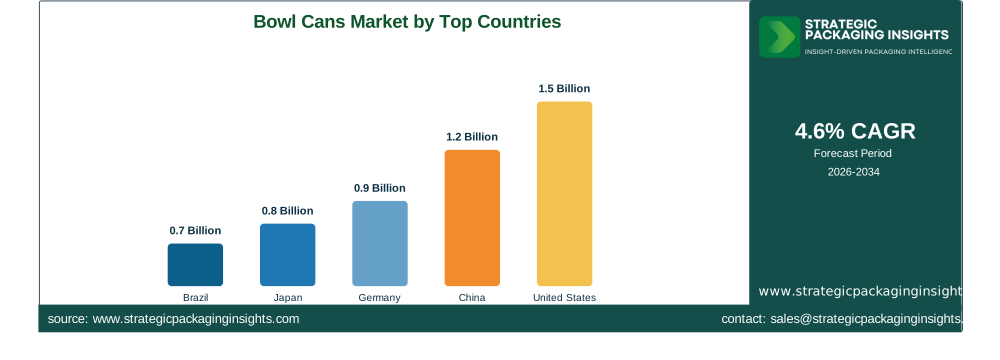
China is another major market for bowl cans, with a growing demand for packaged food products due to rapid urbanization and changing consumer lifestyles. The market in China is projected to grow at a CAGR of 6%, driven by the increasing adoption of sustainable packaging solutions and the expanding pet food industry. Government initiatives to promote eco-friendly packaging are also contributing to market growth.
In Europe, Germany is a leading market for bowl cans, with a strong focus on sustainability and environmental responsibility. The market in Germany is expected to grow at a CAGR of 4%, supported by the increasing demand for recyclable and biodegradable packaging solutions. The presence of key market players and the emphasis on innovation are driving market growth in the country.
Japan is a significant market for bowl cans in the Asia Pacific region, with a growing demand for convenient and high-quality packaging solutions. The market in Japan is projected to grow at a CAGR of 3%, driven by the increasing consumption of ready-to-eat meals and the focus on sustainability. The presence of leading market players and the emphasis on technological advancements are key growth drivers in the country.
In Latin America, Brazil is a key market for bowl cans, with a growing demand for packaged food products and sustainable packaging solutions. The market in Brazil is expected to grow at a CAGR of 4%, supported by the increasing adoption of eco-friendly packaging and the expanding pet food industry. Government initiatives to promote sustainable packaging are also contributing to market growth.
Bowl Cans Market Segments Insights

Material Type Analysis
The Bowl Cans market is segmented by material type into aluminum, steel, and tinplate. Aluminum is the most widely used material due to its lightweight, corrosion-resistant properties, and recyclability. The demand for aluminum bowl cans is driven by the increasing focus on sustainability and the need for eco-friendly packaging solutions. Steel, known for its strength and durability, is also a popular choice for bowl cans, particularly in applications requiring robust packaging. Tinplate, with its excellent barrier properties, is used in specific applications where product preservation is critical.
Aluminum bowl cans are gaining popularity due to their environmental benefits and the growing consumer preference for sustainable packaging. The recyclability of aluminum makes it an attractive option for manufacturers looking to reduce their environmental footprint. Steel bowl cans, on the other hand, are favored for their strength and ability to withstand high temperatures, making them suitable for applications such as ready-to-eat meals and processed foods. Tinplate bowl cans are used in niche applications where product preservation and shelf life are of utmost importance.
Product Type Analysis
The Bowl Cans market is segmented by product type into food bowl cans, pet food bowl cans, and ready meal bowl cans. Food bowl cans are the largest segment, driven by the increasing demand for convenient and ready-to-eat food products. The rise in urbanization and changing consumer lifestyles are contributing to the growth of this segment, as consumers seek quick and easy meal solutions. Pet food bowl cans are also witnessing significant growth, supported by the expanding pet food industry and the increasing number of pet owners worldwide.
Ready meal bowl cans are gaining traction due to the growing demand for convenient meal solutions that require minimal preparation. The busy lifestyles of consumers and the increasing preference for on-the-go meals are driving the demand for ready meal bowl cans. Manufacturers are focusing on developing innovative packaging solutions that cater to the diverse needs of consumers, offering convenience, portion control, and extended shelf life.
Application Analysis
The Bowl Cans market is segmented by application into processed foods, soups, pet food, and ready-to-eat meals. Processed foods are the largest application segment, driven by the increasing demand for convenient and long-lasting food products. The rise in urbanization and changing consumer lifestyles are contributing to the growth of this segment, as consumers seek quick and easy meal solutions. Soups and ready-to-eat meals are also witnessing significant growth, supported by the increasing preference for convenient meal options.
Pet food is a growing application segment, driven by the expanding pet food industry and the increasing number of pet owners worldwide. Bowl cans offer an ideal packaging solution for pet food, providing convenience, portion control, and extended shelf life. Manufacturers are focusing on developing specialized bowl cans for different types of pet food, catering to the diverse needs of pet owners.
End Use Analysis
The Bowl Cans market is segmented by end use into food & beverage, pet food, retail, and foodservice. The food & beverage segment is the largest end-use segment, driven by the increasing demand for convenient and sustainable packaging solutions. The rise in urbanization and changing consumer lifestyles are contributing to the growth of this segment, as consumers seek quick and easy meal solutions. The pet food segment is also witnessing significant growth, supported by the expanding pet food industry and the increasing number of pet owners worldwide.
The retail and foodservice segments are gaining traction due to the growing demand for convenient and high-quality packaging solutions. The busy lifestyles of consumers and the increasing preference for on-the-go meals are driving the demand for bowl cans in these segments. Manufacturers are focusing on developing innovative packaging solutions that cater to the diverse needs of consumers, offering convenience, portion control, and extended shelf life.
Bowl Cans Market Segments
The Bowl Cans market has been segmented on the basis ofBy Material Type
- Aluminum
- Steel
- Tinplate
By Product Type
- Food Bowl Cans
- Pet Food Bowl Cans
- Ready Meal Bowl Cans
By Application
- Processed Foods
- Soups
- Pet Food
- Ready-to-Eat Meals
By End Use
- Food & Beverage
- Pet Food
- Retail
- Foodservice
Region
- Asia Pacific
- North America
- Latin America
- Europe
- Middle East & Africa




