


Bottle Capping Machine Market Outlook
The Bottle Capping Machine market size was valued at USD 4.38 billion in 2025 and is anticipated to reach USD 7.10 billion by 2034, growing at a CAGR of 5.5% during the forecast period according to Strategic Packaging Insights. The market is witnessing robust growth driven by increasing demand for efficient packaging solutions across various industries such as food & beverage, pharmaceuticals, and cosmetics. Companies like Krones and Syntegon are at the forefront, leveraging advanced technologies to enhance machine efficiency and reduce operational costs. The rise in consumer demand for packaged goods, coupled with stringent packaging regulations, is further propelling the market growth.
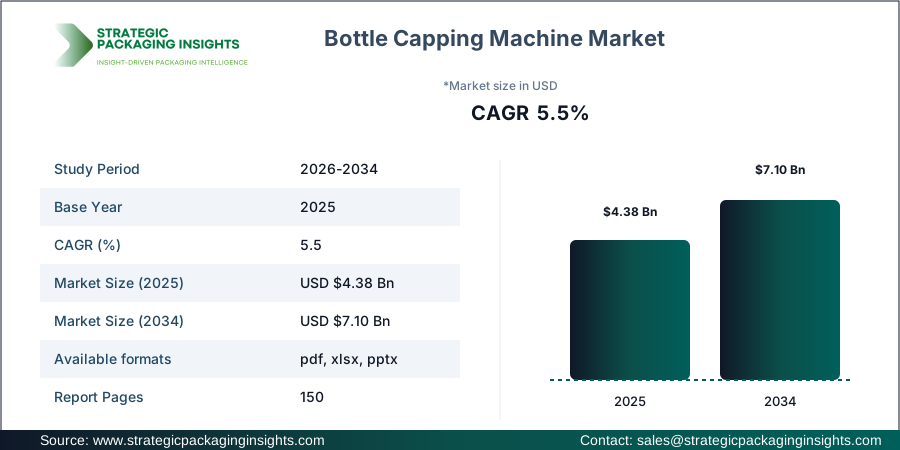
One of the most impactful drivers of the Bottle Capping Machine market is the growing emphasis on automation in packaging processes. Automation not only enhances production efficiency but also ensures consistency and precision in packaging, which is crucial for maintaining product quality. According to industry reports, the adoption of automatic capping machines is increasing significantly, driven by the need for high-speed operations and reduced labor costs. Companies like Accutek and ProMach are investing heavily in R&D to develop innovative capping solutions that cater to the evolving needs of end-users. This trend is expected to continue, providing lucrative growth opportunities for market players.
Report Scope
| Attributes | Details |
| Report Title | Bottle Capping Machine Market Size, Future Growth and Forecast 2034 |
| Machine Type | Screw Capping Machines, Snap Capping Machines, ROPP Capping Machines, Press-On Capping Machines |
| Automation Level | Manual, Semi-Automatic, Automatic |
| Application | Beverages, Pharmaceuticals, Cosmetics, Chemicals |
| End Use | Food & Beverage, Healthcare, Personal Care, Industrial |
| Region | Asia Pacific, North America, Latin America, Europe, Middle East & Africa |
| Base Year | 2025 |
| Historic Period | 2018-2024 |
| Forecast Period | 2026-2034 |
| Number of Pages | 150 |
| Customization Available | Yes* |
Sustainability & Circular Economy Analysis
Sustainability initiatives and circular economy practices are increasingly shaping the packaging market, including the Bottle Capping Machine sector. The focus on recyclable materials and reusable packaging is driving innovation in capping machine design and manufacturing. Companies are exploring eco-friendly materials and lightweight packaging solutions to reduce their carbon footprint and meet consumer sustainability preferences. This shift towards sustainable practices is influencing investment decisions and supply chain strategies, as businesses aim to align with environmental, social, and governance (ESG) initiatives.
Packaging regulations and extended producer responsibility (EPR) are also playing a crucial role in promoting sustainability within the Bottle Capping Machine market. Manufacturers are required to comply with stringent regulations that mandate the use of sustainable materials and waste reduction strategies. This has led to increased investment in research and development to create machines that support eco-friendly packaging solutions. As a result, companies are focusing on developing capping machines that are not only efficient but also environmentally responsible, ensuring long-term market competitiveness.
The emphasis on sustainability is also impacting consumer preferences, with a growing demand for products that are packaged using eco-friendly materials. This trend is encouraging packaging manufacturers and brand owners to adopt sustainable practices throughout the value chain, from raw material sourcing to end-product delivery. By integrating sustainability into their operations, companies can enhance their brand image and appeal to environmentally conscious consumers, ultimately driving market growth.
Packaging Value Chain & Supply Chain Analysis
The packaging value chain and supply chain ecosystem for Bottle Capping Machines is complex, involving multiple stakeholders from raw material suppliers to end-users. Raw material sourcing is a critical component, as the availability and cost of materials directly impact production capabilities and pricing strategies. Packaging converters and manufacturers play a vital role in transforming raw materials into finished products, with companies like Krones and Sidel leading the way in innovation and efficiency.
Logistics and distribution channels are essential for ensuring the timely delivery of capping machines to brand owners and retailers. Efficient transportation and inventory management are crucial for maintaining supply chain resilience and meeting customer demands. Strategic partnerships and collaborations with logistics providers can enhance supply chain efficiency, enabling companies to optimize their operations and reduce costs. This is particularly important in a global market where localization and global sourcing strategies are key to maintaining competitiveness.
Recycling networks and procurement strategies are also integral to the packaging value chain, as they support sustainability initiatives and waste reduction efforts. By implementing effective recycling programs and sourcing sustainable materials, companies can minimize their environmental impact and comply with regulatory requirements. This not only enhances their market reputation but also provides a competitive edge in an increasingly eco-conscious market. Overall, the packaging value chain and supply chain dynamics are critical to the success of the Bottle Capping Machine market, influencing business performance and market growth.
Opportunities & Threats
The Bottle Capping Machine market presents numerous opportunities for growth, driven by technological advancements and increasing demand for efficient packaging solutions. The rise of automation and smart technologies is creating new avenues for innovation, allowing companies to develop advanced capping machines that offer enhanced precision and speed. This is particularly beneficial for industries such as pharmaceuticals and food & beverage, where packaging accuracy and efficiency are paramount. Additionally, the growing trend of customization in packaging is opening up opportunities for manufacturers to offer tailored solutions that meet specific customer requirements.
Another significant opportunity lies in the expanding markets of Asia Pacific and Latin America, where rapid industrialization and urbanization are driving demand for packaged goods. These regions offer a lucrative market for Bottle Capping Machine manufacturers, as businesses seek to capitalize on the growing consumer base and increasing disposable incomes. Companies that can establish a strong presence in these emerging markets stand to gain a competitive advantage and drive substantial revenue growth.
Despite the opportunities, the Bottle Capping Machine market also faces several threats that could hinder its growth. One of the primary challenges is the volatility in raw material prices, which can impact production costs and profit margins. Additionally, the market is subject to stringent regulatory requirements, particularly concerning environmental sustainability and safety standards. Compliance with these regulations can be costly and time-consuming, posing a threat to smaller manufacturers with limited resources. Furthermore, the intense competition among market players can lead to price wars and reduced profit margins, making it essential for companies to differentiate themselves through innovation and quality.
Drivers & Challenges
The Bottle Capping Machine market is driven by several key factors, including the increasing demand for packaged goods and the need for efficient packaging solutions. The rise in consumer awareness regarding product safety and quality has led to a growing emphasis on packaging integrity, driving the demand for advanced capping machines. Additionally, the trend towards automation in packaging processes is a significant driver, as it enhances production efficiency and reduces labor costs. Companies like KHS and Cozzoli Machine are investing in cutting-edge technologies to develop innovative capping solutions that cater to the evolving needs of end-users.
Another major driver of the market is the growing focus on sustainability and eco-friendly packaging solutions. As consumers become more environmentally conscious, there is an increasing demand for packaging that minimizes environmental impact. This has led to the development of capping machines that support the use of recyclable and biodegradable materials, aligning with global sustainability goals. The integration of smart technologies and IoT in capping machines is also driving market growth, as it enables real-time monitoring and optimization of packaging processes, enhancing overall efficiency and productivity.
Despite the positive drivers, the Bottle Capping Machine market faces several challenges that could impact its growth. One of the primary challenges is the high initial investment required for advanced capping machines, which can be a barrier for small and medium-sized enterprises. Additionally, the market is subject to fluctuations in raw material prices, which can affect production costs and pricing strategies. The need for continuous innovation and adaptation to changing consumer preferences and regulatory requirements also poses a challenge for manufacturers, requiring significant investment in research and development to stay competitive.
Market Share Analysis
The Bottle Capping Machine market is characterized by a competitive landscape with several key players vying for market share. Companies like Krones, Syntegon, and Accutek are leading the market, leveraging their extensive experience and technological expertise to offer innovative capping solutions. These companies have established a strong presence in the market through strategic partnerships, mergers, and acquisitions, enabling them to expand their product portfolios and enhance their market reach. The competitive landscape is further intensified by the presence of regional players who offer cost-effective solutions, catering to the specific needs of local markets.
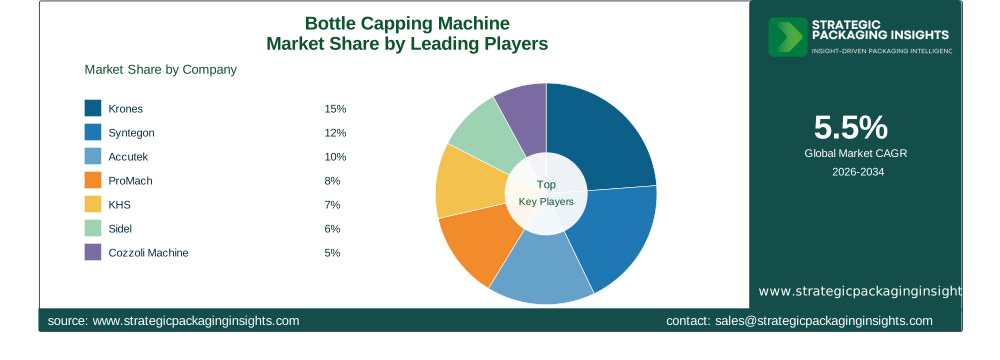
Krones, a leading player in the Bottle Capping Machine market, is known for its advanced capping technologies and comprehensive product offerings. The company focuses on innovation and sustainability, developing machines that are efficient and environmentally friendly. Syntegon, another major player, specializes in providing integrated packaging solutions, with a strong emphasis on automation and digitalization. The company's commitment to quality and customer satisfaction has helped it maintain a competitive edge in the market.
Accutek is renowned for its versatile capping machines that cater to a wide range of industries, including food & beverage, pharmaceuticals, and cosmetics. The company's focus on customization and flexibility has enabled it to meet the diverse needs of its customers, enhancing its market position. ProMach, a prominent player in the market, offers a comprehensive range of capping solutions, backed by robust R&D capabilities and a strong global presence. The company's strategic acquisitions and partnerships have further strengthened its market position, allowing it to offer innovative and cost-effective solutions.
Other notable players in the market include KHS, Sidel, Cozzoli Machine, Pack Leader, Filamatic, and Ronchi Mario. These companies are continuously investing in research and development to enhance their product offerings and maintain their competitive edge. The market is also witnessing the entry of new players, driven by the growing demand for advanced capping solutions and the increasing focus on sustainability. Overall, the competitive landscape of the Bottle Capping Machine market is dynamic, with companies striving to differentiate themselves through innovation, quality, and customer service.
Key Highlights
- Market Size: The Bottle Capping Machine market was valued at USD 4.38 billion in 2025 and is projected to reach USD 7.10 billion by 2034.
- Growth Rate: The market is expected to grow at a CAGR of 5.5% during the forecast period.
- Automation Trend: Increasing adoption of automatic capping machines is driving market growth.
- Regional Growth: Asia Pacific is anticipated to witness significant growth due to rapid industrialization.
- Sustainability Focus: Growing emphasis on eco-friendly packaging solutions is influencing market dynamics.
- Technological Advancements: Integration of smart technologies and IoT in capping machines is enhancing efficiency.
- Competitive Landscape: Key players like Krones, Syntegon, and Accutek are leading the market.
Bottle Capping Machine Market Segments Insights

Machine Type Analysis
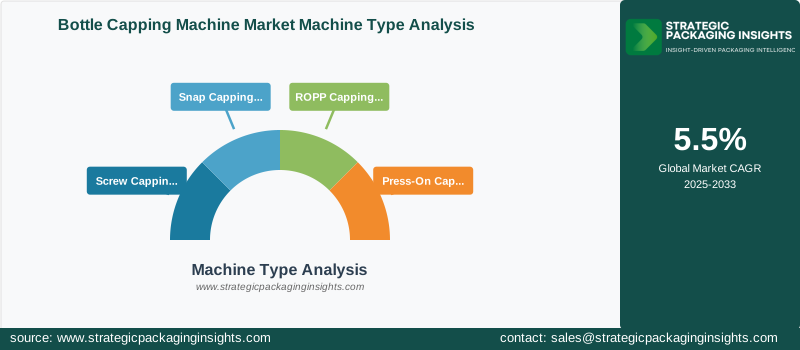
The Bottle Capping Machine market is segmented by machine type, including Screw Capping Machines, Snap Capping Machines, ROPP Capping Machines, and Press-On Capping Machines. Screw Capping Machines are widely used due to their versatility and ability to handle various cap sizes and types, making them a popular choice across industries. The demand for Snap Capping Machines is also on the rise, driven by their efficiency and ease of use in high-speed production lines. ROPP Capping Machines are preferred in the beverage industry for their ability to provide a secure seal, ensuring product integrity and safety. Press-On Capping Machines are gaining traction in the cosmetics and personal care sectors, where packaging aesthetics and functionality are crucial.
Technological advancements and the integration of automation in capping machines are key trends driving the market. Manufacturers are focusing on developing machines that offer enhanced precision, speed, and flexibility to meet the diverse needs of end-users. The growing emphasis on sustainability is also influencing machine design, with companies exploring eco-friendly materials and energy-efficient technologies. As a result, the machine type segment is witnessing significant innovation, providing opportunities for market players to differentiate themselves through product offerings and technological expertise.
Automation Level Analysis
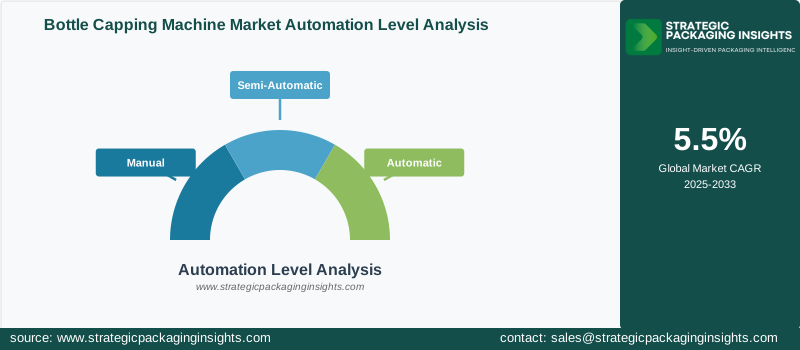
The Bottle Capping Machine market is segmented by automation level into Manual, Semi-Automatic, and Automatic machines. The demand for Automatic capping machines is increasing rapidly, driven by the need for high-speed operations and reduced labor costs. These machines offer enhanced efficiency and precision, making them ideal for large-scale production in industries such as food & beverage and pharmaceuticals. Semi-Automatic machines are preferred by small and medium-sized enterprises due to their cost-effectiveness and flexibility, allowing for easy integration into existing production lines.
Manual capping machines, while less prevalent, are still used in niche applications where production volumes are low, and customization is required. The trend towards automation is expected to continue, with manufacturers investing in advanced technologies to develop machines that offer greater control and adaptability. The integration of smart technologies and IoT in capping machines is also gaining traction, enabling real-time monitoring and optimization of packaging processes. This shift towards automation is driving market growth, providing opportunities for manufacturers to enhance their product offerings and cater to the evolving needs of end-users.
Application Analysis
The Bottle Capping Machine market is segmented by application into Beverages, Pharmaceuticals, Cosmetics, and Chemicals. The beverage industry is a major driver of market growth, with increasing demand for packaged drinks and the need for efficient capping solutions to ensure product safety and quality. The pharmaceutical sector is also a significant contributor, as capping machines play a crucial role in maintaining the integrity and sterility of medical products. In the cosmetics industry, the focus on packaging aesthetics and functionality is driving the demand for advanced capping solutions that offer precision and customization.
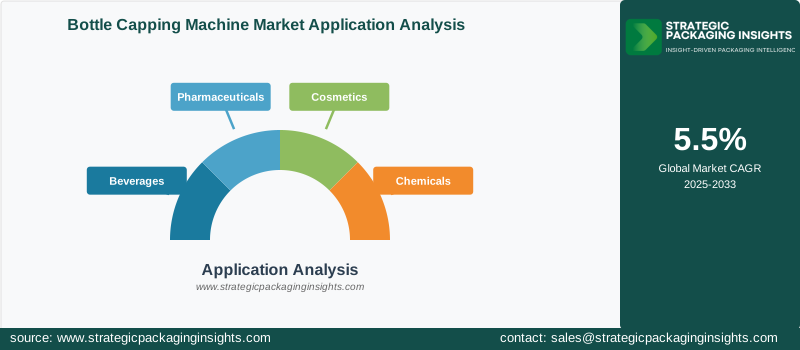
The chemical industry is witnessing a growing demand for capping machines that can handle a wide range of container sizes and materials, ensuring safe and secure packaging. The trend towards sustainability is influencing application-specific requirements, with companies seeking eco-friendly and energy-efficient capping solutions. As a result, manufacturers are focusing on developing machines that cater to the specific needs of each application, providing opportunities for market growth and differentiation.
End Use Analysis
The Bottle Capping Machine market is segmented by end use into Food & Beverage, Healthcare, Personal Care, and Industrial sectors. The Food & Beverage industry is a major end-user, driven by the increasing demand for packaged foods and beverages and the need for efficient capping solutions to ensure product safety and quality. The Healthcare sector is also a significant contributor, as capping machines play a crucial role in maintaining the integrity and sterility of medical products.
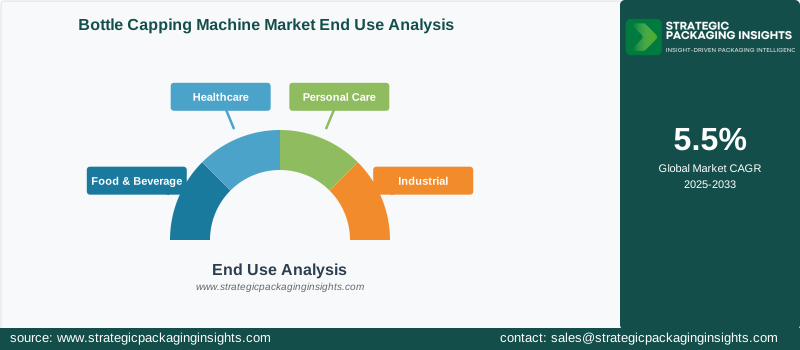
In the Personal Care industry, the focus on packaging aesthetics and functionality is driving the demand for advanced capping solutions that offer precision and customization. The Industrial sector is witnessing a growing demand for capping machines that can handle a wide range of container sizes and materials, ensuring safe and secure packaging. The trend towards sustainability is influencing end-use requirements, with companies seeking eco-friendly and energy-efficient capping solutions. As a result, manufacturers are focusing on developing machines that cater to the specific needs of each end-use sector, providing opportunities for market growth and differentiation.
Bottle Capping Machine Market Segments
The Bottle Capping Machine market has been segmented on the basis ofMachine Type
- Screw Capping Machines
- Snap Capping Machines
- ROPP Capping Machines
- Press-On Capping Machines
Automation Level
- Manual
- Semi-Automatic
- Automatic
Application
- Beverages
- Pharmaceuticals
- Cosmetics
- Chemicals
End Use
- Food & Beverage
- Healthcare
- Personal Care
- Industrial
Region
- Asia Pacific
- North America
- Latin America
- Europe
- Middle East & Africa




