


BOPET Films Market Outlook
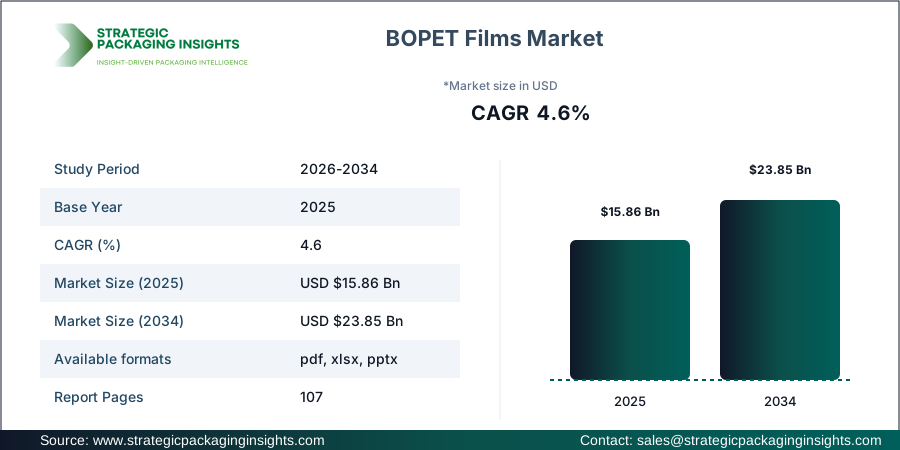
The BOPET Films market size was valued at USD 15.86 billion in 2025 and is anticipated to reach USD 23.85 billion by 2034, growing at a CAGR of 4.6% during the forecast period according to Strategic Packaging Insights. Toray Industries and Polyplex are among the key players driving this growth, leveraging their extensive product portfolios and innovative solutions to meet the increasing demand for BOPET films across various applications. The market's expansion is fueled by the rising need for durable, lightweight, and versatile packaging materials, particularly in the food and beverage sector, where BOPET films offer superior barrier properties and enhanced shelf life.
One of the most impactful drivers of the BOPET Films market is the growing emphasis on sustainable packaging solutions. Governments and environmental organizations worldwide are advocating for reduced plastic waste and promoting the use of recyclable materials. This trend is supported by initiatives such as the European Union's Circular Economy Action Plan, which aims to make all packaging recyclable by 2030. Companies like Jindal Poly Films and SRF are investing in research and development to create eco-friendly BOPET films that align with these sustainability goals, thereby enhancing their market position and catering to environmentally conscious consumers.
Report Scope
| Attributes | Details |
| Report Title | BOPET Films Market Size, Future Growth and Forecast 2034 |
| Thickness | Thin, Medium, Thick, Specialty |
| Application | Packaging, Electrical Insulation, Imaging, Industrial Lamination |
| End Use | Food & Beverage, Pharmaceuticals, Electronics, Consumer Goods |
| Surface Type | Plain, Coated, Metallized, Heat Sealable |
| Region | Asia Pacific, North America, Latin America, Europe, Middle East & Africa |
| Base Year | 2025 |
| Historic Period | 2018-2024 |
| Forecast Period | 2026-2034 |
| Number of Pages | 107 |
| Customization Available | Yes* |
Sustainability & Circular Economy Analysis
Sustainability initiatives and circular economy practices are significantly influencing the BOPET Films market. The shift towards recyclable materials is evident as manufacturers increasingly adopt eco-friendly innovations to reduce environmental impact. Reusable packaging and lightweight designs are becoming standard, driven by consumer demand for sustainable products. Companies like UFlex and Mitsubishi Polyester Film are at the forefront, developing BOPET films that not only meet regulatory requirements but also appeal to environmentally conscious consumers. These trends are reshaping packaging design and manufacturing processes, encouraging investment in sustainable technologies and materials.
The integration of waste reduction strategies and ESG initiatives is crucial for long-term market competitiveness. By focusing on carbon footprint reduction and extended producer responsibility (EPR), companies are aligning their operations with global sustainability goals. This alignment not only enhances brand reputation but also ensures compliance with stringent packaging regulations. As a result, BOPET film manufacturers are prioritizing sustainable supply chain strategies, from raw material sourcing to end-of-life recycling, to maintain their competitive edge in the market.
Consumer preferences for sustainable packaging are driving significant changes in the BOPET Films market. As awareness of environmental issues grows, consumers are increasingly choosing products with eco-friendly packaging. This shift is prompting manufacturers to innovate and invest in sustainable materials and processes. The focus on sustainability is also influencing regulatory compliance, with governments implementing stricter packaging regulations to reduce plastic waste. These trends are expected to continue shaping the market, offering opportunities for companies that prioritize sustainability in their product offerings and business strategies.
Packaging Value Chain & Supply Chain Analysis
The packaging value chain for BOPET films is complex, involving multiple stakeholders from raw material suppliers to end-users. Raw material sourcing is a critical component, with companies like DuPont Teijin Films and Cosmo First ensuring a steady supply of high-quality polyester resins. Packaging converters and manufacturers play a vital role in transforming these materials into finished products, utilizing advanced machinery and technologies to enhance production efficiency. Strategic partnerships and collaborations are essential for optimizing the supply chain, enabling companies to meet the growing demand for BOPET films across various applications.
Supply chain efficiency is paramount in the BOPET Films market, with logistics and distribution channels playing a crucial role in ensuring timely delivery of products. Companies are investing in robust inventory management systems and adopting localization strategies to enhance supply chain resilience. Global sourcing is also a key consideration, as manufacturers seek to diversify their supplier base and mitigate risks associated with geopolitical uncertainties. These efforts are aimed at maintaining a competitive edge in the market by ensuring a reliable supply of BOPET films to meet customer demands.
Recycling networks are becoming increasingly important in the BOPET Films market, as companies strive to close the loop on packaging waste. By implementing effective recycling programs and collaborating with stakeholders across the value chain, manufacturers are enhancing their sustainability credentials and meeting regulatory requirements. Procurement strategies are also evolving, with a focus on sourcing sustainable materials and reducing environmental impact. These initiatives are not only beneficial for the environment but also contribute to long-term business success by aligning with consumer expectations and regulatory standards.
Opportunities & Threats
The BOPET Films market presents numerous opportunities for growth, driven by the increasing demand for sustainable packaging solutions. As consumers become more environmentally conscious, there is a growing preference for products with eco-friendly packaging. This trend is creating opportunities for manufacturers to develop innovative BOPET films that meet these demands. Additionally, the expansion of the food and beverage industry, particularly in emerging markets, is driving the need for high-performance packaging materials. Companies that can offer BOPET films with superior barrier properties and enhanced shelf life are well-positioned to capitalize on this growing demand.
Technological advancements in BOPET film production are also creating opportunities for market growth. Innovations in film coating and metallization techniques are enhancing the performance and functionality of BOPET films, making them suitable for a wider range of applications. This is particularly relevant in the electronics and consumer goods sectors, where there is a need for durable and versatile packaging materials. By investing in research and development, companies can develop new products that cater to these evolving market needs, thereby gaining a competitive advantage.
Despite the opportunities, the BOPET Films market faces several threats that could impact its growth. One of the primary challenges is the volatility in raw material prices, which can affect production costs and profit margins. Additionally, stringent environmental regulations and increasing pressure to reduce plastic waste are posing challenges for manufacturers. Companies must invest in sustainable practices and technologies to comply with these regulations and meet consumer expectations. Failure to do so could result in reputational damage and loss of market share.
Drivers & Challenges
The BOPET Films market is driven by several key factors, including the growing demand for flexible packaging solutions. As consumers seek convenience and portability, there is an increasing preference for lightweight and durable packaging materials. BOPET films offer excellent barrier properties, making them ideal for preserving the freshness and quality of packaged goods. This is particularly important in the food and beverage industry, where maintaining product integrity is crucial. Additionally, the rise of e-commerce is driving the demand for protective packaging solutions, further boosting the market for BOPET films.
Technological advancements are also driving the growth of the BOPET Films market. Innovations in film production processes and coating technologies are enhancing the performance and functionality of BOPET films. These advancements are enabling manufacturers to develop films with improved clarity, strength, and heat resistance, making them suitable for a wider range of applications. Furthermore, the increasing focus on sustainability is driving the development of eco-friendly BOPET films, which are gaining popularity among environmentally conscious consumers.
Despite the positive drivers, the BOPET Films market faces several challenges that could hinder its growth. One of the primary challenges is the competition from alternative packaging materials, such as biodegradable plastics and paper-based solutions. These materials are gaining traction due to their perceived environmental benefits, posing a threat to the demand for BOPET films. Additionally, the market is subject to fluctuations in raw material prices, which can impact production costs and profitability. Manufacturers must navigate these challenges by investing in sustainable practices and developing innovative products that meet evolving consumer preferences.
Market Share Analysis
The BOPET Films market is characterized by a competitive landscape, with several key players dominating the industry. Companies like Toray Industries, Polyplex, and Jindal Poly Films hold significant market shares, leveraging their extensive product portfolios and global presence to maintain their competitive edge. These companies are investing in research and development to enhance their product offerings and meet the evolving demands of consumers. Additionally, strategic partnerships and collaborations are playing a crucial role in expanding their market reach and strengthening their position in the industry.
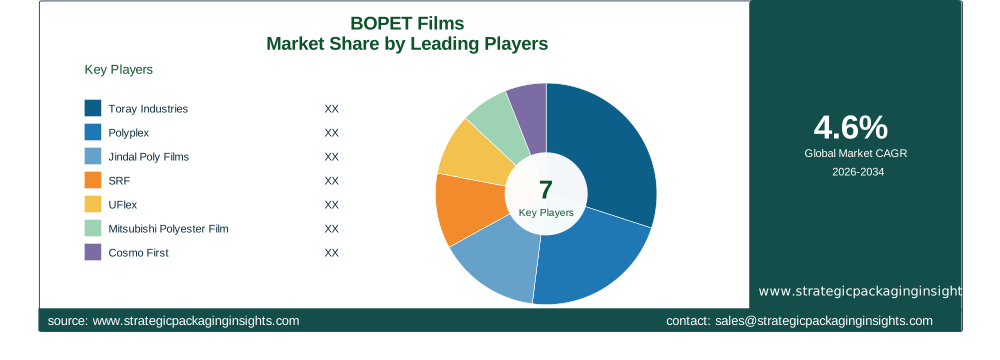
Toray Industries is a leading player in the BOPET Films market, known for its innovative solutions and high-quality products. The company has a strong global presence, with manufacturing facilities and distribution networks across key regions. Polyplex is another major player, offering a wide range of BOPET films for various applications. The company's focus on sustainability and eco-friendly products has helped it gain a competitive advantage in the market. Jindal Poly Films is also a prominent player, known for its advanced manufacturing capabilities and extensive product portfolio.
SRF and UFlex are other key players in the BOPET Films market, known for their innovative solutions and strong market presence. SRF has a diverse product portfolio, catering to various industries such as packaging, electronics, and consumer goods. The company's focus on research and development has enabled it to develop high-performance BOPET films that meet the evolving needs of consumers. UFlex is a leading manufacturer of flexible packaging solutions, offering a wide range of BOPET films for various applications. The company's commitment to sustainability and innovation has helped it maintain a strong position in the market.
Mitsubishi Polyester Film and Cosmo First are also significant players in the BOPET Films market, known for their high-quality products and strong market presence. Mitsubishi Polyester Film is a leading manufacturer of polyester films, offering a wide range of products for various applications. The company's focus on innovation and sustainability has helped it gain a competitive advantage in the market. Cosmo First is another major player, known for its advanced manufacturing capabilities and extensive product portfolio. The company's commitment to quality and customer satisfaction has helped it maintain a strong position in the industry.
Key Highlights
- The BOPET Films market is projected to reach USD 23.85 billion by 2034, growing at a CAGR of 4.6%.
- Key players include Toray Industries, Polyplex, and Jindal Poly Films, known for their innovative solutions.
- Growing demand for sustainable packaging solutions is driving market growth.
- Technological advancements in film production are enhancing product performance.
- Asia Pacific is the largest market for BOPET films, driven by the expanding food and beverage industry.
- Recyclable and eco-friendly BOPET films are gaining popularity among consumers.
- Stringent environmental regulations are influencing market dynamics.
BOPET Films Market Segments Insights

Thickness Analysis
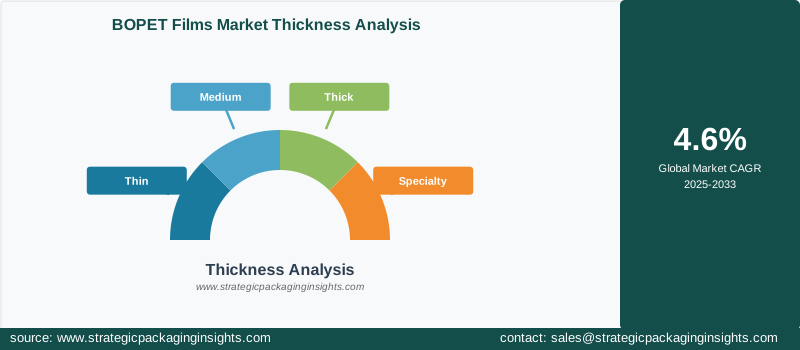
The BOPET Films market is segmented by thickness, with categories including thin, medium, thick, and specialty films. Thin films are widely used in packaging applications due to their lightweight and flexible nature, making them ideal for food and beverage packaging. Medium and thick films are preferred for industrial applications, where durability and strength are crucial. Specialty films, on the other hand, are designed for specific applications, offering unique properties such as enhanced barrier protection and heat resistance. The demand for these films is driven by the need for high-performance packaging solutions that meet the evolving needs of consumers and industries.
Thin films are gaining popularity in the BOPET Films market due to their cost-effectiveness and versatility. These films are used in a variety of applications, including food packaging, electrical insulation, and imaging. The growing demand for lightweight and durable packaging materials is driving the adoption of thin films, particularly in the food and beverage industry. Medium and thick films are also in demand, particularly in industrial applications where strength and durability are essential. Specialty films, with their unique properties, are gaining traction in niche markets, offering opportunities for manufacturers to develop innovative products that cater to specific customer needs.
Application Analysis
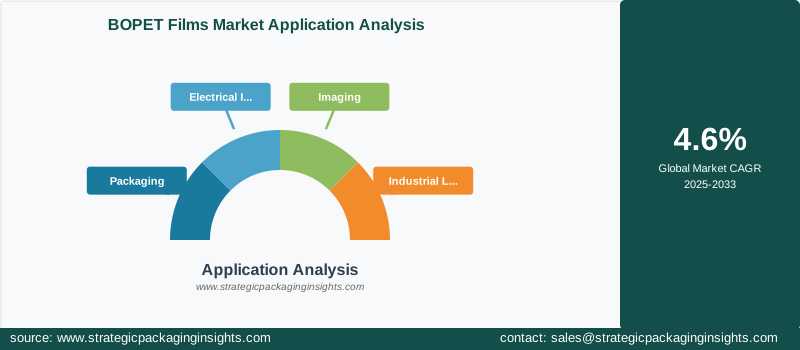
The BOPET Films market is segmented by application, with key categories including packaging, electrical insulation, imaging, and industrial lamination. Packaging is the largest application segment, driven by the growing demand for flexible and durable packaging materials. BOPET films offer excellent barrier properties, making them ideal for preserving the freshness and quality of packaged goods. The electrical insulation segment is also significant, with BOPET films used in various electrical and electronic applications due to their excellent dielectric properties. Imaging and industrial lamination are other important application segments, with BOPET films offering superior clarity and strength for these applications.
The packaging segment is expected to continue dominating the BOPET Films market, driven by the increasing demand for flexible and sustainable packaging solutions. The rise of e-commerce and the growing preference for convenience foods are further boosting the demand for BOPET films in packaging applications. The electrical insulation segment is also expected to grow, driven by the increasing demand for electronic devices and the need for reliable insulation materials. Imaging and industrial lamination are niche segments, offering opportunities for manufacturers to develop specialized products that cater to specific customer needs.
End Use Analysis
The BOPET Films market is segmented by end use, with key categories including food and beverage, pharmaceuticals, electronics, and consumer goods. The food and beverage segment is the largest end-use category, driven by the growing demand for flexible and durable packaging materials. BOPET films offer excellent barrier properties, making them ideal for preserving the freshness and quality of packaged foods. The pharmaceuticals segment is also significant, with BOPET films used in various pharmaceutical packaging applications due to their excellent barrier and protective properties. The electronics and consumer goods segments are other important end-use categories, with BOPET films offering superior clarity and strength for these applications.
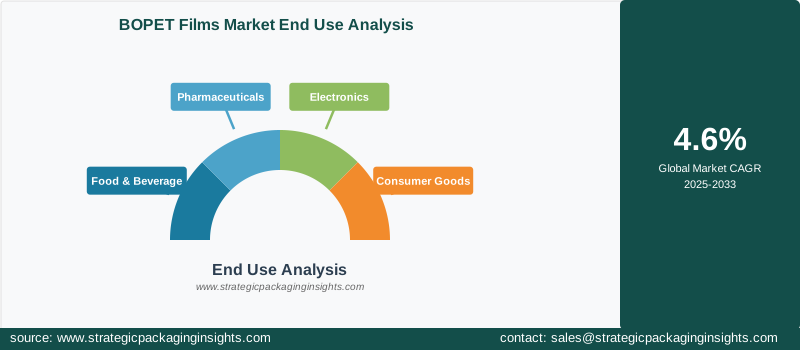
The food and beverage segment is expected to continue dominating the BOPET Films market, driven by the increasing demand for flexible and sustainable packaging solutions. The rise of e-commerce and the growing preference for convenience foods are further boosting the demand for BOPET films in food and beverage applications. The pharmaceuticals segment is also expected to grow, driven by the increasing demand for reliable and protective packaging materials. The electronics and consumer goods segments are niche markets, offering opportunities for manufacturers to develop specialized products that cater to specific customer needs.
Surface Type Analysis
The BOPET Films market is segmented by surface type, with key categories including plain, coated, metallized, and heat sealable films. Plain films are widely used in various applications due to their versatility and cost-effectiveness. Coated films offer enhanced properties such as improved barrier protection and printability, making them ideal for packaging applications. Metallized films are used in applications where high barrier properties and aesthetic appeal are important, such as in food packaging and decorative applications. Heat sealable films are used in applications where strong seals are required, such as in packaging and industrial applications.
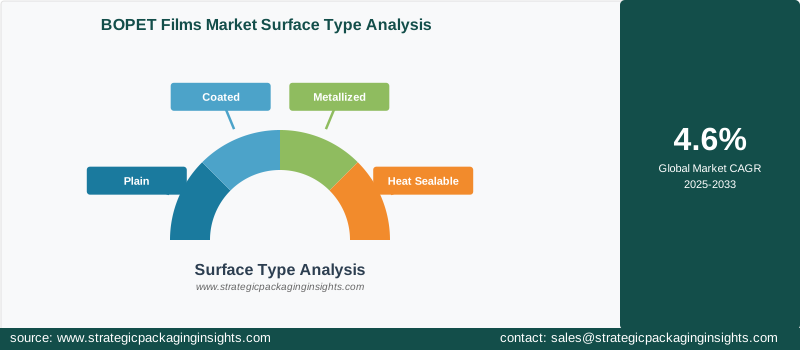
Plain films are the most widely used surface type in the BOPET Films market, driven by their versatility and cost-effectiveness. Coated films are gaining popularity due to their enhanced properties, making them ideal for packaging applications. Metallized films are also in demand, particularly in the food packaging industry, where high barrier properties and aesthetic appeal are important. Heat sealable films are used in applications where strong seals are required, offering opportunities for manufacturers to develop innovative products that cater to specific customer needs.
BOPET Films Market Segments
The BOPET Films market has been segmented on the basis ofThickness
- Thin
- Medium
- Thick
- Specialty
Application
- Packaging
- Electrical Insulation
- Imaging
- Industrial Lamination
End Use
- Food & Beverage
- Pharmaceuticals
- Electronics
- Consumer Goods
Surface Type
- Plain
- Coated
- Metallized
- Heat Sealable
Region
- Asia Pacific
- North America
- Latin America
- Europe
- Middle East & Africa




