


Blow-fill-seal Equipment Market Outlook
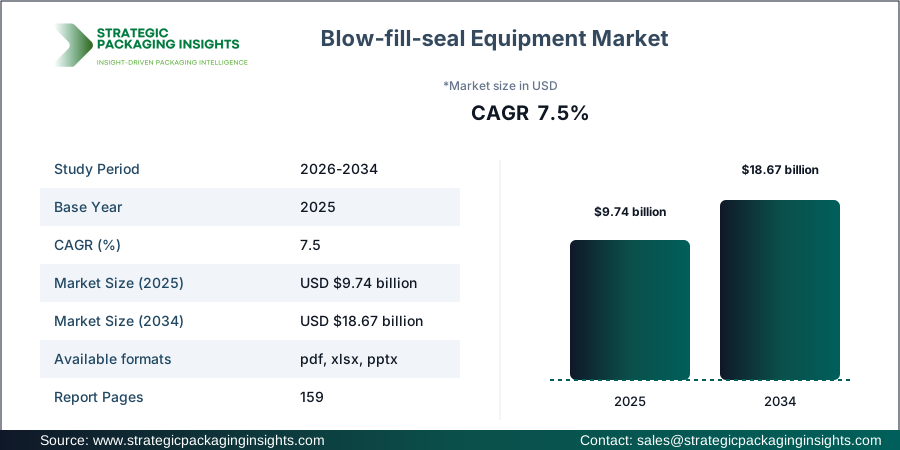
The Blow-fill-seal (BFS) Equipment market was valued at $9.74 billion in 2025 and is projected to reach $18.67 billion by 2034, growing at a CAGR of 7.5% during the forecast period 2026-2034. This growth trajectory is driven by the increasing demand for efficient and sterile packaging solutions in the pharmaceutical and healthcare sectors. BFS technology is gaining traction due to its ability to reduce contamination risks and improve product shelf life, which is crucial in the production of sterile liquid pharmaceuticals. The market is also benefiting from advancements in BFS technology, which are enhancing production efficiency and reducing operational costs. Additionally, the rising prevalence of chronic diseases and the growing need for single-dose packaging are further propelling the demand for BFS equipment.
Report Scope
| Attributes | Details |
| Report Title | Blow-fill-seal Equipment Market Size, Future Growth and Forecast 2034 |
| By Machine Type | Small-volume BFS, Large-volume BFS, Multi-mold BFS |
| By Application | Ophthalmics, Injectables, Respiratory, Oral Liquids |
| By End Use | Pharma, Biologics, Contract Manufacturers, Healthcare |
| By Material Type | PE, PP, Specialty Polymers |
| Region | Asia Pacific, North America, Latin America, Europe, Middle East & Africa |
| Base Year | 2025 |
| Historic Period | 2018-2024 |
| Forecast Period | 2026-2034 |
| Number of Pages | 159 |
| Customization Available | Yes* |
Opportunities & Threats
The Blow-fill-seal Equipment market presents significant opportunities, particularly in emerging economies where the pharmaceutical industry is rapidly expanding. The increasing healthcare expenditure and the growing focus on improving healthcare infrastructure in countries like India and China are creating a fertile ground for BFS technology adoption. Moreover, the trend towards personalized medicine and the need for innovative drug delivery systems are opening new avenues for BFS equipment manufacturers. The ability of BFS technology to produce complex and customized packaging solutions is particularly appealing to pharmaceutical companies looking to differentiate their products in a competitive market.
Another opportunity lies in the environmental benefits of BFS technology. As sustainability becomes a key focus for industries worldwide, BFS equipment offers a more eco-friendly packaging solution by reducing material waste and energy consumption. This aligns with the global push towards greener manufacturing practices and can serve as a significant selling point for BFS equipment manufacturers. Additionally, the integration of automation and digital technologies in BFS equipment is enhancing production capabilities and offering new opportunities for innovation and efficiency improvements.
However, the market faces certain restraints, including the high initial investment required for BFS equipment. This can be a significant barrier for small and medium-sized enterprises looking to adopt this technology. Additionally, the stringent regulatory requirements for pharmaceutical packaging can pose challenges for BFS equipment manufacturers, as they need to ensure compliance with various international standards. The complexity of BFS technology also requires skilled personnel for operation and maintenance, which can be a limiting factor in regions with a shortage of trained professionals.
Drivers & Challenges
The primary drivers of the Blow-fill-seal Equipment market include the increasing demand for sterile and efficient packaging solutions in the pharmaceutical industry. The BFS technology's ability to minimize contamination risks and enhance product safety is a major factor driving its adoption. Additionally, the growing prevalence of chronic diseases and the subsequent increase in demand for injectable drugs are boosting the need for BFS equipment. The technology's capability to produce single-dose packaging is particularly beneficial for the administration of vaccines and other injectable medications, further driving market growth.
Technological advancements in BFS equipment are also playing a crucial role in market expansion. Innovations such as multi-mold BFS machines and the integration of automation are enhancing production efficiency and reducing operational costs. These advancements are making BFS technology more accessible and appealing to a broader range of pharmaceutical manufacturers. Furthermore, the increasing focus on sustainability and the need for eco-friendly packaging solutions are driving the adoption of BFS technology, as it offers significant environmental benefits compared to traditional packaging methods.
Despite these drivers, the market faces challenges such as the high cost of BFS equipment and the complexity of the technology. The initial investment required for BFS machines can be prohibitive for smaller companies, limiting market penetration. Additionally, the stringent regulatory landscape for pharmaceutical packaging requires BFS equipment manufacturers to ensure compliance with various international standards, which can be a complex and costly process. The need for skilled personnel to operate and maintain BFS equipment is another challenge, particularly in regions with a shortage of trained professionals.
Market Share Analysis
The Blow-fill-seal Equipment market is characterized by a competitive landscape with several key players dominating the market. Companies such as Rommelag, Weiler Engineering, and Brevetti Angela hold significant market shares due to their extensive experience and technological expertise in BFS technology. Rommelag, a pioneer in BFS technology, is known for its innovative solutions and has a strong presence in the global market. Weiler Engineering is another major player, recognized for its advanced BFS systems and commitment to quality and customer satisfaction.
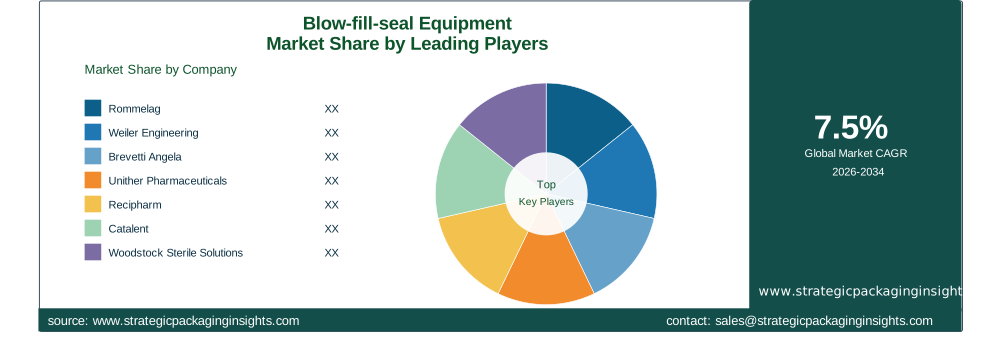
Brevetti Angela, with its focus on research and development, has established itself as a leader in the BFS equipment market. The company's continuous innovation and ability to adapt to changing market demands have contributed to its strong market position. Unither Pharmaceuticals and Recipharm are also notable players, leveraging their expertise in pharmaceutical manufacturing to offer high-quality BFS solutions. These companies have a strong foothold in the market, driven by their commitment to quality and innovation.
Catalent and Woodstock Sterile Solutions are other key players in the BFS equipment market. Catalent's extensive experience in drug delivery technologies and its focus on innovation have positioned it as a leader in the market. Woodstock Sterile Solutions, known for its high-quality sterile manufacturing capabilities, has a strong presence in the BFS market. Nephron Pharmaceuticals and Curida are also significant players, with their focus on providing reliable and efficient BFS solutions to the pharmaceutical industry.
LyondellBasell, a leading supplier of polymers, plays a crucial role in the BFS equipment market by providing high-quality materials for BFS applications. The company's expertise in polymer technology and its commitment to sustainability have made it a preferred supplier for BFS equipment manufacturers. Overall, the competitive landscape of the BFS equipment market is shaped by the presence of these key players, each contributing to the market's growth through innovation, quality, and customer-centric solutions.
Key Highlights
- The Blow-fill-seal Equipment market is projected to grow at a CAGR of 7.5% from 2026 to 2034.
- Advancements in BFS technology are enhancing production efficiency and reducing operational costs.
- The increasing demand for sterile packaging solutions is driving market growth.
- Emerging economies present significant opportunities for BFS technology adoption.
- The integration of automation and digital technologies is enhancing BFS equipment capabilities.
- Sustainability is a key focus, with BFS technology offering eco-friendly packaging solutions.
- High initial investment and regulatory requirements are major challenges for the market.
- Key players include Rommelag, Weiler Engineering, and Brevetti Angela.
- The market is characterized by a competitive landscape with several key players dominating.
- Technological advancements and innovation are driving market expansion.
Top Countries Insights
In the Blow-fill-seal Equipment market, the United States stands out with a market size of approximately $3.5 billion and a CAGR of 6%. The country's advanced healthcare infrastructure and high demand for sterile pharmaceutical packaging drive this growth. The presence of major pharmaceutical companies and a strong focus on innovation further bolster the market. However, regulatory challenges and high operational costs pose significant hurdles.
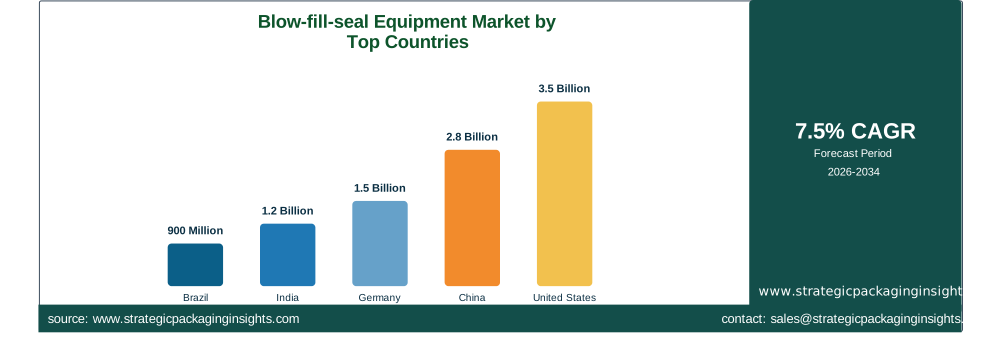
China, with a market size of around $2.8 billion and a CAGR of 9%, is rapidly emerging as a key player in the BFS equipment market. The country's expanding pharmaceutical industry and increasing healthcare expenditure are major growth drivers. Government initiatives to improve healthcare infrastructure and promote domestic manufacturing are also contributing to market expansion. However, the market faces challenges such as regulatory complexities and a shortage of skilled personnel.
Germany, with a market size of approximately $1.5 billion and a CAGR of 5%, is a significant player in the European BFS equipment market. The country's strong focus on innovation and quality, coupled with a robust pharmaceutical industry, drives market growth. However, stringent regulatory requirements and high operational costs are key challenges for the market.
India, with a market size of around $1.2 billion and a CAGR of 8%, presents significant growth opportunities for the BFS equipment market. The country's rapidly expanding pharmaceutical industry and increasing healthcare expenditure are major growth drivers. Government initiatives to promote domestic manufacturing and improve healthcare infrastructure further support market growth. However, regulatory challenges and a shortage of skilled personnel pose significant hurdles.
Brazil, with a market size of approximately $900 million and a CAGR of 7%, is a key player in the Latin American BFS equipment market. The country's growing pharmaceutical industry and increasing demand for sterile packaging solutions drive market growth. However, regulatory complexities and economic instability pose significant challenges for the market.
Blow-fill-seal Equipment Market Segments Insights

Machine Type Analysis
The Blow-fill-seal Equipment market is segmented by machine type into small-volume BFS, large-volume BFS, and multi-mold BFS. Small-volume BFS machines are gaining popularity due to their ability to produce single-dose packaging, which is increasingly in demand for vaccines and other injectable medications. The growing prevalence of chronic diseases and the need for precise dosing are driving the demand for small-volume BFS machines. Large-volume BFS machines, on the other hand, are favored for their efficiency in producing bulk quantities of sterile liquid pharmaceuticals. The demand for large-volume BFS machines is driven by the increasing production of over-the-counter medications and other high-volume pharmaceutical products.
Multi-mold BFS machines are gaining traction due to their versatility and ability to produce complex packaging solutions. These machines are particularly appealing to pharmaceutical companies looking to differentiate their products in a competitive market. The integration of automation and digital technologies in multi-mold BFS machines is enhancing production efficiency and reducing operational costs, making them an attractive option for manufacturers. Overall, the machine type segment is characterized by a growing demand for innovative and efficient BFS solutions, driven by the increasing need for sterile and precise packaging in the pharmaceutical industry.
Application Analysis
The Blow-fill-seal Equipment market is segmented by application into ophthalmics, injectables, respiratory, and oral liquids. The ophthalmics segment is experiencing significant growth due to the increasing prevalence of eye disorders and the growing demand for sterile packaging solutions. BFS technology is particularly suited for ophthalmic products due to its ability to minimize contamination risks and enhance product safety. The injectables segment is also witnessing strong growth, driven by the increasing demand for vaccines and other injectable medications. The ability of BFS technology to produce single-dose packaging is particularly beneficial for the administration of injectable drugs.
The respiratory segment is benefiting from the growing prevalence of respiratory diseases and the increasing demand for inhalation therapies. BFS technology is well-suited for the production of respiratory products due to its ability to produce sterile and precise packaging solutions. The oral liquids segment is also experiencing growth, driven by the increasing demand for over-the-counter medications and other liquid pharmaceutical products. Overall, the application segment is characterized by a growing demand for sterile and efficient packaging solutions, driven by the increasing prevalence of chronic diseases and the need for innovative drug delivery systems.
End Use Analysis
The Blow-fill-seal Equipment market is segmented by end use into pharma, biologics, contract manufacturers, and healthcare. The pharma segment is the largest end-use segment, driven by the increasing demand for sterile packaging solutions in the pharmaceutical industry. The growing prevalence of chronic diseases and the increasing demand for injectable drugs are driving the demand for BFS equipment in the pharma segment. The biologics segment is also experiencing strong growth, driven by the increasing demand for biologic drugs and the need for innovative drug delivery systems.
Contract manufacturers are increasingly adopting BFS technology due to its ability to produce complex and customized packaging solutions. The growing trend towards outsourcing pharmaceutical manufacturing is driving the demand for BFS equipment in the contract manufacturing segment. The healthcare segment is also experiencing growth, driven by the increasing demand for sterile packaging solutions in hospitals and other healthcare facilities. Overall, the end-use segment is characterized by a growing demand for innovative and efficient BFS solutions, driven by the increasing need for sterile and precise packaging in the pharmaceutical and healthcare industries.
Material Type Analysis
The Blow-fill-seal Equipment market is segmented by material type into PE, PP, and specialty polymers. PE is the most commonly used material in BFS applications due to its excellent barrier properties and cost-effectiveness. The growing demand for sterile packaging solutions in the pharmaceutical industry is driving the demand for PE in BFS applications. PP is also widely used in BFS applications due to its high chemical resistance and ability to withstand high temperatures. The increasing demand for injectable drugs and other high-temperature applications is driving the demand for PP in BFS applications.
Specialty polymers are gaining traction in BFS applications due to their superior performance characteristics and ability to meet specific packaging requirements. The growing trend towards personalized medicine and the need for innovative drug delivery systems are driving the demand for specialty polymers in BFS applications. Overall, the material type segment is characterized by a growing demand for high-performance materials, driven by the increasing need for sterile and efficient packaging solutions in the pharmaceutical industry.
Blow-fill-seal Equipment Market Segments
The Blow-fill-seal Equipment market has been segmented on the basis ofBy Machine Type
- Small-volume BFS
- Large-volume BFS
- Multi-mold BFS
By Application
- Ophthalmics
- Injectables
- Respiratory
- Oral Liquids
By End Use
- Pharma
- Biologics
- Contract Manufacturers
- Healthcare
By Material Type
- PE
- PP
- Specialty Polymers
Region
- Asia Pacific
- North America
- Latin America
- Europe
- Middle East & Africa




