


Block Pallets Market Outlook
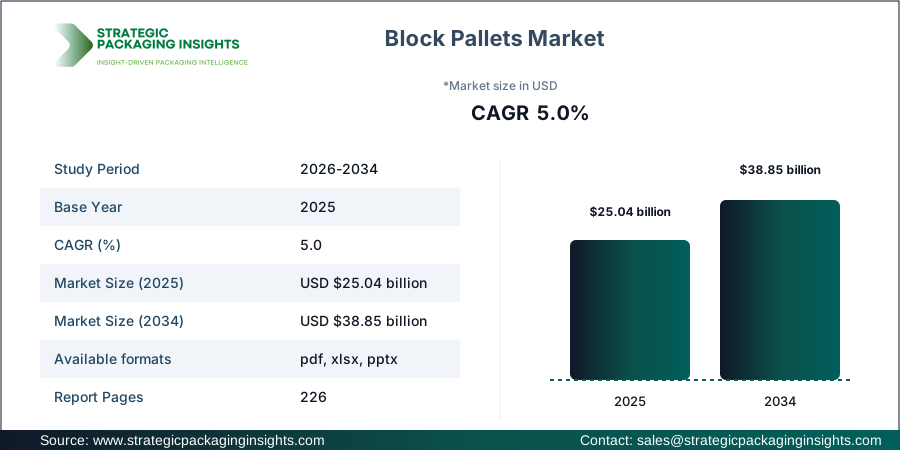
The Block Pallets market was valued at $25.04 billion in 2025 and is projected to reach $38.85 billion by 2034, growing at a CAGR of 5.0% during the forecast period 2026-2034. This growth is driven by the increasing demand for efficient and durable pallet solutions across various industries such as logistics, food & beverage, and manufacturing. The versatility and strength of block pallets make them a preferred choice for heavy-duty applications, contributing to their widespread adoption. Additionally, the rise in global trade and e-commerce has further fueled the demand for block pallets, as they facilitate the safe and efficient transportation of goods.
Despite the promising growth prospects, the block pallets market faces certain challenges. The high cost of raw materials, particularly for plastic and metal pallets, can act as a restraint on market growth. Moreover, stringent regulations regarding the use of certain materials in pallet manufacturing, especially in regions like Europe and North America, can pose challenges for manufacturers. However, the market holds significant growth potential, driven by innovations in pallet design and materials, which aim to enhance durability and sustainability. The increasing focus on eco-friendly and recyclable materials presents new opportunities for market players to differentiate their offerings and capture a larger market share.
Report Scope
| Attributes | Details |
| Report Title | Block Pallets Market Size, Future Growth and Forecast 2034 |
| By Material Type | Wood, Plastic, Metal, Composite |
| By Entry Type | Four-Way Entry, Two-Way Entry |
| By Load Capacity | Light-Duty, Medium-Duty, Heavy-Duty |
| By End Use | Logistics, Food & Beverage, Chemicals, Manufacturing |
| Region | Asia Pacific, North America, Latin America, Europe, Middle East & Africa |
| Base Year | 2025 |
| Historic Period | 2018-2024 |
| Forecast Period | 2026-2034 |
| Number of Pages | 226 |
| Customization Available | Yes* |
Opportunities & Threats
The block pallets market presents numerous opportunities for growth, particularly with the increasing emphasis on sustainability and environmental responsibility. As industries worldwide strive to reduce their carbon footprint, there is a growing demand for pallets made from recyclable and eco-friendly materials. This trend is particularly pronounced in regions like Europe, where stringent environmental regulations are driving the adoption of sustainable pallet solutions. Companies that can innovate and offer pallets made from recycled materials or those that are biodegradable stand to gain a competitive edge in the market. Additionally, the rise of e-commerce and global trade has created a need for efficient logistics solutions, further boosting the demand for block pallets.
Another significant opportunity lies in the technological advancements in pallet manufacturing. The integration of smart technologies, such as RFID tags and IoT-enabled tracking systems, into pallets can enhance supply chain efficiency and provide real-time data on pallet usage and location. This not only improves inventory management but also reduces the risk of pallet loss or theft. Companies that invest in such technologies can offer added value to their customers, thereby increasing their market share. Furthermore, the growing trend of pallet pooling, where companies share pallets to optimize logistics and reduce costs, presents a lucrative opportunity for pallet manufacturers and service providers.
However, the block pallets market is not without its threats. One of the primary challenges is the fluctuating cost of raw materials, particularly for plastic and metal pallets. These materials are subject to price volatility due to factors such as changes in oil prices and supply chain disruptions. This can impact the profitability of pallet manufacturers and lead to increased costs for end-users. Additionally, the market faces competition from alternative pallet types, such as stringer pallets, which are often cheaper and more readily available. Companies must continuously innovate and differentiate their products to maintain a competitive edge in the market.
Drivers & Challenges
The block pallets market is driven by several key factors, including the increasing demand for efficient and durable pallet solutions across various industries. The logistics and transportation sector, in particular, relies heavily on block pallets for the safe and efficient movement of goods. The strength and versatility of block pallets make them ideal for heavy-duty applications, contributing to their widespread adoption. Additionally, the rise in global trade and e-commerce has further fueled the demand for block pallets, as they facilitate the safe and efficient transportation of goods. The growing focus on sustainability and environmental responsibility is also driving the demand for pallets made from recyclable and eco-friendly materials.
Technological advancements in pallet manufacturing are another significant driver of market growth. The integration of smart technologies, such as RFID tags and IoT-enabled tracking systems, into pallets can enhance supply chain efficiency and provide real-time data on pallet usage and location. This not only improves inventory management but also reduces the risk of pallet loss or theft. Companies that invest in such technologies can offer added value to their customers, thereby increasing their market share. Furthermore, the growing trend of pallet pooling, where companies share pallets to optimize logistics and reduce costs, presents a lucrative opportunity for pallet manufacturers and service providers.
Despite these drivers, the block pallets market faces several challenges. One of the primary challenges is the fluctuating cost of raw materials, particularly for plastic and metal pallets. These materials are subject to price volatility due to factors such as changes in oil prices and supply chain disruptions. This can impact the profitability of pallet manufacturers and lead to increased costs for end-users. Additionally, the market faces competition from alternative pallet types, such as stringer pallets, which are often cheaper and more readily available. Companies must continuously innovate and differentiate their products to maintain a competitive edge in the market.
Market Share Analysis
The block pallets market is characterized by a competitive landscape with several key players vying for market share. Companies such as Brambles, PalletOne, and Millwood are among the leading players in the market, known for their extensive product offerings and strong distribution networks. Brambles, in particular, holds a significant market share due to its global presence and comprehensive pallet pooling services. The company's focus on sustainability and innovation has further strengthened its position in the market. PalletOne, another major player, is known for its high-quality wooden pallets and commitment to customer satisfaction.
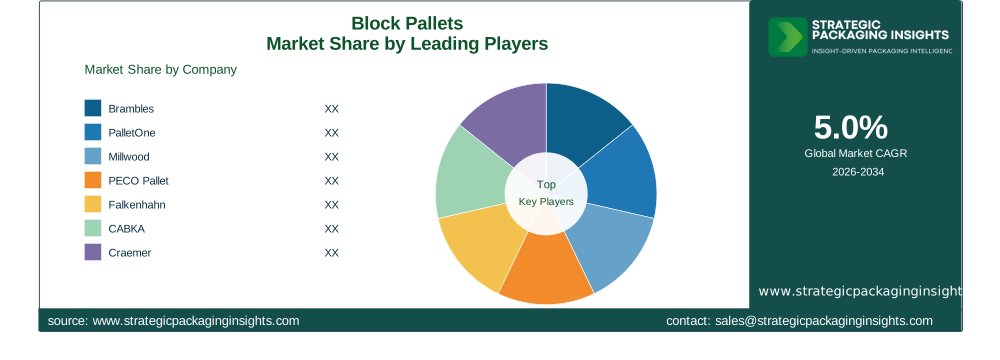
PECO Pallet and Falkenhahn are also prominent players in the block pallets market, known for their durable and reliable pallet solutions. PECO Pallet's focus on providing cost-effective and efficient pallet pooling services has helped it capture a significant market share. Falkenhahn, on the other hand, is recognized for its innovative pallet designs and commitment to sustainability. The company's use of eco-friendly materials and advanced manufacturing techniques has set it apart from its competitors. CABKA and Craemer are also key players in the market, known for their high-quality plastic pallets and focus on innovation.
Schoeller Allibert, Loscam, and Rehrig Pacific are other notable companies in the block pallets market. Schoeller Allibert is known for its extensive range of plastic pallets and commitment to sustainability. The company's focus on innovation and customer satisfaction has helped it maintain a strong market position. Loscam, a leading provider of pallet pooling services in the Asia Pacific region, is known for its high-quality wooden pallets and strong distribution network. Rehrig Pacific, on the other hand, is recognized for its durable and reliable plastic pallets and focus on customer satisfaction.
Key Highlights
- The block pallets market is projected to grow at a CAGR of 5.0% from 2026 to 2034.
- Increasing demand for durable and efficient pallet solutions across various industries is driving market growth.
- Technological advancements in pallet manufacturing, such as RFID tags and IoT-enabled tracking systems, are enhancing supply chain efficiency.
- The growing focus on sustainability and environmental responsibility is driving the demand for eco-friendly pallets.
- Fluctuating raw material costs, particularly for plastic and metal pallets, pose a challenge to market growth.
- Competition from alternative pallet types, such as stringer pallets, is a significant challenge for market players.
- The rise of e-commerce and global trade is boosting the demand for block pallets.
- Pallet pooling is emerging as a lucrative opportunity for pallet manufacturers and service providers.
- Key players in the market include Brambles, PalletOne, Millwood, PECO Pallet, and Falkenhahn.
Top Countries Insights
In the block pallets market, the United States stands out as a key player, with a market size of approximately $8 billion and a CAGR of 4%. The country's robust logistics and transportation sector, coupled with the rise of e-commerce, drives the demand for efficient pallet solutions. Additionally, the focus on sustainability and the use of eco-friendly materials in pallet manufacturing are significant growth drivers. However, the market faces challenges such as fluctuating raw material costs and competition from alternative pallet types.
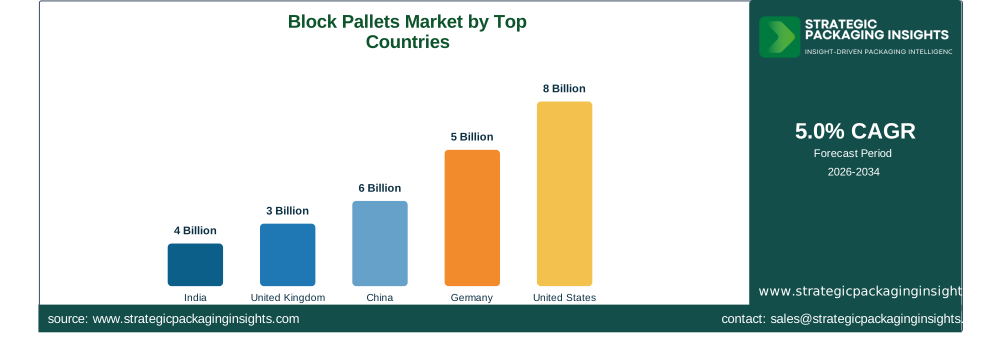
Germany is another significant market for block pallets, with a market size of around $5 billion and a CAGR of 3%. The country's strong manufacturing sector and emphasis on sustainability drive the demand for durable and eco-friendly pallet solutions. The integration of smart technologies in pallet manufacturing is also a key growth driver. However, stringent regulations regarding the use of certain materials in pallet manufacturing pose a challenge for market players.
China, with a market size of approximately $6 billion and a CAGR of 6%, is a rapidly growing market for block pallets. The country's booming e-commerce sector and increasing focus on efficient logistics solutions drive the demand for block pallets. Additionally, the government's emphasis on sustainability and the use of eco-friendly materials in pallet manufacturing are significant growth drivers. However, the market faces challenges such as fluctuating raw material costs and competition from alternative pallet types.
In the United Kingdom, the block pallets market is valued at around $3 billion, with a CAGR of 2%. The country's strong logistics and transportation sector, coupled with the rise of e-commerce, drives the demand for efficient pallet solutions. The focus on sustainability and the use of eco-friendly materials in pallet manufacturing are also significant growth drivers. However, the market faces challenges such as fluctuating raw material costs and competition from alternative pallet types.
India, with a market size of approximately $4 billion and a CAGR of 5%, is an emerging market for block pallets. The country's growing manufacturing sector and increasing focus on efficient logistics solutions drive the demand for block pallets. Additionally, the government's emphasis on sustainability and the use of eco-friendly materials in pallet manufacturing are significant growth drivers. However, the market faces challenges such as fluctuating raw material costs and competition from alternative pallet types.
Block Pallets Market Segments Insights

Material Type Analysis
The block pallets market is segmented by material type into wood, plastic, metal, and composite. Wood pallets dominate the market due to their cost-effectiveness and widespread availability. They are particularly popular in the logistics and transportation sector, where durability and strength are crucial. However, the increasing focus on sustainability is driving the demand for plastic and composite pallets, which are more durable and environmentally friendly. Plastic pallets, in particular, are gaining traction due to their lightweight nature and resistance to moisture and chemicals. Composite pallets, made from a combination of materials, offer enhanced strength and durability, making them ideal for heavy-duty applications.
Metal pallets, although less common, are preferred in industries where hygiene and cleanliness are paramount, such as the food and beverage sector. They are also used in applications where high load capacity is required. The demand for metal pallets is driven by their durability and resistance to extreme temperatures and harsh environments. However, their high cost and weight can be a deterrent for some end-users. Overall, the choice of material type is influenced by factors such as cost, durability, and environmental impact, with companies increasingly opting for sustainable and eco-friendly options.
Entry Type Analysis
The block pallets market is segmented by entry type into four-way entry and two-way entry. Four-way entry pallets are the most popular choice due to their versatility and ease of handling. They allow forklifts and pallet jacks to access the pallet from all four sides, making them ideal for use in warehouses and distribution centers. This feature enhances operational efficiency and reduces handling time, contributing to their widespread adoption. Four-way entry pallets are particularly popular in the logistics and transportation sector, where speed and efficiency are crucial.
Two-way entry pallets, on the other hand, are accessed from only two sides, making them less versatile than their four-way counterparts. However, they are often more cost-effective and are used in applications where space is limited, and handling requirements are less demanding. The choice between four-way and two-way entry pallets is influenced by factors such as cost, handling requirements, and space constraints. Overall, the demand for four-way entry pallets is expected to remain strong, driven by their versatility and efficiency in handling operations.
Load Capacity Analysis
The block pallets market is segmented by load capacity into light-duty, medium-duty, and heavy-duty. Light-duty pallets are designed for applications where the load weight is relatively low, such as in retail and small-scale distribution. They are typically made from lightweight materials such as plastic or composite, making them easy to handle and transport. Medium-duty pallets are used in applications where the load weight is moderate, such as in manufacturing and warehousing. They offer a balance between strength and cost, making them a popular choice for a wide range of industries.
Heavy-duty pallets are designed for applications where the load weight is high, such as in the logistics and transportation sector. They are typically made from durable materials such as wood or metal, offering enhanced strength and durability. The demand for heavy-duty pallets is driven by their ability to withstand heavy loads and harsh environments, making them ideal for use in industries such as chemicals and manufacturing. Overall, the choice of load capacity is influenced by factors such as load weight, handling requirements, and cost, with companies opting for pallets that best meet their specific needs.
End Use Analysis
The block pallets market is segmented by end use into logistics, food & beverage, chemicals, and manufacturing. The logistics sector is the largest end-user of block pallets, driven by the need for efficient and durable pallet solutions for the transportation and storage of goods. The rise of e-commerce and global trade has further fueled the demand for block pallets in this sector. The food & beverage industry is another significant end-user, where hygiene and cleanliness are paramount. Block pallets made from materials such as plastic and metal are preferred in this sector due to their resistance to moisture and chemicals.
The chemicals industry also relies heavily on block pallets for the safe and efficient transportation of hazardous materials. The demand for pallets in this sector is driven by their durability and resistance to harsh environments. The manufacturing sector is another key end-user, where block pallets are used for the transportation and storage of raw materials and finished goods. The demand for pallets in this sector is driven by the need for efficient and cost-effective logistics solutions. Overall, the choice of end use is influenced by factors such as industry requirements, handling needs, and cost, with companies opting for pallets that best meet their specific needs.
Block Pallets Market Segments
The Block Pallets market has been segmented on the basis ofBy Material Type
- Wood
- Plastic
- Metal
- Composite
By Entry Type
- Four-Way Entry
- Two-Way Entry
By Load Capacity
- Light-Duty
- Medium-Duty
- Heavy-Duty
By End Use
- Logistics
- Food & Beverage
- Chemicals
- Manufacturing
Region
- Asia Pacific
- North America
- Latin America
- Europe
- Middle East & Africa




