


Biodegradable Insulated Panel Market Outlook
The Biodegradable Insulated Panel market size was valued at USD 300 million in 2025 and is anticipated to reach USD 560 million by 2034, growing at a CAGR of 7.20% during the forecast period according to Strategic Packaging Insights. This growth is driven by increasing demand for sustainable packaging solutions across various industries, including food delivery, pharmaceuticals, and logistics. Companies like Ranpak and TemperPack are at the forefront, innovating with eco-friendly materials that meet the rising consumer and regulatory demands for reduced environmental impact. The market's expansion is further supported by advancements in material science, enabling the development of biodegradable panels that offer comparable insulation properties to traditional materials.
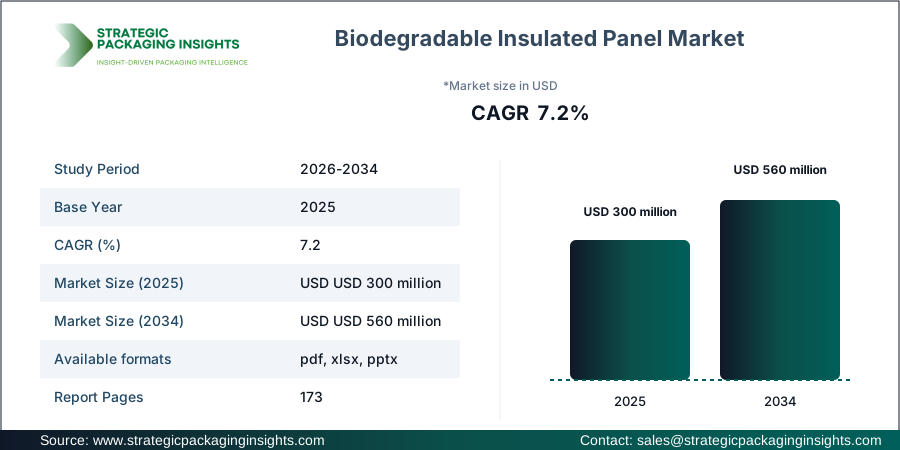
One of the most impactful drivers of the Biodegradable Insulated Panel market is the growing emphasis on environmental sustainability and regulatory pressures to reduce carbon footprints. Governments worldwide are implementing stricter regulations on packaging waste, encouraging the adoption of biodegradable alternatives. For instance, the European Union's directive on single-use plastics has accelerated the shift towards sustainable packaging solutions. This regulatory landscape, coupled with increasing consumer awareness and preference for eco-friendly products, is propelling the demand for biodegradable insulated panels. Companies like Woolcool and Ecovative are leveraging these trends to expand their market presence by offering innovative, sustainable packaging solutions that align with global environmental goals.
Report Scope
| Attributes | Details |
| Report Title | Biodegradable Insulated Panel Market Size, Future Growth and Forecast 2034 |
| By Material | Molded Fiber / Recycled Paper, Corrugated-Based Insulation, Mushroom / Mycelium, Wool Liners, Starch-Based Foam, Cellulose / Hemp Fiber |
| By Panel Type | Box Liners, Pouch Liners, Rigid Panels, Flexible Blankets |
| By Application | Cold Chain Food Delivery (Meal Kits, Grocery), Pharmaceutical & Vaccine Shipping, Seafood & Meat Shipping, Dairy & Confectionery |
| By Region | North America (U.S., Canada, Mexico), Europe (Germany, UK, France, Italy, Spain, Rest of Europe), Asia Pacific (China, India, Japan, South Korea, Australia, Rest of Asia Pacific), Latin America (Brazil, Argentina, Rest of Latin America), Middle East & Africa (GCC Countries, South Africa, Rest of MEA) |
| Base Year | 2025 |
| Historic Period | 2018-2024 |
| Forecast Period | 2026-2034 |
| Number of Pages | 173 |
| Customization Available | Yes* |
Sustainability & Circular Economy Analysis
Sustainability initiatives and circular economy practices are significantly influencing the packaging market, particularly in the realm of biodegradable insulated panels. The shift towards recyclable materials and reusable packaging is becoming a cornerstone of modern packaging strategies. Companies are investing in eco-friendly material innovations, such as mushroom-based and cellulose fibers, to create products that not only meet insulation needs but also minimize environmental impact. These materials are designed to break down naturally, reducing waste and contributing to a circular economy where resources are reused and recycled.
As consumer preferences increasingly lean towards sustainability, packaging design and manufacturing processes are evolving to incorporate lightweight and eco-friendly materials. This shift is not only driven by consumer demand but also by regulatory compliance and extended producer responsibility (EPR) initiatives. Companies are adopting waste reduction strategies and ESG initiatives to align with global sustainability goals, which in turn influences investment decisions and supply chain strategies. The focus on reducing carbon footprints is prompting manufacturers to innovate and develop packaging solutions that are both functional and environmentally friendly.
The influence of sustainability trends extends beyond product design to impact long-term market competitiveness. Companies that prioritize sustainable practices are better positioned to meet regulatory requirements and consumer expectations, thereby enhancing their market standing. This focus on sustainability is also driving collaborations and partnerships across the supply chain, as stakeholders work together to develop and implement sustainable packaging solutions. As a result, the biodegradable insulated panel market is poised for growth, driven by the increasing importance of sustainability in packaging decisions.
Packaging Value Chain & Supply Chain Analysis
The packaging value chain for biodegradable insulated panels encompasses a complex ecosystem involving raw material sourcing, manufacturing, logistics, and distribution. Raw materials such as molded fiber, recycled paper, and mycelium are sourced from sustainable suppliers, ensuring that the initial stages of the supply chain align with environmental goals. Packaging converters and manufacturers play a crucial role in transforming these materials into insulated panels that meet industry standards for performance and sustainability. Companies like Smurfit Westrock and DS Smith are leading the charge in integrating sustainable practices throughout their production processes.
Supply chain efficiency is critical to the success of the biodegradable insulated panel market. The availability of raw materials, coupled with advanced packaging machinery, influences production capabilities and overall market performance. Strategic partnerships and collaborations with logistics providers and distribution channels ensure that products reach end-users efficiently and sustainably. Brand owners and retailers are increasingly prioritizing supply chain resilience and localization to mitigate risks and enhance competitiveness in a global market. This focus on supply chain optimization is essential for maintaining a steady supply of biodegradable insulated panels to meet growing demand.
Recycling networks and procurement strategies are integral components of the packaging value chain, supporting the circular economy model. Companies are investing in recycling infrastructure and developing procurement strategies that prioritize sustainable materials. Inventory management practices are also evolving to accommodate the unique characteristics of biodegradable materials, ensuring that products are stored and transported in a manner that preserves their integrity and performance. As the market continues to grow, the integration of sustainable practices across the supply chain will be key to achieving long-term success and competitiveness.
Opportunities & Threats
The biodegradable insulated panel market presents numerous opportunities for growth and innovation. One significant opportunity lies in the expanding demand for sustainable packaging solutions in the food and pharmaceutical industries. As consumers become more environmentally conscious, there is a growing preference for packaging that minimizes environmental impact. This trend is driving companies to invest in research and development to create innovative, biodegradable materials that offer superior insulation properties. Additionally, the increasing adoption of e-commerce and online food delivery services is boosting demand for insulated packaging solutions, providing further growth opportunities for market players.
Another opportunity in the market is the potential for geographic expansion. Emerging markets in Asia Pacific and Latin America are witnessing rapid industrialization and urbanization, leading to increased demand for sustainable packaging solutions. Companies that can effectively penetrate these markets stand to gain a competitive advantage. Furthermore, partnerships and collaborations with local suppliers and distributors can enhance market presence and facilitate the adoption of biodegradable insulated panels in these regions. As regulatory frameworks continue to evolve, companies that proactively align their products with local regulations will be well-positioned to capitalize on these opportunities.
Despite the promising opportunities, the biodegradable insulated panel market faces certain threats that could hinder growth. One major challenge is the high cost of biodegradable materials compared to traditional alternatives. This cost disparity can limit the adoption of biodegradable panels, particularly among price-sensitive consumers and industries. Additionally, the lack of standardized regulations and certifications for biodegradable packaging can create uncertainty and hinder market growth. Companies must navigate these challenges by investing in cost-effective production methods and advocating for standardized regulations that promote the adoption of sustainable packaging solutions.
Drivers & Challenges
The biodegradable insulated panel market is driven by several key factors, including increasing environmental awareness and regulatory pressures. As consumers become more conscious of their environmental impact, there is a growing demand for sustainable packaging solutions that reduce waste and carbon emissions. This shift in consumer preferences is encouraging companies to develop innovative biodegradable materials that offer comparable performance to traditional insulation solutions. Additionally, government regulations aimed at reducing plastic waste and promoting sustainability are driving the adoption of biodegradable insulated panels across various industries.
Technological advancements in material science are also driving market growth. Innovations in biodegradable materials, such as mushroom-based and cellulose fibers, are enabling the development of insulated panels that meet industry standards for performance and sustainability. These advancements are attracting investments from companies looking to capitalize on the growing demand for eco-friendly packaging solutions. Furthermore, the increasing adoption of e-commerce and online food delivery services is boosting demand for insulated packaging, providing further impetus for market growth.
Despite the positive drivers, the biodegradable insulated panel market faces several challenges that could impede growth. One significant challenge is the high cost of biodegradable materials compared to traditional alternatives. This cost disparity can limit the adoption of biodegradable panels, particularly among price-sensitive consumers and industries. Additionally, the lack of standardized regulations and certifications for biodegradable packaging can create uncertainty and hinder market growth. Companies must navigate these challenges by investing in cost-effective production methods and advocating for standardized regulations that promote the adoption of sustainable packaging solutions.
Market Share Analysis
The competitive landscape of the biodegradable insulated panel market is characterized by the presence of several key players who are driving innovation and growth. Companies like Ranpak, TemperPack, and Woolcool are leading the market with their focus on sustainable packaging solutions. These companies are investing in research and development to create innovative biodegradable materials that meet the growing demand for eco-friendly packaging. Their commitment to sustainability and innovation is helping them capture a significant share of the market.
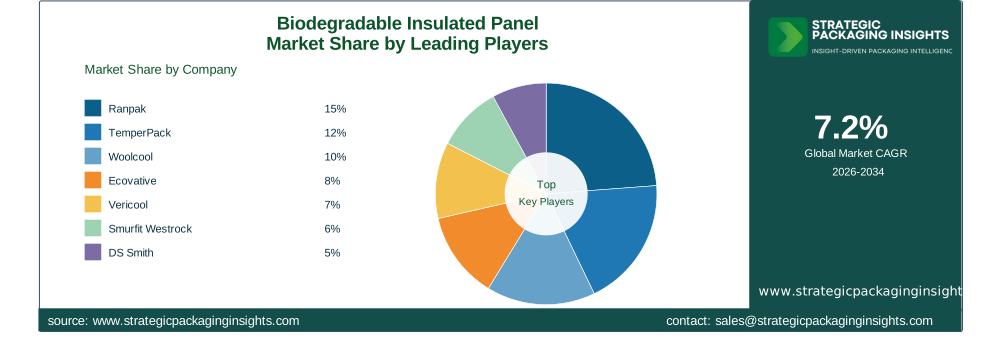
Ranpak, a leader in sustainable packaging solutions, is known for its innovative paper-based insulation products. The company's focus on sustainability and environmental responsibility has helped it establish a strong presence in the market. TemperPack, another key player, is recognized for its ClimaCell technology, which offers a sustainable alternative to traditional insulation materials. The company's commitment to reducing environmental impact and promoting sustainability has positioned it as a leader in the biodegradable insulated panel market.
Woolcool, a pioneer in wool-based insulation solutions, is making significant strides in the market with its innovative products. The company's focus on natural and sustainable materials has helped it capture a substantial share of the market. Ecovative, known for its mushroom-based packaging solutions, is also a key player in the market. The company's commitment to sustainability and innovation is driving its growth and helping it establish a strong presence in the biodegradable insulated panel market.
Other notable players in the market include Vericool, Smurfit Westrock, DS Smith, Hydropac, Green Cell Foam (KTM Industries), and ClimaCell. These companies are investing in research and development to create innovative biodegradable materials that meet the growing demand for eco-friendly packaging solutions. Their focus on sustainability and innovation is helping them capture a significant share of the market and drive growth in the biodegradable insulated panel market.
Key Highlights
- Market Size: The biodegradable insulated panel market was valued at USD 300 million in 2025 and is projected to reach USD 560 million by 2034.
- Growth Rate: The market is expected to grow at a CAGR of 7.20% during the forecast period.
- Leading Companies: Key players include Ranpak, TemperPack, Woolcool, and Ecovative.
- Material Innovation: Advancements in mushroom-based and cellulose fibers are driving market growth.
- Regulatory Impact: Stricter regulations on packaging waste are boosting demand for biodegradable solutions.
- Regional Growth: Asia Pacific and Latin America are emerging as key growth regions.
- Consumer Preferences: Increasing demand for sustainable packaging solutions is driving market expansion.
Biodegradable Insulated Panel Market Segments Insights

By Material Analysis
The biodegradable insulated panel market is segmented by material, with options including molded fiber/recycled paper, corrugated-based insulation, mushroom/mycelium, wool liners, starch-based foam, and cellulose/hemp fiber. Molded fiber and recycled paper are gaining traction due to their eco-friendly nature and cost-effectiveness. These materials are widely used in packaging applications where sustainability is a priority. Companies like Ranpak are leveraging these materials to create innovative packaging solutions that meet consumer demand for environmentally responsible products.
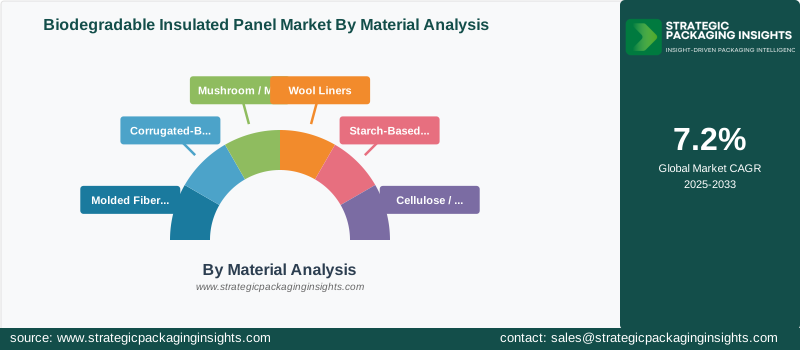
Mushroom-based and cellulose fibers are also gaining popularity due to their biodegradability and insulation properties. These materials are being used in a variety of applications, including cold chain food delivery and pharmaceutical shipping. The growing demand for sustainable packaging solutions is driving innovation in material science, with companies investing in research and development to create new biodegradable materials that offer superior performance. As a result, the market for biodegradable insulated panels is expected to continue growing, driven by advancements in material technology and increasing consumer demand for sustainable packaging solutions.
By Panel Type Analysis
The market is also segmented by panel type, including box liners, pouch liners, rigid panels, and flexible blankets. Box liners and pouch liners are widely used in the food and pharmaceutical industries due to their ability to provide effective insulation and protection during transportation. These panel types are particularly popular in cold chain applications, where maintaining temperature control is critical. Companies like TemperPack are leading the market with their innovative ClimaCell technology, which offers a sustainable alternative to traditional insulation materials.
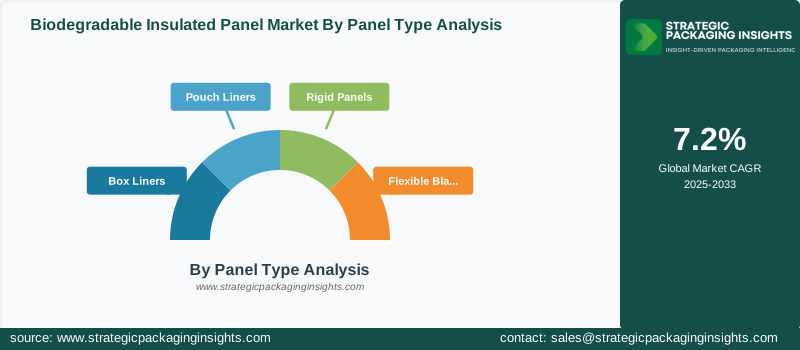
Rigid panels and flexible blankets are also gaining traction in the market, driven by their versatility and ease of use. These panel types are used in a variety of applications, including seafood and meat shipping, dairy, and confectionery. The growing demand for insulated packaging solutions is driving innovation in panel design, with companies investing in research and development to create new products that meet the evolving needs of consumers and industries. As a result, the market for biodegradable insulated panels is expected to continue growing, driven by advancements in panel technology and increasing demand for sustainable packaging solutions.
By Application Analysis
The biodegradable insulated panel market is segmented by application, with key segments including cold chain food delivery, pharmaceutical and vaccine shipping, seafood and meat shipping, and dairy and confectionery. Cold chain food delivery is a major driver of market growth, as consumers increasingly demand fresh and perishable goods delivered to their doorsteps. The need for effective insulation solutions in this segment is driving demand for biodegradable insulated panels, which offer a sustainable alternative to traditional packaging materials.

Pharmaceutical and vaccine shipping is another key application segment, driven by the need for temperature-controlled packaging solutions that ensure the integrity and efficacy of medical products. The growing demand for vaccines and other temperature-sensitive pharmaceuticals is boosting demand for biodegradable insulated panels, which offer effective insulation and protection during transportation. As a result, the market for biodegradable insulated panels is expected to continue growing, driven by increasing demand for sustainable packaging solutions in these key application segments.
By Region Analysis
The biodegradable insulated panel market is segmented by region, with key regions including North America, Europe, Asia Pacific, Latin America, and the Middle East & Africa. North America and Europe are leading the market, driven by stringent regulations on packaging waste and increasing consumer demand for sustainable packaging solutions. Companies in these regions are investing in research and development to create innovative biodegradable materials that meet the growing demand for eco-friendly packaging.
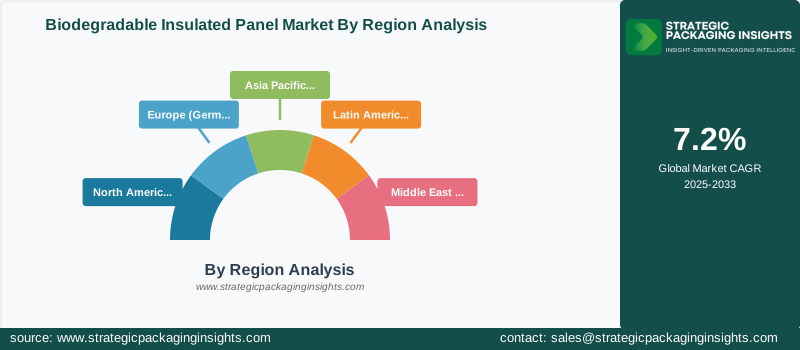
Asia Pacific and Latin America are emerging as key growth regions, driven by rapid industrialization and urbanization. The growing demand for sustainable packaging solutions in these regions is creating opportunities for market players to expand their presence and capture a larger share of the market. As regulatory frameworks continue to evolve, companies that proactively align their products with local regulations will be well-positioned to capitalize on these opportunities and drive growth in the biodegradable insulated panel market.
Biodegradable Insulated Panel Market Segments
The Biodegradable Insulated Panel market has been segmented on the basis ofBy Material
- Molded Fiber / Recycled Paper
- Corrugated-Based Insulation
- Mushroom / Mycelium
- Wool Liners
- Starch-Based Foam
- Cellulose / Hemp Fiber
By Panel Type
- Box Liners
- Pouch Liners
- Rigid Panels
- Flexible Blankets
By Application
- Cold Chain Food Delivery (Meal Kits, Grocery)
- Pharmaceutical & Vaccine Shipping
- Seafood & Meat Shipping
- Dairy & Confectionery
By Region
- North America (U.S., Canada, Mexico)
- Europe (Germany, UK, France, Italy, Spain, Rest of Europe)
- Asia Pacific (China, India, Japan, South Korea, Australia, Rest of Asia Pacific)
- Latin America (Brazil, Argentina, Rest of Latin America)
- Middle East & Africa (GCC Countries, South Africa, Rest of MEA)




