


Biodegradable Agricultural Films Market Outlook
The Biodegradable Agricultural Films market was valued at $5.12 billion in 2025 and is projected to reach $9.50 billion by 2034, growing at a CAGR of 7.1% during the forecast period 2026-2034. This market is witnessing significant growth due to the increasing demand for sustainable agricultural practices. The rising awareness about the environmental impact of conventional plastic films is driving the adoption of biodegradable alternatives. These films are designed to degrade naturally, reducing pollution and enhancing soil health, which is crucial for sustainable agriculture. The market is also benefiting from technological advancements in biodegradable materials, which are improving the performance and cost-effectiveness of these films.
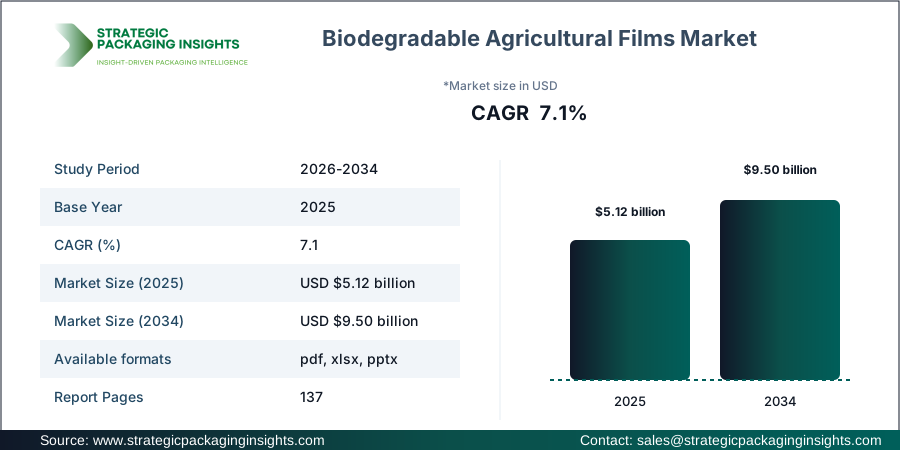
However, the market faces challenges such as the higher cost of biodegradable films compared to traditional plastic films. Regulatory frameworks and standards for biodegradability also vary across regions, which can complicate market entry and expansion strategies for companies. Despite these challenges, the market holds significant growth potential, driven by increasing government support for sustainable agriculture and the development of new biodegradable materials with enhanced properties. The market is also expected to benefit from the growing trend of organic farming, which often requires the use of environmentally friendly products.
Report Scope
| Attributes | Details |
| Report Title | Biodegradable Agricultural Films Market Size, Future Growth and Forecast 2034 |
| Type | Mulch, Greenhouse |
| Material | Starch, PLA |
| Application | Crop Protection, Soil Enhancement |
| Degradation | Photo, Bio |
| Region | Asia Pacific, North America, Latin America, Europe, Middle East & Africa |
| Base Year | 2025 |
| Historic Period | 2018-2024 |
| Forecast Period | 2026-2034 |
| Number of Pages | 137 |
| Customization Available | Yes* |
Opportunities & Threats
The Biodegradable Agricultural Films market presents numerous opportunities, particularly in regions with strong agricultural sectors and environmental regulations. The increasing focus on sustainable farming practices is driving demand for biodegradable films, which help reduce plastic waste and improve soil health. Governments worldwide are implementing policies to promote the use of biodegradable materials in agriculture, providing a significant boost to the market. Additionally, advancements in material science are leading to the development of more efficient and cost-effective biodegradable films, further expanding their adoption.
Another opportunity lies in the growing trend of organic farming, which often requires the use of environmentally friendly products. Biodegradable films are ideal for organic farming as they do not leave harmful residues in the soil. The market is also benefiting from the increasing consumer awareness about the environmental impact of conventional plastics, which is driving demand for sustainable alternatives. Companies that can innovate and offer high-performance biodegradable films at competitive prices are likely to capture significant market share.
Despite the opportunities, the market faces threats from the higher cost of biodegradable films compared to traditional plastic films. This cost difference can be a significant barrier to adoption, particularly in price-sensitive markets. Additionally, the lack of standardized regulations for biodegradability across regions can create challenges for companies looking to expand internationally. The market also faces competition from other sustainable agricultural products, which can limit the growth potential of biodegradable films.
Drivers & Challenges
The primary drivers of the Biodegradable Agricultural Films market include the increasing demand for sustainable agricultural practices and the growing awareness about the environmental impact of conventional plastics. Governments worldwide are implementing policies to reduce plastic waste, which is driving the adoption of biodegradable films. The market is also benefiting from technological advancements in biodegradable materials, which are improving the performance and cost-effectiveness of these films. Additionally, the growing trend of organic farming is driving demand for environmentally friendly products, further boosting the market.
Another significant driver is the increasing consumer awareness about the environmental impact of conventional plastics. Consumers are becoming more conscious of the need to reduce plastic waste, which is driving demand for sustainable alternatives. Companies that can offer high-performance biodegradable films at competitive prices are likely to capture significant market share. The market is also benefiting from the development of new biodegradable materials with enhanced properties, which are expanding the range of applications for these films.
However, the market faces challenges such as the higher cost of biodegradable films compared to traditional plastic films. This cost difference can be a significant barrier to adoption, particularly in price-sensitive markets. Additionally, the lack of standardized regulations for biodegradability across regions can create challenges for companies looking to expand internationally. The market also faces competition from other sustainable agricultural products, which can limit the growth potential of biodegradable films. Companies need to focus on innovation and cost reduction to overcome these challenges and capture market share.
Market Share Analysis
The Biodegradable Agricultural Films market is characterized by a competitive landscape with several key players vying for market share. Companies such as Novamont, BASF, and NatureWorks are leading the market with their innovative biodegradable film products. These companies have a strong presence in the market due to their extensive research and development capabilities and their ability to offer high-performance products. Tagleef Industries and Barbier Group are also significant players in the market, known for their wide range of biodegradable film products and strong distribution networks.
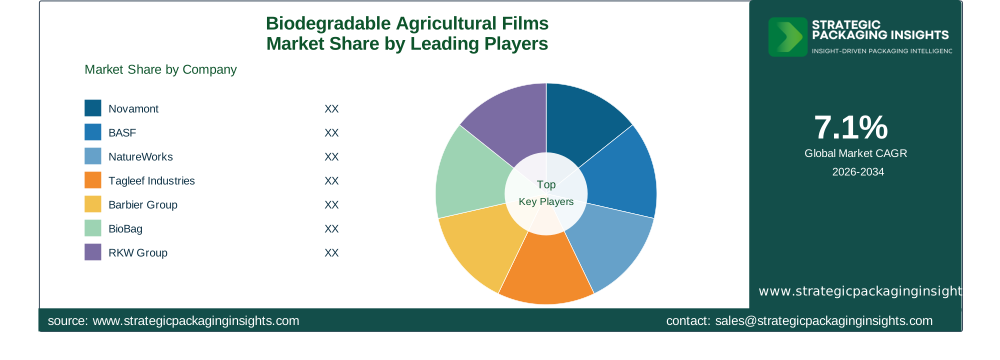
BioBag and RKW Group are other notable companies in the market, offering a variety of biodegradable films for different agricultural applications. These companies have a strong focus on sustainability and are continuously investing in research and development to improve the performance and cost-effectiveness of their products. Agropack and Armando Alvarez are also key players in the market, known for their innovative biodegradable film solutions and strong customer relationships.
Polenghi is another significant player in the market, offering a range of biodegradable films for various agricultural applications. The company has a strong focus on sustainability and is continuously investing in research and development to improve the performance and cost-effectiveness of its products. The competitive landscape of the market is characterized by a high level of innovation, with companies continuously developing new products to meet the evolving needs of the agricultural sector.
Overall, the market is highly competitive, with companies focusing on innovation and sustainability to capture market share. The key players in the market are investing heavily in research and development to improve the performance and cost-effectiveness of their products. Companies that can offer high-performance biodegradable films at competitive prices are likely to capture significant market share. The market is also benefiting from the increasing demand for sustainable agricultural practices and the growing awareness about the environmental impact of conventional plastics.
Key Highlights
- The Biodegradable Agricultural Films market is projected to grow at a CAGR of 7.1% from 2026 to 2034.
- The market was valued at $5.12 billion in 2025 and is expected to reach $9.50 billion by 2034.
- Key drivers include increasing demand for sustainable agricultural practices and growing awareness about the environmental impact of conventional plastics.
- Challenges include the higher cost of biodegradable films compared to traditional plastic films and the lack of standardized regulations for biodegradability.
- Opportunities exist in regions with strong agricultural sectors and environmental regulations, as well as in the growing trend of organic farming.
- Key players in the market include Novamont, BASF, NatureWorks, Tagleef Industries, and Barbier Group.
- The market is characterized by a high level of innovation, with companies continuously developing new products to meet the evolving needs of the agricultural sector.
Top Countries Insights
In the Biodegradable Agricultural Films market, the United States is a leading country with a market size of approximately $1.2 billion and a CAGR of 6%. The country's strong agricultural sector and stringent environmental regulations are driving the demand for biodegradable films. The government is also providing incentives for sustainable farming practices, further boosting the market. However, the higher cost of biodegradable films compared to traditional plastics remains a challenge.

China is another significant market, with a market size of around $1 billion and a CAGR of 8%. The country's large agricultural sector and increasing focus on sustainability are driving the demand for biodegradable films. The government is implementing policies to reduce plastic waste, providing a significant boost to the market. However, the lack of standardized regulations for biodegradability can create challenges for companies looking to expand in the region.
Germany is a key market in Europe, with a market size of approximately $800 million and a CAGR of 7%. The country's strong focus on sustainability and environmental regulations are driving the demand for biodegradable films. The government is also providing incentives for sustainable farming practices, further boosting the market. However, the higher cost of biodegradable films compared to traditional plastics remains a challenge.
India is an emerging market, with a market size of around $600 million and a CAGR of 9%. The country's large agricultural sector and increasing focus on sustainability are driving the demand for biodegradable films. The government is implementing policies to reduce plastic waste, providing a significant boost to the market. However, the lack of standardized regulations for biodegradability can create challenges for companies looking to expand in the region.
Brazil is another significant market, with a market size of approximately $500 million and a CAGR of 7%. The country's large agricultural sector and increasing focus on sustainability are driving the demand for biodegradable films. The government is implementing policies to reduce plastic waste, providing a significant boost to the market. However, the higher cost of biodegradable films compared to traditional plastics remains a challenge.
Biodegradable Agricultural Films Market Segments Insights

Type Analysis
The Biodegradable Agricultural Films market is segmented by type into mulch and greenhouse films. Mulch films are widely used in agriculture to suppress weeds, retain soil moisture, and improve crop yield. The demand for biodegradable mulch films is increasing due to their environmental benefits, as they degrade naturally and do not leave harmful residues in the soil. Greenhouse films, on the other hand, are used to cover greenhouse structures and protect crops from adverse weather conditions. The demand for biodegradable greenhouse films is also growing, driven by the increasing focus on sustainable agriculture and the need to reduce plastic waste.

Mulch films are expected to dominate the market due to their widespread use in agriculture and the increasing demand for sustainable farming practices. The development of new biodegradable materials with enhanced properties is also driving the adoption of mulch films. Greenhouse films, while smaller in market size, are expected to grow at a significant rate due to the increasing adoption of greenhouse farming techniques. The market is characterized by a high level of innovation, with companies continuously developing new products to meet the evolving needs of the agricultural sector.
Material Analysis
The market is segmented by material into starch and PLA (polylactic acid) films. Starch-based films are widely used due to their biodegradability and cost-effectiveness. They are made from renewable resources and degrade naturally, making them an ideal choice for sustainable agriculture. PLA films, on the other hand, are known for their high strength and durability, making them suitable for a wide range of agricultural applications. The demand for PLA films is increasing due to their superior performance and environmental benefits.

Starch-based films are expected to dominate the market due to their cost-effectiveness and widespread use in agriculture. The development of new starch-based materials with enhanced properties is also driving the adoption of these films. PLA films, while smaller in market size, are expected to grow at a significant rate due to their superior performance and environmental benefits. The market is characterized by a high level of innovation, with companies continuously developing new materials to meet the evolving needs of the agricultural sector.
Application Analysis
The market is segmented by application into crop protection and soil enhancement. Crop protection films are used to protect crops from pests, diseases, and adverse weather conditions. The demand for biodegradable crop protection films is increasing due to their environmental benefits and the need to reduce plastic waste. Soil enhancement films, on the other hand, are used to improve soil health and fertility. The demand for biodegradable soil enhancement films is also growing, driven by the increasing focus on sustainable agriculture and the need to improve crop yield.
Crop protection films are expected to dominate the market due to their widespread use in agriculture and the increasing demand for sustainable farming practices. The development of new biodegradable materials with enhanced properties is also driving the adoption of crop protection films. Soil enhancement films, while smaller in market size, are expected to grow at a significant rate due to the increasing focus on soil health and fertility. The market is characterized by a high level of innovation, with companies continuously developing new products to meet the evolving needs of the agricultural sector.
Degradation Analysis
The market is segmented by degradation into photo and bio-degradable films. Photo-degradable films are designed to degrade when exposed to sunlight, making them suitable for applications where exposure to sunlight is expected. Bio-degradable films, on the other hand, are designed to degrade naturally through microbial activity, making them suitable for a wide range of agricultural applications. The demand for bio-degradable films is increasing due to their environmental benefits and the need to reduce plastic waste.
Bio-degradable films are expected to dominate the market due to their superior environmental benefits and widespread use in agriculture. The development of new bio-degradable materials with enhanced properties is also driving the adoption of these films. Photo-degradable films, while smaller in market size, are expected to grow at a significant rate due to their suitability for specific applications. The market is characterized by a high level of innovation, with companies continuously developing new materials to meet the evolving needs of the agricultural sector.
Biodegradable Agricultural Films Market Segments
The Biodegradable Agricultural Films market has been segmented on the basis ofType
- Mulch
- Greenhouse
Material
- Starch
- PLA
Application
- Crop Protection
- Soil Enhancement
Degradation
- Photo
- Bio
Region
- Asia Pacific
- North America
- Latin America
- Europe
- Middle East & Africa




