


Bile Collection Bag Market Outlook
The Bile Collection Bag market was valued at $1.85 billion in 2025 and is projected to reach $3.10 billion by 2034, growing at a CAGR of 5.9% during the forecast period 2026-2034. This market is witnessing significant growth due to the increasing prevalence of hepatobiliary diseases and the rising number of surgical procedures globally. The demand for bile collection bags is further driven by advancements in medical technology and the growing awareness about post-operative care. The market is also benefiting from the increasing adoption of minimally invasive surgeries, which require efficient drainage solutions. Additionally, the aging population and the rising incidence of chronic diseases are contributing to the market's expansion.
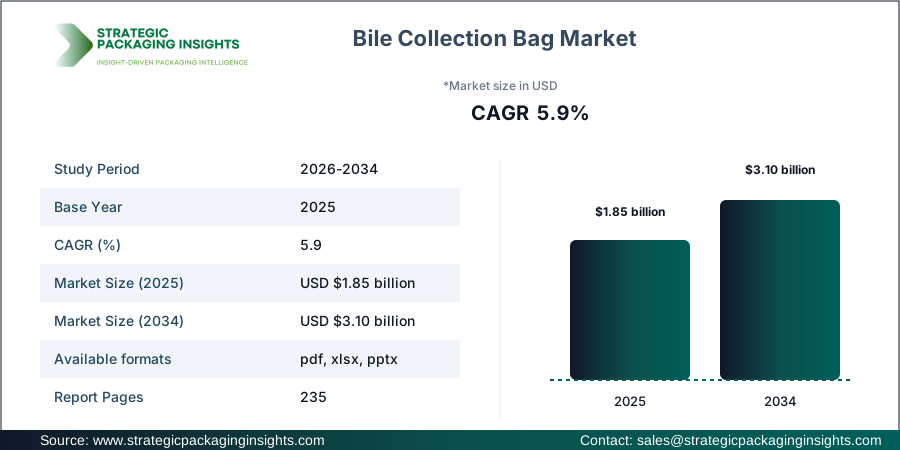
However, the market faces challenges such as stringent regulatory requirements and the high cost of advanced bile collection bags. Despite these challenges, the market holds significant growth potential due to the increasing focus on improving healthcare infrastructure and the rising demand for homecare solutions. The development of innovative products with enhanced features and the expansion of distribution networks are expected to create lucrative opportunities for market players. Furthermore, the growing trend of medical tourism in emerging economies is likely to boost the demand for bile collection bags in the coming years.
Report Scope
| Attributes | Details |
| Report Title | Bile Collection Bag Market Size, Future Growth and Forecast 2034 |
| By Product Type | Drainage Bags, Bile Bags, Collection Pouches |
| By Material Type | PVC, Silicone, Polyurethane, Medical-Grade Polymers |
| By Application | Surgical Drainage, Hepatobiliary Procedures, Post-Operative Care |
| By End Use | Hospitals, Ambulatory Surgical Centers, Clinics, Homecare |
| Region | Asia Pacific, North America, Latin America, Europe, Middle East & Africa |
| Base Year | 2025 |
| Historic Period | 2018-2024 |
| Forecast Period | 2026-2034 |
| Number of Pages | 235 |
| Customization Available | Yes* |
Opportunities & Threats
The Bile Collection Bag market presents numerous opportunities for growth, primarily driven by the increasing prevalence of liver and gallbladder diseases. As the global population ages, the incidence of these conditions is expected to rise, leading to a higher demand for bile collection bags. Additionally, the growing trend of minimally invasive surgeries, which require efficient drainage solutions, is expected to boost market growth. The development of innovative products with enhanced features, such as anti-reflux valves and odor barriers, is also creating new opportunities for market players. Furthermore, the expansion of healthcare infrastructure in emerging economies is expected to drive demand for bile collection bags, as more hospitals and clinics are established to cater to the growing patient population.
Another significant opportunity lies in the increasing demand for homecare solutions. As healthcare costs continue to rise, more patients are opting for home-based care, which requires the use of bile collection bags for post-operative care and chronic disease management. This trend is expected to drive market growth, as manufacturers develop products specifically designed for homecare use. Additionally, the growing awareness about the importance of post-operative care and the need for efficient drainage solutions is expected to boost demand for bile collection bags in the coming years.
Despite the numerous opportunities, the Bile Collection Bag market faces several threats that could hinder its growth. One of the primary challenges is the stringent regulatory requirements for medical devices, which can increase the time and cost of bringing new products to market. Additionally, the high cost of advanced bile collection bags may limit their adoption, particularly in price-sensitive markets. The market also faces competition from alternative drainage solutions, such as closed suction systems and negative pressure wound therapy devices, which may impact demand for bile collection bags. Furthermore, the ongoing COVID-19 pandemic has disrupted supply chains and impacted the production and distribution of medical devices, including bile collection bags, which could pose a threat to market growth.
Drivers & Challenges
The Bile Collection Bag market is primarily driven by the increasing prevalence of hepatobiliary diseases and the rising number of surgical procedures globally. As the global population ages, the incidence of liver and gallbladder diseases is expected to rise, leading to a higher demand for bile collection bags. Additionally, the growing trend of minimally invasive surgeries, which require efficient drainage solutions, is expected to boost market growth. The development of innovative products with enhanced features, such as anti-reflux valves and odor barriers, is also driving demand for bile collection bags. Furthermore, the expansion of healthcare infrastructure in emerging economies is expected to drive demand for bile collection bags, as more hospitals and clinics are established to cater to the growing patient population.
Another significant driver of the Bile Collection Bag market is the increasing demand for homecare solutions. As healthcare costs continue to rise, more patients are opting for home-based care, which requires the use of bile collection bags for post-operative care and chronic disease management. This trend is expected to drive market growth, as manufacturers develop products specifically designed for homecare use. Additionally, the growing awareness about the importance of post-operative care and the need for efficient drainage solutions is expected to boost demand for bile collection bags in the coming years.
Despite the numerous drivers, the Bile Collection Bag market faces several challenges that could hinder its growth. One of the primary challenges is the stringent regulatory requirements for medical devices, which can increase the time and cost of bringing new products to market. Additionally, the high cost of advanced bile collection bags may limit their adoption, particularly in price-sensitive markets. The market also faces competition from alternative drainage solutions, such as closed suction systems and negative pressure wound therapy devices, which may impact demand for bile collection bags. Furthermore, the ongoing COVID-19 pandemic has disrupted supply chains and impacted the production and distribution of medical devices, including bile collection bags, which could pose a threat to market growth.
Market Share Analysis
The Bile Collection Bag market is characterized by intense competition among key players, with several companies holding significant market shares. The competitive landscape is shaped by factors such as product innovation, pricing strategies, and distribution networks. Companies are focusing on developing advanced bile collection bags with enhanced features to gain a competitive edge. Additionally, strategic partnerships and collaborations are common in this market, as companies seek to expand their product portfolios and geographic reach.
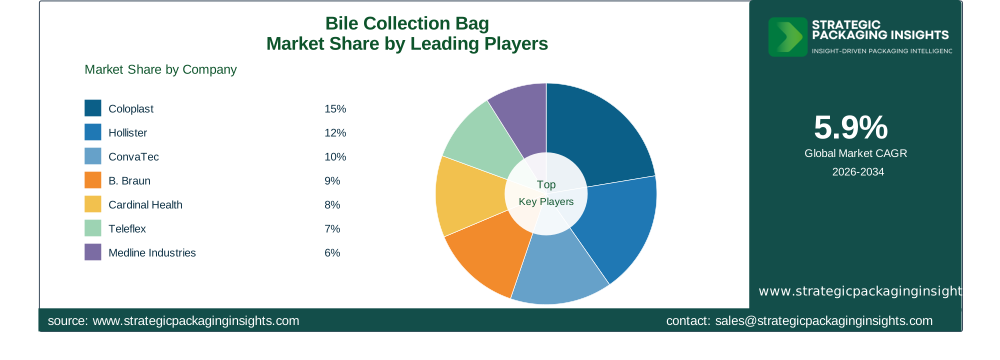
Coloplast is one of the leading players in the Bile Collection Bag market, known for its innovative products and strong distribution network. The company holds a significant market share and is focused on expanding its presence in emerging markets. Hollister is another major player, offering a wide range of bile collection bags with advanced features. The company is committed to product innovation and has a strong focus on customer satisfaction.
ConvaTec is a key player in the market, known for its high-quality bile collection bags and strong customer base. The company has a significant market share and is focused on expanding its product portfolio through strategic acquisitions and partnerships. B. Braun is another major player, offering a wide range of bile collection bags with advanced features. The company is committed to product innovation and has a strong focus on customer satisfaction.
Cardinal Health, Teleflex, Medline Industries, Cook Medical, McKesson, and Romsons are other notable players in the Bile Collection Bag market. These companies are focused on expanding their product portfolios and geographic reach through strategic partnerships and collaborations. The competitive landscape is expected to remain dynamic, with companies investing in research and development to introduce innovative products and gain a competitive edge.
Key Highlights
- The Bile Collection Bag market is projected to grow at a CAGR of 5.9% from 2026 to 2034.
- Increasing prevalence of hepatobiliary diseases is driving demand for bile collection bags.
- Growing trend of minimally invasive surgeries is boosting market growth.
- Development of innovative products with enhanced features is creating new opportunities.
- Expansion of healthcare infrastructure in emerging economies is driving demand.
- Increasing demand for homecare solutions is expected to boost market growth.
- Stringent regulatory requirements and high cost of advanced products are key challenges.
- Key players include Coloplast, Hollister, ConvaTec, B. Braun, and Cardinal Health.
- Strategic partnerships and collaborations are common in the competitive landscape.
- COVID-19 pandemic has impacted supply chains and production of medical devices.
Top Countries Insights
In the Bile Collection Bag market, the United States holds a significant market share, driven by the high prevalence of hepatobiliary diseases and the advanced healthcare infrastructure. The market in the U.S. is expected to grow at a CAGR of 6%, supported by the increasing adoption of minimally invasive surgeries and the rising demand for homecare solutions. Additionally, the presence of key market players and the availability of advanced medical technologies are contributing to market growth.
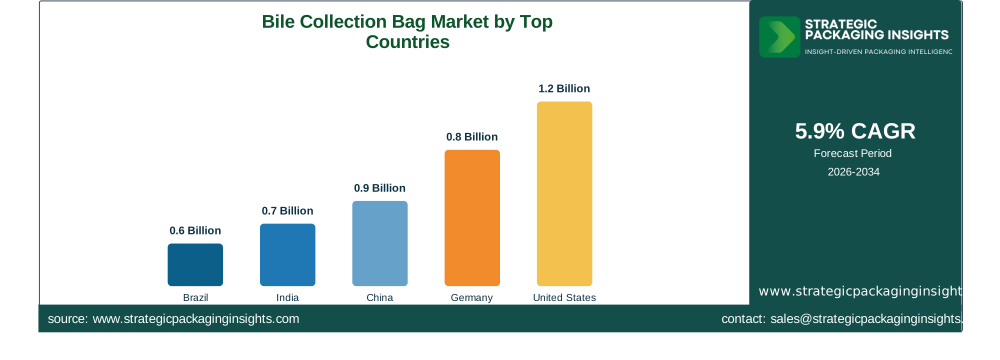
Germany is another key market for bile collection bags, with a strong focus on product innovation and quality. The market in Germany is expected to grow at a CAGR of 5%, driven by the increasing prevalence of liver and gallbladder diseases and the growing trend of minimally invasive surgeries. The country's well-established healthcare system and the presence of leading medical device manufacturers are also contributing to market growth.
In the Asia Pacific region, China is a major market for bile collection bags, driven by the expanding healthcare infrastructure and the rising incidence of chronic diseases. The market in China is expected to grow at a CAGR of 7%, supported by the increasing demand for advanced medical devices and the growing awareness about post-operative care. Additionally, the government's focus on improving healthcare access and affordability is expected to boost market growth.
India is another key market in the Asia Pacific region, with significant growth potential due to the increasing prevalence of hepatobiliary diseases and the rising number of surgical procedures. The market in India is expected to grow at a CAGR of 8%, driven by the expanding healthcare infrastructure and the growing demand for homecare solutions. The government's initiatives to improve healthcare access and affordability are also contributing to market growth.
Brazil is a significant market in Latin America, with a growing demand for bile collection bags driven by the increasing prevalence of liver and gallbladder diseases. The market in Brazil is expected to grow at a CAGR of 6%, supported by the expanding healthcare infrastructure and the rising demand for advanced medical devices. Additionally, the government's focus on improving healthcare access and affordability is expected to boost market growth.
Bile Collection Bag Market Segments Insights

Product Type Analysis
The Bile Collection Bag market is segmented by product type into drainage bags, bile bags, and collection pouches. Drainage bags hold a significant share of the market due to their widespread use in surgical procedures and post-operative care. These bags are designed to efficiently collect bile and other fluids, reducing the risk of infection and promoting faster recovery. The demand for drainage bags is driven by the increasing number of surgical procedures and the growing awareness about the importance of post-operative care. Bile bags are also gaining popularity, particularly in homecare settings, as they offer a convenient and hygienic solution for bile collection. Collection pouches, on the other hand, are primarily used in ambulatory surgical centers and clinics, where space and convenience are critical factors.
The market for bile collection bags is characterized by continuous innovation, with manufacturers focusing on developing products with enhanced features such as anti-reflux valves and odor barriers. These innovations are aimed at improving patient comfort and reducing the risk of complications. Additionally, the growing trend of minimally invasive surgeries is expected to boost demand for bile collection bags, as these procedures require efficient drainage solutions. The expansion of healthcare infrastructure in emerging economies is also expected to drive demand for bile collection bags, as more hospitals and clinics are established to cater to the growing patient population.
Material Type Analysis
The Bile Collection Bag market is segmented by material type into PVC, silicone, polyurethane, and medical-grade polymers. PVC is the most commonly used material for bile collection bags due to its cost-effectiveness and durability. However, there is a growing demand for silicone and polyurethane bags, which offer superior flexibility and patient comfort. These materials are particularly popular in homecare settings, where patient comfort is a top priority. Medical-grade polymers are also gaining traction, as they offer a combination of durability and flexibility, making them ideal for use in both hospital and homecare settings.
The choice of material is a critical factor in the design and performance of bile collection bags, as it affects the bag's durability, flexibility, and patient comfort. Manufacturers are focusing on developing products with advanced materials that offer improved performance and patient comfort. Additionally, the growing awareness about the environmental impact of medical waste is driving demand for eco-friendly materials, such as biodegradable polymers. The expansion of healthcare infrastructure in emerging economies is also expected to drive demand for bile collection bags made from advanced materials, as more hospitals and clinics are established to cater to the growing patient population.
Application Analysis
The Bile Collection Bag market is segmented by application into surgical drainage, hepatobiliary procedures, and post-operative care. Surgical drainage is the largest application segment, driven by the increasing number of surgical procedures and the growing awareness about the importance of post-operative care. Bile collection bags are essential for efficient drainage of bile and other fluids, reducing the risk of infection and promoting faster recovery. The demand for bile collection bags in surgical drainage is expected to grow, supported by the increasing adoption of minimally invasive surgeries and the rising demand for homecare solutions.
Hepatobiliary procedures are another significant application segment, with bile collection bags playing a critical role in the management of liver and gallbladder diseases. The increasing prevalence of these conditions is expected to drive demand for bile collection bags in hepatobiliary procedures. Post-operative care is also a key application segment, with bile collection bags being used to manage drainage and prevent complications following surgery. The growing awareness about the importance of post-operative care and the need for efficient drainage solutions is expected to boost demand for bile collection bags in this segment.
End Use Analysis
The Bile Collection Bag market is segmented by end use into hospitals, ambulatory surgical centers, clinics, and homecare. Hospitals are the largest end-use segment, driven by the increasing number of surgical procedures and the growing demand for advanced medical devices. Bile collection bags are essential for efficient drainage and post-operative care in hospital settings, reducing the risk of infection and promoting faster recovery. The demand for bile collection bags in hospitals is expected to grow, supported by the expansion of healthcare infrastructure and the increasing prevalence of hepatobiliary diseases.
Ambulatory surgical centers and clinics are also significant end-use segments, with bile collection bags being used for surgical drainage and post-operative care. These settings require efficient and convenient drainage solutions, driving demand for bile collection bags. Homecare is another key end-use segment, with the increasing demand for home-based care driving demand for bile collection bags. As healthcare costs continue to rise, more patients are opting for homecare solutions, which require the use of bile collection bags for post-operative care and chronic disease management. The growing awareness about the importance of post-operative care and the need for efficient drainage solutions is expected to boost demand for bile collection bags in the homecare segment.
Bile Collection Bag Market Segments
The Bile Collection Bag market has been segmented on the basis ofBy Product Type
- Drainage Bags
- Bile Bags
- Collection Pouches
By Material Type
- PVC
- Silicone
- Polyurethane
- Medical-Grade Polymers
By Application
- Surgical Drainage
- Hepatobiliary Procedures
- Post-Operative Care
By End Use
- Hospitals
- Ambulatory Surgical Centers
- Clinics
- Homecare
Region
- Asia Pacific
- North America
- Latin America
- Europe
- Middle East & Africa




