


Bi-Injected Snap Hinge Closure Market Outlook
The Bi-Injected Snap Hinge Closure market was valued at $1.60 billion in 2025 and is projected to reach $3.02 billion by 2034, growing at a CAGR of 7.3% during the forecast period 2026-2034. This market is witnessing significant growth due to the increasing demand for innovative packaging solutions that offer convenience and sustainability. The rise in consumer preference for easy-to-use and resealable packaging is driving the demand for bi-injected snap hinge closures. These closures are particularly popular in the food and beverage industry, where they help maintain product freshness and prevent spillage. Additionally, the growing awareness about environmental sustainability is pushing manufacturers to adopt bi-injection molding techniques that reduce material waste and enhance product durability.
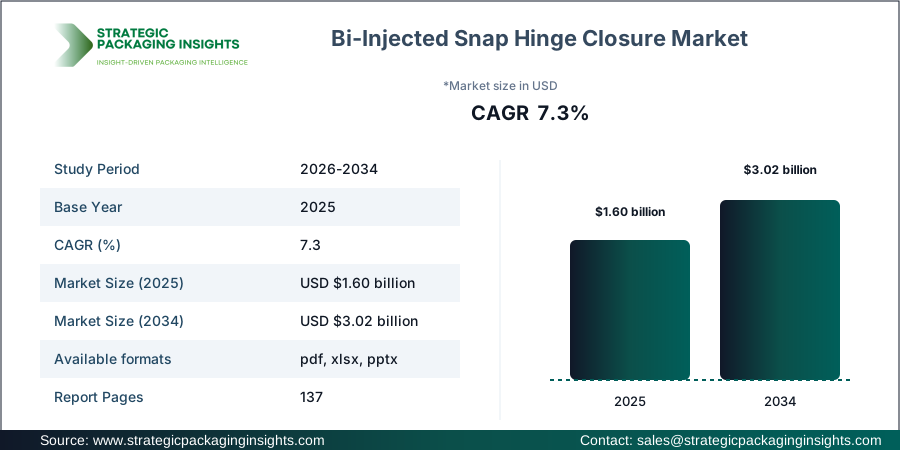
Despite the promising growth prospects, the Bi-Injected Snap Hinge Closure market faces certain challenges. Regulatory constraints related to plastic usage and environmental concerns are significant restraining factors. Governments across the globe are implementing stringent regulations to curb plastic waste, which could impact the production and usage of plastic closures. However, the market holds potential for growth through the development of eco-friendly materials and innovative designs that comply with environmental standards. The increasing investment in research and development to create biodegradable and recyclable closures is expected to open new avenues for market expansion.
Report Scope
| Attributes | Details |
| Report Title | Bi-Injected Snap Hinge Closure Market Size, Future Growth and Forecast 2034 |
| Product Type | Snap Hinge Caps, Flip-Top Closures, Dual-Material Closures |
| Material Type | PP, PE, TPE, Bi-Injected Polymers |
| Application | Personal Care, Food, Pharma, Household |
| End Use | FMCG, Healthcare, Beauty, Food |
| Region | Asia Pacific, North America, Latin America, Europe, Middle East & Africa |
| Base Year | 2025 |
| Historic Period | 2018-2024 |
| Forecast Period | 2026-2034 |
| Number of Pages | 137 |
| Customization Available | Yes* |
Opportunities & Threats
The Bi-Injected Snap Hinge Closure market presents numerous opportunities for growth, primarily driven by the rising demand for sustainable packaging solutions. As consumers become more environmentally conscious, there is a growing preference for packaging that minimizes environmental impact. This trend is encouraging manufacturers to explore bi-injection molding techniques that utilize biodegradable and recyclable materials. The development of closures that are not only functional but also environmentally friendly is expected to drive market growth. Additionally, the increasing adoption of these closures in emerging markets, where the demand for packaged goods is on the rise, presents significant growth opportunities.
Another opportunity lies in the technological advancements in bi-injection molding processes. Innovations in this area are enabling manufacturers to produce closures with enhanced functionality and aesthetic appeal. The ability to combine different materials in a single closure offers design flexibility and allows for the creation of unique product features. This is particularly beneficial for brands looking to differentiate their products in a competitive market. Furthermore, the integration of smart technologies, such as QR codes and NFC tags, into closures is opening new possibilities for consumer engagement and product tracking.
However, the market is not without its threats. One of the primary challenges is the fluctuating prices of raw materials, which can impact production costs and profit margins. The reliance on petroleum-based materials for closure production makes the market vulnerable to changes in oil prices. Additionally, the increasing competition from alternative packaging solutions, such as flexible packaging and pouches, poses a threat to the market. These alternatives offer similar benefits in terms of convenience and sustainability, making it crucial for manufacturers to continuously innovate and improve their product offerings to maintain a competitive edge.
Drivers & Challenges
The Bi-Injected Snap Hinge Closure market is driven by several key factors, including the growing demand for convenience in packaging. Consumers today seek packaging solutions that are easy to open, close, and reseal, making snap hinge closures an ideal choice. The rise in on-the-go consumption and the need for portion control in food and beverage packaging are further fueling the demand for these closures. Additionally, the increasing focus on product safety and hygiene is driving the adoption of tamper-evident and child-resistant closures, which are often achieved through bi-injection molding techniques.
Another significant driver is the trend towards premiumization in packaging. Brands are increasingly investing in high-quality packaging to enhance the perceived value of their products. Bi-injected snap hinge closures offer a premium look and feel, making them a popular choice for luxury and high-end products. The ability to customize closures with different colors, textures, and finishes adds to their appeal, allowing brands to create a distinctive brand identity. Moreover, the growing e-commerce sector is boosting the demand for secure and durable packaging solutions, further driving the market for bi-injected snap hinge closures.
Despite these drivers, the market faces challenges that could hinder its growth. One of the primary challenges is the high initial investment required for bi-injection molding equipment and technology. Small and medium-sized enterprises may find it difficult to invest in such advanced machinery, limiting their ability to compete with larger players. Additionally, the complexity of the bi-injection molding process requires skilled labor and expertise, which can be a barrier for new entrants. The need for continuous innovation and adaptation to changing consumer preferences also poses a challenge for manufacturers in this market.
Market Share Analysis
The Bi-Injected Snap Hinge Closure market is characterized by a competitive landscape with several key players vying for market share. AptarGroup, Berry Global, and Silgan Closures are among the leading companies in this market, known for their extensive product portfolios and strong distribution networks. These companies have established themselves as leaders through continuous innovation and strategic acquisitions. AptarGroup, for instance, is renowned for its focus on sustainability and has developed a range of eco-friendly closures that cater to the growing demand for sustainable packaging solutions.
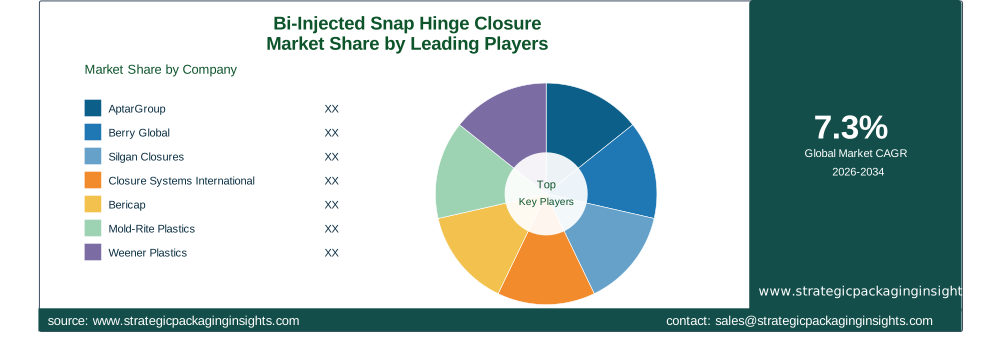
Berry Global is another major player in the market, offering a wide range of closures for various applications. The company's commitment to innovation and customer-centric approach has helped it maintain a strong market position. Silgan Closures, on the other hand, is known for its expertise in metal and plastic closures, providing solutions for both food and non-food applications. The company's focus on quality and reliability has earned it a loyal customer base.
Other notable companies in the market include Closure Systems International, Bericap, and Mold-Rite Plastics. Closure Systems International is recognized for its advanced closure technologies and has a strong presence in the beverage industry. Bericap, a global leader in plastic closures, is known for its innovative solutions that enhance product safety and convenience. Mold-Rite Plastics specializes in custom closures and has a reputation for delivering high-quality products tailored to customer needs.
Weener Plastics, United Caps, Guala Closures, and RPC Group are also key players in the market, each with their unique strengths and offerings. Weener Plastics is known for its focus on sustainability and has developed a range of closures made from recycled materials. United Caps offers a diverse portfolio of closures for various industries, while Guala Closures is a leader in the spirits and wine closure market. RPC Group, now part of Berry Global, is recognized for its expertise in plastic packaging solutions.
Key Highlights
- The Bi-Injected Snap Hinge Closure market is projected to grow at a CAGR of 7.3% from 2026 to 2034.
- Increasing demand for sustainable and eco-friendly packaging solutions is driving market growth.
- Technological advancements in bi-injection molding are enabling the production of innovative closures.
- The market is witnessing significant demand from the food and beverage industry.
- Regulatory constraints related to plastic usage pose a challenge to market growth.
- Key players in the market include AptarGroup, Berry Global, and Silgan Closures.
- The Asia Pacific region is expected to witness the highest growth during the forecast period.
- Customization and premiumization in packaging are key trends driving the market.
- Fluctuating raw material prices are a major challenge for manufacturers.
- Emerging markets offer significant growth opportunities for market expansion.
Top Countries Insights
In the Bi-Injected Snap Hinge Closure market, the United States stands out as a key player, with a market size of approximately $500 million and a CAGR of 6%. The country's strong demand for convenient and sustainable packaging solutions is a major growth driver. The presence of leading packaging companies and a well-established retail sector further bolster market growth. However, regulatory challenges related to plastic usage and environmental concerns remain significant hurdles.
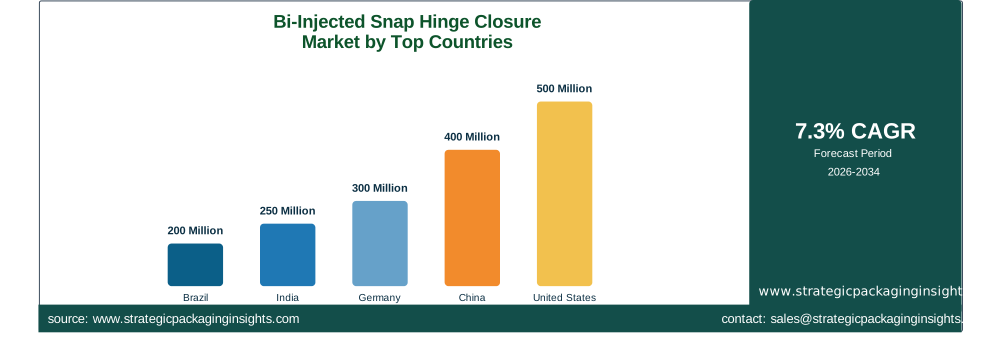
China is another prominent market, with a market size of around $400 million and a CAGR of 9%. The rapid urbanization and increasing disposable income in the country are driving the demand for packaged goods, thereby boosting the market for bi-injected snap hinge closures. The government's focus on reducing plastic waste and promoting sustainable packaging solutions is also contributing to market growth. However, the market faces challenges related to the availability of raw materials and the need for technological advancements.
Germany, with a market size of $300 million and a CAGR of 5%, is a key market in Europe. The country's strong manufacturing base and focus on innovation in packaging solutions are driving market growth. The demand for high-quality and sustainable packaging is particularly strong in the food and beverage industry. However, stringent regulations related to plastic usage and environmental sustainability pose challenges for market players.
India, with a market size of $250 million and a CAGR of 8%, is an emerging market with significant growth potential. The increasing demand for packaged goods, driven by a growing middle class and changing consumer preferences, is fueling market growth. The government's initiatives to promote sustainable packaging solutions and reduce plastic waste are also contributing to market expansion. However, the market faces challenges related to infrastructure and supply chain inefficiencies.
Brazil, with a market size of $200 million and a CAGR of 7%, is a key market in Latin America. The country's growing consumer base and increasing demand for convenient packaging solutions are driving market growth. The presence of a strong food and beverage industry further supports market expansion. However, economic instability and regulatory challenges related to plastic usage pose significant hurdles for market players.
Bi-Injected Snap Hinge Closure Market Segments Insights

Product Type Analysis
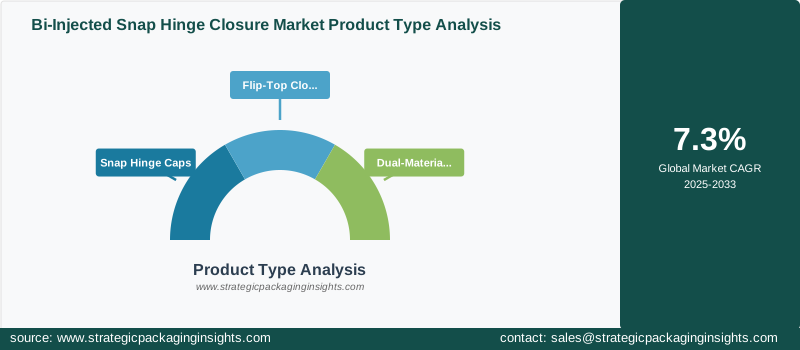
The Bi-Injected Snap Hinge Closure market is segmented by product type into snap hinge caps, flip-top closures, and dual-material closures. Snap hinge caps are widely used due to their convenience and ease of use, making them a popular choice in the food and beverage industry. The demand for flip-top closures is also on the rise, driven by their application in personal care and household products. These closures offer a user-friendly experience and are often preferred for products that require frequent opening and closing. Dual-material closures, which combine different materials for enhanced functionality and aesthetics, are gaining traction in the market. These closures offer design flexibility and are particularly popular in the beauty and personal care sectors, where packaging plays a crucial role in brand differentiation.
Material Type Analysis
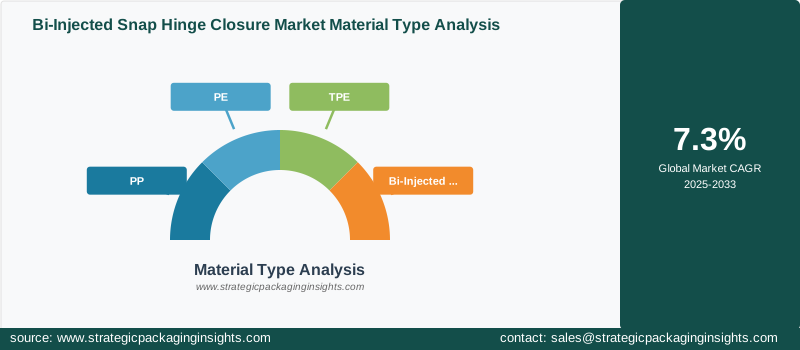
The market is also segmented by material type, including PP, PE, TPE, and bi-injected polymers. Polypropylene (PP) is the most commonly used material due to its durability, versatility, and cost-effectiveness. It is widely used in the production of closures for various applications, including food, personal care, and household products. Polyethylene (PE) is another popular material, known for its flexibility and resistance to moisture. Thermoplastic elastomers (TPE) are gaining popularity due to their soft-touch feel and enhanced grip, making them ideal for closures in the personal care and beauty sectors. Bi-injected polymers, which combine different materials in a single closure, offer enhanced functionality and are increasingly being used in premium packaging solutions.
Application Analysis
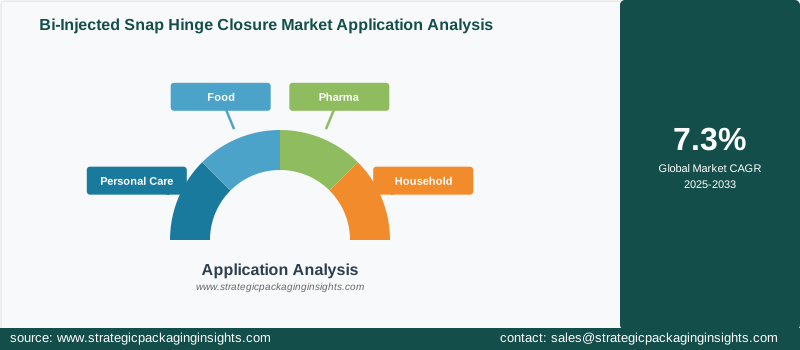
By application, the market is segmented into personal care, food, pharma, and household products. The food segment is the largest application area, driven by the demand for convenient and resealable packaging solutions that maintain product freshness. The personal care segment is also witnessing significant growth, with closures being used in products such as shampoos, lotions, and creams. The pharmaceutical sector is adopting bi-injected snap hinge closures for their tamper-evident and child-resistant properties, ensuring product safety and compliance with regulatory standards. The household segment is benefiting from the demand for closures in cleaning and maintenance products, where ease of use and durability are key considerations.
End Use Analysis
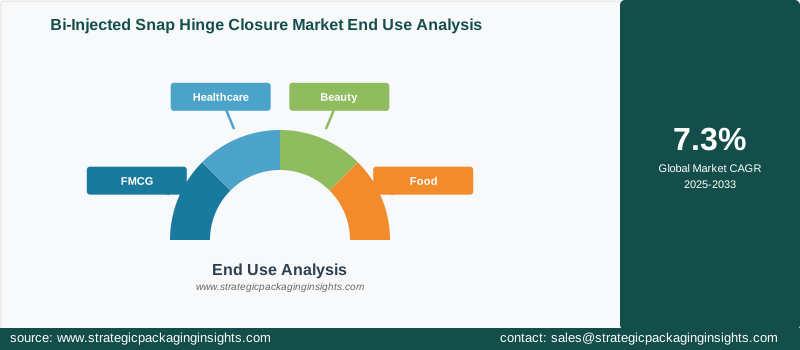
The market is further segmented by end use into FMCG, healthcare, beauty, and food industries. The FMCG sector is the largest end-user of bi-injected snap hinge closures, driven by the demand for convenient and sustainable packaging solutions. The healthcare sector is adopting these closures for their safety and hygiene benefits, particularly in pharmaceutical and medical packaging. The beauty industry is leveraging the design flexibility and premium appeal of bi-injected closures to enhance brand differentiation and consumer engagement. The food industry is also a major end-user, with closures being used in a wide range of products, from beverages to snacks and condiments.
Bi-Injected Snap Hinge Closure Market Segments
The Bi-Injected Snap Hinge Closure market has been segmented on the basis ofProduct Type
- Snap Hinge Caps
- Flip-Top Closures
- Dual-Material Closures
Material Type
- PP
- PE
- TPE
- Bi-Injected Polymers
Application
- Personal Care
- Food
- Pharma
- Household
End Use
- FMCG
- Healthcare
- Beauty
- Food
Region
- Asia Pacific
- North America
- Latin America
- Europe
- Middle East & Africa




