


Beer Canning Machines Market Outlook
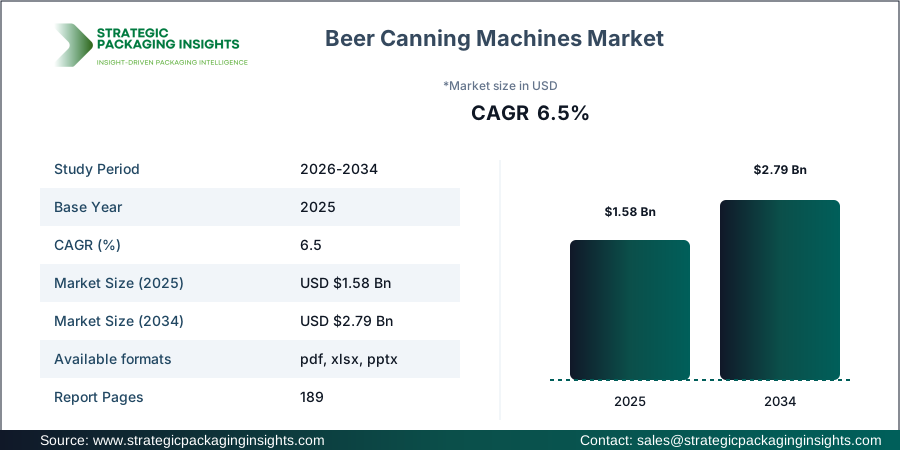
The Beer Canning Machines market size was valued at USD 1.58 billion in 2025 and is anticipated to reach USD 2.79 billion by 2034, growing at a CAGR of 6.5% during the forecast period according to Strategic Packaging Insights. The market is witnessing robust growth driven by the increasing demand for canned beer, which offers convenience and longer shelf life. Companies like Krones and CFT Group are leading the charge with innovative canning solutions that cater to the diverse needs of breweries and beverage startups. The rise in craft beer consumption and the shift towards sustainable packaging solutions are further propelling the market forward.
One of the most impactful drivers of the Beer Canning Machines market is the growing consumer preference for canned beverages due to their portability and recyclability. According to industry reports, the demand for canned beer has surged significantly, especially among millennials who prioritize convenience and sustainability. This trend is supported by government initiatives promoting eco-friendly packaging solutions, which are encouraging breweries to adopt canning over traditional bottling methods. Companies like Wild Goose Filling and Pneumatic Scale Angelus are capitalizing on this trend by offering advanced canning technologies that enhance production efficiency and reduce environmental impact.
Report Scope
| Attributes | Details |
| Report Title | Beer Canning Machines Market Size, Future Growth and Forecast 2034 |
| Machine Type | Automatic Canning Lines, Semi-Automatic Canners, Counter Pressure Fillers, Seamers |
| Capacity | Low-Speed, Medium-Speed, High-Speed |
| Application | Craft Beer, Lager, Ale, Non-Alcoholic Beer |
| End Use | Breweries, Contract Packers, Beverage Startups, Canning Service Providers |
| Region | Asia Pacific, North America, Latin America, Europe, Middle East & Africa |
| Base Year | 2025 |
| Historic Period | 2018-2024 |
| Forecast Period | 2026-2034 |
| Number of Pages | 189 |
| Customization Available | Yes* |
Sustainability & Circular Economy Analysis
Sustainability initiatives and circular economy practices are significantly influencing the Beer Canning Machines market. The shift towards recyclable materials and reusable packaging is driving innovation in canning machine design. Companies are increasingly focusing on lightweight packaging solutions that reduce material usage and transportation costs. This trend is not only enhancing the environmental credentials of beer producers but also aligning with consumer preferences for eco-friendly products. As a result, manufacturers are investing in R&D to develop machines that support the use of sustainable materials, thereby reducing the carbon footprint of the packaging process.
The implementation of waste reduction strategies and ESG initiatives is reshaping the competitive landscape of the beer canning industry. Companies are adopting extended producer responsibility (EPR) frameworks to ensure that packaging waste is minimized and recycled effectively. This approach is fostering collaboration across the supply chain, from raw material suppliers to recycling networks, to create a closed-loop system that supports the circular economy. As regulatory compliance becomes more stringent, businesses are prioritizing sustainable practices to maintain market competitiveness and meet consumer expectations.
These sustainability trends are influencing investment decisions and supply chain strategies within the beer canning sector. Companies are increasingly considering the environmental impact of their operations when selecting suppliers and partners. This focus on sustainability is driving the adoption of advanced technologies that enhance production efficiency and reduce waste. As a result, businesses that prioritize eco-friendly practices are gaining a competitive edge in the market, attracting investment from stakeholders who value long-term environmental stewardship.
Packaging Value Chain & Supply Chain Analysis
The packaging value chain for beer canning machines is a complex ecosystem involving multiple stakeholders, from raw material suppliers to end-users. Raw material sourcing is a critical component, as the availability and cost of materials like aluminum directly impact production capabilities and pricing strategies. Packaging converters and manufacturers play a pivotal role in transforming these materials into finished products, with companies like Krones and CFT Group leading the way in innovation and efficiency. The integration of advanced machinery and automation technologies is enhancing production capabilities, enabling manufacturers to meet the growing demand for canned beer efficiently.
Logistics and distribution channels are vital components of the beer canning supply chain, ensuring that products reach consumers in a timely and cost-effective manner. Strategic partnerships between manufacturers, logistics providers, and retailers are essential for optimizing supply chain efficiency and minimizing disruptions. Companies are increasingly focusing on localization and global sourcing strategies to enhance supply chain resilience and reduce dependency on single-source suppliers. This approach not only mitigates risks associated with supply chain disruptions but also supports sustainable business practices by reducing transportation-related emissions.
Recycling networks and procurement strategies are integral to the sustainability of the beer canning value chain. As consumer demand for eco-friendly packaging grows, companies are investing in recycling infrastructure and collaborating with stakeholders to create a circular economy. Inventory management and supply chain resilience are also key considerations, with businesses adopting advanced technologies to optimize operations and reduce waste. By prioritizing sustainability and efficiency, companies are enhancing their market performance and competitiveness, positioning themselves as leaders in the evolving beer canning industry.
Opportunities & Threats
The Beer Canning Machines market presents numerous opportunities for growth, driven by the increasing demand for craft beer and the shift towards sustainable packaging solutions. The rise of microbreweries and craft beer producers is creating a significant demand for flexible and efficient canning solutions. Companies like Twin Monkeys Beverage Systems and American Canning are capitalizing on this trend by offering customizable canning lines that cater to the unique needs of small-scale producers. Additionally, the growing popularity of non-alcoholic beer is opening new avenues for market expansion, as consumers seek healthier beverage options.
Technological advancements in canning machinery are also creating opportunities for market growth. The integration of automation and IoT technologies is enhancing production efficiency and reducing operational costs, making canning solutions more accessible to a wider range of producers. Companies are investing in R&D to develop innovative machines that offer greater precision and flexibility, enabling producers to meet diverse consumer preferences. As the demand for premium and specialty beers continues to rise, the market for advanced canning solutions is expected to grow, providing lucrative opportunities for manufacturers and suppliers.
Despite the promising growth prospects, the Beer Canning Machines market faces several threats that could hinder its expansion. One of the primary challenges is the volatility in raw material prices, particularly aluminum, which can impact production costs and profit margins. Additionally, stringent regulatory requirements related to packaging waste and environmental impact pose significant challenges for manufacturers. Companies must navigate complex compliance frameworks and invest in sustainable practices to mitigate these risks. Furthermore, the competitive landscape is intensifying, with new entrants and existing players vying for market share, necessitating continuous innovation and differentiation to maintain a competitive edge.
Drivers & Challenges
The Beer Canning Machines market is driven by several key factors, including the increasing consumer preference for canned beverages and the rise of craft beer culture. Canned beer offers numerous advantages, such as portability, longer shelf life, and reduced environmental impact, making it an attractive option for consumers. The growing popularity of craft beer is further fueling demand for canning solutions, as producers seek efficient and flexible machinery to meet diverse consumer preferences. Companies like Codi Manufacturing and ABE Equipment are leveraging these trends by offering innovative canning technologies that enhance production efficiency and product quality.
Technological advancements in canning machinery are also driving market growth. The integration of automation and IoT technologies is transforming the production process, enabling manufacturers to achieve greater precision and efficiency. These innovations are reducing operational costs and enhancing product quality, making canning solutions more accessible to a wider range of producers. As the demand for premium and specialty beers continues to rise, the market for advanced canning solutions is expected to grow, providing lucrative opportunities for manufacturers and suppliers.
However, the Beer Canning Machines market faces several challenges that could hinder its growth. One of the primary challenges is the volatility in raw material prices, particularly aluminum, which can impact production costs and profit margins. Additionally, stringent regulatory requirements related to packaging waste and environmental impact pose significant challenges for manufacturers. Companies must navigate complex compliance frameworks and invest in sustainable practices to mitigate these risks. Furthermore, the competitive landscape is intensifying, with new entrants and existing players vying for market share, necessitating continuous innovation and differentiation to maintain a competitive edge.
Market Share Analysis
The Beer Canning Machines market is characterized by a competitive landscape with several key players vying for market share. Companies like Krones, CFT Group, and Wild Goose Filling are leading the market with their innovative canning solutions and strong global presence. These companies are investing heavily in R&D to develop advanced technologies that enhance production efficiency and product quality. Their extensive distribution networks and strategic partnerships with breweries and beverage producers are further strengthening their market position.
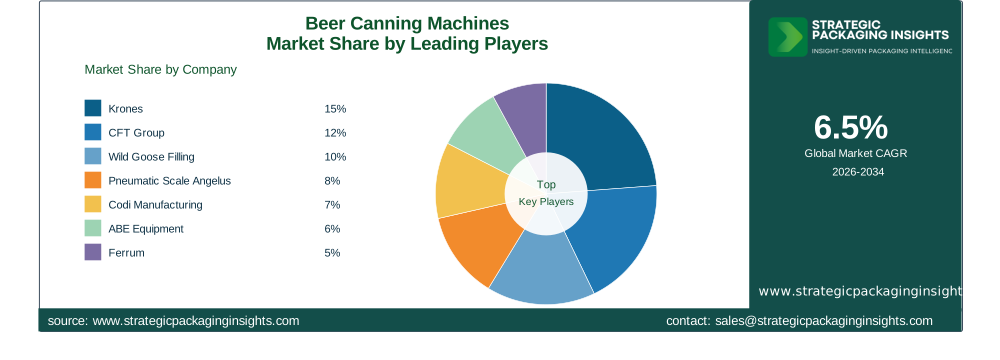
Krones is a dominant player in the Beer Canning Machines market, known for its comprehensive range of canning solutions that cater to the diverse needs of breweries and beverage startups. The company's focus on innovation and sustainability has enabled it to maintain a competitive edge in the market. CFT Group is another key player, offering a wide range of canning technologies that are designed to enhance production efficiency and reduce environmental impact. The company's strong focus on customer satisfaction and quality assurance has earned it a loyal customer base and a significant market share.
Wild Goose Filling is a leading provider of canning solutions for craft breweries, known for its flexible and customizable canning lines that cater to the unique needs of small-scale producers. The company's commitment to innovation and customer service has enabled it to establish a strong presence in the market. Pneumatic Scale Angelus is another major player, offering a comprehensive range of canning technologies that are designed to enhance production efficiency and product quality. The company's focus on sustainability and environmental responsibility has earned it a reputation as a leader in the industry.
Other notable players in the Beer Canning Machines market include Codi Manufacturing, ABE Equipment, Ferrum, Microcanner, American Canning, and Twin Monkeys Beverage Systems. These companies are leveraging their expertise and technological capabilities to offer innovative canning solutions that meet the evolving needs of the market. Their focus on sustainability and customer satisfaction is driving their growth and enabling them to capture a significant share of the market.
Key Highlights
- The Beer Canning Machines market is projected to grow from USD 1.58 billion in 2025 to USD 2.79 billion by 2034, at a CAGR of 6.5%.
- Automatic Canning Lines and Semi-Automatic Canners are the fastest-growing segments in the market.
- Craft Beer and Lager applications are driving significant demand for canning machines.
- North America and Europe are the leading regions in terms of market share and growth rate.
- Key players like Krones and CFT Group are focusing on sustainability and innovation to maintain their competitive edge.
- Technological advancements in automation and IoT are enhancing production efficiency and reducing operational costs.
- Increasing consumer preference for canned beverages is driving market growth.
Beer Canning Machines Market Segments Insights

Machine Type Analysis
The Beer Canning Machines market is segmented by machine type into Automatic Canning Lines, Semi-Automatic Canners, Counter Pressure Fillers, and Seamers. Automatic Canning Lines are gaining traction due to their high efficiency and ability to handle large volumes, making them ideal for large breweries and beverage producers. Companies like Krones and CFT Group are leading the market with their advanced automatic canning solutions that offer precision and speed. Semi-Automatic Canners are also witnessing significant demand, particularly among craft breweries and small-scale producers who require flexible and cost-effective solutions. The rise of craft beer culture is driving the demand for these machines, as producers seek efficient and customizable canning solutions to meet diverse consumer preferences.
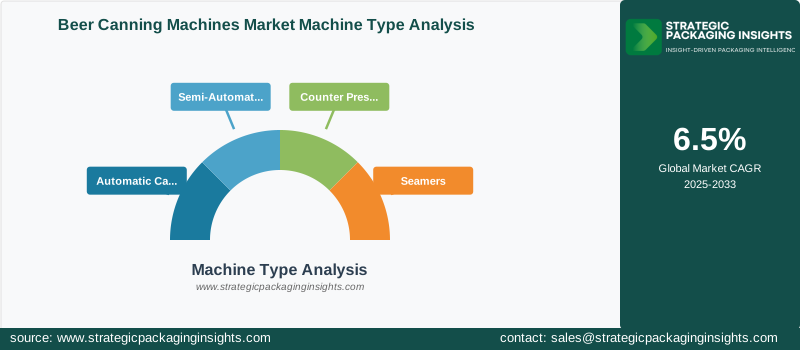
Counter Pressure Fillers and Seamers are essential components of the canning process, ensuring that the beer is filled and sealed with precision to maintain quality and freshness. These machines are particularly popular among premium and specialty beer producers who prioritize product quality and consistency. Companies are investing in R&D to develop innovative filling and seaming technologies that enhance production efficiency and reduce waste. As the demand for premium and specialty beers continues to rise, the market for advanced filling and seaming solutions is expected to grow, providing lucrative opportunities for manufacturers and suppliers.
Capacity Analysis
The Beer Canning Machines market is segmented by capacity into Low-Speed, Medium-Speed, and High-Speed machines. High-Speed machines are in high demand among large breweries and beverage producers who require efficient and high-volume production capabilities. These machines offer significant advantages in terms of speed and efficiency, enabling producers to meet the growing demand for canned beer. Companies like Krones and CFT Group are leading the market with their advanced high-speed canning solutions that offer precision and reliability.
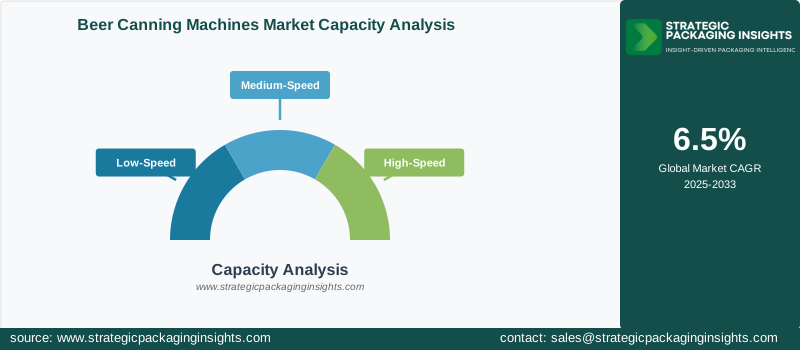
Medium-Speed machines are also witnessing significant demand, particularly among mid-sized breweries and beverage producers who require flexible and cost-effective solutions. These machines offer a balance between speed and efficiency, making them ideal for producers who need to scale their operations without incurring significant costs. Low-Speed machines are popular among craft breweries and small-scale producers who prioritize flexibility and customization. The rise of craft beer culture is driving the demand for these machines, as producers seek efficient and customizable canning solutions to meet diverse consumer preferences.
Application Analysis
The Beer Canning Machines market is segmented by application into Craft Beer, Lager, Ale, and Non-Alcoholic Beer. Craft Beer is the largest segment, driven by the growing popularity of craft beer culture and the increasing number of microbreweries and craft beer producers. These producers require flexible and efficient canning solutions to meet diverse consumer preferences, driving the demand for advanced canning technologies. Companies like Wild Goose Filling and American Canning are capitalizing on this trend by offering customizable canning lines that cater to the unique needs of craft beer producers.
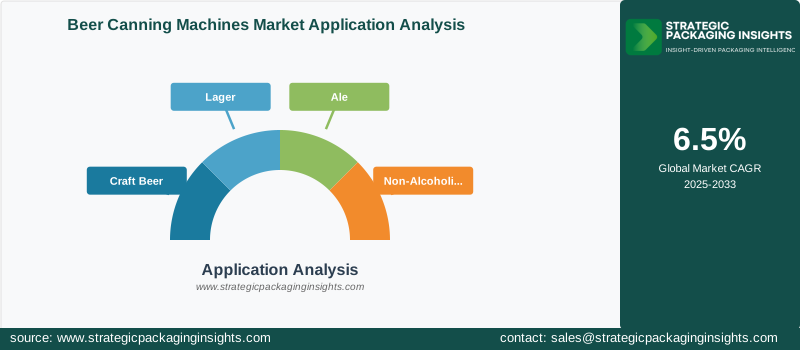
Lager and Ale are also significant segments, driven by the increasing demand for premium and specialty beers. These segments require high-quality canning solutions that ensure product quality and consistency, driving the demand for advanced filling and seaming technologies. Non-Alcoholic Beer is an emerging segment, driven by the growing consumer preference for healthier beverage options. As the demand for non-alcoholic beer continues to rise, the market for canning solutions that cater to this segment is expected to grow, providing lucrative opportunities for manufacturers and suppliers.
End Use Analysis
The Beer Canning Machines market is segmented by end use into Breweries, Contract Packers, Beverage Startups, and Canning Service Providers. Breweries are the largest segment, driven by the increasing demand for canned beer and the shift towards sustainable packaging solutions. These producers require efficient and flexible canning solutions to meet diverse consumer preferences, driving the demand for advanced canning technologies. Companies like Krones and CFT Group are leading the market with their innovative canning solutions that cater to the diverse needs of breweries.
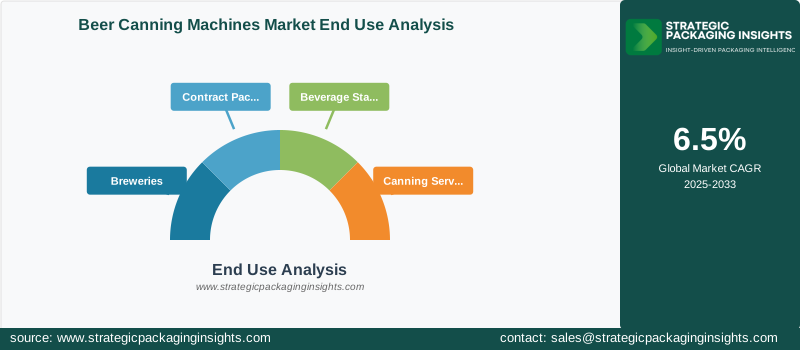
Contract Packers and Beverage Startups are also significant segments, driven by the increasing demand for flexible and cost-effective canning solutions. These producers require customizable canning lines that cater to their unique needs, driving the demand for advanced canning technologies. Canning Service Providers are an emerging segment, driven by the growing trend of outsourcing canning operations to specialized service providers. As the demand for canned beer continues to rise, the market for canning solutions that cater to these segments is expected to grow, providing lucrative opportunities for manufacturers and suppliers.
Beer Canning Machines Market Segments
The Beer Canning Machines market has been segmented on the basis ofMachine Type
- Automatic Canning Lines
- Semi-Automatic Canners
- Counter Pressure Fillers
- Seamers
Capacity
- Low-Speed
- Medium-Speed
- High-Speed
Application
- Craft Beer
- Lager
- Ale
- Non-Alcoholic Beer
End Use
- Breweries
- Contract Packers
- Beverage Startups
- Canning Service Providers
Region
- Asia Pacific
- North America
- Latin America
- Europe
- Middle East & Africa




