


Barrier Film for Coffee Packaging Market Outlook
The Barrier Film for Coffee Packaging market was valued at $1.2 billion in 2024 and is projected to reach $2.3 billion by 2033, growing at a CAGR of 6.5% during the forecast period 2025-2033. This market is driven by the increasing demand for coffee worldwide, which necessitates effective packaging solutions to preserve flavor and extend shelf life. Barrier films are essential in maintaining the quality of coffee by protecting it from moisture, oxygen, and other environmental factors that can degrade its quality. The rise in coffee consumption, especially in emerging markets, is a significant driver for the growth of this market. Additionally, the trend towards sustainable and eco-friendly packaging solutions is pushing manufacturers to innovate and develop barrier films that are not only effective but also environmentally friendly.
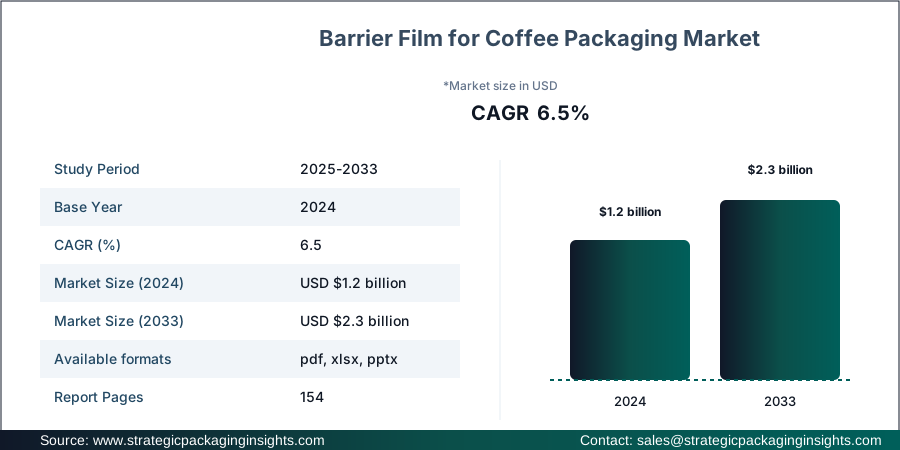
However, the market faces challenges such as the high cost of raw materials and stringent regulations regarding packaging waste. These factors can restrain market growth as companies need to balance cost-effectiveness with compliance and sustainability. Despite these challenges, the market holds significant growth potential due to technological advancements in packaging materials and processes. Innovations such as biodegradable barrier films and the use of nanotechnology to enhance barrier properties are expected to create new opportunities for market players. Furthermore, the increasing popularity of specialty coffee and the growing trend of coffee consumption at home are likely to boost the demand for high-quality packaging solutions.
Report Scope
| Attributes | Details |
| Report Title | Barrier Film for Coffee Packaging Market Size, Future Growth and Forecast 2033 |
| Material Type | Plastic, Metalized, Others |
| Application | Retail, Industrial, Institutional |
| Coffee Type | Ground Coffee, Whole Bean, Instant Coffee |
| Region | Asia Pacific, North America, Latin America, Europe, Middle East & Africa |
| Base Year | 2024 |
| Historic Period | 2017-2023 |
| Forecast Period | 2025-2033 |
| Number of Pages | 154 |
| Customization Available | Yes* |
Opportunities & Threats
The Barrier Film for Coffee Packaging market presents numerous opportunities, particularly with the rising demand for premium and specialty coffee. As consumers become more discerning about their coffee choices, the need for packaging that preserves the unique flavors and aromas of specialty coffee increases. This trend is driving innovation in barrier film technology, with manufacturers focusing on developing films that offer superior protection against oxygen and moisture. Additionally, the growing awareness of environmental issues is pushing companies to explore sustainable packaging options, such as biodegradable and recyclable barrier films. These developments are expected to open new avenues for growth in the market.
Another significant opportunity lies in the expansion of coffee consumption in emerging markets. Countries in Asia Pacific and Latin America are witnessing a surge in coffee consumption, driven by urbanization, rising disposable incomes, and changing consumer preferences. This trend is creating a demand for effective packaging solutions that can cater to the diverse needs of these markets. Companies that can offer innovative and cost-effective barrier films tailored to the specific requirements of these regions are likely to gain a competitive edge.
Despite the promising opportunities, the market faces threats from regulatory challenges and the high cost of raw materials. Governments worldwide are implementing stringent regulations to reduce packaging waste and promote sustainability. These regulations can increase the cost of compliance for manufacturers, potentially impacting their profitability. Additionally, fluctuations in the prices of raw materials used in the production of barrier films can affect the overall cost structure, posing a threat to market growth. Companies need to invest in research and development to find cost-effective solutions that meet regulatory requirements and consumer expectations.
Market Share Analysis
The Barrier Film for Coffee Packaging market is characterized by intense competition, with several key players vying for market share. The competitive landscape is shaped by factors such as product innovation, quality, pricing, and sustainability. Companies are focusing on developing advanced barrier films that offer superior protection and meet the evolving needs of consumers. The market is also witnessing strategic collaborations and partnerships as companies seek to expand their product portfolios and geographic reach.
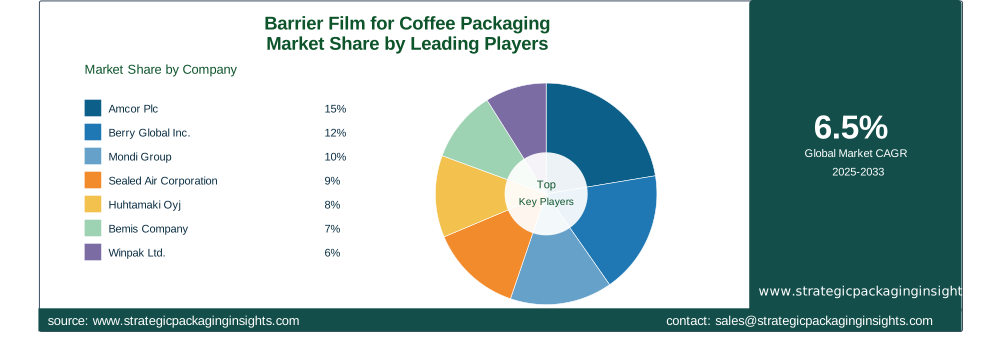
Some of the major players in the market include Amcor Plc, Berry Global Inc., Mondi Group, Sealed Air Corporation, and Huhtamaki Oyj. These companies are investing heavily in research and development to enhance their product offerings and maintain a competitive edge. For instance, Amcor Plc is known for its innovative packaging solutions that combine functionality with sustainability. The company has a strong presence in the global market and is continuously expanding its product range to cater to the growing demand for eco-friendly packaging.
Berry Global Inc. is another key player in the market, offering a wide range of barrier films for coffee packaging. The company focuses on delivering high-performance packaging solutions that meet the diverse needs of its customers. With a strong emphasis on sustainability, Berry Global is committed to reducing its environmental footprint through the development of recyclable and biodegradable packaging materials.
Mondi Group is renowned for its comprehensive range of packaging solutions, including barrier films for coffee packaging. The company leverages its extensive expertise in material science to develop innovative products that enhance the shelf life and quality of coffee. Mondi's commitment to sustainability is evident in its efforts to create packaging solutions that are both effective and environmentally friendly.
Sealed Air Corporation is a leader in the packaging industry, known for its advanced barrier film technologies. The company offers a variety of packaging solutions designed to protect coffee from external factors that can compromise its quality. Sealed Air's focus on innovation and sustainability has helped it maintain a strong position in the market.
Huhtamaki Oyj is a global provider of sustainable packaging solutions, including barrier films for coffee packaging. The company is dedicated to creating packaging that not only preserves the quality of coffee but also minimizes environmental impact. Huhtamaki's commitment to sustainability and innovation has made it a key player in the market.
Key Highlights
- The market is projected to grow at a CAGR of 6.5% from 2025 to 2033.
- Increasing demand for specialty coffee is driving innovation in barrier film technology.
- Emerging markets in Asia Pacific and Latin America are key growth regions.
- Sustainability is a major focus, with companies developing biodegradable and recyclable films.
- Technological advancements, such as nanotechnology, are enhancing barrier properties.
- Regulatory challenges and raw material costs are potential restraints.
- Strategic collaborations are common as companies seek to expand their reach.
- Major players include Amcor Plc, Berry Global Inc., and Mondi Group.
- Product innovation and quality are critical competitive factors.
- Consumer demand for eco-friendly packaging is influencing market dynamics.
Top Countries Insights
In the Barrier Film for Coffee Packaging market, the United States holds a significant share, with a market size of $300 million and a CAGR of 5%. The country's strong coffee culture and demand for premium coffee drive the need for high-quality packaging solutions. Innovations in packaging technology and a focus on sustainability are key growth drivers in the U.S. market.
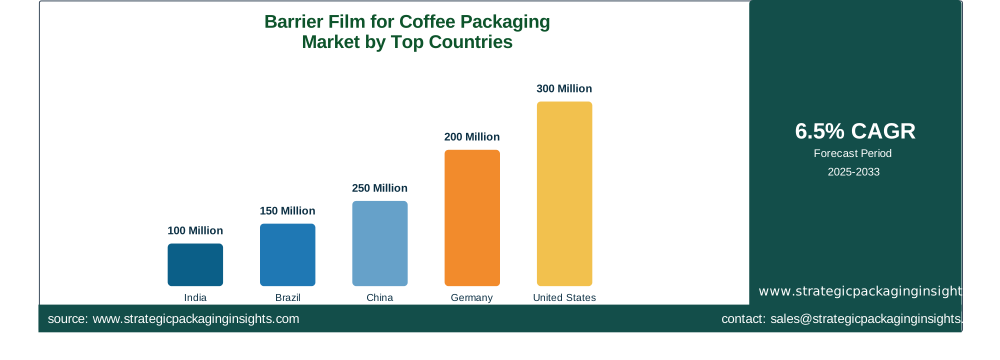
Germany is another major player, with a market size of $200 million and a CAGR of 4%. The country's emphasis on sustainability and stringent packaging regulations are shaping the market dynamics. German consumers' preference for eco-friendly packaging solutions is encouraging companies to develop innovative barrier films.
China, with a market size of $250 million and a CAGR of 7%, is experiencing rapid growth in coffee consumption. The increasing popularity of coffee among younger consumers and the expansion of coffee chains are driving the demand for effective packaging solutions. China's focus on reducing packaging waste is also influencing market trends.
Brazil, with a market size of $150 million and a CAGR of 6%, is a key market for barrier films due to its status as a leading coffee producer. The country's growing domestic coffee consumption and export activities necessitate high-quality packaging solutions to preserve coffee quality during transportation and storage.
India, with a market size of $100 million and a CAGR of 8%, is witnessing a surge in coffee consumption, particularly among urban populations. The demand for convenient and premium coffee products is driving the need for advanced packaging solutions. India's focus on sustainability and reducing plastic waste is also impacting market dynamics.
Evolving Market Dynamics (2018-2024) and Strategic Foresight (2025-2033)
| Metric | 2018-2024 | 2025-2033 |
|---|---|---|
| CAGR | 5.2% | 6.5% |
| Market Size Evolution | $900 million to $1.2 billion | $1.2 billion to $2.3 billion |
| Segment Distribution Shifts | Plastic Dominance | Increased Metalized and Eco-Friendly Films |
| Regional Contribution Changes | North America and Europe Lead | Asia Pacific and Latin America Growth |
| Technological Impact Factors | Basic Barrier Films | Advanced Nanotechnology and Biodegradable Films |
| Client Demand Transformations | Standard Packaging | Customized and Sustainable Solutions |
Barrier Film for Coffee Packaging Market Segments Insights

Material Type Analysis
The material type segment in the Barrier Film for Coffee Packaging market is crucial as it determines the effectiveness and sustainability of the packaging. Plastic barrier films have traditionally dominated the market due to their cost-effectiveness and versatility. However, the growing environmental concerns and regulatory pressures are driving a shift towards more sustainable materials. Metalized films are gaining popularity due to their superior barrier properties, which are essential for preserving the quality of coffee. These films offer excellent protection against oxygen and moisture, making them ideal for coffee packaging. Additionally, the development of biodegradable and recyclable films is gaining traction as companies strive to meet consumer demand for eco-friendly packaging solutions.
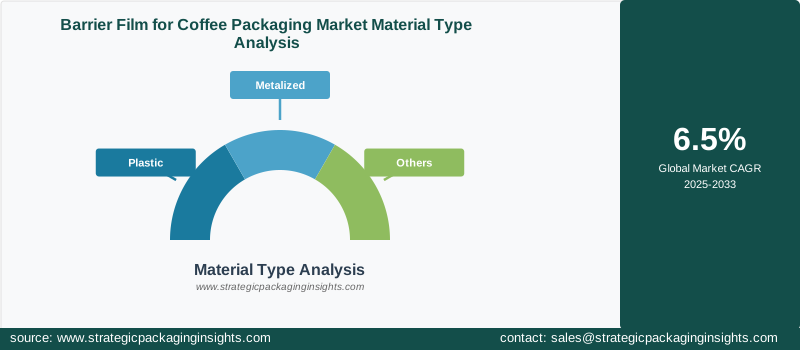
The competition in this segment is intense, with companies investing in research and development to enhance the performance of their barrier films. Innovations such as the incorporation of nanotechnology to improve barrier properties and the use of renewable materials are key trends in this segment. The demand for sustainable packaging solutions is expected to drive the growth of metalized and biodegradable films, while plastic films may face challenges due to environmental concerns. Companies that can offer innovative and sustainable material solutions are likely to gain a competitive advantage in the market.
Application Analysis
The application segment of the Barrier Film for Coffee Packaging market is diverse, catering to retail, industrial, and institutional needs. Retail applications dominate the market as coffee is primarily consumed by individual consumers. The demand for convenient and attractive packaging solutions is high in this segment, with companies focusing on developing barrier films that enhance the shelf appeal of coffee products. Industrial applications, although smaller in comparison, are significant as they involve bulk packaging for distribution and export. The need for robust and durable packaging solutions is critical in this segment to ensure the safe transportation and storage of coffee.
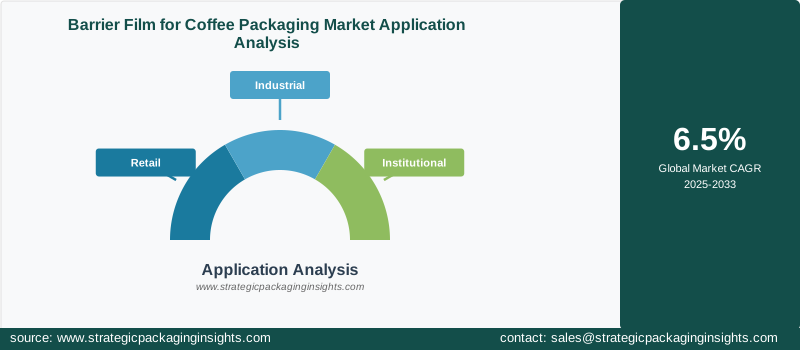
Institutional applications, which include packaging for coffee shops, restaurants, and hotels, are also important as they require packaging solutions that maintain the freshness and quality of coffee over extended periods. The competition in this segment is driven by the need for customization and innovation, with companies offering tailored solutions to meet the specific requirements of different applications. The trend towards premium and specialty coffee is influencing the demand for high-quality packaging solutions across all application segments, with companies focusing on developing barrier films that preserve the unique flavors and aromas of coffee.
Coffee Type Analysis
The coffee type segment in the Barrier Film for Coffee Packaging market is segmented into ground coffee, whole bean, and instant coffee. Ground coffee is the largest segment, driven by its popularity among consumers who prefer the convenience of pre-ground coffee. The demand for barrier films in this segment is high as they need to provide effective protection against oxygen and moisture to preserve the freshness and flavor of the coffee. Whole bean coffee, although smaller in comparison, is gaining popularity among coffee enthusiasts who prefer to grind their coffee for a fresher taste. The need for packaging solutions that maintain the quality of whole beans is driving innovation in barrier film technology.
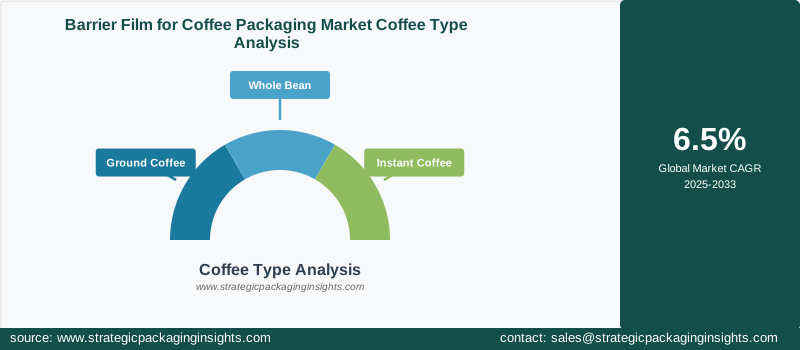
Instant coffee, known for its convenience and long shelf life, is another significant segment. The demand for barrier films in this segment is driven by the need for packaging that prevents moisture ingress and preserves the quality of the coffee. The competition in this segment is intense, with companies focusing on developing advanced barrier films that cater to the specific needs of different coffee types. The trend towards premium and specialty coffee is influencing the demand for high-quality packaging solutions across all coffee types, with companies investing in research and development to enhance the performance of their barrier films.
Region Analysis
The regional analysis of the Barrier Film for Coffee Packaging market highlights the diverse growth opportunities and challenges across different regions. North America and Europe have traditionally been the largest markets, driven by the strong coffee culture and demand for premium coffee. The focus on sustainability and regulatory pressures are shaping the market dynamics in these regions, with companies investing in eco-friendly packaging solutions. Asia Pacific is emerging as a key growth region, driven by the increasing coffee consumption and urbanization. The demand for effective packaging solutions is high in this region, with companies focusing on developing barrier films that cater to the diverse needs of consumers.
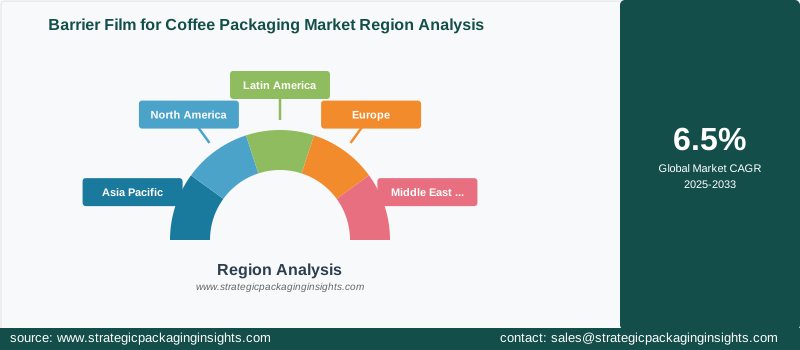
Latin America, known for its coffee production, is also a significant market for barrier films. The need for high-quality packaging solutions to preserve the quality of coffee during transportation and storage is driving the demand in this region. The Middle East & Africa, although smaller in comparison, is witnessing growth due to the increasing popularity of coffee and the expansion of coffee chains. The competition in this segment is driven by the need for innovation and customization, with companies offering tailored solutions to meet the specific requirements of different regions. The trend towards premium and specialty coffee is influencing the demand for high-quality packaging solutions across all regions, with companies focusing on developing barrier films that preserve the unique flavors and aromas of coffee.
Barrier Film for Coffee Packaging Market Segments
The Barrier Film for Coffee Packaging market has been segmented on the basis ofMaterial Type
- Plastic
- Metalized
- Others
Application
- Retail
- Industrial
- Institutional
Coffee Type
- Ground Coffee
- Whole Bean
- Instant Coffee
Region
- Asia Pacific
- North America
- Latin America
- Europe
- Middle East & Africa




