


Barrier Coated Papers Market Outlook
The Barrier Coated Papers market size was valued at USD 5.0 billion in 2025 and is anticipated to reach USD 8.2 billion by 2034, growing at a CAGR of 5.70% during the forecast period according to Strategic Packaging Insights. This growth trajectory is driven by the increasing demand for sustainable and eco-friendly packaging solutions across various industries. Companies like Stora Enso and Mondi are at the forefront, leveraging their expertise in innovative coating technologies to meet the evolving consumer preferences and regulatory requirements. The market's expansion is further fueled by the rising awareness of environmental issues, prompting a shift towards barrier-coated papers that offer superior protection while being environmentally benign.
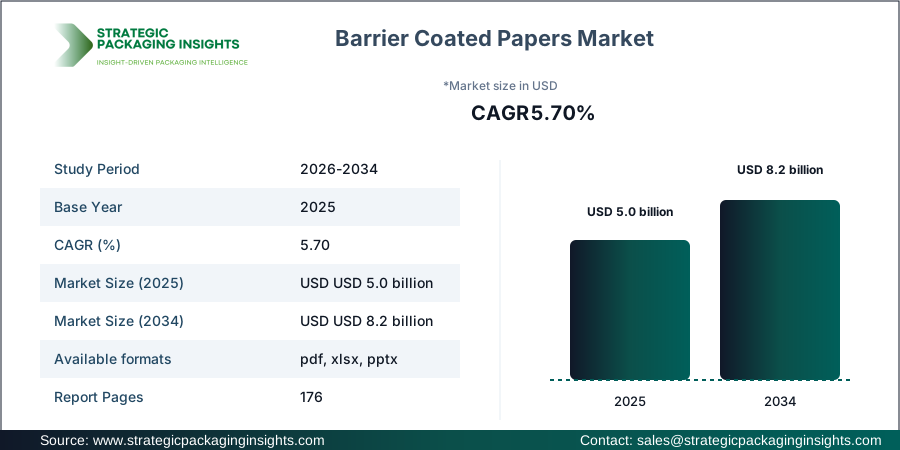
One of the most impactful drivers of the Barrier Coated Papers market is the stringent regulations imposed by governments worldwide to reduce plastic waste. For instance, the European Union's directive on single-use plastics has accelerated the adoption of paper-based alternatives, thereby boosting the demand for barrier-coated papers. This regulatory push is complemented by consumer preferences for sustainable packaging, which is increasingly influencing purchasing decisions. Companies like UPM and Sappi are capitalizing on this trend by developing innovative products that not only meet regulatory standards but also appeal to eco-conscious consumers. The synergy between regulatory frameworks and consumer demand is expected to sustain the market's growth momentum over the forecast period.
Report Scope
| Attributes | Details |
| Report Title | Barrier Coated Papers Market Size, Future Growth and Forecast 2034 |
| By Coating Material | Polyethylene (PE), PLA / Bioplastics, Wax, Water-Based Dispersion / Aqueous, Silicone, EVOH, Clay / Mineral |
| By Barrier Function | Moisture / Water Barrier, Grease & Oil Barrier, Oxygen / Gas Barrier, Aroma Barrier, Heat Sealability |
| By Product | Cup Stock, Greaseproof Paper, Flexible Packaging Paper, Liner & Board, Wrapping Paper, Sachet Paper |
| By End Use | Food Packaging, Foodservice / QSR, Pharmaceutical, Personal Care, Industrial, E-commerce |
| By Region | North America (U.S., Canada, Mexico), Europe (Germany, UK, France, Italy, Spain, Rest of Europe), Asia Pacific (China, India, Japan, South Korea, Australia, Rest of Asia Pacific), Latin America (Brazil, Argentina, Rest of Latin America), Middle East & Africa (GCC Countries, South Africa, Rest of MEA) |
| Base Year | 2025 |
| Historic Period | 2018-2024 |
| Forecast Period | 2026-2034 |
| Number of Pages | 176 |
| Customization Available | Yes* |
Sustainability & Circular Economy Analysis
Sustainability initiatives and circular economy practices are significantly shaping the Barrier Coated Papers market. The emphasis on recyclable materials and reusable packaging is driving innovation in eco-friendly material development. Companies are investing in lightweight packaging solutions that reduce material usage without compromising on performance. This trend is evident in the increased adoption of water-based dispersion coatings, which offer effective barrier properties while being environmentally friendly. Eco-friendly material innovation is not only reducing the carbon footprint of packaging but also enhancing the market's appeal to environmentally conscious consumers.
The integration of waste reduction strategies and ESG initiatives is influencing packaging design and manufacturing processes. Companies are adopting extended producer responsibility (EPR) frameworks to ensure that their products are part of a sustainable lifecycle. This approach is fostering collaboration across the supply chain, from raw material sourcing to recycling networks. As a result, packaging manufacturers are prioritizing investments in technologies that enhance recyclability and reduce environmental impact. Consumer sustainability preferences are also driving regulatory compliance, as brands strive to align with evolving standards and maintain market competitiveness.
Long-term market competitiveness is increasingly linked to a company's ability to adapt to sustainability trends. Investment decisions are being guided by the need to comply with packaging regulations and reduce carbon emissions. Companies like Ahlstrom and Nordic Paper are leading the way by developing products that meet these criteria, thereby securing a competitive edge. The focus on sustainability is not only enhancing brand reputation but also opening up new market opportunities. As the demand for sustainable packaging solutions continues to grow, companies that prioritize eco-friendly practices are likely to experience sustained growth and profitability.
Packaging Value Chain & Supply Chain Analysis
The packaging value chain for barrier-coated papers is a complex ecosystem involving multiple stakeholders, from raw material suppliers to end-users. Raw material sourcing is a critical component, with companies like WestRock and International Paper ensuring a steady supply of high-quality pulp and paper. Packaging converters and manufacturers play a pivotal role in transforming these materials into finished products, utilizing advanced machinery and technologies to enhance efficiency and quality. The integration of logistics and distribution channels is essential for timely delivery, with strategic partnerships enhancing supply chain resilience and localization efforts.
Supply chain efficiency is heavily influenced by raw material availability and transportation capabilities. Companies are adopting procurement strategies that prioritize local sourcing to mitigate risks associated with global supply chain disruptions. Inventory management is becoming increasingly sophisticated, with real-time tracking and data analytics enabling better decision-making. The role of brand owners and retailers is crucial in driving demand, as they seek packaging solutions that align with their sustainability goals. Recycling networks are also integral to the value chain, facilitating the circular economy by ensuring that used packaging is effectively collected and processed.
Strategic partnerships and collaborations are enhancing production capabilities and market performance. Companies are investing in state-of-the-art packaging machinery to improve production efficiency and reduce waste. The focus on supply chain resilience is prompting investments in technology and infrastructure, ensuring that companies can adapt to changing market dynamics. Global sourcing strategies are being balanced with localization efforts to optimize costs and enhance competitiveness. As the market continues to evolve, companies that effectively manage their supply chains are likely to achieve sustained growth and profitability.
Opportunities & Threats
The Barrier Coated Papers market presents numerous opportunities for growth, driven by the increasing demand for sustainable packaging solutions. The shift towards eco-friendly materials is opening up new avenues for innovation, with companies investing in research and development to create products that meet consumer and regulatory expectations. The growing popularity of e-commerce is also driving demand for barrier-coated papers, as online retailers seek packaging solutions that offer protection and sustainability. Companies that can effectively leverage these trends are likely to experience significant growth and market expansion.
Another opportunity lies in the development of advanced coating technologies that enhance the performance of barrier-coated papers. Innovations in bioplastics and water-based dispersions are creating new possibilities for product differentiation and market penetration. The focus on reducing carbon emissions and enhancing recyclability is driving investments in sustainable manufacturing processes. Companies that prioritize these initiatives are likely to gain a competitive edge, as consumers increasingly favor brands that demonstrate a commitment to environmental stewardship.
However, the market also faces threats from regulatory challenges and competitive pressures. Stringent regulations on packaging materials can increase compliance costs and limit market entry for new players. The competitive landscape is intensifying, with established companies investing heavily in innovation and marketing to maintain their market share. Companies must navigate these challenges by adopting agile strategies and investing in technologies that enhance efficiency and sustainability. Failure to adapt to changing market dynamics could result in lost opportunities and diminished competitiveness.
Drivers & Challenges
The primary drivers of the Barrier Coated Papers market include the increasing demand for sustainable packaging solutions and the regulatory push towards reducing plastic waste. The growing awareness of environmental issues is prompting consumers and businesses to seek alternatives to traditional plastic packaging. Companies like Stora Enso and Mondi are leading the charge by developing innovative products that meet these demands. The focus on sustainability is not only driving market growth but also enhancing brand reputation and consumer loyalty.
Technological advancements in coating materials and manufacturing processes are also driving market growth. Innovations in bioplastics and water-based dispersions are enhancing the performance and sustainability of barrier-coated papers. Companies are investing in research and development to create products that offer superior protection and environmental benefits. The integration of digital technologies in manufacturing processes is improving efficiency and reducing waste, further contributing to market expansion. As these trends continue to evolve, companies that prioritize innovation and sustainability are likely to achieve long-term success.
Despite these drivers, the market faces challenges related to regulatory compliance and competitive pressures. Stringent regulations on packaging materials can increase costs and limit market entry for new players. The competitive landscape is becoming increasingly crowded, with established companies investing heavily in innovation and marketing to maintain their market share. Companies must navigate these challenges by adopting agile strategies and investing in technologies that enhance efficiency and sustainability. Failure to adapt to changing market dynamics could result in lost opportunities and diminished competitiveness.
Market Share Analysis
The Barrier Coated Papers market is characterized by a competitive landscape with several key players vying for market share. Companies like Stora Enso, Mondi, and UPM are leading the market with their innovative product offerings and strong distribution networks. These companies have established themselves as leaders in the industry by investing in research and development and expanding their global presence. Their focus on sustainability and eco-friendly packaging solutions has positioned them as preferred partners for businesses seeking to enhance their environmental credentials.
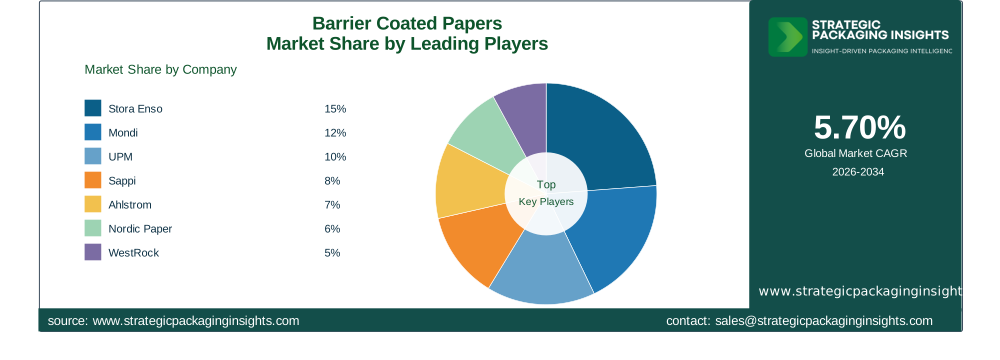
Stora Enso, a leading player in the market, has a significant market share due to its extensive product portfolio and commitment to sustainability. The company has invested heavily in developing innovative coating technologies that enhance the performance and recyclability of barrier-coated papers. Mondi, another major player, has a strong presence in the market with its focus on sustainable packaging solutions. The company's investments in research and development have resulted in a range of products that meet the evolving needs of consumers and businesses.
UPM is also a key player in the market, known for its innovative approach to sustainable packaging. The company's focus on eco-friendly materials and advanced manufacturing processes has enabled it to capture a significant share of the market. Sappi, Ahlstrom, and Nordic Paper are other notable players, each with their unique strengths and market strategies. These companies have established themselves as leaders in the industry by leveraging their expertise in coating technologies and sustainable packaging solutions.
International Paper, WestRock, and Toppan Printing are also prominent players in the market, each with a strong focus on innovation and sustainability. These companies have invested in state-of-the-art manufacturing facilities and advanced coating technologies to enhance their product offerings. Their commitment to sustainability and environmental stewardship has positioned them as preferred partners for businesses seeking to enhance their environmental credentials. As the market continues to evolve, these companies are likely to maintain their competitive edge by prioritizing innovation and sustainability.
Key Highlights
- Market Size: USD 5.0 billion in 2025, projected to reach USD 8.2 billion by 2034.
- Growth Rate: CAGR of 5.70% during the forecast period.
- Leading Companies: Stora Enso, Mondi, UPM, Sappi, Ahlstrom, Nordic Paper.
- Key Segments: Coating Material, Barrier Function, Product, End Use.
- Regional Insights: Asia Pacific and North America are key growth regions.
- Innovation Focus: Bioplastics and water-based dispersions.
- Sustainability Trends: Eco-friendly materials and waste reduction strategies.
Barrier Coated Papers Market Segments Insights

By Coating Material Analysis
The Barrier Coated Papers market is segmented by coating material, with Polyethylene (PE) and PLA/Bioplastics being the most prominent. Polyethylene coatings are widely used due to their excellent moisture barrier properties, making them ideal for food packaging applications. However, the growing demand for sustainable alternatives is driving the adoption of PLA and bioplastics. These materials offer similar barrier properties while being biodegradable, aligning with the increasing consumer preference for eco-friendly packaging solutions. Companies like Stora Enso and Mondi are investing in research and development to enhance the performance of bioplastic coatings, ensuring they meet the stringent requirements of various end-use industries.
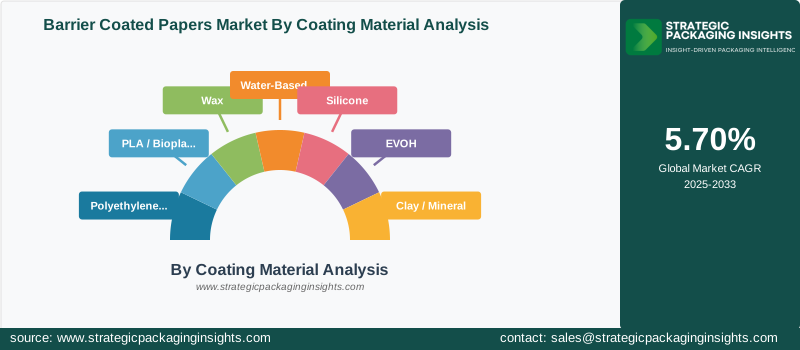
Wax and water-based dispersion coatings are also gaining traction in the market. Wax coatings provide excellent grease and oil resistance, making them suitable for applications in the foodservice industry. Water-based dispersion coatings, on the other hand, offer a sustainable alternative to traditional coatings, as they are free from volatile organic compounds (VOCs) and are easily recyclable. The focus on reducing environmental impact is driving the adoption of these coatings, with companies like UPM and Sappi leading the way in developing innovative solutions that meet the evolving needs of consumers and businesses.
Silicone, EVOH, and clay/mineral coatings are also important segments within the market. Silicone coatings are known for their heat resistance and release properties, making them ideal for applications in the baking and foodservice industries. EVOH coatings offer excellent oxygen barrier properties, ensuring the freshness and quality of packaged products. Clay and mineral coatings provide a cost-effective solution for applications that require moderate barrier properties. As the market continues to evolve, companies are likely to focus on developing coatings that offer a balance between performance, cost, and sustainability.
By Barrier Function Analysis
The Barrier Coated Papers market is also segmented by barrier function, with moisture/water barrier and grease & oil barrier being the most significant. Moisture barrier coatings are essential for applications in the food packaging industry, where they help preserve the freshness and quality of products. Companies like Mondi and Ahlstrom are investing in advanced coating technologies that enhance moisture resistance while maintaining recyclability. Grease and oil barrier coatings are crucial for applications in the foodservice industry, where they prevent the penetration of oils and fats, ensuring the integrity of the packaging.
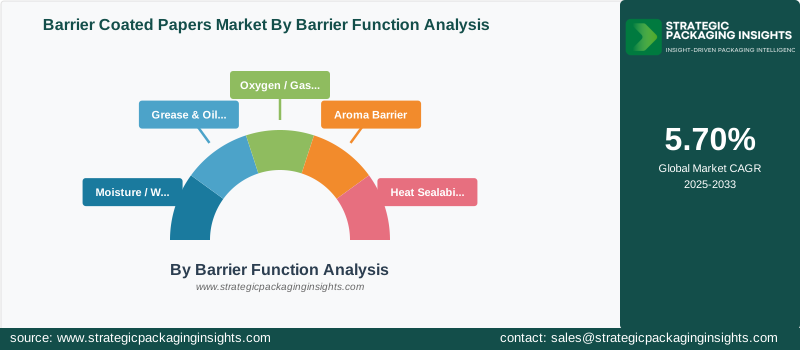
Oxygen/gas barrier coatings are gaining importance in the market, particularly in the food and pharmaceutical industries. These coatings help extend the shelf life of products by preventing the ingress of oxygen and other gases. Aroma barrier coatings are also becoming increasingly popular, as they help preserve the flavor and aroma of packaged products. Companies are investing in research and development to enhance the performance of these coatings, ensuring they meet the stringent requirements of various end-use industries.
Heat sealability is another important barrier function, particularly in the food packaging industry. Heat-sealable coatings enable the creation of secure seals, ensuring the integrity of the packaging and preventing contamination. Companies like Sappi and Nordic Paper are developing innovative solutions that offer excellent heat sealability while maintaining recyclability. As the market continues to evolve, companies are likely to focus on developing coatings that offer a balance between performance, cost, and sustainability.
By Product Analysis
The Barrier Coated Papers market is segmented by product, with cup stock and greaseproof paper being the most prominent. Cup stock is widely used in the foodservice industry for applications such as disposable cups and containers. The demand for sustainable alternatives is driving the adoption of barrier-coated cup stock, with companies like Stora Enso and Mondi leading the way in developing innovative solutions that meet the evolving needs of consumers and businesses. Greaseproof paper is also gaining traction in the market, particularly in the food packaging industry, where it provides excellent grease and oil resistance.
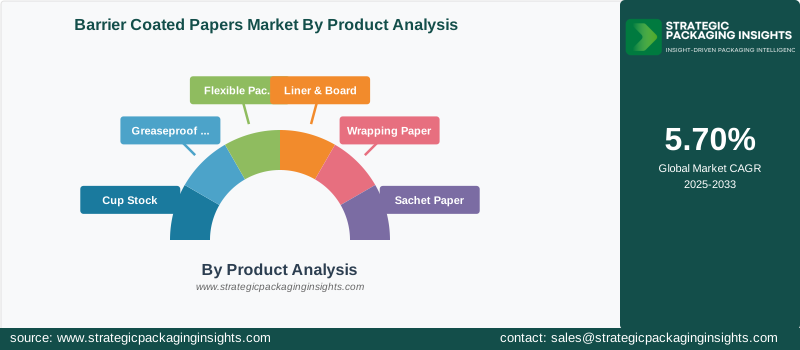
Flexible packaging paper is another important segment within the market, offering versatility and sustainability. Companies are investing in research and development to enhance the performance of flexible packaging paper, ensuring it meets the stringent requirements of various end-use industries. Liner and board, wrapping paper, and sachet paper are also significant segments within the market, each with its unique applications and requirements. As the market continues to evolve, companies are likely to focus on developing products that offer a balance between performance, cost, and sustainability.
The focus on sustainability is driving the adoption of innovative solutions that reduce environmental impact. Companies are investing in advanced manufacturing processes and materials that enhance the recyclability and biodegradability of barrier-coated papers. The integration of digital technologies in manufacturing processes is also improving efficiency and reducing waste, further contributing to market expansion. As these trends continue to evolve, companies that prioritize innovation and sustainability are likely to achieve long-term success.
By End Use Analysis
The Barrier Coated Papers market is segmented by end use, with food packaging and foodservice/QSR being the most significant. The demand for sustainable packaging solutions in the food industry is driving the adoption of barrier-coated papers, with companies like Stora Enso and Mondi leading the way in developing innovative solutions that meet the evolving needs of consumers and businesses. The focus on reducing environmental impact is driving the adoption of eco-friendly materials and manufacturing processes, ensuring the market's growth and competitiveness.
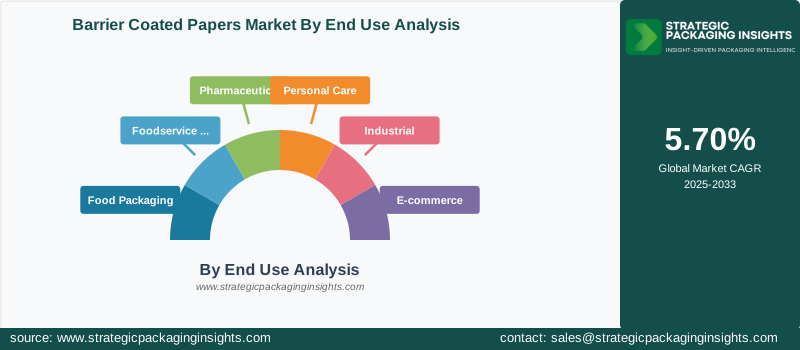
The pharmaceutical and personal care industries are also significant end-use segments within the market. The demand for packaging solutions that offer superior protection and sustainability is driving the adoption of barrier-coated papers in these industries. Companies are investing in research and development to enhance the performance of their products, ensuring they meet the stringent requirements of various end-use industries. The focus on sustainability is also driving the adoption of innovative solutions that reduce environmental impact and enhance recyclability.
The industrial and e-commerce sectors are also important end-use segments within the market. The demand for packaging solutions that offer protection and sustainability is driving the adoption of barrier-coated papers in these industries. Companies are investing in advanced manufacturing processes and materials that enhance the performance and sustainability of their products. As the market continues to evolve, companies are likely to focus on developing solutions that offer a balance between performance, cost, and sustainability.
Barrier Coated Papers Market Segments
The Barrier Coated Papers market has been segmented on the basis ofBy Coating Material
- Polyethylene (PE)
- PLA / Bioplastics
- Wax
- Water-Based Dispersion / Aqueous
- Silicone
- EVOH
- Clay / Mineral
By Barrier Function
- Moisture / Water Barrier
- Grease & Oil Barrier
- Oxygen / Gas Barrier
- Aroma Barrier
- Heat Sealability
By Product
- Cup Stock
- Greaseproof Paper
- Flexible Packaging Paper
- Liner & Board
- Wrapping Paper
- Sachet Paper
By End Use
- Food Packaging
- Foodservice / QSR
- Pharmaceutical
- Personal Care
- Industrial
- E-commerce
By Region
- North America (U.S., Canada, Mexico)
- Europe (Germany, UK, France, Italy, Spain, Rest of Europe)
- Asia Pacific (China, India, Japan, South Korea, Australia, Rest of Asia Pacific)
- Latin America (Brazil, Argentina, Rest of Latin America)
- Middle East & Africa (GCC Countries, South Africa, Rest of MEA)




