


Bamboo Cups Market Outlook
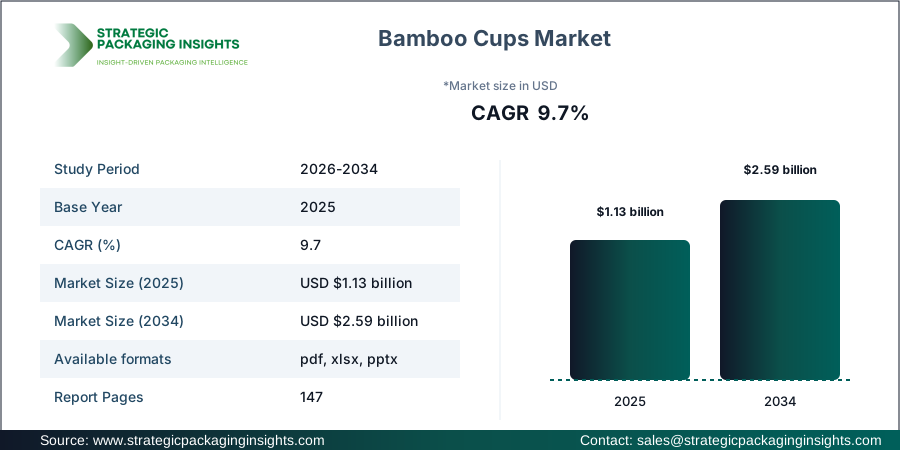
The Bamboo Cups market was valued at $1.13 billion in 2025 and is projected to reach $2.59 billion by 2034, growing at a CAGR of 9.7% during the forecast period 2026-2034. This market is witnessing significant growth due to the increasing consumer preference for sustainable and eco-friendly products. Bamboo cups, known for their biodegradability and renewable nature, are gaining traction as an alternative to plastic and paper cups. The rising awareness about environmental conservation and the harmful effects of plastic waste is driving the demand for bamboo cups across various regions. Additionally, the growing trend of using reusable products in households and commercial spaces is further propelling market growth.
Despite the promising growth prospects, the Bamboo Cups market faces certain challenges. The high cost of bamboo cups compared to conventional plastic and paper cups is a significant restraint. Moreover, the availability of low-cost alternatives and the lack of awareness about the benefits of bamboo cups in some regions may hinder market growth. However, the increasing government initiatives to reduce plastic waste and promote sustainable products offer lucrative growth opportunities for market players. The market is also expected to benefit from technological advancements in bamboo cup manufacturing, which could lead to cost reductions and improved product quality.
Report Scope
| Attributes | Details |
| Report Title | Bamboo Cups Market Size, Future Growth and Forecast 2034 |
| Product Type | Reusable Bamboo Cups, Disposable Bamboo Cups, Bamboo Fiber Cups |
| Application | Hot Beverages, Cold Beverages, Foodservice, Retail |
| Distribution Channel | Online, Supermarkets, Specialty Stores, Foodservice |
| End Use | Households, Cafés, QSRs, Hospitality |
| Region | Asia Pacific, North America, Latin America, Europe, Middle East & Africa |
| Base Year | 2025 |
| Historic Period | 2018-2024 |
| Forecast Period | 2026-2034 |
| Number of Pages | 147 |
| Customization Available | Yes* |
Opportunities & Threats
The Bamboo Cups market presents numerous opportunities for growth, primarily driven by the increasing consumer awareness regarding environmental sustainability. As more consumers become conscious of their ecological footprint, the demand for eco-friendly products like bamboo cups is expected to rise. This shift in consumer preference is encouraging manufacturers to innovate and expand their product offerings, catering to a broader audience. Additionally, the growing trend of personalized and customized products provides an opportunity for companies to differentiate themselves in the market by offering unique designs and features that appeal to individual consumer preferences.
Another significant opportunity lies in the expansion of distribution channels. With the rise of e-commerce and online retail platforms, bamboo cup manufacturers can reach a wider audience and tap into new markets. Online platforms offer a convenient shopping experience for consumers, allowing them to explore a variety of products and make informed purchasing decisions. Furthermore, partnerships with specialty stores and foodservice providers can enhance product visibility and accessibility, driving sales and market penetration.
However, the Bamboo Cups market also faces certain threats that could impact its growth trajectory. One of the primary challenges is the competition from alternative eco-friendly materials such as biodegradable plastics and compostable paper products. These alternatives often come at a lower cost, making them attractive to price-sensitive consumers. Additionally, the market is susceptible to fluctuations in raw material prices, which can affect production costs and profit margins. To mitigate these threats, companies need to focus on innovation, cost optimization, and strategic partnerships to maintain a competitive edge.
Drivers & Challenges
The Bamboo Cups market is primarily driven by the increasing demand for sustainable and eco-friendly products. As consumers become more environmentally conscious, there is a growing preference for products that minimize environmental impact. Bamboo cups, being biodegradable and made from renewable resources, align perfectly with this trend. The rising awareness about the harmful effects of plastic waste and the need for sustainable alternatives is further fueling the demand for bamboo cups. Additionally, government regulations and initiatives aimed at reducing plastic consumption and promoting sustainable products are providing a significant boost to the market.
Another key driver of the Bamboo Cups market is the growing trend of using reusable products. With the increasing focus on reducing single-use plastic waste, consumers are opting for reusable bamboo cups as a sustainable alternative. This trend is particularly prominent in households, cafés, and quick-service restaurants (QSRs), where there is a high demand for durable and eco-friendly beverage containers. The versatility and aesthetic appeal of bamboo cups also contribute to their popularity, making them a preferred choice for both personal and commercial use.
Despite the positive drivers, the Bamboo Cups market faces several challenges that could hinder its growth. One of the main challenges is the high cost of bamboo cups compared to traditional plastic and paper cups. This price difference can be a deterrent for cost-conscious consumers, especially in regions with low awareness about the environmental benefits of bamboo products. Additionally, the market is characterized by intense competition from alternative eco-friendly materials, which can impact market share and profitability. To overcome these challenges, companies need to focus on cost optimization, product innovation, and effective marketing strategies to educate consumers about the benefits of bamboo cups.
Market Share Analysis
The Bamboo Cups market is characterized by a competitive landscape with several key players vying for market share. Companies such as Ecoffee Cup, Bamboozle, BioPak, Huhtamaki, Eco-Products, Vegware, Duni Group, World Centric, Green Paper Products, and Zungleboo are prominent players in this market. These companies are focusing on product innovation, strategic partnerships, and expanding their distribution networks to strengthen their market position. The competitive landscape is further intensified by the presence of numerous small and medium-sized enterprises that offer a wide range of bamboo cup products.
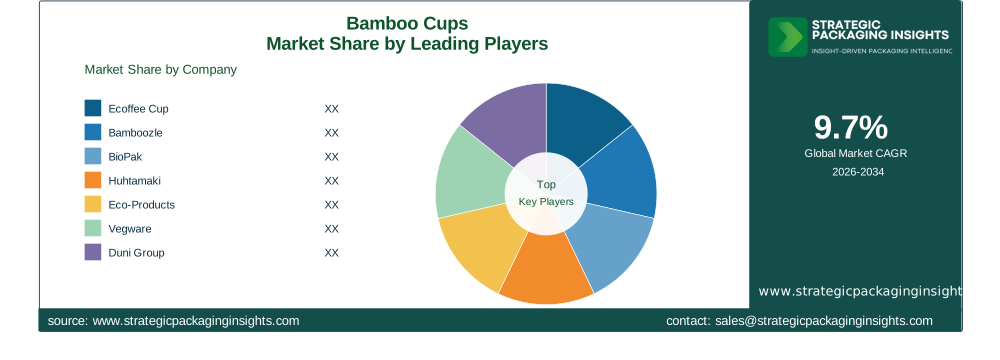
Ecoffee Cup is a leading player in the Bamboo Cups market, known for its innovative and stylish designs. The company focuses on sustainability and offers a wide range of reusable bamboo cups that cater to different consumer preferences. Bamboozle, another key player, is recognized for its eco-friendly products made from bamboo fiber. The company emphasizes product quality and sustainability, which has helped it gain a significant market share. BioPak is a prominent player in the eco-friendly packaging industry, offering a range of bamboo cups that are biodegradable and compostable.
Huhtamaki, a global leader in sustainable packaging solutions, has a strong presence in the Bamboo Cups market. The company focuses on innovation and sustainability, offering a range of bamboo cups that meet the needs of environmentally conscious consumers. Eco-Products, a subsidiary of Novolex, is known for its commitment to sustainability and offers a wide range of eco-friendly products, including bamboo cups. Vegware, a leading provider of compostable packaging solutions, offers a range of bamboo cups that are designed to reduce environmental impact.
Duni Group, a leading provider of sustainable tableware and packaging solutions, offers a range of bamboo cups that cater to the needs of environmentally conscious consumers. World Centric, a certified B Corporation, is known for its commitment to sustainability and offers a range of bamboo cups that are compostable and biodegradable. Green Paper Products, a provider of eco-friendly disposable products, offers a range of bamboo cups that are designed to reduce environmental impact. Zungleboo, a relatively new entrant in the market, focuses on innovative and stylish bamboo cup designs that appeal to a wide range of consumers.
Key Highlights
- The Bamboo Cups market is projected to grow at a CAGR of 9.7% from 2026 to 2034.
- Increasing consumer preference for sustainable and eco-friendly products is driving market growth.
- Reusable bamboo cups are gaining popularity due to their durability and aesthetic appeal.
- Online distribution channels are expanding market reach and accessibility.
- Government initiatives to reduce plastic waste are boosting demand for bamboo cups.
- High production costs remain a challenge for market players.
- Competition from alternative eco-friendly materials is impacting market share.
- Technological advancements in manufacturing are expected to reduce costs and improve product quality.
- Partnerships with specialty stores and foodservice providers are enhancing product visibility.
- Customization and personalization trends are creating new opportunities for market differentiation.
Top Countries Insights
In the Bamboo Cups market, China stands out as a leading player with a market size of approximately $0.45 billion and a CAGR of 12%. The country's strong manufacturing base and increasing consumer awareness about environmental sustainability are key growth drivers. Government policies promoting eco-friendly products and reducing plastic waste further support market expansion. However, challenges such as fluctuating raw material prices and competition from alternative materials persist.
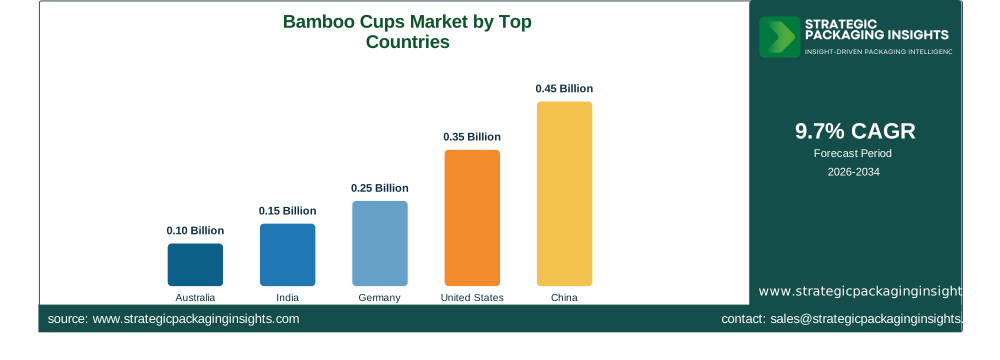
The United States is another significant market for bamboo cups, with a market size of around $0.35 billion and a CAGR of 10%. The growing trend of using reusable products and increasing consumer awareness about environmental issues are driving demand. The presence of key market players and a well-established distribution network also contribute to market growth. However, high production costs and competition from alternative materials pose challenges.
Germany, with a market size of approximately $0.25 billion and a CAGR of 9%, is a key player in the European Bamboo Cups market. The country's strong focus on sustainability and environmental conservation drives demand for eco-friendly products. Government regulations promoting the use of sustainable materials further support market growth. However, the high cost of bamboo cups compared to traditional alternatives remains a challenge.
In the Asia Pacific region, India is emerging as a promising market for bamboo cups, with a market size of around $0.15 billion and a CAGR of 14%. The increasing awareness about environmental sustainability and government initiatives to reduce plastic waste are key growth drivers. The growing trend of using reusable products in households and commercial spaces also contributes to market expansion. However, low consumer awareness and competition from alternative materials pose challenges.
Australia, with a market size of approximately $0.10 billion and a CAGR of 11%, is a significant player in the Bamboo Cups market. The country's strong focus on environmental conservation and increasing consumer preference for sustainable products drive demand. Government initiatives promoting eco-friendly products further support market growth. However, high production costs and competition from alternative materials remain challenges.
Bamboo Cups Market Segments Insights

Product Type Analysis
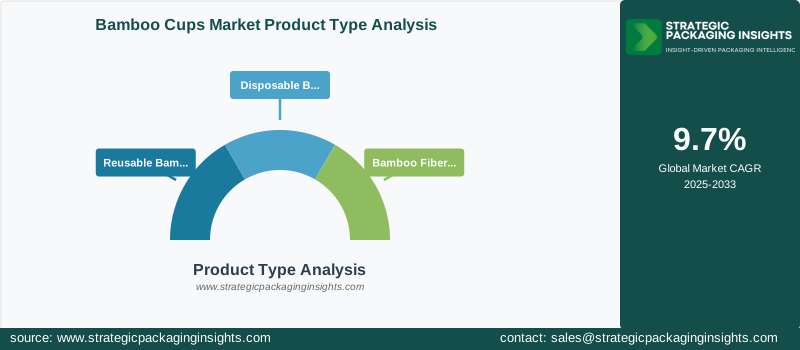
The Bamboo Cups market is segmented by product type into reusable bamboo cups, disposable bamboo cups, and bamboo fiber cups. Reusable bamboo cups are gaining significant traction due to their durability and eco-friendly nature. Consumers are increasingly opting for reusable options to reduce single-use plastic waste, which is driving demand in this segment. The aesthetic appeal and versatility of reusable bamboo cups make them a popular choice among environmentally conscious consumers. On the other hand, disposable bamboo cups are preferred in foodservice and hospitality sectors where convenience and hygiene are prioritized. Bamboo fiber cups, known for their lightweight and biodegradable properties, are also witnessing growing demand, particularly in regions with stringent environmental regulations.
The competition in the product type segment is intense, with companies focusing on innovation and product differentiation to capture market share. Manufacturers are investing in research and development to enhance the quality and design of bamboo cups, catering to diverse consumer preferences. The growing trend of customization and personalization is also influencing product offerings, with companies offering unique designs and features to attract consumers. Additionally, technological advancements in manufacturing processes are expected to reduce production costs and improve product quality, further driving growth in this segment.
Application Analysis
The Bamboo Cups market is segmented by application into hot beverages, cold beverages, foodservice, and retail. The hot beverages segment holds a significant share of the market, driven by the increasing consumption of coffee and tea in households and commercial spaces. Bamboo cups are preferred for hot beverages due to their thermal insulation properties and aesthetic appeal. The cold beverages segment is also witnessing growth, with consumers opting for bamboo cups as a sustainable alternative to plastic and paper cups. In the foodservice sector, bamboo cups are gaining popularity due to their convenience and eco-friendly nature, aligning with the industry's focus on sustainability.
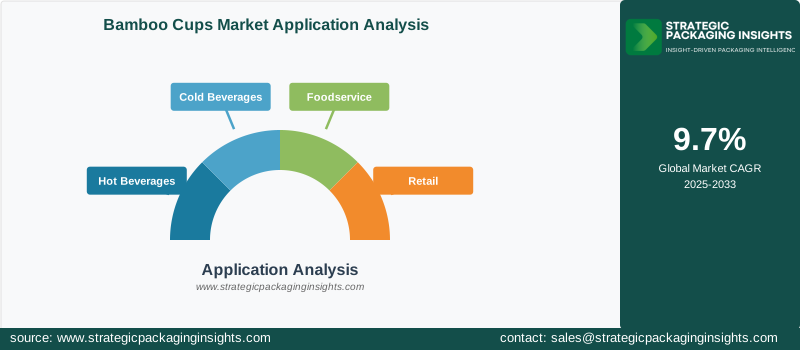
The retail segment is experiencing growth as consumers increasingly purchase bamboo cups for personal use and gifting purposes. The rising trend of using eco-friendly products in households is driving demand in this segment. Companies are focusing on expanding their product offerings and distribution networks to cater to the growing demand in the application segment. Partnerships with foodservice providers and retailers are enhancing product visibility and accessibility, further driving market growth. However, the high cost of bamboo cups compared to traditional alternatives remains a challenge in this segment.
Distribution Channel Analysis
The Bamboo Cups market is segmented by distribution channel into online, supermarkets, specialty stores, and foodservice. The online distribution channel is witnessing significant growth, driven by the increasing popularity of e-commerce platforms. Consumers prefer online shopping for its convenience and the ability to compare a wide range of products. The online channel also allows manufacturers to reach a broader audience and tap into new markets. Supermarkets and specialty stores remain important distribution channels, offering consumers the opportunity to physically examine products before purchase. These channels are particularly popular in regions with high consumer awareness about eco-friendly products.
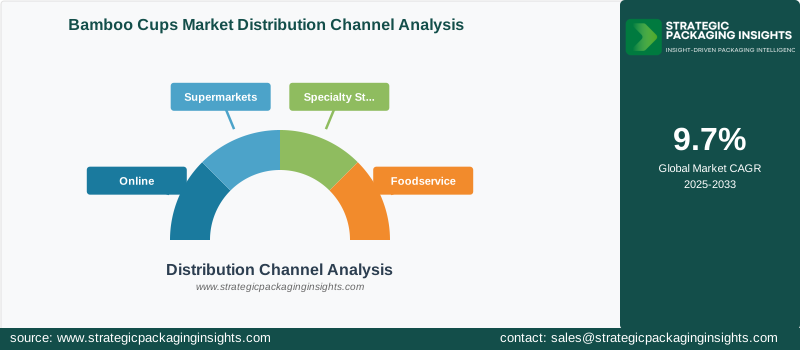
The foodservice distribution channel is also experiencing growth, with bamboo cups being increasingly used in cafés, restaurants, and quick-service restaurants (QSRs). The focus on sustainability and reducing single-use plastic waste is driving demand in this channel. Companies are forming strategic partnerships with foodservice providers to enhance product visibility and accessibility. However, the high cost of bamboo cups compared to traditional alternatives remains a challenge in the distribution channel segment. To overcome this, companies are focusing on cost optimization and strategic pricing to attract price-sensitive consumers.
End Use Analysis
The Bamboo Cups market is segmented by end use into households, cafés, QSRs, and hospitality. The household segment holds a significant share of the market, driven by the increasing trend of using eco-friendly products in daily life. Consumers are opting for bamboo cups as a sustainable alternative to plastic and paper cups, contributing to the growth of this segment. The cafés and QSRs segments are also witnessing growth, with businesses focusing on sustainability and reducing single-use plastic waste. Bamboo cups are preferred in these segments for their durability and aesthetic appeal, aligning with the industry's focus on providing a unique customer experience.
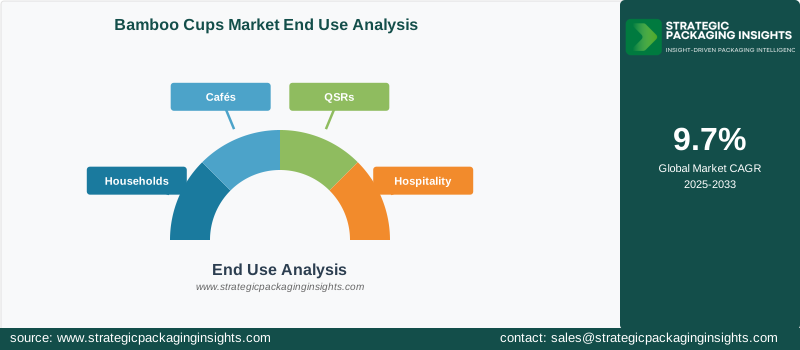
The hospitality segment is experiencing growth as hotels and resorts increasingly adopt sustainable practices to enhance their brand image and appeal to environmentally conscious consumers. Bamboo cups are used in hospitality settings for their eco-friendly nature and aesthetic appeal, contributing to the segment's growth. Companies are focusing on expanding their product offerings and forming strategic partnerships with hospitality providers to enhance market penetration. However, the high cost of bamboo cups compared to traditional alternatives remains a challenge in the end-use segment. To address this, companies are focusing on cost optimization and strategic pricing to attract price-sensitive consumers.
Bamboo Cups Market Segments
The Bamboo Cups market has been segmented on the basis ofProduct Type
- Reusable Bamboo Cups
- Disposable Bamboo Cups
- Bamboo Fiber Cups
Application
- Hot Beverages
- Cold Beverages
- Foodservice
- Retail
Distribution Channel
- Online
- Supermarkets
- Specialty Stores
- Foodservice
End Use
- Households
- Cafés
- QSRs
- Hospitality
Region
- Asia Pacific
- North America
- Latin America
- Europe
- Middle East & Africa




