


Bagging Equipment Market Outlook
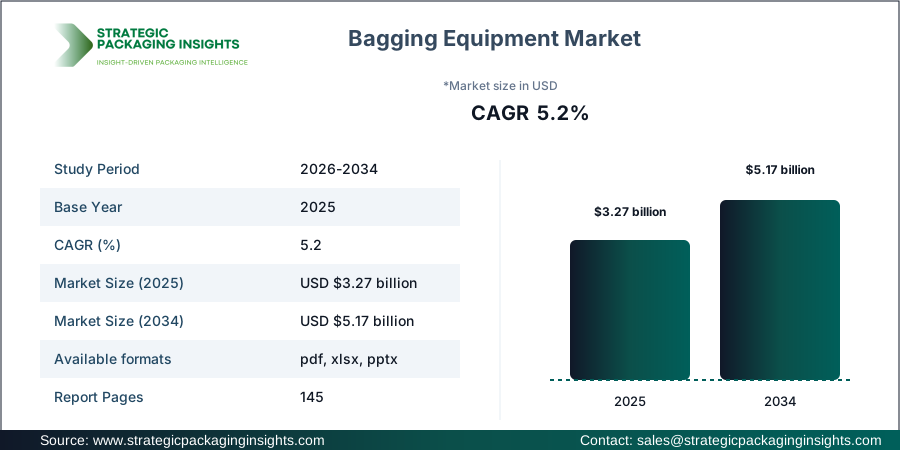
The bagging equipment market was valued at $3.27 billion in 2025 and is projected to reach $5.17 billion by 2034, growing at a CAGR of 5.2% during the forecast period 2026-2034. This growth is driven by the increasing demand for efficient packaging solutions across various industries such as food, chemicals, and construction. The need for automation in packaging processes to enhance productivity and reduce labor costs is also a significant factor propelling market expansion. Additionally, the rise in e-commerce and retail sectors has led to a surge in demand for flexible and reliable packaging solutions, further boosting the market for bagging equipment.
Despite the promising growth prospects, the bagging equipment market faces certain challenges. Regulatory constraints related to packaging waste and environmental concerns are some of the key restraints that could hinder market growth. However, the development of eco-friendly and sustainable packaging solutions presents significant growth potential for market players. The increasing focus on reducing carbon footprints and adopting green packaging practices is expected to create new opportunities for innovation and expansion in the bagging equipment market.
Report Scope
| Attributes | Details |
| Report Title | Bagging Equipment Market Size, Future Growth and Forecast 2034 |
| Machine Type | Open-Mouth, Form-Fill-Seal, Valve Bag |
| Automation | Manual, Semi-Automatic, Automatic |
| End Use | Food, Chemicals, Construction |
| Bag Type | Paper, Plastic, Woven |
| Region | Asia Pacific, North America, Latin America, Europe, Middle East & Africa |
| Base Year | 2025 |
| Historic Period | 2018-2024 |
| Forecast Period | 2026-2034 |
| Number of Pages | 145 |
| Customization Available | Yes* |
Opportunities & Threats
The bagging equipment market is poised for significant opportunities, primarily driven by technological advancements and the increasing adoption of automation in packaging processes. The integration of IoT and AI in bagging equipment is expected to enhance operational efficiency, reduce downtime, and improve overall productivity. This technological shift is anticipated to open new avenues for market players, enabling them to offer advanced and customized solutions to meet the evolving needs of end-users. Furthermore, the growing demand for sustainable packaging solutions presents a lucrative opportunity for manufacturers to develop eco-friendly bagging equipment that aligns with global environmental standards.
Another opportunity lies in the expanding e-commerce sector, which has led to a surge in demand for efficient and reliable packaging solutions. The need for quick and safe delivery of products has increased the adoption of advanced bagging equipment, particularly in the food and retail industries. This trend is expected to continue, providing a significant boost to the market. Additionally, the increasing focus on reducing packaging waste and improving recyclability is likely to drive innovation in the development of sustainable bagging solutions, further enhancing market growth.
However, the market also faces certain threats, primarily in the form of stringent regulatory requirements related to packaging waste and environmental impact. Compliance with these regulations can increase operational costs for manufacturers, potentially affecting profitability. Moreover, the high initial investment required for advanced bagging equipment can be a barrier for small and medium-sized enterprises, limiting market penetration. The volatility in raw material prices and the availability of low-cost alternatives can also pose challenges to market growth.
Drivers & Challenges
The primary drivers of the bagging equipment market include the increasing demand for automation in packaging processes and the growing need for efficient and reliable packaging solutions across various industries. Automation helps in reducing labor costs, enhancing productivity, and ensuring consistent quality, making it a preferred choice for manufacturers. The rise in e-commerce and retail sectors has further fueled the demand for advanced bagging equipment, as businesses seek to improve their packaging efficiency to meet the growing consumer demand. Additionally, the development of innovative and sustainable packaging solutions is driving market growth, as companies strive to reduce their environmental impact and comply with regulatory standards.
Another significant driver is the technological advancements in bagging equipment, such as the integration of IoT and AI, which are enhancing operational efficiency and reducing downtime. These technologies enable real-time monitoring and predictive maintenance, improving the overall performance of bagging equipment. The increasing focus on product safety and hygiene, particularly in the food and pharmaceutical industries, is also driving the demand for advanced bagging solutions that ensure product integrity and compliance with health standards.
Despite these drivers, the bagging equipment market faces several challenges. One of the primary challenges is the high initial investment required for advanced bagging equipment, which can be a barrier for small and medium-sized enterprises. Additionally, the market is subject to stringent regulatory requirements related to packaging waste and environmental impact, which can increase operational costs for manufacturers. The volatility in raw material prices and the availability of low-cost alternatives can also pose challenges to market growth. Furthermore, the need for continuous innovation to meet the evolving demands of end-users requires significant investment in research and development, which can be a challenge for some market players.
Market Share Analysis
The competitive landscape of the bagging equipment market is characterized by the presence of several key players who are actively engaged in product innovation and strategic partnerships to strengthen their market position. Companies such as W&H, TNA Solutions, Premier Tech, IMA Group, ARPAC, BW Flexible Systems, Syntegon, Rennco, Bosch Packaging, and Hamer-Fischbein are some of the prominent players in the market. These companies are focusing on expanding their product portfolios and enhancing their distribution networks to cater to the growing demand for advanced bagging solutions across various industries.
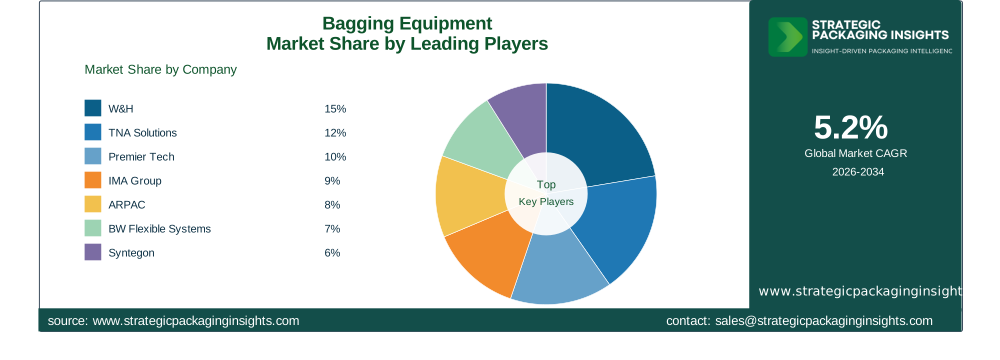
W&H holds a significant market share, driven by its strong focus on innovation and customer-centric solutions. The company offers a wide range of bagging equipment, catering to diverse industry needs. TNA Solutions is another major player, known for its high-performance packaging solutions and commitment to sustainability. The company's focus on research and development has enabled it to introduce innovative products that meet the evolving demands of the market.
Premier Tech is recognized for its comprehensive range of bagging equipment and its emphasis on providing customized solutions to its clients. The company's strong global presence and extensive distribution network have contributed to its significant market share. IMA Group, with its advanced technological capabilities and focus on automation, is also a key player in the market. The company's commitment to quality and innovation has helped it maintain a competitive edge in the industry.
ARPAC and BW Flexible Systems are known for their robust and reliable bagging solutions, catering to a wide range of industries. These companies have established a strong market presence through strategic partnerships and collaborations. Syntegon, Rennco, Bosch Packaging, and Hamer-Fischbein are also prominent players, offering a diverse range of bagging equipment and focusing on enhancing their product offerings to meet the growing demand for efficient and sustainable packaging solutions.
Key Highlights
- The bagging equipment market is projected to grow at a CAGR of 5.2% from 2026 to 2034.
- Technological advancements, such as IoT and AI integration, are driving market growth.
- The increasing demand for automation in packaging processes is a significant market driver.
- Regulatory constraints related to packaging waste pose challenges to market growth.
- The development of eco-friendly and sustainable packaging solutions presents growth opportunities.
- The expanding e-commerce sector is boosting demand for advanced bagging equipment.
- High initial investment costs can be a barrier for small and medium-sized enterprises.
- Key players are focusing on product innovation and strategic partnerships to strengthen their market position.
- The food, chemicals, and construction industries are major end-users of bagging equipment.
- Asia Pacific is expected to witness significant market growth due to increasing industrialization and urbanization.
Top Countries Insights
In the bagging equipment market, the United States holds a significant share, driven by the presence of major manufacturers and the increasing demand for advanced packaging solutions in the food and retail sectors. The market in the U.S. is expected to grow at a CAGR of 4%, supported by technological advancements and the adoption of automation in packaging processes. The country's focus on sustainability and reducing packaging waste is also contributing to market growth.
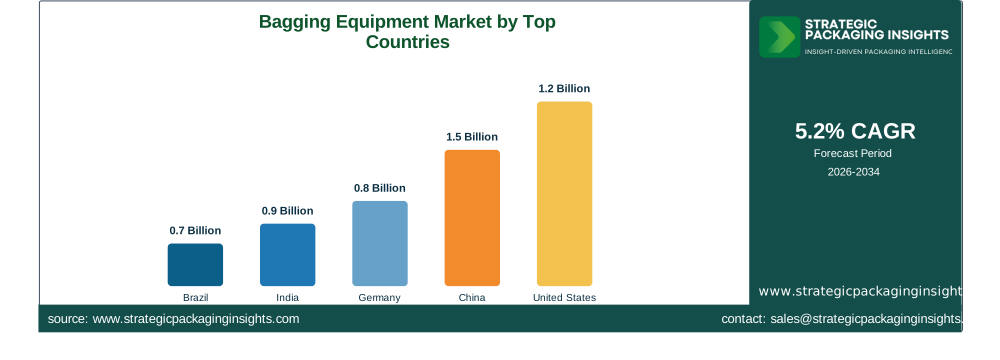
China is another key market for bagging equipment, with a projected CAGR of 7%. The rapid industrialization and urbanization in the country are driving the demand for efficient packaging solutions. The government's initiatives to promote sustainable packaging practices and reduce environmental impact are further boosting market growth. Additionally, the expanding e-commerce sector in China is creating significant opportunities for bagging equipment manufacturers.
Germany is a prominent market in Europe, with a strong focus on innovation and sustainability. The market is expected to grow at a CAGR of 5%, driven by the increasing demand for automated packaging solutions in the food and pharmaceutical industries. The country's stringent regulatory requirements related to packaging waste are encouraging the development of eco-friendly bagging equipment.
India is witnessing significant growth in the bagging equipment market, with a projected CAGR of 8%. The country's expanding food and retail sectors are driving the demand for advanced packaging solutions. The government's initiatives to promote manufacturing and reduce packaging waste are also contributing to market growth. The increasing adoption of automation in packaging processes is further enhancing market prospects.
Brazil is an emerging market for bagging equipment, with a CAGR of 6%. The country's growing construction and chemicals industries are driving the demand for efficient and reliable packaging solutions. The focus on sustainability and reducing environmental impact is also encouraging the adoption of advanced bagging equipment. The expanding e-commerce sector in Brazil is creating new opportunities for market players.
Bagging Equipment Market Segments Insights

Machine Type Analysis
The bagging equipment market is segmented by machine type into open-mouth, form-fill-seal, and valve bag machines. Open-mouth bagging machines are widely used in industries such as food and chemicals due to their versatility and ability to handle a variety of bag types and sizes. The demand for open-mouth machines is driven by their efficiency and ease of use, making them a preferred choice for manufacturers looking to enhance their packaging processes. Form-fill-seal machines are gaining popularity due to their ability to automate the entire packaging process, from forming the bag to sealing it, which significantly reduces labor costs and increases productivity. Valve bag machines are commonly used in the construction industry for packaging powdered materials, offering a dust-free and efficient solution for handling bulk products.
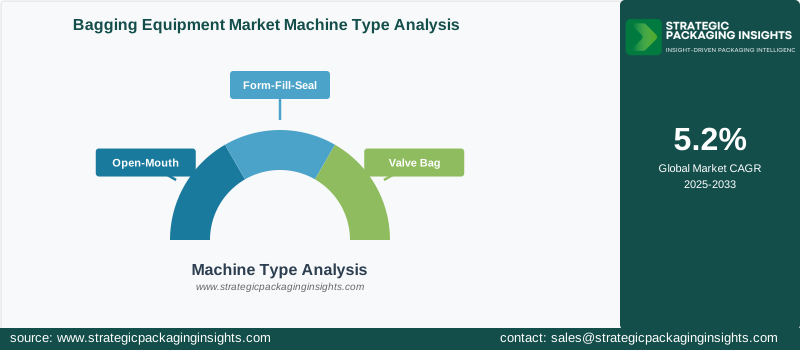
The increasing demand for automation in packaging processes is a significant driver for the growth of the form-fill-seal segment. These machines offer high-speed and precise packaging solutions, making them ideal for industries with high production volumes. The development of advanced technologies, such as IoT and AI integration, is further enhancing the capabilities of these machines, enabling real-time monitoring and predictive maintenance. The valve bag segment is also witnessing growth due to the rising demand for efficient and reliable packaging solutions in the construction industry. The focus on reducing packaging waste and improving recyclability is encouraging manufacturers to develop innovative and sustainable bagging solutions.
Automation Analysis
The bagging equipment market is segmented by automation into manual, semi-automatic, and automatic machines. The demand for automatic bagging machines is increasing due to their ability to enhance productivity and reduce labor costs. These machines offer high-speed and precise packaging solutions, making them ideal for industries with high production volumes. The integration of advanced technologies, such as IoT and AI, is further enhancing the capabilities of automatic machines, enabling real-time monitoring and predictive maintenance. Semi-automatic machines are also gaining popularity due to their flexibility and cost-effectiveness, making them a preferred choice for small and medium-sized enterprises.
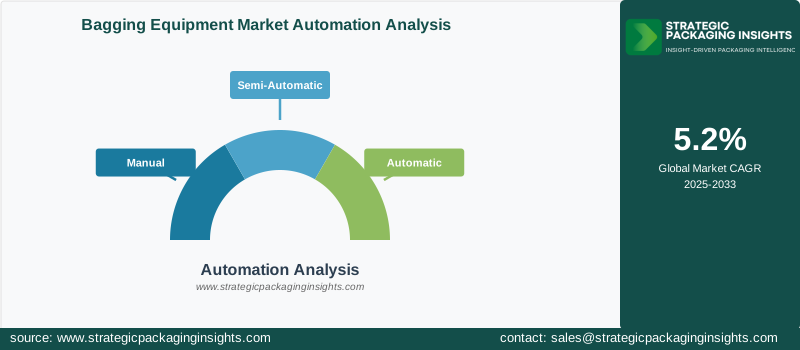
The manual segment, although declining, still holds a significant share in the market, particularly in developing regions where labor costs are relatively low. However, the increasing focus on automation and the need for efficient and reliable packaging solutions are driving the shift towards semi-automatic and automatic machines. The development of innovative and sustainable packaging solutions is also encouraging manufacturers to invest in advanced bagging equipment that aligns with global environmental standards. The growing demand for eco-friendly packaging solutions is expected to create new opportunities for market players, particularly in the automatic segment.
End Use Analysis
The bagging equipment market is segmented by end use into food, chemicals, and construction industries. The food industry is a major end-user of bagging equipment, driven by the increasing demand for efficient and reliable packaging solutions to ensure product safety and hygiene. The rise in e-commerce and retail sectors has further fueled the demand for advanced bagging equipment in the food industry, as businesses seek to improve their packaging efficiency to meet the growing consumer demand. The chemicals industry is also a significant end-user, with the need for safe and efficient packaging solutions for handling hazardous materials.
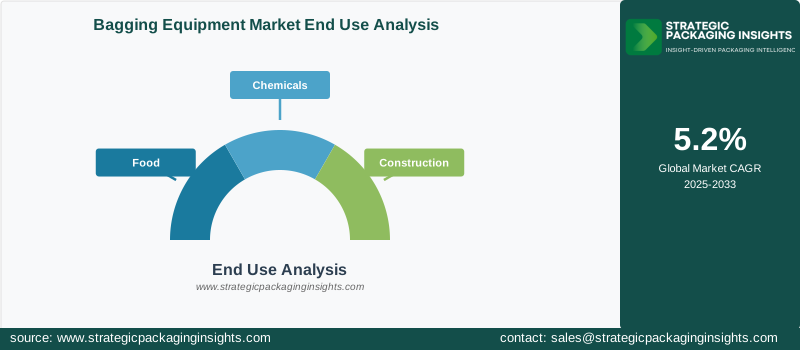
The construction industry is witnessing significant growth in the demand for bagging equipment, particularly for packaging powdered materials such as cement and plaster. The increasing focus on reducing packaging waste and improving recyclability is encouraging manufacturers to develop innovative and sustainable bagging solutions for the construction industry. The development of advanced technologies, such as IoT and AI integration, is further enhancing the capabilities of bagging equipment, enabling real-time monitoring and predictive maintenance. The growing demand for eco-friendly packaging solutions is expected to create new opportunities for market players in the construction industry.
Bag Type Analysis
The bagging equipment market is segmented by bag type into paper, plastic, and woven bags. The demand for paper bags is increasing due to their eco-friendly nature and the growing focus on sustainability. The development of innovative and sustainable packaging solutions is encouraging manufacturers to invest in advanced bagging equipment that aligns with global environmental standards. The plastic segment, although facing challenges due to environmental concerns, still holds a significant share in the market, particularly in industries where durability and moisture resistance are critical.
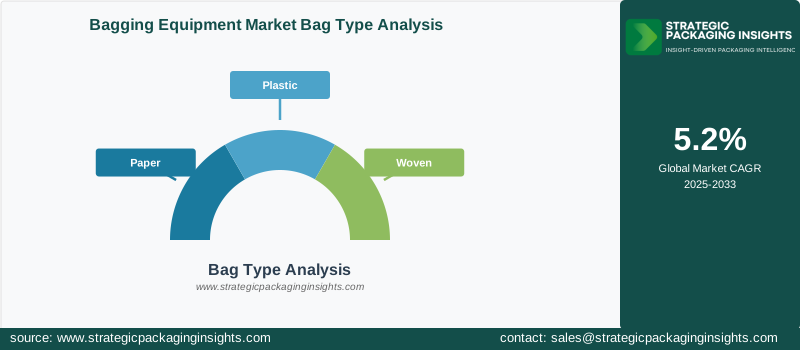
The woven segment is witnessing growth due to its strength and durability, making it ideal for packaging bulk materials in industries such as construction and chemicals. The increasing demand for efficient and reliable packaging solutions is driving the growth of the woven segment, as manufacturers seek to enhance their packaging processes to meet the evolving needs of end-users. The development of advanced technologies, such as IoT and AI integration, is further enhancing the capabilities of bagging equipment, enabling real-time monitoring and predictive maintenance. The growing demand for eco-friendly packaging solutions is expected to create new opportunities for market players in the woven segment.
Bagging Equipment Market Segments
The Bagging Equipment market has been segmented on the basis ofMachine Type
- Open-Mouth
- Form-Fill-Seal
- Valve Bag
Automation
- Manual
- Semi-Automatic
- Automatic
End Use
- Food
- Chemicals
- Construction
Bag Type
- Paper
- Plastic
- Woven
Region
- Asia Pacific
- North America
- Latin America
- Europe
- Middle East & Africa




