


B2B Hygienic Paper Market Outlook
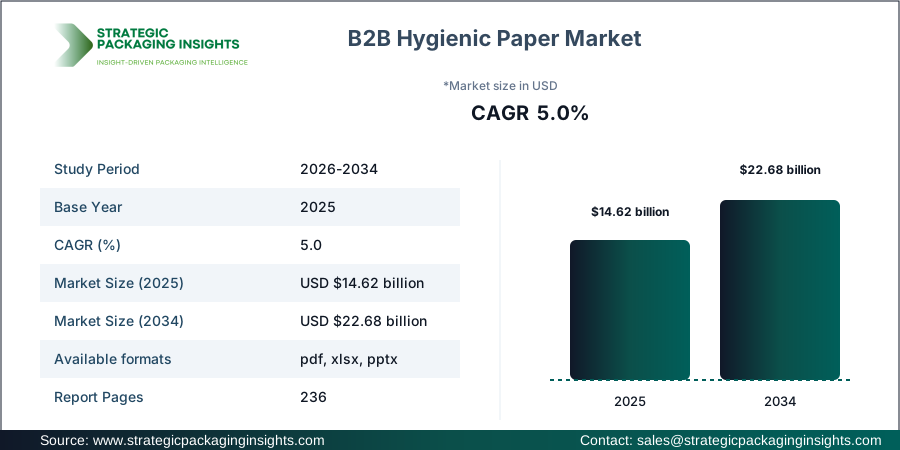
The B2B Hygienic Paper market was valued at $14.62 billion in 2025 and is projected to reach $22.68 billion by 2034, growing at a CAGR of 5.0% during the forecast period 2026-2034. This market is driven by the increasing demand for hygiene products across various sectors such as healthcare, hospitality, and foodservice. The rising awareness about hygiene and sanitation, especially in the wake of global health crises, has significantly boosted the demand for hygienic paper products. Additionally, the expansion of the hospitality and healthcare sectors in emerging economies is expected to further fuel market growth. The market is also witnessing innovations in product offerings, such as eco-friendly and biodegradable paper products, which are gaining traction among environmentally conscious consumers.
However, the market faces certain restraints, including the volatility in raw material prices and stringent environmental regulations regarding paper production. These factors could potentially hinder market growth. Despite these challenges, the market holds significant growth potential due to the increasing adoption of sustainable practices and the development of advanced manufacturing technologies. Companies are investing in research and development to create innovative products that meet the evolving needs of consumers while adhering to environmental standards. The shift towards digitalization and e-commerce is also opening new avenues for market expansion, as businesses increasingly rely on online platforms for product distribution and sales.
Report Scope
| Attributes | Details |
| Report Title | B2B Hygienic Paper Market Size, Future Growth and Forecast 2034 |
| By Product Type | Paper Towels, Toilet Tissue, Napkins, Wipes |
| By Application | Workplaces, Healthcare, Hospitality, Foodservice |
| By Sales Channel | Distributors, Institutional, Direct Sales |
| By End Use | Offices, Hospitals, Hotels, Restaurants |
| Region | Asia Pacific, North America, Latin America, Europe, Middle East & Africa |
| Base Year | 2025 |
| Historic Period | 2018-2024 |
| Forecast Period | 2026-2034 |
| Number of Pages | 236 |
| Customization Available | Yes* |
Opportunities & Threats
The B2B Hygienic Paper market presents numerous opportunities for growth, particularly in the development of sustainable and eco-friendly products. As environmental concerns continue to rise, there is a growing demand for biodegradable and recyclable paper products. Companies that invest in sustainable manufacturing processes and materials are likely to gain a competitive edge in the market. Additionally, the increasing focus on hygiene and sanitation in public spaces, workplaces, and healthcare facilities is driving the demand for hygienic paper products. This trend is expected to continue, providing ample opportunities for market players to expand their product offerings and reach new customer segments.
Another significant opportunity lies in the expansion of the market in emerging economies. As these regions experience economic growth and urbanization, the demand for hygienic paper products is expected to rise. Companies that establish a strong presence in these markets can capitalize on the growing demand and increase their market share. Furthermore, the rise of e-commerce and digital platforms offers new distribution channels for hygienic paper products, allowing companies to reach a wider audience and streamline their supply chains.
Despite the opportunities, the market also faces threats from fluctuating raw material prices and stringent environmental regulations. The cost of raw materials, such as pulp and paper, can significantly impact the profitability of companies in the market. Additionally, environmental regulations regarding paper production and waste management can pose challenges for manufacturers. Companies must navigate these regulatory landscapes carefully to avoid potential fines and reputational damage. Moreover, the increasing competition in the market, with the entry of new players and the expansion of existing ones, can lead to price wars and reduced profit margins.
Drivers & Challenges
The primary drivers of the B2B Hygienic Paper market include the growing awareness of hygiene and sanitation, the expansion of the healthcare and hospitality sectors, and the increasing demand for eco-friendly products. The COVID-19 pandemic has heightened the importance of hygiene, leading to a surge in demand for hygienic paper products in various sectors. The healthcare industry, in particular, has seen a significant increase in the use of paper towels, tissues, and wipes to maintain cleanliness and prevent the spread of infections. Similarly, the hospitality sector is investing in hygienic paper products to enhance guest experiences and ensure safety.
Another key driver is the innovation in product offerings, with companies developing new and improved hygienic paper products to meet consumer demands. The introduction of biodegradable and recyclable products is gaining popularity among environmentally conscious consumers, driving market growth. Additionally, the rise of digitalization and e-commerce is providing new opportunities for market expansion, as businesses increasingly rely on online platforms for product distribution and sales. This shift towards digital channels is expected to continue, further boosting market growth.
However, the market also faces several challenges, including the volatility in raw material prices and the stringent environmental regulations governing paper production. The cost of raw materials, such as pulp and paper, can significantly impact the profitability of companies in the market. Additionally, environmental regulations regarding paper production and waste management can pose challenges for manufacturers. Companies must navigate these regulatory landscapes carefully to avoid potential fines and reputational damage. Moreover, the increasing competition in the market, with the entry of new players and the expansion of existing ones, can lead to price wars and reduced profit margins.
Market Share Analysis
The B2B Hygienic Paper market is characterized by a competitive landscape with several key players holding significant market shares. Kimberly-Clark Professional is one of the leading companies in the market, known for its innovative product offerings and strong distribution network. The company has a substantial market share, driven by its focus on sustainability and customer-centric solutions. Essity is another major player, with a strong presence in the European market. The company's commitment to sustainability and its extensive product portfolio have helped it maintain a competitive edge.
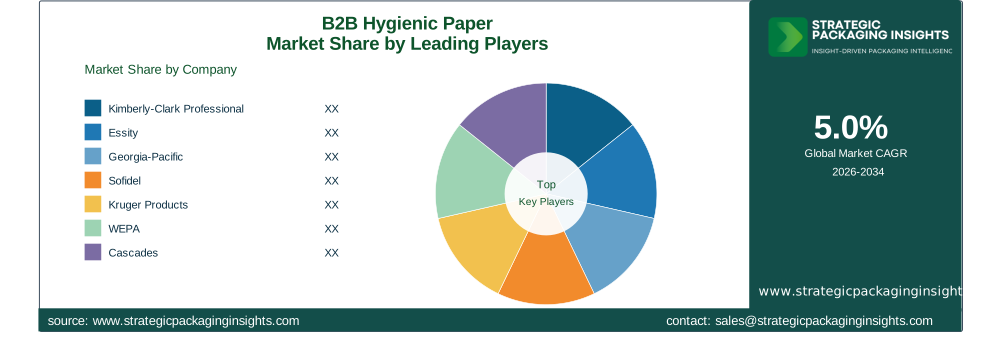
Georgia-Pacific is a prominent player in the North American market, known for its high-quality products and strong brand reputation. The company's focus on innovation and customer satisfaction has contributed to its significant market share. Sofidel, a leading European manufacturer, is recognized for its sustainable practices and eco-friendly product offerings. The company's commitment to reducing its environmental impact has resonated with consumers, boosting its market position.
Kruger Products, WEPA, and Cascades are other notable players in the market, each with a strong focus on sustainability and innovation. These companies have invested in advanced manufacturing technologies and sustainable practices to meet the growing demand for eco-friendly products. Hengan International and Asia Pulp & Paper are key players in the Asia Pacific region, with a strong focus on expanding their product offerings and distribution networks. Procter & Gamble, a global leader in consumer goods, has a significant presence in the hygienic paper market, driven by its strong brand reputation and extensive product portfolio.
Key Highlights
- The B2B Hygienic Paper market is projected to grow at a CAGR of 5.0% from 2026 to 2034.
- Increasing demand for eco-friendly and biodegradable paper products is driving market growth.
- The healthcare and hospitality sectors are major contributors to the rising demand for hygienic paper products.
- Emerging economies present significant growth opportunities for market expansion.
- Fluctuating raw material prices and stringent environmental regulations pose challenges for manufacturers.
- Digitalization and e-commerce are providing new distribution channels for hygienic paper products.
- Key players in the market include Kimberly-Clark Professional, Essity, and Georgia-Pacific.
- Innovation in product offerings, such as biodegradable and recyclable products, is gaining traction.
- The market is witnessing increased competition with the entry of new players and the expansion of existing ones.
- Companies are investing in research and development to create innovative products that meet consumer demands.
Top Countries Insights
In the B2B Hygienic Paper market, the United States holds a significant market share, driven by the strong presence of key players and the high demand for hygienic products in the healthcare and hospitality sectors. The market in the U.S. is expected to grow at a CAGR of 4%, supported by the increasing focus on hygiene and sanitation. Government regulations promoting hygiene in public spaces and workplaces further boost market growth.
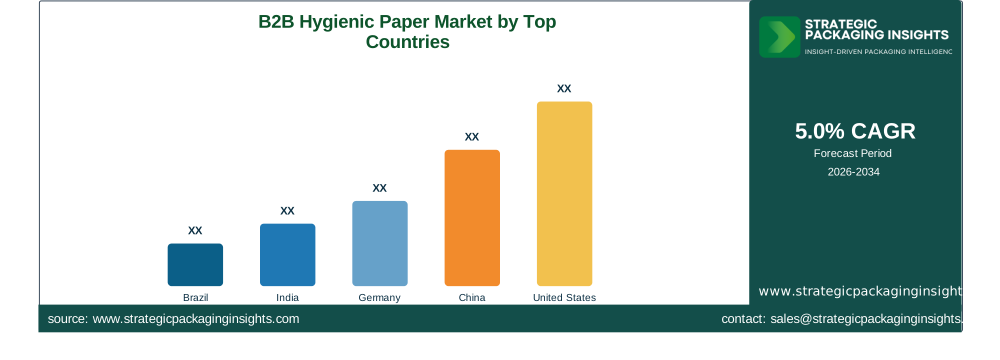
China is another major market for hygienic paper products, with a projected CAGR of 6%. The rapid urbanization and economic growth in the country have led to increased demand for hygiene products in various sectors. The government's initiatives to improve public health and sanitation are also driving market growth. Additionally, the presence of key players such as Hengan International and Asia Pulp & Paper contributes to the market's expansion.
Germany is a leading market in Europe, with a CAGR of 5%. The country's strong focus on sustainability and environmental regulations has led to increased demand for eco-friendly hygienic paper products. The presence of major players such as Essity and WEPA further strengthens the market. The growing awareness of hygiene and sanitation in public spaces and workplaces is also driving market growth.
India is an emerging market with significant growth potential, projected to grow at a CAGR of 7%. The increasing population and urbanization are driving the demand for hygienic paper products in the country. The government's initiatives to improve sanitation and hygiene in public spaces and workplaces are also contributing to market growth. The presence of key players such as Asia Pulp & Paper further supports the market's expansion.
Brazil is a key market in Latin America, with a projected CAGR of 5%. The country's growing economy and increasing focus on hygiene and sanitation are driving the demand for hygienic paper products. The presence of major players such as Kimberly-Clark Professional and Procter & Gamble further strengthens the market. The government's initiatives to improve public health and sanitation are also contributing to market growth.
B2B Hygienic Paper Market Segments Insights

Product Type Analysis
The B2B Hygienic Paper market is segmented by product type into paper towels, toilet tissue, napkins, and wipes. Paper towels are widely used in various sectors, including workplaces, healthcare, and hospitality, due to their convenience and effectiveness in maintaining hygiene. The demand for paper towels is driven by the increasing focus on hygiene and sanitation, particularly in the wake of global health crises. Toilet tissue is another major segment, with high demand in both commercial and residential settings. The introduction of eco-friendly and biodegradable toilet tissue products is gaining traction among environmentally conscious consumers.
Napkins and wipes are also significant segments in the market, with growing demand in the foodservice and hospitality sectors. The increasing focus on hygiene and cleanliness in these sectors is driving the demand for napkins and wipes. Companies are investing in research and development to create innovative products that meet the evolving needs of consumers. The introduction of biodegradable and recyclable napkins and wipes is gaining popularity, further boosting market growth. The competition in the product type segment is intense, with key players focusing on product innovation and sustainability to gain a competitive edge.
Application Analysis
The B2B Hygienic Paper market is segmented by application into workplaces, healthcare, hospitality, and foodservice. The healthcare sector is a major contributor to the market, with high demand for hygienic paper products to maintain cleanliness and prevent the spread of infections. The increasing focus on hygiene and sanitation in healthcare facilities is driving the demand for paper towels, tissues, and wipes. The hospitality sector is another significant segment, with growing demand for hygienic paper products to enhance guest experiences and ensure safety.
Workplaces and foodservice sectors are also key segments in the market, with increasing demand for hygienic paper products to maintain cleanliness and hygiene. The growing awareness of hygiene and sanitation in public spaces and workplaces is driving the demand for these products. Companies are investing in research and development to create innovative products that meet the evolving needs of consumers. The introduction of biodegradable and recyclable products is gaining popularity, further boosting market growth. The competition in the application segment is intense, with key players focusing on product innovation and sustainability to gain a competitive edge.
Sales Channel Analysis
The B2B Hygienic Paper market is segmented by sales channel into distributors, institutional, and direct sales. Distributors are a major sales channel, with a strong presence in the market due to their extensive distribution networks and ability to reach a wide range of customers. The demand for hygienic paper products through distributors is driven by the increasing focus on hygiene and sanitation in various sectors. Institutional sales are another significant segment, with high demand for hygienic paper products in healthcare, hospitality, and foodservice sectors.
Direct sales are also a key segment in the market, with growing demand for hygienic paper products from businesses and organizations. The rise of e-commerce and digital platforms is providing new distribution channels for hygienic paper products, allowing companies to reach a wider audience and streamline their supply chains. The competition in the sales channel segment is intense, with key players focusing on expanding their distribution networks and leveraging digital platforms to gain a competitive edge. Companies are investing in research and development to create innovative products that meet the evolving needs of consumers.
End Use Analysis
The B2B Hygienic Paper market is segmented by end use into offices, hospitals, hotels, and restaurants. Offices are a major end-use segment, with high demand for hygienic paper products to maintain cleanliness and hygiene in the workplace. The increasing focus on hygiene and sanitation in offices is driving the demand for paper towels, tissues, and wipes. Hospitals are another significant segment, with growing demand for hygienic paper products to maintain cleanliness and prevent the spread of infections.
Hotels and restaurants are also key segments in the market, with increasing demand for hygienic paper products to enhance guest experiences and ensure safety. The growing awareness of hygiene and sanitation in public spaces and workplaces is driving the demand for these products. Companies are investing in research and development to create innovative products that meet the evolving needs of consumers. The introduction of biodegradable and recyclable products is gaining popularity, further boosting market growth. The competition in the end-use segment is intense, with key players focusing on product innovation and sustainability to gain a competitive edge.
B2B Hygienic Paper Market Segments
The B2B Hygienic Paper market has been segmented on the basis ofBy Product Type
- Paper Towels
- Toilet Tissue
- Napkins
- Wipes
By Application
- Workplaces
- Healthcare
- Hospitality
- Foodservice
By Sales Channel
- Distributors
- Institutional
- Direct Sales
By End Use
- Offices
- Hospitals
- Hotels
- Restaurants
Region
- Asia Pacific
- North America
- Latin America
- Europe
- Middle East & Africa




