


Automotive Tape Market Outlook
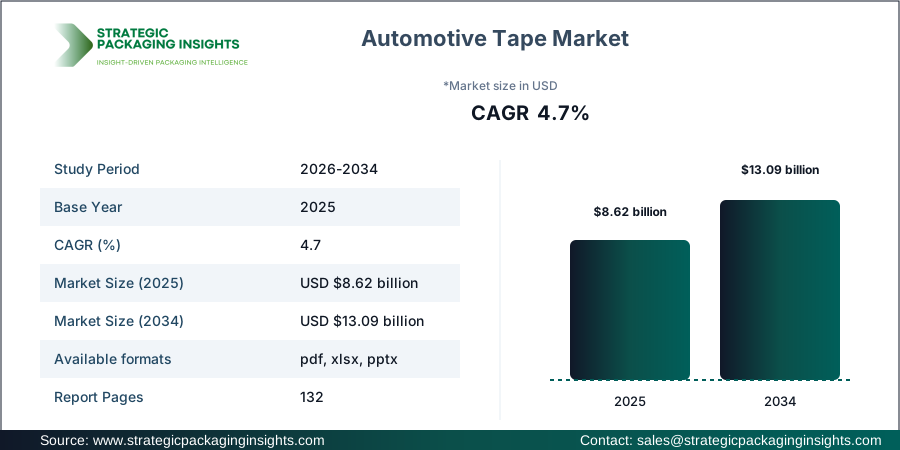
The automotive tape market was valued at $8.62 billion in 2025 and is projected to reach $13.09 billion by 2034, growing at a CAGR of 4.7% during the forecast period 2026-2034. This market is witnessing significant growth due to the increasing demand for lightweight and fuel-efficient vehicles, which necessitates the use of advanced materials like automotive tapes. These tapes are essential in reducing vehicle weight without compromising on strength and durability. The market is also driven by the rising adoption of electric vehicles, which require specialized tapes for battery insulation and other applications. Additionally, the growing trend of vehicle customization and the increasing use of electronics in vehicles are further propelling the demand for automotive tapes.
However, the market faces certain challenges that could hinder its growth. The fluctuating prices of raw materials used in the production of automotive tapes, such as adhesives and backing materials, pose a significant restraint. Moreover, stringent environmental regulations regarding the use of certain chemicals in adhesives could impact the market dynamics. Despite these challenges, the market holds immense growth potential, particularly in emerging economies where the automotive industry is expanding rapidly. The increasing focus on sustainability and the development of eco-friendly tapes are expected to create new opportunities for market players.
Report Scope
| Attributes | Details |
| Report Title | Automotive Tape Market Size, Future Growth and Forecast 2034 |
| By Product Type | Wire Harness Tape, Masking Tape, Bonding Tape, Foam Tape |
| By Adhesive Type | Acrylic, Rubber, Silicone |
| By Application | Interiors, Exteriors, Electronics, Harnessing |
| By End Use | OEMs, Tier 1 Suppliers, Aftermarket |
| Region | Asia Pacific, North America, Latin America, Europe, Middle East & Africa |
| Base Year | 2025 |
| Historic Period | 2018-2024 |
| Forecast Period | 2026-2034 |
| Number of Pages | 132 |
| Customization Available | Yes* |
Opportunities & Threats
The automotive tape market presents numerous opportunities, particularly with the growing emphasis on electric vehicles (EVs). As the automotive industry shifts towards electrification, the demand for specialized tapes that can withstand high temperatures and provide effective insulation is on the rise. This trend is expected to drive innovation in the market, with companies investing in research and development to create advanced tape solutions tailored for EV applications. Additionally, the increasing focus on vehicle aesthetics and customization offers opportunities for decorative and protective tapes, which enhance the visual appeal and longevity of vehicle surfaces.
Another significant opportunity lies in the development of eco-friendly and sustainable automotive tapes. With environmental concerns gaining prominence, there is a growing demand for tapes that are free from harmful chemicals and have a reduced carbon footprint. Companies that can offer biodegradable or recyclable tape solutions are likely to gain a competitive edge in the market. Furthermore, the expansion of the automotive industry in emerging markets, driven by rising disposable incomes and urbanization, presents lucrative opportunities for market players to expand their presence and tap into new customer bases.
Despite these opportunities, the automotive tape market faces certain threats that could impact its growth trajectory. One of the primary threats is the volatility in raw material prices, which can affect the overall production costs and profit margins for manufacturers. Additionally, the market is subject to stringent regulatory standards, particularly concerning the use of certain chemicals in adhesives. Compliance with these regulations can be challenging and may require significant investments in research and development to develop compliant products. Moreover, the intense competition among market players, coupled with the threat of new entrants, could pose challenges for existing companies in maintaining their market share.
Drivers & Challenges
The automotive tape market is primarily driven by the increasing demand for lightweight vehicles, which are essential for improving fuel efficiency and reducing emissions. Automotive tapes play a crucial role in achieving weight reduction by replacing traditional mechanical fasteners and welding methods. This shift towards lightweight materials is further accelerated by stringent government regulations aimed at reducing vehicle emissions and improving fuel economy. Additionally, the growing trend of vehicle electrification is driving the demand for specialized tapes that can provide effective insulation and protection for electrical components.
Another key driver of the market is the rising adoption of advanced driver-assistance systems (ADAS) and other electronic components in vehicles. As vehicles become more technologically advanced, the need for reliable and durable tapes to secure and protect electronic components increases. Automotive tapes offer excellent adhesion and resistance to environmental factors, making them ideal for use in electronic applications. Furthermore, the increasing focus on vehicle aesthetics and customization is driving the demand for decorative and protective tapes, which enhance the visual appeal and durability of vehicle surfaces.
Despite the positive drivers, the automotive tape market faces several challenges that could hinder its growth. One of the primary challenges is the fluctuating prices of raw materials, which can impact the overall production costs and profit margins for manufacturers. Additionally, the market is subject to stringent regulatory standards, particularly concerning the use of certain chemicals in adhesives. Compliance with these regulations can be challenging and may require significant investments in research and development to develop compliant products. Moreover, the intense competition among market players, coupled with the threat of new entrants, could pose challenges for existing companies in maintaining their market share.
Market Share Analysis
The automotive tape market is characterized by a highly competitive landscape, with several key players vying for market share. Companies such as 3M, Tesa SE, Nitto Denko, Avery Dennison, and Saint-Gobain are among the leading players in the market, known for their extensive product portfolios and strong distribution networks. These companies have established themselves as leaders through continuous innovation and strategic partnerships, enabling them to cater to the diverse needs of the automotive industry. Additionally, companies like Lohmann, Scapa Group, Shurtape Technologies, Intertape Polymer Group, and Berry Global are also significant players, contributing to the market's growth through their specialized tape solutions.

3M is a prominent player in the automotive tape market, known for its innovative adhesive technologies and comprehensive range of products. The company's strong focus on research and development has enabled it to introduce advanced tape solutions that cater to the evolving needs of the automotive industry. Tesa SE, another key player, is renowned for its high-performance adhesive tapes that offer excellent bonding and sealing properties. The company's extensive distribution network and strong customer relationships have helped it maintain a significant market share.
Nitto Denko is a leading manufacturer of automotive tapes, offering a wide range of products that cater to various applications, including wire harnessing, masking, and bonding. The company's commitment to quality and innovation has earned it a strong reputation in the market. Avery Dennison, known for its pressure-sensitive adhesive technologies, provides a diverse range of automotive tapes that are widely used in interior and exterior applications. The company's focus on sustainability and eco-friendly solutions has further strengthened its position in the market.
Saint-Gobain, a global leader in the construction and automotive industries, offers a comprehensive range of tapes that provide excellent adhesion and durability. The company's strong emphasis on innovation and customer-centric solutions has enabled it to capture a significant share of the market. Lohmann, Scapa Group, Shurtape Technologies, Intertape Polymer Group, and Berry Global are also key players, known for their specialized tape solutions that cater to the unique needs of the automotive industry. These companies have established themselves as reliable partners for automotive manufacturers, offering high-quality products and exceptional customer service.
Key Highlights
- The automotive tape market is projected to grow from $8.62 billion in 2025 to $13.09 billion by 2034, at a CAGR of 4.7%.
- Increasing demand for lightweight and fuel-efficient vehicles is driving the market growth.
- Rising adoption of electric vehicles is creating new opportunities for specialized tape solutions.
- Development of eco-friendly and sustainable tapes is gaining traction in the market.
- Fluctuating raw material prices pose a significant challenge for manufacturers.
- Stringent regulatory standards regarding adhesive chemicals impact market dynamics.
- Key players include 3M, Tesa SE, Nitto Denko, Avery Dennison, and Saint-Gobain.
- Emerging markets offer lucrative opportunities for market expansion.
- Intense competition and threat of new entrants pose challenges for existing players.
Top Countries Insights
In the automotive tape market, the United States stands out as a key player, with a market size of approximately $2.5 billion and a CAGR of 5%. The country's strong automotive industry, coupled with the increasing demand for electric vehicles, drives the growth of the automotive tape market. Government initiatives promoting fuel efficiency and emission reduction further bolster the demand for lightweight materials, including automotive tapes. However, the market faces challenges from stringent environmental regulations and fluctuating raw material prices.
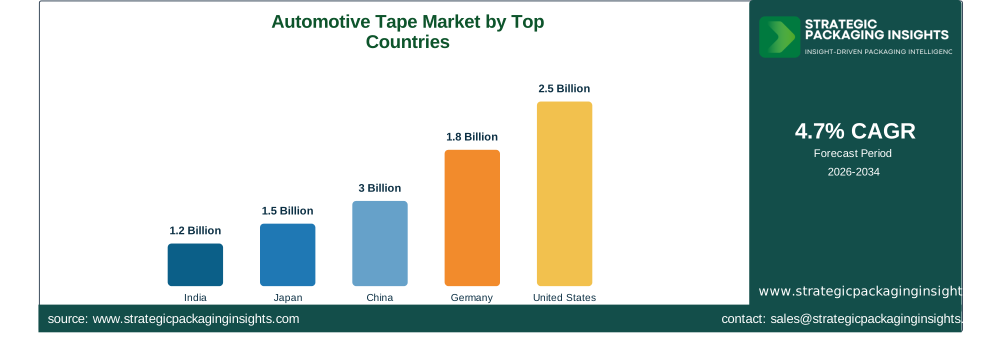
Germany, with a market size of around $1.8 billion and a CAGR of 4%, is another significant player in the automotive tape market. The country's robust automotive manufacturing sector, known for its focus on innovation and quality, drives the demand for advanced tape solutions. The increasing adoption of electric vehicles and the emphasis on sustainability are key growth drivers. However, the market faces challenges from regulatory standards and the need for continuous innovation to meet evolving customer demands.
China, with a market size of approximately $3 billion and a CAGR of 6%, is a major contributor to the automotive tape market. The country's booming automotive industry, driven by rising disposable incomes and urbanization, fuels the demand for automotive tapes. The government's focus on electric vehicles and the development of eco-friendly solutions further drive market growth. However, the market faces challenges from intense competition and the need to comply with stringent environmental regulations.
Japan, with a market size of around $1.5 billion and a CAGR of 3%, is a key player in the automotive tape market. The country's strong focus on technological advancements and innovation drives the demand for high-performance tape solutions. The increasing adoption of electric vehicles and the emphasis on reducing vehicle weight are key growth drivers. However, the market faces challenges from regulatory standards and the need for continuous innovation to meet evolving customer demands.
India, with a market size of approximately $1.2 billion and a CAGR of 7%, is an emerging market for automotive tapes. The country's growing automotive industry, driven by rising disposable incomes and urbanization, fuels the demand for automotive tapes. The government's focus on electric vehicles and the development of eco-friendly solutions further drive market growth. However, the market faces challenges from intense competition and the need to comply with stringent environmental regulations.
Automotive Tape Market Segments Insights

Product Type Analysis
The automotive tape market is segmented by product type into wire harness tape, masking tape, bonding tape, and foam tape. Wire harness tapes are essential for bundling and protecting electrical wires in vehicles, ensuring safety and reliability. The demand for these tapes is driven by the increasing complexity of vehicle electronics and the need for efficient wire management solutions. Masking tapes, on the other hand, are widely used in painting and surface protection applications, offering excellent adhesion and easy removal without leaving residue. The growing trend of vehicle customization and the need for high-quality finishes are driving the demand for masking tapes.
Bonding tapes are gaining traction in the automotive industry due to their ability to provide strong and durable bonds between different materials. These tapes are increasingly used as an alternative to traditional mechanical fasteners, offering benefits such as weight reduction and improved aesthetics. Foam tapes, known for their cushioning and sealing properties, are widely used in interior and exterior applications to reduce noise, vibration, and harshness (NVH). The demand for foam tapes is driven by the increasing focus on enhancing vehicle comfort and reducing noise levels.
Adhesive Type Analysis
The automotive tape market is segmented by adhesive type into acrylic, rubber, and silicone. Acrylic adhesives are known for their excellent adhesion properties and resistance to environmental factors, making them ideal for use in automotive applications. The demand for acrylic adhesives is driven by their versatility and ability to bond with a wide range of materials. Rubber adhesives, on the other hand, offer excellent initial tack and are widely used in applications where quick bonding is required. The demand for rubber adhesives is driven by their cost-effectiveness and ease of use.
Silicone adhesives are gaining popularity in the automotive industry due to their high-temperature resistance and flexibility. These adhesives are ideal for use in applications where exposure to extreme temperatures and environmental conditions is expected. The demand for silicone adhesives is driven by the increasing adoption of electric vehicles and the need for specialized tape solutions that can withstand high temperatures. Additionally, the growing focus on sustainability and the development of eco-friendly adhesives are expected to drive the demand for silicone adhesives in the automotive tape market.
Application Analysis
The automotive tape market is segmented by application into interiors, exteriors, electronics, and harnessing. Interior applications of automotive tapes include bonding and sealing of interior components, such as dashboards, door panels, and seats. The demand for interior tapes is driven by the increasing focus on vehicle aesthetics and comfort. Exterior applications of automotive tapes include bonding and sealing of exterior components, such as body panels, trim, and emblems. The demand for exterior tapes is driven by the need for durable and weather-resistant solutions that can withstand harsh environmental conditions.
In the electronics segment, automotive tapes are used for securing and protecting electronic components, such as sensors, displays, and wiring. The demand for electronic tapes is driven by the increasing adoption of advanced driver-assistance systems (ADAS) and other electronic components in vehicles. Harnessing applications of automotive tapes include bundling and protecting electrical wires and cables, ensuring safety and reliability. The demand for harnessing tapes is driven by the increasing complexity of vehicle electronics and the need for efficient wire management solutions.
End Use Analysis
The automotive tape market is segmented by end use into OEMs, Tier 1 suppliers, and aftermarket. OEMs are the primary consumers of automotive tapes, using them in the manufacturing and assembly of vehicles. The demand for OEM tapes is driven by the increasing production of vehicles and the need for high-quality and reliable tape solutions. Tier 1 suppliers, who provide components and systems to OEMs, also use automotive tapes in their manufacturing processes. The demand for Tier 1 supplier tapes is driven by the need for efficient and cost-effective solutions that can enhance the performance and durability of automotive components.
The aftermarket segment includes the use of automotive tapes in vehicle repair, maintenance, and customization. The demand for aftermarket tapes is driven by the increasing trend of vehicle customization and the need for high-quality repair solutions. Additionally, the growing focus on vehicle aesthetics and the need for protective solutions are driving the demand for aftermarket tapes. The aftermarket segment offers significant growth opportunities for market players, particularly in emerging markets where the automotive industry is expanding rapidly.
Automotive Tape Market Segments
The Automotive Tape market has been segmented on the basis ofBy Product Type
- Wire Harness Tape
- Masking Tape
- Bonding Tape
- Foam Tape
By Adhesive Type
- Acrylic
- Rubber
- Silicone
By Application
- Interiors
- Exteriors
- Electronics
- Harnessing
By End Use
- OEMs
- Tier 1 Suppliers
- Aftermarket
Region
- Asia Pacific
- North America
- Latin America
- Europe
- Middle East & Africa




