


Automotive Parts Packaging Market Outlook
The automotive parts packaging market was valued at $8.5 billion in 2024 and is projected to reach $12.3 billion by 2033, growing at a CAGR of 4.2% during the forecast period 2025-2033. This market is driven by the increasing demand for efficient and sustainable packaging solutions in the automotive industry. As the automotive sector continues to expand globally, the need for reliable packaging that ensures the safe transportation and storage of parts is becoming more critical. The rise in automotive production, especially in emerging economies, is further propelling the market growth. Additionally, the trend towards lightweight and recyclable packaging materials is gaining traction, aligning with the industry's sustainability goals.
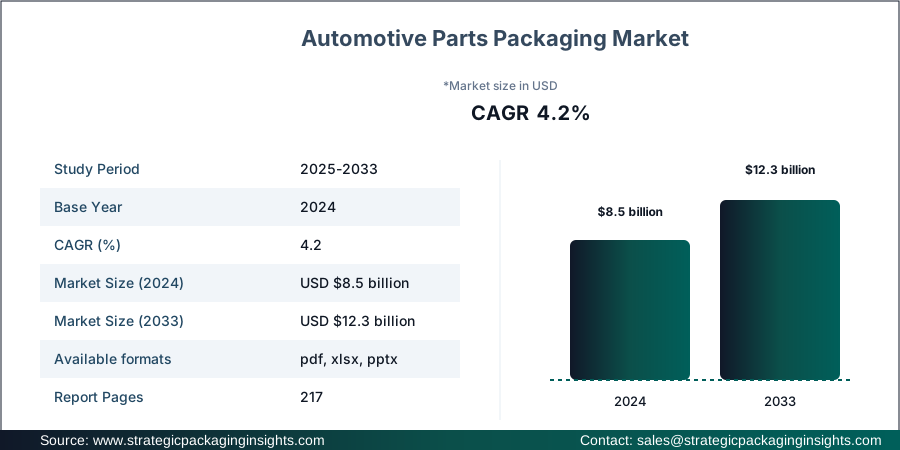
However, the market faces challenges such as fluctuating raw material prices and stringent environmental regulations. These factors can impact the cost-effectiveness and adoption of certain packaging solutions. Despite these challenges, the market holds significant growth potential due to technological advancements and innovations in packaging materials and designs. Companies are increasingly investing in research and development to create more durable and eco-friendly packaging options, which are expected to open new avenues for market expansion.
Report Scope
| Attributes | Details |
| Report Title | Automotive Parts Packaging Market Size, Future Growth and Forecast 2033 |
| Material | Plastic, Metal, Paper & Paperboard, Others |
| Product Type | Pallets, Crates, Bulk Containers, Bags & Pouches, Others |
| Component | Primary Packaging, Secondary Packaging, Tertiary Packaging |
| End-User | OEMs, Aftermarket |
| Base Year | 2024 |
| Historic Period | 2017-2023 |
| Forecast Period | 2025-2033 |
| Number of Pages | 217 |
| Customization Available | Yes* |
Opportunities & Threats
The automotive parts packaging market presents numerous opportunities, particularly with the growing emphasis on sustainability and environmental responsibility. As automotive manufacturers strive to reduce their carbon footprint, there is a rising demand for packaging solutions that are not only efficient but also environmentally friendly. This shift towards sustainable packaging is creating opportunities for companies to innovate and develop new materials and designs that meet these criteria. Additionally, the increasing adoption of electric vehicles (EVs) is expected to drive the demand for specialized packaging solutions tailored to the unique requirements of EV components.
Another significant opportunity lies in the expansion of the automotive industry in emerging markets. Countries in Asia Pacific and Latin America are witnessing rapid industrialization and urbanization, leading to increased automotive production and sales. This growth is creating a substantial demand for automotive parts packaging solutions that can cater to the diverse needs of these regions. Companies that can effectively tap into these markets and offer customized packaging solutions are likely to gain a competitive edge.
On the other hand, the market faces threats from regulatory challenges and economic uncertainties. Stringent regulations regarding packaging waste and recycling can pose compliance challenges for manufacturers. Additionally, economic fluctuations and geopolitical tensions can impact the automotive industry, subsequently affecting the demand for packaging solutions. Companies need to navigate these challenges by staying abreast of regulatory changes and adopting flexible strategies to mitigate risks.
Drivers & Challenges
The automotive parts packaging market is primarily driven by the increasing demand for efficient and cost-effective packaging solutions. As the automotive industry continues to grow, there is a heightened need for packaging that ensures the safe and secure transportation of parts. The rise in global automotive production, particularly in emerging economies, is a significant driver of market growth. Additionally, the trend towards lightweight and recyclable packaging materials is gaining momentum, as manufacturers seek to reduce costs and meet sustainability goals.
Technological advancements and innovations in packaging materials and designs are also driving the market. Companies are investing in research and development to create more durable and eco-friendly packaging options. The integration of smart packaging technologies, such as RFID tags and sensors, is enhancing the functionality and efficiency of packaging solutions. These innovations are expected to open new avenues for market expansion and provide a competitive advantage to companies that can offer advanced packaging solutions.
However, the market faces challenges such as fluctuating raw material prices and stringent environmental regulations. These factors can impact the cost-effectiveness and adoption of certain packaging solutions. Additionally, the complexity of the automotive supply chain and the need for customized packaging solutions can pose logistical challenges for manufacturers. Companies need to address these challenges by adopting flexible strategies and investing in sustainable packaging solutions that comply with regulatory requirements.
Market Share Analysis
The competitive landscape of the automotive parts packaging market is characterized by the presence of several key players who are actively engaged in product innovation and strategic partnerships. Companies such as Sealed Air Corporation, Sonoco Products Company, and Smurfit Kappa Group hold significant market shares due to their extensive product portfolios and strong distribution networks. These companies are focusing on expanding their global presence and enhancing their product offerings to cater to the evolving needs of the automotive industry.
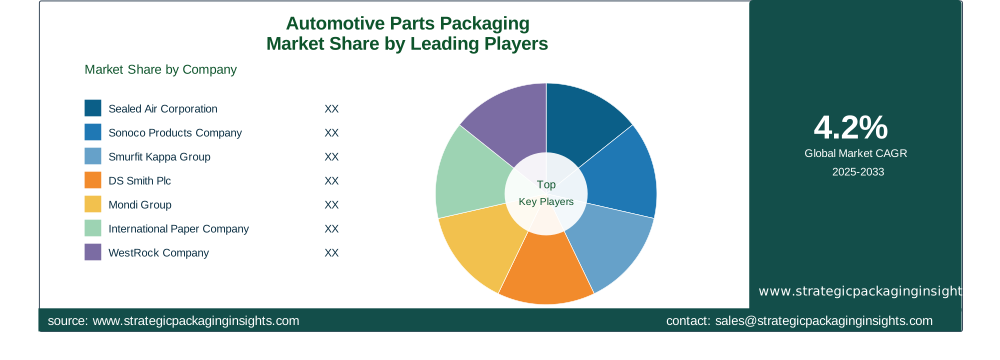
Sealed Air Corporation, for instance, is known for its innovative packaging solutions that prioritize sustainability and efficiency. The company has a strong focus on research and development, which enables it to offer advanced packaging technologies that meet the specific requirements of automotive manufacturers. Similarly, Sonoco Products Company is recognized for its comprehensive range of packaging solutions that cater to various industries, including automotive. The company's commitment to sustainability and innovation has helped it maintain a competitive edge in the market.
Smurfit Kappa Group is another major player in the automotive parts packaging market, known for its sustainable packaging solutions and strong customer relationships. The company has a global presence and offers a wide range of packaging products that are designed to meet the diverse needs of the automotive industry. Other notable companies in the market include DS Smith Plc, Mondi Group, and International Paper Company, all of which are actively investing in research and development to enhance their product offerings and expand their market reach.
Overall, the market is highly competitive, with companies focusing on strategic collaborations and acquisitions to strengthen their market position. The emphasis on sustainability and innovation is driving companies to develop new packaging solutions that align with the industry's evolving needs. As the market continues to grow, companies that can effectively leverage these trends and offer customized, eco-friendly packaging solutions are likely to gain a competitive advantage.
Key Highlights
- The automotive parts packaging market is projected to grow at a CAGR of 4.2% from 2025 to 2033.
- Increasing demand for sustainable and eco-friendly packaging solutions is driving market growth.
- Technological advancements in packaging materials and designs are creating new opportunities.
- Emerging markets in Asia Pacific and Latin America are witnessing significant growth in automotive production.
- Stringent environmental regulations pose challenges for manufacturers in terms of compliance.
- Companies are focusing on strategic partnerships and acquisitions to enhance their market position.
- The rise of electric vehicles is driving demand for specialized packaging solutions.
- Fluctuating raw material prices can impact the cost-effectiveness of packaging solutions.
- Smart packaging technologies are enhancing the functionality and efficiency of packaging solutions.
Top Countries Insights
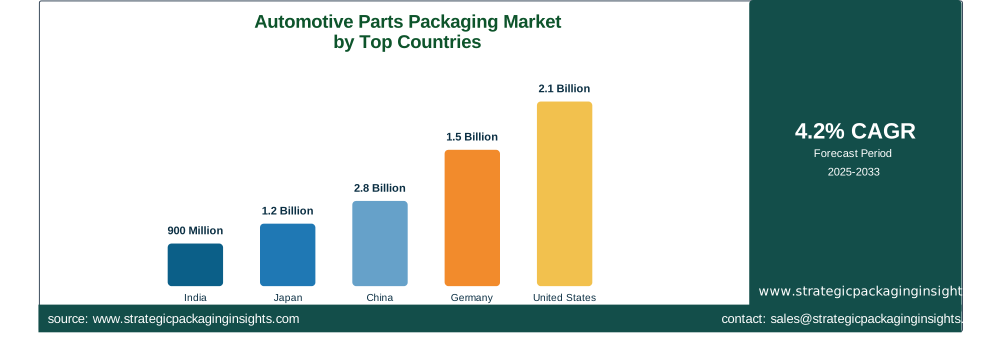
In the automotive parts packaging market, the United States holds a significant share, with a market size of $2.1 billion and a CAGR of 3%. The country's well-established automotive industry and focus on sustainability are key growth drivers. Germany, with a market size of $1.5 billion and a CAGR of 4%, is another major player, driven by its strong automotive manufacturing base and emphasis on innovation. China, the largest automotive market globally, has a market size of $2.8 billion and a CAGR of 6%, fueled by rapid industrialization and urbanization. Japan, known for its advanced automotive technologies, has a market size of $1.2 billion and a CAGR of 2%, with a focus on efficiency and sustainability. India, with a market size of $900 million and a CAGR of 5%, is experiencing growth due to increasing automotive production and demand for cost-effective packaging solutions.
Evolving Market Dynamics (2018-2024) and Strategic Foresight (2025-2033)
| Metric | 2018-2024 | 2025-2033 |
|---|---|---|
| CAGR | 3.5% | 4.2% |
| Market Size Evolution | $7.2 billion to $8.5 billion | $8.5 billion to $12.3 billion |
| Segment Distribution Shifts | Increased demand for plastic and metal packaging | Rising preference for eco-friendly materials |
| Regional Contribution Changes | Dominance of North America and Europe | Significant growth in Asia Pacific |
| Technological Impact Factors | Introduction of smart packaging technologies | Advancements in sustainable packaging solutions |
| Client Demand Transformations | Focus on cost-effectiveness and efficiency | Emphasis on sustainability and customization |
Automotive Parts Packaging Market Segments Insights

Material Analysis
The material segment in the automotive parts packaging market is crucial as it determines the durability, cost, and environmental impact of the packaging solutions. Plastic remains the most widely used material due to its lightweight and cost-effective nature. However, there is a growing shift towards more sustainable materials such as paper and paperboard, driven by increasing environmental concerns and regulatory pressures. Metal packaging is also gaining traction for its robustness and recyclability, particularly in applications requiring high protection levels. Companies are investing in research and development to innovate new materials that offer a balance between performance and sustainability.
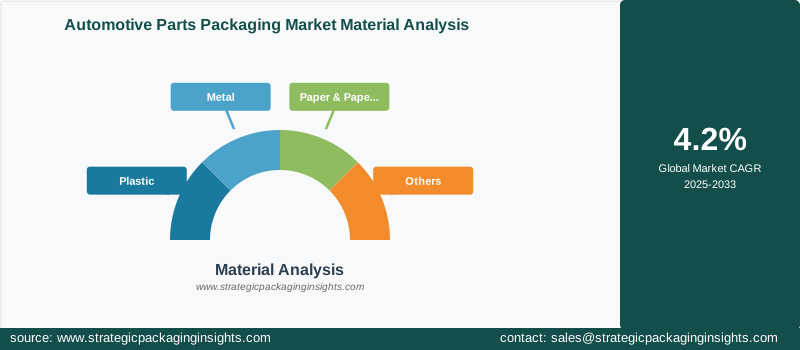
The trend towards eco-friendly materials is expected to continue, with manufacturers exploring biodegradable and compostable options. This shift is not only driven by regulatory requirements but also by consumer demand for sustainable products. As a result, companies that can offer innovative, sustainable packaging solutions are likely to gain a competitive advantage. The material segment is also witnessing advancements in technology, such as the development of smart materials that can enhance the functionality of packaging solutions. These innovations are expected to open new avenues for growth in the market.
Product Type Analysis
The product type segment in the automotive parts packaging market includes pallets, crates, bulk containers, bags, and pouches, among others. Pallets and crates are widely used for their ability to provide secure and efficient transportation of automotive parts. Bulk containers are gaining popularity due to their capacity to handle large volumes and reduce transportation costs. Bags and pouches are preferred for smaller parts and components, offering flexibility and ease of handling. The demand for these products is driven by the need for efficient and cost-effective packaging solutions that ensure the safe transportation of automotive parts.
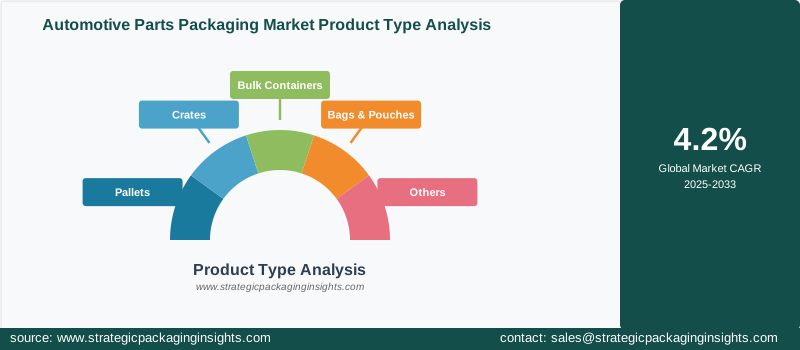
Innovation in product design is a key trend in this segment, with companies focusing on developing packaging solutions that offer enhanced protection and ease of use. The integration of smart technologies, such as RFID tags and sensors, is also gaining traction, providing real-time tracking and monitoring capabilities. This trend is expected to drive the demand for advanced packaging solutions that can meet the evolving needs of the automotive industry. Companies that can offer innovative and customized packaging solutions are likely to gain a competitive edge in the market.
Component Analysis
The component segment in the automotive parts packaging market is divided into primary, secondary, and tertiary packaging. Primary packaging refers to the immediate packaging that comes in direct contact with the product, providing protection and containment. Secondary packaging is used for grouping primary packages, offering additional protection and facilitating handling and transportation. Tertiary packaging is used for bulk handling, storage, and transportation, ensuring the safe delivery of products to their final destination. The demand for these components is driven by the need for efficient and reliable packaging solutions that can ensure the safe transportation of automotive parts.
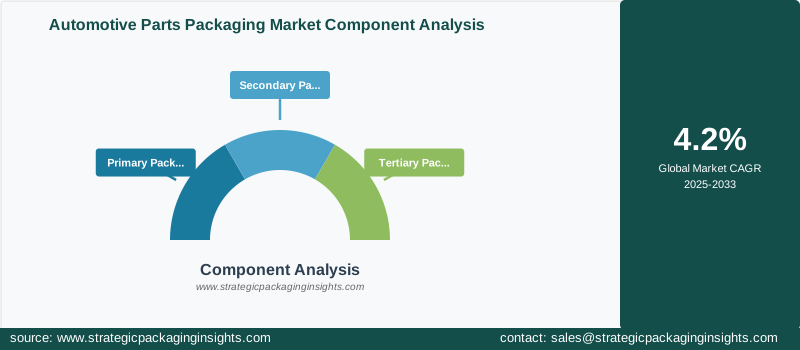
Companies are focusing on developing innovative packaging solutions that offer enhanced protection and efficiency. The integration of smart technologies, such as RFID tags and sensors, is gaining traction, providing real-time tracking and monitoring capabilities. This trend is expected to drive the demand for advanced packaging solutions that can meet the evolving needs of the automotive industry. Companies that can offer innovative and customized packaging solutions are likely to gain a competitive edge in the market.
End-User Analysis
The end-user segment in the automotive parts packaging market includes OEMs and the aftermarket. OEMs are the primary consumers of packaging solutions, requiring efficient and reliable packaging for the transportation and storage of automotive parts. The aftermarket, which includes repair and maintenance services, also requires packaging solutions that can ensure the safe delivery of parts to their final destination. The demand for these solutions is driven by the need for efficient and cost-effective packaging that can ensure the safe transportation of automotive parts.
Companies are focusing on developing innovative packaging solutions that offer enhanced protection and efficiency. The integration of smart technologies, such as RFID tags and sensors, is gaining traction, providing real-time tracking and monitoring capabilities. This trend is expected to drive the demand for advanced packaging solutions that can meet the evolving needs of the automotive industry. Companies that can offer innovative and customized packaging solutions are likely to gain a competitive edge in the market.
Automotive Parts Packaging Market Segments
The Automotive Parts Packaging market has been segmented on the basis ofMaterial
- Plastic
- Metal
- Paper & Paperboard
- Others
Product Type
- Pallets
- Crates
- Bulk Containers
- Bags & Pouches
- Others
Component
- Primary Packaging
- Secondary Packaging
- Tertiary Packaging
End-User
- OEMs
- Aftermarket




