


Automotive Label Market Outlook
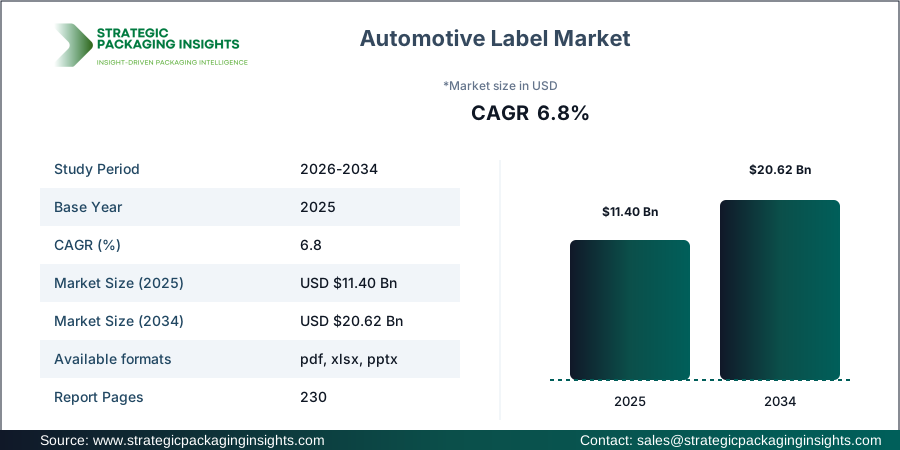
The automotive label market was valued at $11.40 billion in 2025 and is projected to reach $20.62 billion by 2034, growing at a CAGR of 6.8% during the forecast period 2026-2034. This growth is driven by the increasing demand for automotive labels due to the rising production of vehicles globally and the need for efficient tracking and branding solutions. The market is also influenced by the stringent regulations regarding vehicle safety and labeling, which necessitate the use of high-quality labels that can withstand harsh environmental conditions. Additionally, the growing trend of vehicle customization and the increasing adoption of smart labels are expected to further propel market growth.
Report Scope
| Attributes | Details |
| Report Title | Automotive Label Market Size, Future Growth and Forecast 2034 |
| By Label Type | Warning, Branding, Tracking |
| By Material | Polyester, Polypropylene, Paper |
| By Application | Engine Bay, Interior, Exterior |
| By End Use | OEM, Aftermarket |
| Region | Asia Pacific, North America, Latin America, Europe, Middle East & Africa |
| Base Year | 2025 |
| Historic Period | 2018-2024 |
| Forecast Period | 2026-2034 |
| Number of Pages | 230 |
| Customization Available | Yes* |
Opportunities & Threats
One of the significant opportunities in the automotive label market is the increasing demand for electric vehicles (EVs). As the automotive industry shifts towards electrification, there is a growing need for specialized labels that can handle the unique requirements of EVs, such as high voltage warnings and battery information. This presents a lucrative opportunity for label manufacturers to develop innovative solutions tailored to the EV segment. Furthermore, the rise of connected vehicles and the Internet of Things (IoT) in the automotive sector is creating a demand for smart labels that can provide real-time data and enhance vehicle connectivity.
Another opportunity lies in the expansion of the automotive industry in emerging markets. Countries in Asia Pacific and Latin America are witnessing rapid urbanization and an increase in disposable income, leading to higher vehicle sales. This growth in vehicle production and sales in these regions is expected to drive the demand for automotive labels. Additionally, advancements in printing technologies, such as digital printing, are enabling manufacturers to produce high-quality labels with greater efficiency and customization options, further boosting market opportunities.
However, the automotive label market faces certain threats, including the volatility in raw material prices. The cost of materials like polyester and polypropylene, which are commonly used in label production, can fluctuate due to changes in crude oil prices and supply chain disruptions. This can impact the profitability of label manufacturers. Moreover, the market is highly competitive, with numerous players vying for market share, which can lead to price wars and reduced margins. Additionally, stringent environmental regulations regarding the disposal and recycling of label materials pose a challenge for manufacturers to develop sustainable solutions.
Drivers & Challenges
The primary driver of the automotive label market is the increasing emphasis on vehicle safety and regulatory compliance. Governments worldwide are implementing stringent regulations that require vehicles to have clear and durable labels for safety warnings, instructions, and identification. This has led to a surge in demand for high-quality labels that can withstand extreme temperatures, chemicals, and abrasion. Additionally, the growing trend of vehicle customization and personalization is driving the demand for aesthetically appealing labels that enhance the overall look of vehicles.
Another significant driver is the advancement in labeling technologies. The development of smart labels and RFID technology is revolutionizing the automotive label market. These technologies enable real-time tracking and monitoring of vehicles, providing valuable data for manufacturers and consumers. The integration of IoT in vehicles is further boosting the demand for smart labels that can communicate with vehicle systems and provide enhanced connectivity. Moreover, the increasing adoption of digital printing technology is allowing manufacturers to produce high-quality labels with intricate designs and variable data, catering to the diverse needs of the automotive industry.
Despite these drivers, the automotive label market faces challenges such as the high cost of advanced labeling technologies. The implementation of smart labels and RFID systems requires significant investment in technology and infrastructure, which can be a barrier for small and medium-sized enterprises. Additionally, the market is highly fragmented, with numerous players offering similar products, leading to intense competition and price pressures. Furthermore, the need for continuous innovation and compliance with evolving regulations requires manufacturers to invest in research and development, adding to operational costs.
Market Share Analysis
The competitive landscape of the automotive label market is characterized by the presence of several key players who hold significant market shares. Companies such as Avery Dennison, 3M, and CCL Industries are leading the market with their extensive product portfolios and strong distribution networks. Avery Dennison, known for its innovative labeling solutions, holds a substantial market share due to its focus on sustainability and advanced technology. 3M, with its diverse range of automotive labels, is a major player, leveraging its expertise in adhesive technologies to offer high-performance products.
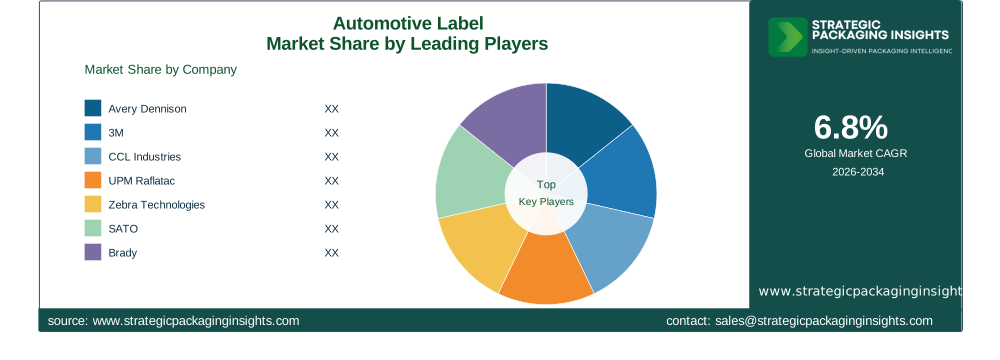
CCL Industries is another prominent player in the automotive label market, known for its comprehensive labeling solutions that cater to various automotive applications. The company's focus on innovation and customer-centric approach has helped it maintain a strong market position. UPM Raflatac, a leading supplier of pressure-sensitive label materials, is also a key player, offering sustainable labeling solutions that meet the stringent requirements of the automotive industry. Zebra Technologies, with its expertise in barcode and RFID solutions, is expanding its presence in the automotive label market by providing smart labeling solutions.
SATO, a global leader in auto-ID solutions, is making significant strides in the automotive label market with its focus on RFID technology and smart labeling solutions. Brady Corporation, known for its high-performance labels, is catering to the automotive industry's demand for durable and reliable labeling solutions. Fuji Seal, a specialist in shrink sleeve labels, is expanding its product offerings to include automotive labels, leveraging its expertise in packaging solutions. Multi-Color Corporation, with its extensive experience in label printing, is focusing on expanding its presence in the automotive sector by offering customized labeling solutions.
Herma, a leading provider of self-adhesive technology, is gaining traction in the automotive label market with its innovative labeling solutions that meet the industry's stringent requirements. The company's focus on sustainability and advanced technology is helping it capture a significant market share. Overall, the automotive label market is highly competitive, with companies focusing on innovation, sustainability, and customer-centric solutions to gain a competitive edge. The market is witnessing a trend towards the adoption of smart labels and RFID technology, with key players investing in research and development to offer advanced labeling solutions.
Key Highlights
- The automotive label market is projected to grow at a CAGR of 6.8% from 2026 to 2034.
- Increasing demand for electric vehicles is driving the need for specialized automotive labels.
- Advancements in digital printing technology are enhancing label quality and customization.
- Smart labels and RFID technology are gaining traction in the automotive sector.
- Stringent regulations regarding vehicle safety and labeling are boosting market demand.
- Emerging markets in Asia Pacific and Latin America are witnessing significant growth.
- Volatility in raw material prices poses a challenge for label manufacturers.
- Key players are focusing on sustainability and innovation to gain a competitive edge.
- The market is highly competitive, with numerous players offering similar products.
Top Countries Insights
In the automotive label market, the United States holds a significant share due to its advanced automotive industry and stringent regulations regarding vehicle safety and labeling. The market in the U.S. is driven by the increasing production of vehicles and the demand for high-quality labels that meet regulatory standards. The country's focus on innovation and technology adoption is further boosting the demand for smart labels and RFID solutions. The market is expected to grow at a CAGR of 5% during the forecast period.
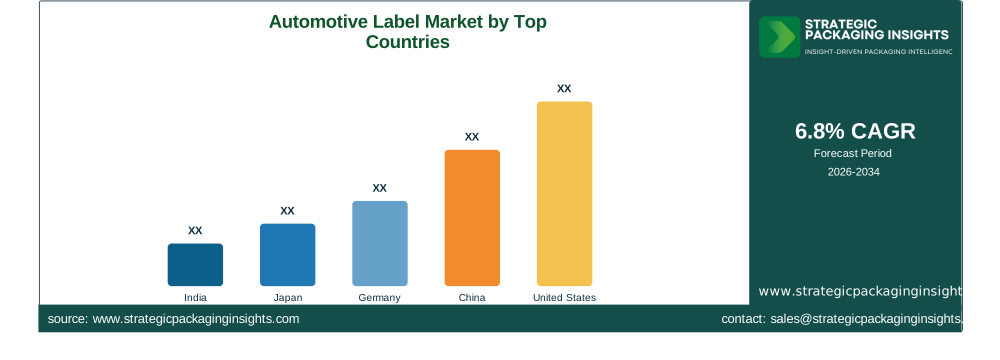
China is another major player in the automotive label market, driven by its booming automotive industry and the increasing production of electric vehicles. The government's focus on promoting electric mobility and the adoption of smart technologies is creating a demand for specialized labels that cater to the unique requirements of EVs. The market in China is expected to grow at a CAGR of 8%, supported by the country's rapid urbanization and increasing disposable income.
Germany, known for its strong automotive industry, is a key market for automotive labels in Europe. The country's focus on vehicle safety and compliance with stringent regulations is driving the demand for high-quality labels. Additionally, the presence of leading automotive manufacturers and the adoption of advanced labeling technologies are contributing to market growth. The market in Germany is projected to grow at a CAGR of 6% during the forecast period.
Japan, with its advanced automotive industry and focus on innovation, is a significant market for automotive labels. The country's emphasis on vehicle safety and the adoption of smart technologies are driving the demand for high-performance labels. The market in Japan is expected to grow at a CAGR of 4%, supported by the increasing production of vehicles and the demand for customized labeling solutions.
India is emerging as a lucrative market for automotive labels, driven by the rapid growth of its automotive industry and the increasing production of vehicles. The government's focus on promoting electric mobility and the adoption of smart technologies is creating a demand for specialized labels. The market in India is projected to grow at a CAGR of 7%, supported by the country's growing middle class and increasing disposable income.
Automotive Label Market Segments Insights

Label Type Analysis
The automotive label market is segmented by label type into warning, branding, and tracking labels. Warning labels are essential for ensuring vehicle safety and compliance with regulatory standards. These labels provide critical information about potential hazards and safety instructions, making them a vital component of vehicle manufacturing. The demand for warning labels is driven by the increasing emphasis on vehicle safety and the need for clear and durable labels that can withstand harsh environmental conditions. Branding labels, on the other hand, are used for enhancing the aesthetic appeal of vehicles and promoting brand identity. The growing trend of vehicle customization and personalization is driving the demand for branding labels, as consumers seek unique and visually appealing designs.
Tracking labels are gaining traction in the automotive industry due to the increasing adoption of smart technologies and the Internet of Things (IoT). These labels enable real-time tracking and monitoring of vehicles, providing valuable data for manufacturers and consumers. The integration of RFID technology in tracking labels is further enhancing their functionality, allowing for seamless communication with vehicle systems. The demand for tracking labels is expected to grow significantly as the automotive industry continues to embrace digitalization and connectivity. Overall, the label type segment is witnessing a shift towards the adoption of smart labels and advanced technologies, with manufacturers focusing on innovation and customization to meet the diverse needs of the automotive industry.
Material Analysis
The automotive label market is segmented by material into polyester, polypropylene, and paper. Polyester labels are widely used in the automotive industry due to their durability and resistance to harsh environmental conditions. These labels are ideal for applications that require high-performance and long-lasting solutions, such as engine bay and exterior labeling. The demand for polyester labels is driven by the increasing emphasis on vehicle safety and the need for labels that can withstand extreme temperatures, chemicals, and abrasion. Polypropylene labels, on the other hand, are known for their flexibility and cost-effectiveness, making them suitable for a wide range of automotive applications.
Paper labels are primarily used for interior applications, where durability and resistance to environmental factors are less critical. These labels are favored for their cost-effectiveness and ease of customization, making them a popular choice for branding and informational purposes. The demand for paper labels is driven by the growing trend of vehicle customization and the need for aesthetically appealing designs. Overall, the material segment is witnessing a trend towards the adoption of high-performance materials that offer durability and resistance to harsh conditions, with manufacturers focusing on innovation and sustainability to meet the evolving needs of the automotive industry.
Application Analysis
The automotive label market is segmented by application into engine bay, interior, and exterior labeling. Engine bay labels are critical for providing essential information about vehicle components and safety instructions. These labels are designed to withstand high temperatures and harsh environmental conditions, making them a vital component of vehicle manufacturing. The demand for engine bay labels is driven by the increasing emphasis on vehicle safety and compliance with regulatory standards. Interior labels, on the other hand, are used for branding and informational purposes, enhancing the aesthetic appeal of vehicles and providing valuable information to consumers.
Exterior labels are used for branding and identification purposes, providing critical information about the vehicle and its components. These labels are designed to withstand harsh environmental conditions, such as UV exposure and abrasion, making them a vital component of vehicle manufacturing. The demand for exterior labels is driven by the growing trend of vehicle customization and the need for durable and visually appealing designs. Overall, the application segment is witnessing a trend towards the adoption of high-performance labels that offer durability and resistance to harsh conditions, with manufacturers focusing on innovation and customization to meet the diverse needs of the automotive industry.
End Use Analysis
The automotive label market is segmented by end use into OEM and aftermarket. OEM labels are used by vehicle manufacturers during the production process, providing essential information about vehicle components and safety instructions. These labels are designed to withstand harsh environmental conditions and meet stringent regulatory standards, making them a vital component of vehicle manufacturing. The demand for OEM labels is driven by the increasing production of vehicles and the need for high-quality labels that meet regulatory standards.
Aftermarket labels, on the other hand, are used for vehicle customization and personalization, providing consumers with the opportunity to enhance the aesthetic appeal of their vehicles. The demand for aftermarket labels is driven by the growing trend of vehicle customization and the increasing adoption of smart technologies in the automotive industry. Overall, the end use segment is witnessing a trend towards the adoption of high-performance labels that offer durability and resistance to harsh conditions, with manufacturers focusing on innovation and customization to meet the diverse needs of the automotive industry.
Automotive Label Market Segments
The Automotive Label market has been segmented on the basis ofBy Label Type
- Warning
- Branding
- Tracking
By Material
- Polyester
- Polypropylene
- Paper
By Application
- Engine Bay
- Interior
- Exterior
By End Use
- OEM
- Aftermarket
Region
- Asia Pacific
- North America
- Latin America
- Europe
- Middle East & Africa




