


Autoclaving Trays Market Outlook
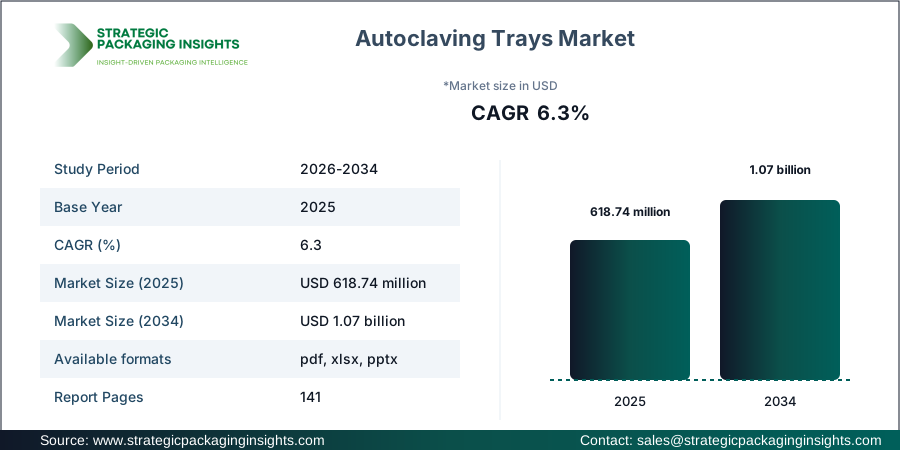
The Autoclaving Trays market size was valued at USD 618.74 million in 2025 and is anticipated to reach USD 1.07 billion by 2034, growing at a CAGR of 6.3% during the forecast period according to Strategic Packaging Insights. The market is witnessing robust growth driven by the increasing demand for sterilization solutions across healthcare facilities. Companies like Steris and Aesculap are at the forefront, offering innovative tray solutions that cater to the stringent sterilization requirements in hospitals and clinics. The rising prevalence of hospital-acquired infections has further propelled the demand for effective sterilization methods, thereby boosting the market for autoclaving trays.
One of the most impactful drivers of the autoclaving trays market is the growing emphasis on infection control in healthcare settings. According to the Centers for Disease Control and Prevention (CDC), healthcare-associated infections (HAIs) are a significant concern, affecting patient safety and increasing healthcare costs. This has led to a heightened focus on sterilization practices, where autoclaving trays play a crucial role. Companies like Medline Industries and Case Medical are investing in research and development to enhance the efficacy and durability of their autoclaving trays, ensuring compliance with regulatory standards and meeting the evolving needs of healthcare providers.
Report Scope
| Attributes | Details |
| Report Title | Autoclaving Trays Market Size, Future Growth and Forecast 2034 |
| By Material Type | Stainless Steel, Aluminum, Polypropylene, PPSU |
| By Product Type | Instrument Trays, Dental Trays, Laboratory Trays, Lidded Trays |
| By Application | Sterilization, Surgical Instruments, Dental Tools, Labware |
| By End Use | Hospitals, Clinics, Laboratories, Dental Centers |
| Region | Asia Pacific, North America, Latin America, Europe, Middle East & Africa |
| Base Year | 2025 |
| Historic Period | 2018-2024 |
| Forecast Period | 2026-2034 |
| Number of Pages | 141 |
| Customization Available | Yes* |
Sustainability & Circular Economy Analysis
Sustainability initiatives are increasingly shaping the autoclaving trays market, as manufacturers and healthcare providers strive to reduce their environmental impact. The use of recyclable materials and eco-friendly innovations in tray production is becoming more prevalent. Companies are exploring lightweight packaging solutions that not only reduce material usage but also lower transportation emissions. For instance, the integration of polypropylene and PPSU materials in tray manufacturing offers durability while being recyclable, aligning with circular economy principles.
These sustainability trends are influencing packaging design and manufacturing processes, prompting companies to invest in eco-friendly material innovations. The focus on reducing carbon footprints and adhering to environmental, social, and governance (ESG) initiatives is driving investment decisions and supply chain strategies. Regulatory compliance with packaging regulations and extended producer responsibility (EPR) frameworks is becoming a critical factor for market competitiveness, as companies like B. Braun and Integra LifeSciences prioritize sustainable practices in their operations.
Consumer preferences for sustainable products are also impacting the market, as healthcare providers and patients increasingly demand eco-friendly solutions. This shift is encouraging manufacturers to adopt waste reduction strategies and enhance the recyclability of their products. As a result, the autoclaving trays market is witnessing a transformation towards more sustainable practices, which is expected to enhance long-term market competitiveness and align with global sustainability goals.
Packaging Value Chain & Supply Chain Analysis
The packaging value chain for autoclaving trays involves a complex ecosystem of raw material sourcing, manufacturing, and distribution. Raw materials such as stainless steel, aluminum, and advanced polymers are sourced globally, with manufacturers like Steris and Aesculap playing a pivotal role in converting these materials into high-quality trays. The efficiency of the supply chain is crucial, as it impacts production capabilities and market performance. Strategic partnerships with suppliers and logistics providers are essential to ensure a steady supply of raw materials and timely delivery of finished products.
Supply chain resilience is a key focus for companies in the autoclaving trays market, as disruptions can significantly impact business competitiveness. Localization strategies are being adopted to mitigate risks associated with global sourcing, ensuring that production facilities are closer to key markets. This approach not only enhances supply chain efficiency but also reduces transportation costs and emissions. Inventory management and procurement strategies are being optimized to align with fluctuating demand patterns, ensuring that manufacturers can meet the needs of healthcare providers effectively.
Recycling networks and sustainable procurement practices are becoming integral to the supply chain strategy, as companies aim to minimize waste and enhance the recyclability of their products. The integration of advanced packaging machinery and automation technologies is further streamlining production processes, enabling manufacturers to scale operations and meet growing demand. As the market evolves, the focus on supply chain optimization and strategic partnerships will continue to drive competitiveness and support the growth of the autoclaving trays market.
Opportunities & Threats
The autoclaving trays market presents significant opportunities for growth, driven by the increasing demand for sterilization solutions in healthcare settings. The rising prevalence of hospital-acquired infections and the need for effective infection control measures are creating a favorable environment for market expansion. Companies like Steris and Medline Industries are well-positioned to capitalize on these opportunities by offering innovative tray solutions that meet the stringent requirements of healthcare providers. The growing adoption of advanced materials such as PPSU and polypropylene in tray manufacturing is also opening new avenues for product development and differentiation.
Another opportunity lies in the expansion of healthcare infrastructure in emerging markets, where the demand for sterilization equipment is on the rise. As countries invest in healthcare facilities and improve access to medical services, the need for autoclaving trays is expected to increase. Companies can leverage this trend by establishing strategic partnerships and expanding their distribution networks in these regions. Additionally, the focus on sustainability and eco-friendly practices is creating opportunities for manufacturers to develop recyclable and reusable tray solutions, aligning with global sustainability goals and enhancing market competitiveness.
However, the market also faces certain threats, including regulatory challenges and the high cost of raw materials. Compliance with stringent sterilization standards and packaging regulations can pose a barrier to market entry for new players. The volatility in raw material prices, particularly for metals like stainless steel and aluminum, can impact production costs and profit margins. Companies need to adopt effective risk management strategies and explore alternative materials to mitigate these threats and ensure sustainable growth in the autoclaving trays market.
Drivers & Challenges
The primary driver of the autoclaving trays market is the increasing focus on infection control and sterilization in healthcare facilities. The rising incidence of healthcare-associated infections (HAIs) has heightened the need for effective sterilization solutions, where autoclaving trays play a critical role. Companies like Steris and Aesculap are investing in research and development to enhance the efficacy and durability of their trays, ensuring compliance with regulatory standards and meeting the evolving needs of healthcare providers. The growing adoption of advanced materials such as PPSU and polypropylene in tray manufacturing is also driving market growth, offering durability and recyclability.
Another significant driver is the expansion of healthcare infrastructure in emerging markets, where the demand for sterilization equipment is on the rise. As countries invest in healthcare facilities and improve access to medical services, the need for autoclaving trays is expected to increase. Companies can leverage this trend by establishing strategic partnerships and expanding their distribution networks in these regions. Additionally, the focus on sustainability and eco-friendly practices is creating opportunities for manufacturers to develop recyclable and reusable tray solutions, aligning with global sustainability goals and enhancing market competitiveness.
Despite these drivers, the market faces challenges such as regulatory compliance and the high cost of raw materials. Compliance with stringent sterilization standards and packaging regulations can pose a barrier to market entry for new players. The volatility in raw material prices, particularly for metals like stainless steel and aluminum, can impact production costs and profit margins. Companies need to adopt effective risk management strategies and explore alternative materials to mitigate these challenges and ensure sustainable growth in the autoclaving trays market.
Market Share Analysis
The autoclaving trays market is characterized by a competitive landscape with several key players vying for market share. Companies like Steris, Aesculap, and Medline Industries are leading the market, offering a wide range of tray solutions that cater to the diverse needs of healthcare providers. These companies have established strong brand recognition and a loyal customer base, which gives them a competitive edge in the market. Their focus on innovation and product development has enabled them to maintain a dominant position in the industry.
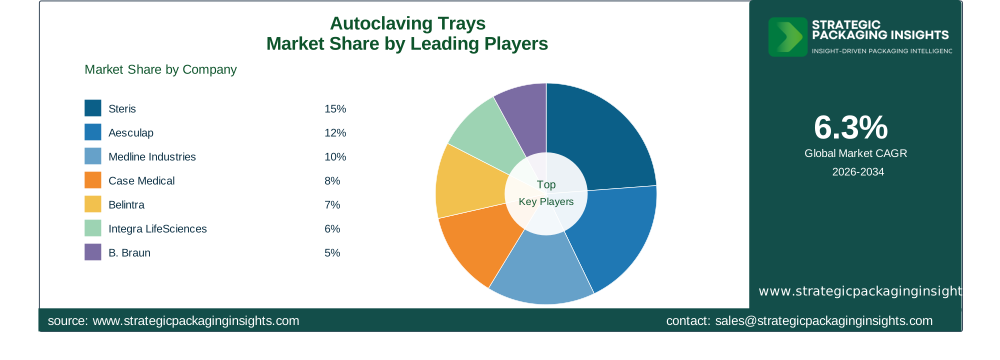
Steris, a prominent player in the market, is known for its high-quality sterilization solutions and extensive product portfolio. The company's commitment to research and development has resulted in the introduction of advanced tray designs that enhance sterilization efficiency and durability. Aesculap, another key player, offers a comprehensive range of autoclaving trays that are widely used in hospitals and clinics. The company's focus on quality and customer satisfaction has helped it build a strong reputation in the market.
Medline Industries is a major player in the autoclaving trays market, known for its innovative tray solutions and commitment to sustainability. The company's focus on eco-friendly practices and recyclable materials has positioned it as a leader in the market. Case Medical, Belintra, and Integra LifeSciences are also significant players, offering a diverse range of tray solutions that cater to the specific needs of healthcare providers. These companies have established strong distribution networks and strategic partnerships, enabling them to expand their market presence and reach a wider customer base.
Other notable players in the market include B. Braun, Summit Medical, Sklar Surgical Instruments, and Hu-Friedy. These companies are known for their high-quality products and commitment to customer satisfaction. Their focus on innovation and product development has enabled them to maintain a competitive edge in the market. As the market continues to evolve, these companies are expected to play a crucial role in driving growth and shaping the future of the autoclaving trays industry.
Key Highlights
- Market Size: The autoclaving trays market was valued at USD 618.74 million in 2025 and is projected to reach USD 1.07 billion by 2034.
- Growth Rate: The market is expected to grow at a CAGR of 6.3% during the forecast period.
- Leading Companies: Key players include Steris, Aesculap, and Medline Industries.
- Material Innovation: Increasing use of advanced materials like PPSU and polypropylene.
- Regional Growth: Significant growth expected in Asia Pacific and North America.
- Sustainability Focus: Emphasis on eco-friendly practices and recyclable materials.
- Healthcare Demand: Rising demand for sterilization solutions in hospitals and clinics.
Autoclaving Trays Market Segments Insights

Material Type Analysis
The autoclaving trays market is segmented by material type, with stainless steel, aluminum, polypropylene, and PPSU being the primary materials used in tray manufacturing. Stainless steel trays are highly durable and resistant to corrosion, making them ideal for repeated sterilization processes. Companies like Steris and Aesculap are leveraging the strength and longevity of stainless steel to offer high-quality tray solutions that meet the stringent requirements of healthcare providers. Aluminum trays, on the other hand, are lightweight and offer excellent thermal conductivity, making them suitable for rapid sterilization cycles.
Polypropylene and PPSU are gaining traction in the market due to their recyclability and eco-friendly properties. These materials offer a balance between durability and sustainability, aligning with the growing demand for environmentally conscious products. Manufacturers are investing in research and development to enhance the performance of these materials, ensuring that they meet the rigorous standards of the healthcare industry. The increasing focus on sustainability and the circular economy is expected to drive the adoption of polypropylene and PPSU in tray manufacturing, offering new opportunities for market growth.
Product Type Analysis
The autoclaving trays market is categorized by product type, including instrument trays, dental trays, laboratory trays, and lidded trays. Instrument trays are widely used in hospitals and clinics for the sterilization of surgical instruments, with companies like Medline Industries and Case Medical offering a diverse range of solutions to meet the specific needs of healthcare providers. Dental trays are designed for the sterilization of dental tools, with a focus on durability and ease of use. Laboratory trays are used for the sterilization of labware, ensuring that they remain free from contaminants.
Lidded trays offer additional protection during the sterilization process, preventing contamination and ensuring the integrity of the contents. These trays are particularly popular in settings where sterility is of utmost importance, such as surgical theaters and laboratories. The demand for lidded trays is expected to increase as healthcare providers prioritize infection control and patient safety. Manufacturers are focusing on innovation and product development to enhance the functionality and performance of these trays, ensuring that they meet the evolving needs of the healthcare industry.
Application Analysis
The autoclaving trays market is segmented by application, with sterilization, surgical instruments, dental tools, and labware being the primary areas of use. Sterilization is the most significant application, driven by the increasing focus on infection control in healthcare settings. Companies like Steris and Aesculap are leading the market with their advanced sterilization solutions, offering trays that are designed to withstand high temperatures and repeated sterilization cycles. The demand for trays used in the sterilization of surgical instruments is also on the rise, as healthcare providers prioritize patient safety and infection prevention.
Dental tools and labware are other key applications, with trays designed to meet the specific needs of dental centers and laboratories. The growing demand for dental services and laboratory testing is expected to drive the market for autoclaving trays in these segments. Manufacturers are focusing on product innovation and customization to cater to the diverse needs of these applications, ensuring that their trays offer the highest levels of performance and reliability. As the market continues to evolve, the focus on application-specific solutions is expected to drive growth and enhance market competitiveness.
End Use Analysis
The autoclaving trays market is segmented by end use, with hospitals, clinics, laboratories, and dental centers being the primary users of these products. Hospitals are the largest end users, driven by the need for effective sterilization solutions to prevent healthcare-associated infections. Companies like Steris and Medline Industries are well-positioned to meet the needs of hospitals, offering a wide range of tray solutions that cater to the specific requirements of these facilities. Clinics and laboratories are also significant end users, with a focus on infection control and patient safety.
Dental centers are another key segment, with trays designed for the sterilization of dental tools and equipment. The growing demand for dental services and the increasing focus on infection prevention are driving the market for autoclaving trays in this segment. Manufacturers are focusing on product development and innovation to meet the diverse needs of these end users, ensuring that their trays offer the highest levels of performance and reliability. As the market continues to evolve, the focus on end-use-specific solutions is expected to drive growth and enhance market competitiveness.
Autoclaving Trays Market Segments
The Autoclaving Trays market has been segmented on the basis ofBy Material Type
- Stainless Steel
- Aluminum
- Polypropylene
- PPSU
By Product Type
- Instrument Trays
- Dental Trays
- Laboratory Trays
- Lidded Trays
By Application
- Sterilization
- Surgical Instruments
- Dental Tools
- Labware
By End Use
- Hospitals
- Clinics
- Laboratories
- Dental Centers
Region
- Asia Pacific
- North America
- Latin America
- Europe
- Middle East & Africa




