


Augmented Reality and Vision System Integration in Packaging Automation Market Outlook
The Augmented Reality and Vision System Integration in Packaging Automation market size was valued at USD $3.6 Billion in 2025 and is anticipated to reach USD $10.8 Billion by 2035, growing at a CAGR of 11.6% during the forecast period according to Strategic Packaging Insights.
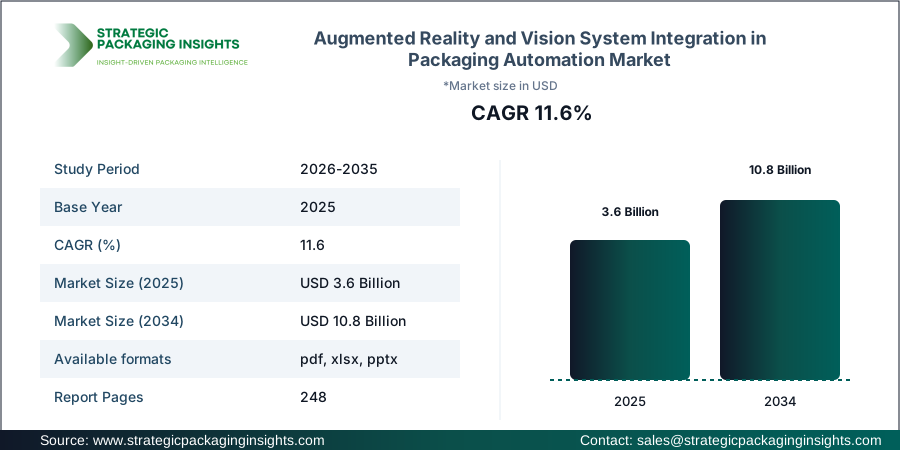
The most impactful market driver is the increasing demand for automation in packaging processes, driven by the need for efficiency and accuracy in industries such as food and beverage, pharmaceuticals, and consumer goods. The integration of augmented reality and vision systems enhances quality inspection, defect detection, and track and trace capabilities, which are critical for maintaining product integrity and compliance with regulatory standards.
Report Scope
| Attributes | Details |
| Report Title | Augmented Reality and Vision System Integration in Packaging Automation Market Projected to Scale to 10.8 Billion by 2035, Assesses Strategic Packaging Insights |
| by component | Hardware, Software, Services |
| by technology | 2D Vision, 3D Vision, Smart-Camera Systems, Head-Mounted AR, Spatial AR/Projection |
| by application | Quality Inspection and Defect Detection, Track and Trace / Serialization, Robotic Guidance / Pick and Place, Packaging Line Setup, Operator Training and Maintenance, Other Applications |
| by end user | Food and Beverage, Pharmaceuticals, Cosmetics and Personal Care, Consumer Goods, E-commerce and Logistics, Other Industries |
| by region | North America, Europe, Asia-Pacific, Latin America, Middle East and Africa |
| Base Year | 2025 |
| Historic Period | 2018-2024 |
| Forecast Period | 2026-2035 |
| Number of Pages | 248 |
| Customization Available | Yes* |
Market Trends Analysis
Augmented reality and vision systems are increasingly being adopted in packaging automation to enhance operational efficiency and accuracy. The trend towards digital transformation in manufacturing processes is driving the demand for these technologies. Companies are investing in advanced vision systems to improve quality control and reduce waste, aligning with sustainability goals. The integration of AI and machine learning with vision systems is further enhancing their capabilities, enabling real-time data analysis and decision-making.
Another significant trend is the shift towards smart packaging solutions that incorporate augmented reality for interactive consumer engagement. This trend is particularly prominent in the food and beverage and cosmetics industries, where brands are leveraging AR to provide consumers with detailed product information and immersive experiences. The growing e-commerce sector is also driving the adoption of AR and vision systems for efficient packaging and logistics operations.
Industry Transformation Analysis
The integration of augmented reality and vision systems is transforming the packaging automation industry by enhancing operational efficiency and reducing human error. The adoption of these technologies is leading to significant changes in manufacturing processes, with a focus on automation and digitalization. Companies are investing in advanced vision systems to improve quality control and reduce waste, aligning with sustainability goals.
The value chain is evolving as companies seek to integrate these technologies into their existing systems. This transformation is driving demand for skilled professionals who can manage and maintain these advanced systems. The shift towards smart packaging solutions is also influencing the industry, with companies investing in research and development to create innovative packaging solutions that incorporate AR and vision systems.
Trends & Disruptions Impacting Customers' Customers
Downstream customers, particularly in the food and beverage and pharmaceuticals industries, are increasingly demanding packaging solutions that ensure product safety and compliance with regulatory standards. The integration of augmented reality and vision systems in packaging automation is addressing these needs by enhancing quality inspection and defect detection capabilities. This trend is driven by the growing emphasis on product integrity and traceability in these industries.
As downstream customers prioritize sustainability and efficiency, the demand for smart packaging solutions that incorporate AR and vision systems is expected to rise. This shift is influencing purchasing decisions and driving innovation in packaging solutions. Companies are focusing on developing packaging solutions that not only meet regulatory requirements but also enhance consumer engagement through interactive features enabled by augmented reality.
Augmented Reality and Vision System Integration in Packaging Automation Market Ecosystem
The ecosystem for augmented reality and vision system integration in packaging automation involves a complex interplay of raw material suppliers, technology providers, system integrators, and end users. Raw materials are crucial for developing the hardware and software components necessary for these systems. Technology providers play a key role in offering advanced AR and vision system solutions that enhance packaging automation processes.
System integrators are responsible for seamlessly incorporating these technologies into existing packaging lines, ensuring compatibility and efficiency. End users, including industries such as food and beverage, pharmaceuticals, and consumer goods, benefit from the enhanced capabilities of these systems, which improve quality control and operational efficiency. The ecosystem is characterized by strong interdependencies, with each stage relying on the others to deliver value and drive innovation in packaging automation.
Analyst Perspective
Analyst Perspective: The integration of augmented reality and vision systems in packaging automation is a significant driver of industry transformation, enhancing operational efficiency and reducing human error.
The most important structural change is the shift towards digitalization and automation in packaging processes. This change is creating growth opportunities for companies that can offer advanced AR and vision system solutions. The competitive landscape is evolving as companies invest in research and development to create innovative packaging solutions that incorporate these technologies.
Companies, investors, and suppliers should watch the increasing demand for smart packaging solutions that enhance consumer engagement and meet regulatory requirements. This trend is expected to drive innovation and create new market opportunities during the forecast period.
Opportunities & Threats
The integration of augmented reality and vision systems in packaging automation presents significant market opportunities. The growing demand for automation in packaging processes is driving the adoption of these technologies, particularly in industries such as food and beverage, pharmaceuticals, and consumer goods. Companies that can offer advanced AR and vision system solutions are well-positioned to capitalize on this trend.
Technology opportunities are also emerging as companies invest in research and development to create innovative packaging solutions that incorporate AR and vision systems. The shift towards smart packaging solutions that enhance consumer engagement is creating new market opportunities, particularly in the food and beverage and cosmetics industries.
However, the market also faces threats, including raw material volatility and regulatory uncertainty. The availability of essential components for hardware and software development is a critical factor that could impact the growth of the market. Companies must navigate these challenges to successfully integrate AR and vision systems into packaging automation processes.
Additionally, the competitive landscape is evolving as companies invest in research and development to create innovative packaging solutions. The increasing demand for smart packaging solutions that enhance consumer engagement is driving competition, and companies must differentiate themselves to succeed in this dynamic market.
Drivers & Challenges
The primary driver of the augmented reality and vision system integration in packaging automation market is the increasing demand for automation in packaging processes. Industries such as food and beverage, pharmaceuticals, and consumer goods are seeking to enhance operational efficiency and accuracy, driving the adoption of these technologies. The integration of AR and vision systems enhances quality inspection, defect detection, and track and trace capabilities, which are critical for maintaining product integrity and compliance with regulatory standards.
Another significant driver is the growing emphasis on sustainability and efficiency in packaging processes. Companies are investing in advanced vision systems to improve quality control and reduce waste, aligning with sustainability goals. The integration of AI and machine learning with vision systems is further enhancing their capabilities, enabling real-time data analysis and decision-making.
However, the market faces challenges, including raw material volatility and regulatory uncertainty. The availability of essential components for hardware and software development is a critical factor that could impact the growth of the market. Companies must navigate these challenges to successfully integrate AR and vision systems into packaging automation processes.
Packaging Market Economics
The economics of integrating augmented reality and vision systems in packaging automation involve several factors, including raw material costs, conversion costs, and energy costs. The pricing of essential components for hardware and software development is a critical factor that influences the overall cost of these systems. Companies must carefully manage these costs to ensure the successful integration of AR and vision systems into packaging processes.
Conversion costs, including the cost of integrating these technologies into existing packaging lines, are another important consideration. Companies must invest in system integrators who can seamlessly incorporate these technologies into their operations, ensuring compatibility and efficiency. Energy costs are also a factor, as the operation of these systems requires significant power consumption.
Packaging Value Chain & Cost Analysis
The value chain for augmented reality and vision system integration in packaging automation involves several tiers, including raw material suppliers, technology providers, system integrators, and end users. Raw material suppliers provide essential components for hardware and software development, while technology providers offer advanced AR and vision system solutions.
System integrators play a key role in incorporating these technologies into existing packaging lines, ensuring compatibility and efficiency. End users, including industries such as food and beverage, pharmaceuticals, and consumer goods, benefit from the enhanced capabilities of these systems, which improve quality control and operational efficiency.
Substrate lead times, capacity utilization, and conversion economics are important considerations in the value chain. Companies must carefully manage these factors to ensure the successful integration of AR and vision systems into packaging processes. The availability of essential components for hardware and software development is a critical factor that could impact the growth of the market.
Unit Economics & Substrate Cost Analysis
The unit economics of integrating augmented reality and vision systems in packaging automation involve several factors, including raw material costs, energy costs, and conversion costs. The pricing of essential components for hardware and software development is a critical factor that influences the overall cost of these systems.
Energy costs are also a factor, as the operation of these systems requires significant power consumption. Companies must carefully manage these costs to ensure the successful integration of AR and vision systems into packaging processes. Conversion costs, including the cost of integrating these technologies into existing packaging lines, are another important consideration.
Packaging Regulatory & Sustainability Analysis
The integration of augmented reality and vision systems in packaging automation is subject to various regulatory requirements, including food-contact requirements, labeling requirements, and recyclability rules. Companies must ensure compliance with these regulations to successfully integrate these technologies into their packaging processes.
Sustainability is also a key consideration, as companies seek to align their packaging processes with sustainability goals. The integration of AR and vision systems can enhance quality control and reduce waste, contributing to sustainability efforts. Companies must carefully manage these factors to ensure the successful integration of these technologies into their packaging processes.
Strategic Mergers, Acquisitions & Capacity Expansions
Recent strategic developments in the augmented reality and vision system integration in packaging automation market include mergers, acquisitions, and capacity expansions. Companies are investing in research and development to create innovative packaging solutions that incorporate AR and vision systems.
For example, Cognex Corporation has recently expanded its capabilities in vision systems through strategic acquisitions, enhancing its position in the market. Similarly, KEYENCE Corporation has invested in research and development to create advanced vision system solutions that enhance packaging automation processes.
These strategic developments are driving innovation and creating new market opportunities. Companies must carefully manage these developments to ensure the successful integration of AR and vision systems into packaging processes.
Strategic Action Directives
Brand Packaging Engineers & Sustainability Directors should focus on material selection and recyclability to align with sustainability goals. The integration of AR and vision systems can enhance quality control and reduce waste, contributing to sustainability efforts.
Converter Operations & Extrusion Leads should focus on line speed and tooling to ensure the successful integration of AR and vision systems into packaging processes. The availability of essential components for hardware and software development is a critical factor that could impact the growth of the market.
Procurement & Material Sourcing Managers should focus on resin contracts and supplier diversification to ensure the successful integration of AR and vision systems into packaging processes. The availability of essential components for hardware and software development is a critical factor that could impact the growth of the market.
Investors should focus on capacity and margin structure to ensure the successful integration of AR and vision systems into packaging processes. The availability of essential components for hardware and software development is a critical factor that could impact the growth of the market.
Market Share Analysis
The market for augmented reality and vision system integration in packaging automation is characterized by a competitive landscape with several key players. Companies such as Cognex Corporation, KEYENCE Corporation, and OMRON Corporation are leading the market with their advanced vision system solutions.
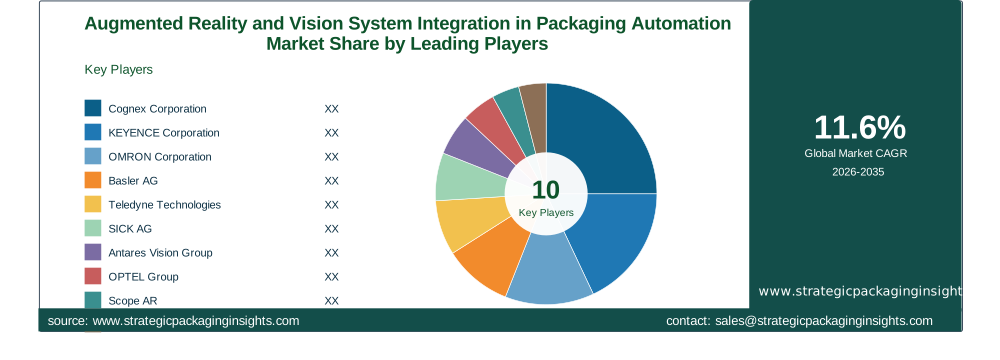
Cognex Corporation has a strong presence in the market, offering a wide range of vision system solutions that enhance packaging automation processes. The company has recently expanded its capabilities through strategic acquisitions, enhancing its position in the market.
KEYENCE Corporation is another key player in the market, offering advanced vision system solutions that enhance packaging automation processes. The company has invested in research and development to create innovative packaging solutions that incorporate AR and vision systems.
OMRON Corporation is also a leading player in the market, offering a wide range of vision system solutions that enhance packaging automation processes. The company has a strong presence in the market, with a focus on innovation and research and development.
Key Highlights
- Largest Region: North America
- Fastest-Growing Region: Asia-Pacific
- Largest Segment: Hardware
- Fastest-Growing Segment: Smart-Camera Systems
- Base-year market size: $3.6 Billion
- Forecast-year market size: $10.8 Billion
- CAGR: 11.6%
- Important application: Quality Inspection and Defect Detection
- Major end-use industry: Food and Beverage
- Major market driver: Increasing demand for automation in packaging processes
Regional Insights
The global market for augmented reality and vision system integration in packaging automation is characterized by significant regional variations. North America is the largest market, driven by the presence of key players and the increasing demand for automation in packaging processes. The region is characterized by a strong focus on innovation and research and development, with companies investing in advanced vision system solutions.
North America
North America is the largest market for augmented reality and vision system integration in packaging automation, driven by the presence of key players and the increasing demand for automation in packaging processes. The region is characterized by a strong focus on innovation and research and development, with companies investing in advanced vision system solutions.
The food and beverage and pharmaceuticals industries are the major end users in the region, driving demand for packaging solutions that enhance quality control and operational efficiency. The region is also characterized by a strong regulatory environment, with companies required to comply with various food-contact and labeling requirements.
Europe
Europe is another significant market for augmented reality and vision system integration in packaging automation, driven by the increasing demand for automation in packaging processes. The region is characterized by a strong focus on sustainability, with companies investing in advanced vision system solutions that enhance quality control and reduce waste.
The food and beverage and cosmetics industries are the major end users in the region, driving demand for packaging solutions that enhance consumer engagement and meet regulatory requirements. The region is also characterized by a strong regulatory environment, with companies required to comply with various food-contact and labeling requirements.
Asia Pacific
Asia Pacific is the fastest-growing market for augmented reality and vision system integration in packaging automation, driven by the increasing demand for automation in packaging processes. The region is characterized by a strong focus on innovation and research and development, with companies investing in advanced vision system solutions.
The food and beverage and pharmaceuticals industries are the major end users in the region, driving demand for packaging solutions that enhance quality control and operational efficiency. The region is also characterized by a strong regulatory environment, with companies required to comply with various food-contact and labeling requirements.
Latin America
Latin America is a growing market for augmented reality and vision system integration in packaging automation, driven by the increasing demand for automation in packaging processes. The region is characterized by a strong focus on innovation and research and development, with companies investing in advanced vision system solutions.
The food and beverage and pharmaceuticals industries are the major end users in the region, driving demand for packaging solutions that enhance quality control and operational efficiency. The region is also characterized by a strong regulatory environment, with companies required to comply with various food-contact and labeling requirements.
Middle East & Africa
The Middle East and Africa is a growing market for augmented reality and vision system integration in packaging automation, driven by the increasing demand for automation in packaging processes. The region is characterized by a strong focus on innovation and research and development, with companies investing in advanced vision system solutions.
The food and beverage and pharmaceuticals industries are the major end users in the region, driving demand for packaging solutions that enhance quality control and operational efficiency. The region is also characterized by a strong regulatory environment, with companies required to comply with various food-contact and labeling requirements.
Augmented Reality and Vision System Integration in Packaging Automation Market Segments Insights

by Component Analysis
The component segment of the augmented reality and vision system integration in packaging automation market is divided into hardware, software, and services. Hardware is the largest segment, driven by the increasing demand for advanced vision system solutions that enhance packaging automation processes. Companies are investing in research and development to create innovative hardware solutions that incorporate AR and vision systems.
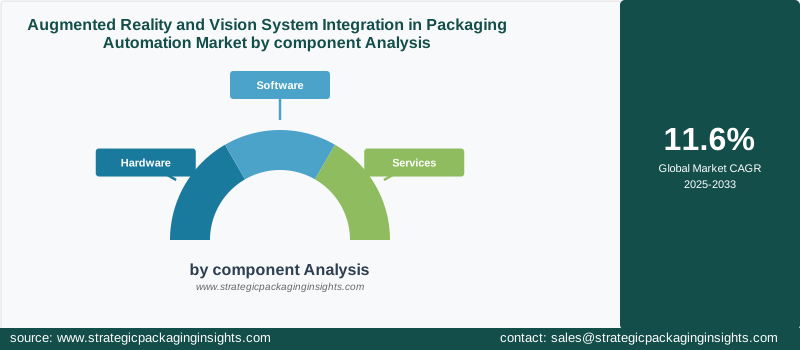
Software is another significant segment, driven by the increasing demand for advanced software solutions that enhance packaging automation processes. Companies are investing in research and development to create innovative software solutions that incorporate AR and vision systems. Services are also a growing segment, driven by the increasing demand for system integrators who can seamlessly incorporate these technologies into existing packaging lines.
by Technology Analysis
The technology segment of the augmented reality and vision system integration in packaging automation market is divided into 2D vision, 3D vision, smart-camera systems, head-mounted AR, and spatial AR/projection. Smart-camera systems are the fastest-growing segment, driven by the increasing demand for advanced vision system solutions that enhance packaging automation processes.
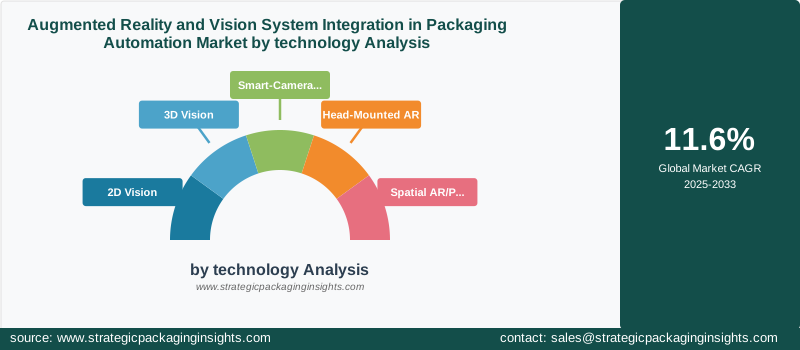
2D vision and 3D vision are also significant segments, driven by the increasing demand for advanced vision system solutions that enhance packaging automation processes. Companies are investing in research and development to create innovative vision system solutions that incorporate AR and vision systems. Head-mounted AR and spatial AR/projection are also growing segments, driven by the increasing demand for advanced AR solutions that enhance packaging automation processes.
by Application Analysis
The application segment of the augmented reality and vision system integration in packaging automation market is divided into quality inspection and defect detection, track and trace/serialization, robotic guidance/pick and place, packaging line setup, operator training and maintenance, and other applications. Quality inspection and defect detection is the most important application, driven by the increasing demand for packaging solutions that enhance quality control and operational efficiency.
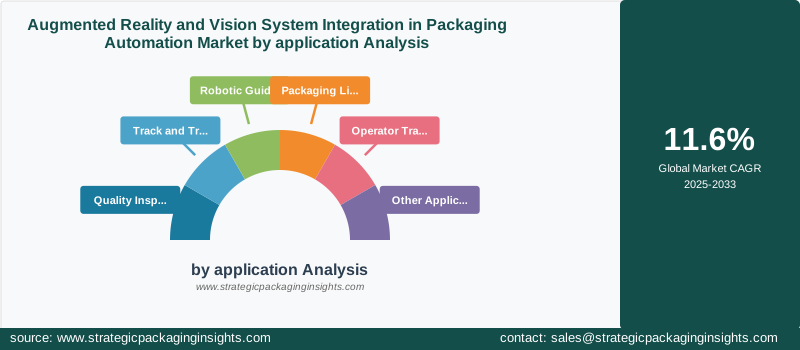
Track and trace/serialization and robotic guidance/pick and place are also significant applications, driven by the increasing demand for packaging solutions that enhance operational efficiency and accuracy. Companies are investing in research and development to create innovative packaging solutions that incorporate AR and vision systems. Packaging line setup, operator training and maintenance, and other applications are also growing segments, driven by the increasing demand for advanced packaging solutions that enhance operational efficiency.
by End User Analysis
The end user segment of the augmented reality and vision system integration in packaging automation market is divided into food and beverage, pharmaceuticals, cosmetics and personal care, consumer goods, e-commerce and logistics, and other industries. Food and beverage is the major end-use industry, driven by the increasing demand for packaging solutions that enhance quality control and operational efficiency.
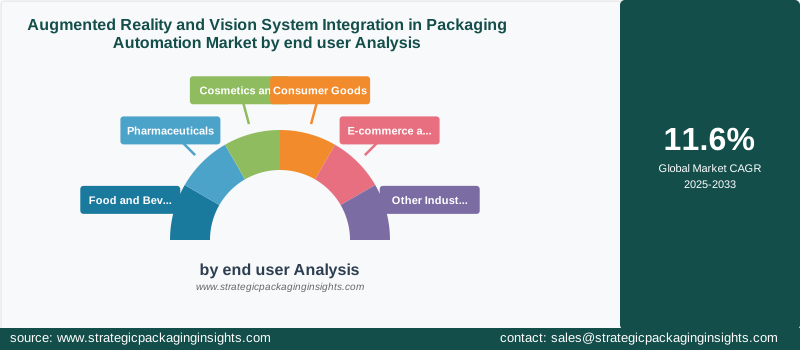
Pharmaceuticals and cosmetics and personal care are also significant end-use industries, driven by the increasing demand for packaging solutions that enhance product integrity and compliance with regulatory standards. Consumer goods, e-commerce and logistics, and other industries are also growing segments, driven by the increasing demand for advanced packaging solutions that enhance operational efficiency and consumer engagement.
Augmented Reality and Vision System Integration in Packaging Automation Market Segments
The Augmented Reality and Vision System Integration in Packaging Automation market has been segmented on the basis ofby component
- Hardware
- Software
- Services
by technology
- 2D Vision
- 3D Vision
- Smart-Camera Systems
- Head-Mounted AR
- Spatial AR/Projection
by application
- Quality Inspection and Defect Detection
- Track and Trace / Serialization
- Robotic Guidance / Pick and Place
- Packaging Line Setup
- Operator Training and Maintenance
- Other Applications
by end user
- Food and Beverage
- Pharmaceuticals
- Cosmetics and Personal Care
- Consumer Goods
- E-commerce and Logistics
- Other Industries
by region
- North America
- Europe
- Asia-Pacific
- Latin America
- Middle East and Africa




