


Aseptic Packaging Equipment Market Outlook
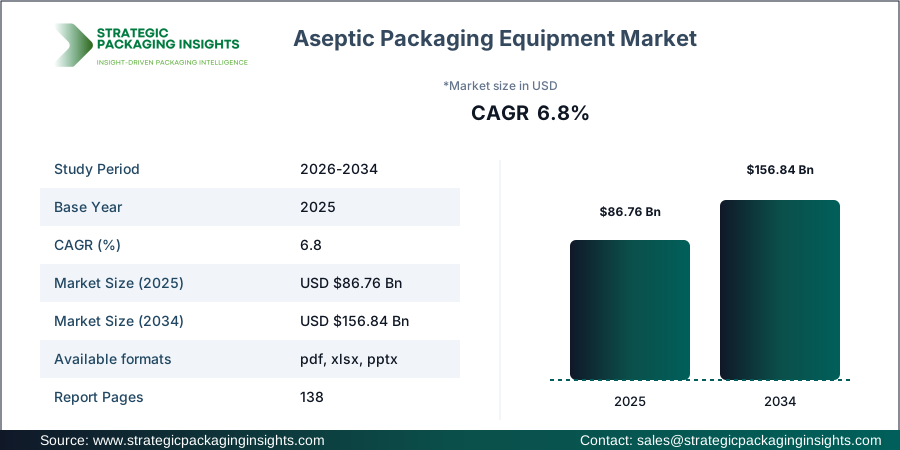
The Aseptic Packaging Equipment market size was valued at USD 86.76 billion in 2025 and is anticipated to reach USD 156.84 billion by 2034, growing at a CAGR of 6.8% during the forecast period according to Strategic Packaging Insights. The market is witnessing robust growth driven by the increasing demand for safe and extended shelf-life packaging solutions across various industries. Tetra Pak, a leading player in the market, continues to innovate in aseptic technology, enhancing the efficiency and sustainability of packaging processes. The rise in consumer preference for packaged food and beverages, coupled with advancements in aseptic processing technologies, is propelling the market forward.
One of the most impactful drivers of the Aseptic Packaging Equipment market is the growing emphasis on food safety and hygiene. Governments worldwide are implementing stringent regulations to ensure the safety of food and pharmaceutical products, which in turn is boosting the demand for aseptic packaging solutions. For instance, the U.S. Food and Drug Administration (FDA) has set rigorous standards for aseptic processing and packaging to prevent contamination and ensure product integrity. This regulatory push is encouraging manufacturers to adopt advanced aseptic packaging equipment, thereby driving market growth. Additionally, the increasing awareness among consumers about the benefits of aseptic packaging, such as reduced preservatives and enhanced nutritional value, is further fueling the market expansion.
Report Scope
| Attributes | Details |
| Report Title | Aseptic Packaging Equipment Market Size, Future Growth and Forecast 2034 |
| Machine Type | Aseptic Filling Machines, Aseptic Form-Fill-Seal Machines, Sterilization Systems, Cartoning Systems |
| Packaging Type | Cartons, Bottles, Pouches, Cups |
| Application | Dairy, Juices, Liquid Foods, Pharmaceuticals |
| End Use | Food & Beverage, Healthcare, Contract Packers |
| Region | Asia Pacific, North America, Latin America, Europe, Middle East & Africa |
| Base Year | 2025 |
| Historic Period | 2018-2024 |
| Forecast Period | 2026-2034 |
| Number of Pages | 138 |
| Customization Available | Yes* |
Sustainability & Circular Economy Analysis
Sustainability initiatives and circular economy practices are significantly influencing the aseptic packaging equipment market. The shift towards recyclable materials and reusable packaging is becoming a priority for manufacturers aiming to reduce their environmental impact. Companies like Tetra Pak are leading the way by developing eco-friendly materials and lightweight packaging solutions that minimize waste and lower carbon footprints. These efforts align with consumer preferences for sustainable products, driving demand for innovative packaging solutions that support a circular economy.
The integration of eco-friendly material innovation and waste reduction strategies is reshaping packaging design and manufacturing processes. Packaging companies are investing in research and development to create materials that are not only sustainable but also cost-effective. This trend is influencing investment decisions and supply chain strategies, as companies seek to enhance their long-term competitiveness by adopting sustainable practices. Regulatory compliance is also a key factor, with governments imposing stricter packaging regulations to promote sustainability and extended producer responsibility (EPR).
As sustainability trends continue to evolve, they are impacting the entire packaging value chain, from raw material sourcing to end-user delivery. Companies are increasingly focusing on reducing their carbon footprint and enhancing supply chain resilience through localization and strategic partnerships. These efforts are crucial for maintaining market competitiveness and meeting the growing demand for sustainable packaging solutions. The emphasis on sustainability is not only a regulatory requirement but also a strategic driver for innovation and growth in the aseptic packaging equipment market.
Packaging Value Chain & Supply Chain Analysis
The packaging value chain and supply chain ecosystem for aseptic packaging equipment are complex and multifaceted, involving various stakeholders from raw material suppliers to end-users. Raw material sourcing is a critical component, as the availability and cost of materials like plastics and paperboard directly impact production capabilities and pricing strategies. Packaging converters and manufacturers play a pivotal role in transforming these raw materials into finished products, utilizing advanced machinery and technologies to ensure efficiency and quality.
Logistics and distribution channels are essential for delivering aseptic packaging equipment to brand owners and retailers. Efficient transportation and inventory management are crucial for maintaining supply chain resilience and meeting customer demands. Companies like Krones and Syntegon are leveraging strategic partnerships and global sourcing to enhance their supply chain capabilities, ensuring timely delivery and competitive pricing. These strategies are vital for sustaining market performance and business competitiveness in a rapidly evolving industry.
Recycling networks and procurement strategies are also integral to the packaging value chain, as companies strive to meet sustainability goals and regulatory requirements. The focus on localization and supply chain resilience is driving investment in advanced packaging machinery and technologies that support sustainable practices. By optimizing their supply chains, companies can reduce costs, improve efficiency, and enhance their market position. The interplay between supply chain efficiency, raw material availability, and strategic partnerships is a key determinant of success in the aseptic packaging equipment market.
Opportunities & Threats
The aseptic packaging equipment market presents numerous opportunities for growth and innovation. One significant opportunity lies in the expanding demand for aseptic packaging solutions in emerging markets. As countries in Asia Pacific and Latin America experience economic growth and urbanization, the demand for packaged food and beverages is increasing. This trend is driving the need for advanced aseptic packaging equipment that can meet the growing consumer demand for safe and convenient products. Companies that can effectively tap into these emerging markets stand to gain a competitive advantage and expand their market share.
Another opportunity is the increasing focus on technological advancements and automation in packaging processes. The integration of smart technologies and IoT in aseptic packaging equipment is enhancing operational efficiency and product quality. Companies like GEA and Coesia are investing in research and development to develop innovative solutions that streamline packaging operations and reduce costs. This technological evolution is creating new avenues for growth and differentiation in the market, as manufacturers seek to offer cutting-edge solutions that meet the evolving needs of their customers.
Despite the opportunities, the aseptic packaging equipment market also faces several threats. One major challenge is the high initial investment required for advanced aseptic packaging machinery. Small and medium-sized enterprises may find it difficult to afford these technologies, limiting their ability to compete with larger players. Additionally, the market is subject to regulatory challenges, as governments impose stringent standards for food safety and packaging materials. Companies must navigate these regulatory complexities to ensure compliance and avoid potential penalties. The competitive landscape is also intensifying, with established players and new entrants vying for market share, which could lead to pricing pressures and margin erosion.
Drivers & Challenges
The aseptic packaging equipment market is driven by several key factors that are shaping its growth trajectory. One of the primary drivers is the increasing demand for extended shelf-life products, particularly in the food and beverage industry. Consumers are seeking convenient and long-lasting products that maintain their quality and nutritional value. Aseptic packaging solutions provide an effective means of preserving product integrity without the need for preservatives, making them highly attractive to health-conscious consumers. This demand is further fueled by the rise in e-commerce and online grocery shopping, where the need for durable and safe packaging is paramount.
Another significant driver is the growing emphasis on sustainability and environmental responsibility. As consumers become more environmentally conscious, there is a rising demand for eco-friendly packaging solutions that minimize waste and reduce carbon footprints. Companies are responding by developing recyclable and biodegradable materials, as well as implementing sustainable manufacturing practices. This shift towards sustainability is not only a consumer-driven trend but also a regulatory requirement, as governments worldwide impose stricter packaging regulations to promote environmental stewardship.
However, the aseptic packaging equipment market also faces several challenges that could hinder its growth. One of the main challenges is the high cost of advanced aseptic packaging technologies, which can be a barrier to entry for smaller companies. Additionally, the market is subject to fluctuations in raw material prices, which can impact production costs and profitability. Companies must also navigate complex regulatory landscapes, ensuring compliance with food safety and packaging standards. These challenges require strategic planning and investment in research and development to overcome and maintain a competitive edge in the market.
Market Share Analysis
The competitive landscape of the aseptic packaging equipment market is characterized by the presence of several key players who dominate the industry. Tetra Pak, a leader in the market, holds a significant share due to its extensive product portfolio and innovative solutions. The company's focus on sustainability and technological advancements has positioned it as a frontrunner in the aseptic packaging sector. Similarly, SIG Combibloc is a major player known for its cutting-edge aseptic carton packaging solutions, catering to the growing demand for safe and sustainable packaging.
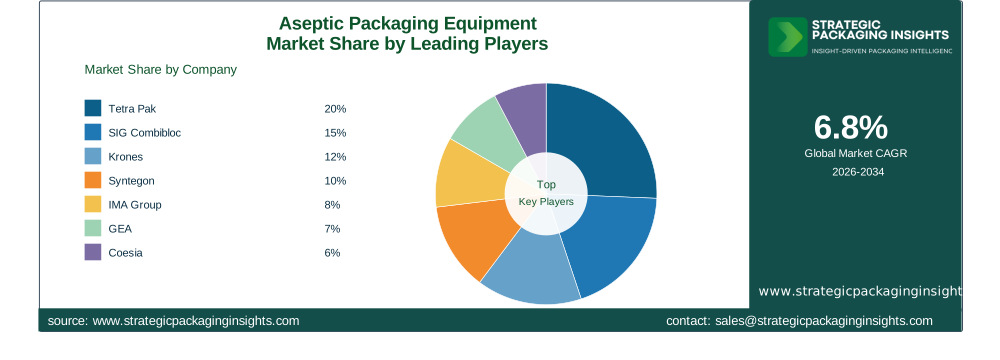
Krones, another prominent company, is renowned for its comprehensive range of aseptic filling machines and packaging systems. The company's commitment to quality and efficiency has earned it a strong reputation in the market. Syntegon, formerly Bosch Packaging Technology, is also a key player, offering a wide array of aseptic packaging equipment that meets the stringent requirements of the food and pharmaceutical industries. These companies, along with others like IMA Group and GEA, are continuously investing in research and development to enhance their product offerings and maintain their competitive edge.
Coesia and Sidel are notable players in the aseptic packaging equipment market, known for their innovative solutions and global reach. Coesia's focus on automation and digitalization has enabled it to deliver high-performance packaging systems that meet the evolving needs of its customers. Sidel, on the other hand, is recognized for its expertise in PET packaging solutions, catering to the beverage industry's demand for lightweight and sustainable packaging. These companies, along with KHS and Serac, are leveraging strategic partnerships and acquisitions to expand their market presence and strengthen their product portfolios.
The competitive dynamics of the aseptic packaging equipment market are further influenced by the entry of new players and the expansion of existing companies into new regions. As the market continues to grow, companies are focusing on innovation and differentiation to capture a larger share of the market. The emphasis on sustainability, technological advancements, and customer-centric solutions is driving competition and shaping the future of the aseptic packaging equipment industry.
Key Highlights
- The aseptic packaging equipment market is projected to reach USD 156.84 billion by 2034, growing at a CAGR of 6.8%.
- Asia Pacific is expected to witness the highest growth due to increasing demand for packaged food and beverages.
- Tetra Pak and SIG Combibloc are leading players in the market, known for their innovative solutions.
- Technological advancements and automation are key trends driving market growth.
- Sustainability initiatives are reshaping packaging design and manufacturing processes.
- Emerging markets offer significant growth opportunities for aseptic packaging equipment manufacturers.
- Regulatory compliance and food safety standards are critical factors influencing market dynamics.
Aseptic Packaging Equipment Market Segments Insights

Machine Type Analysis
The machine type segment of the aseptic packaging equipment market is diverse, encompassing various technologies such as aseptic filling machines, aseptic form-fill-seal machines, sterilization systems, and cartoning systems. Aseptic filling machines are in high demand due to their ability to maintain product sterility and extend shelf life without the need for preservatives. Companies like Krones and Syntegon are leading the way in developing advanced filling technologies that enhance efficiency and reduce operational costs. The aseptic form-fill-seal machines are also gaining traction, particularly in the dairy and liquid food sectors, where they offer flexibility and high-speed production capabilities.
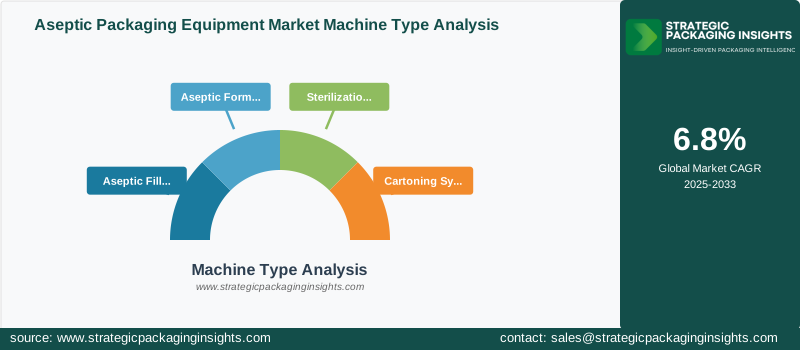
Sterilization systems are a critical component of the aseptic packaging process, ensuring that packaging materials and products are free from contaminants. The demand for these systems is driven by the stringent food safety regulations and the need for high-quality packaging solutions. Cartoning systems, on the other hand, are essential for secondary packaging, providing protection and convenience for consumers. The integration of automation and digital technologies in these systems is enhancing their performance and reliability, making them a preferred choice for manufacturers seeking to optimize their packaging operations.
Packaging Type Analysis
The packaging type segment includes cartons, bottles, pouches, and cups, each catering to different applications and consumer preferences. Cartons are widely used in the dairy and juice industries, offering a sustainable and convenient packaging solution. Companies like SIG Combibloc are at the forefront of carton packaging innovation, developing eco-friendly materials and designs that appeal to environmentally conscious consumers. Bottles, particularly PET bottles, are popular in the beverage industry due to their lightweight and recyclable nature. Sidel is a key player in this segment, providing advanced PET packaging solutions that meet the demands of the modern consumer.
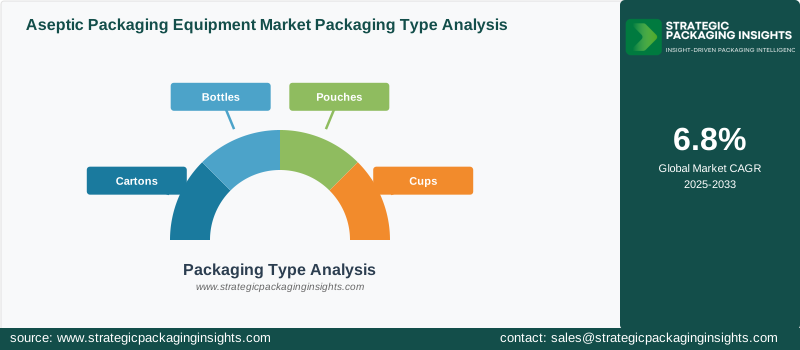
Pouches and cups are gaining popularity in the food and pharmaceutical sectors, offering convenience and portion control. The flexibility and versatility of pouches make them suitable for a wide range of products, from liquid foods to pharmaceuticals. The demand for cups is driven by the growing trend of on-the-go consumption, particularly in urban areas. The focus on sustainability and innovation in packaging materials is driving the development of new solutions that meet the evolving needs of consumers and regulatory requirements.
Application Analysis
The application segment of the aseptic packaging equipment market is dominated by the dairy, juices, liquid foods, and pharmaceuticals industries. The dairy industry is a major consumer of aseptic packaging solutions, as it requires packaging that can preserve the freshness and quality of products without the use of preservatives. The demand for aseptic packaging in the juice industry is also significant, driven by the need for packaging that can maintain the nutritional value and taste of products. Companies like Tetra Pak are leading the way in providing innovative solutions that cater to these industries.
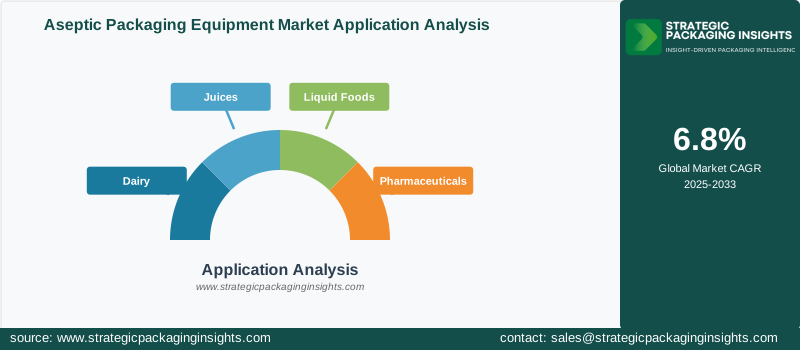
The liquid foods sector is experiencing rapid growth, with consumers seeking convenient and healthy options. Aseptic packaging solutions offer an ideal solution for preserving the quality and safety of liquid foods, making them a preferred choice for manufacturers. The pharmaceutical industry is also a key application area, as it requires packaging that can ensure the sterility and integrity of products. The focus on safety and regulatory compliance is driving the demand for advanced aseptic packaging equipment in this sector.
End Use Analysis
The end-use segment of the aseptic packaging equipment market includes food & beverage, healthcare, and contract packers. The food & beverage industry is the largest end-user, driven by the increasing demand for packaged products that offer convenience and extended shelf life. The healthcare sector is also a significant consumer of aseptic packaging solutions, as it requires packaging that can ensure the safety and efficacy of pharmaceutical products. The demand for aseptic packaging in the healthcare industry is driven by the need for compliance with stringent regulatory standards and the growing focus on patient safety.
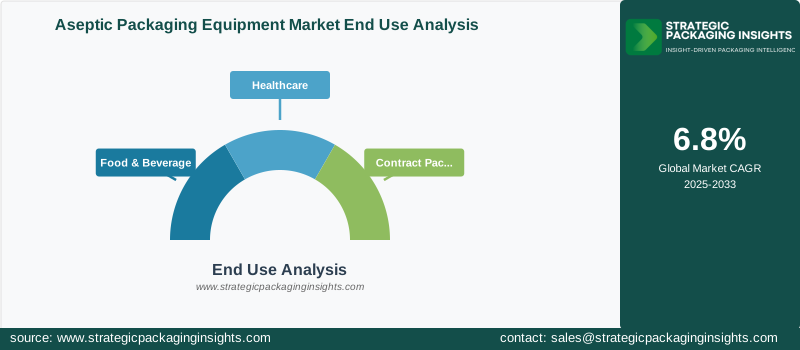
Contract packers are emerging as a key end-user segment, as they provide packaging services to various industries, including food, beverage, and pharmaceuticals. The flexibility and scalability offered by contract packers make them an attractive option for companies seeking to outsource their packaging operations. The focus on efficiency and cost-effectiveness is driving the demand for advanced aseptic packaging equipment among contract packers, as they seek to optimize their operations and meet the evolving needs of their clients.
Aseptic Packaging Equipment Market Segments
The Aseptic Packaging Equipment market has been segmented on the basis ofMachine Type
- Aseptic Filling Machines
- Aseptic Form-Fill-Seal Machines
- Sterilization Systems
- Cartoning Systems
Packaging Type
- Cartons
- Bottles
- Pouches
- Cups
Application
- Dairy
- Juices
- Liquid Foods
- Pharmaceuticals
End Use
- Food & Beverage
- Healthcare
- Contract Packers
Region
- Asia Pacific
- North America
- Latin America
- Europe
- Middle East & Africa




