


Antimony Free Film Market Outlook
The Antimony Free Film market was valued at $3.66 billion in 2025 and is projected to reach $7.06 billion by 2034, growing at a CAGR of 7.6% during the forecast period 2026-2034. This market is witnessing significant growth due to the increasing demand for eco-friendly and sustainable packaging solutions. The shift towards antimony-free films is driven by the rising awareness of environmental issues and the stringent regulations imposed by governments worldwide to reduce the use of hazardous materials in packaging. The food and beverage industry, in particular, is a major contributor to the demand for antimony-free films, as these films offer excellent barrier properties and are safe for food contact applications.
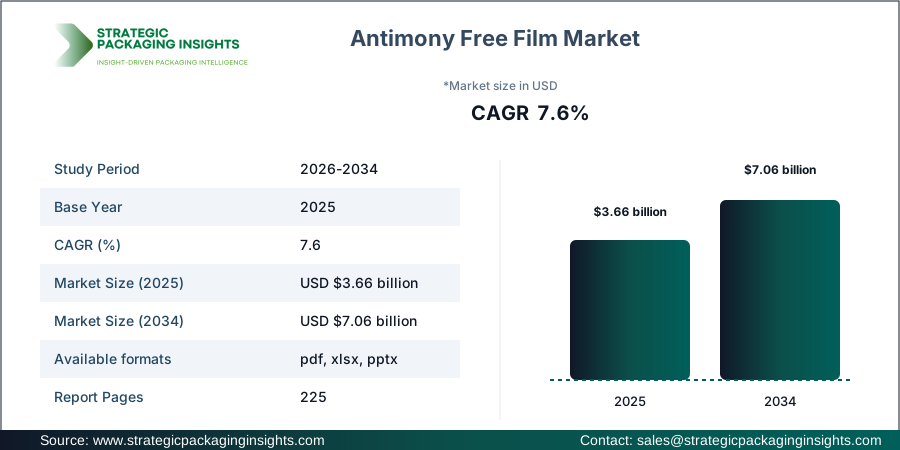
Despite the promising growth prospects, the Antimony Free Film market faces certain challenges. The high cost of production and the need for advanced manufacturing technologies are some of the key restraints that could hinder market growth. Additionally, the lack of awareness about the benefits of antimony-free films among end-users in certain regions could also pose a challenge. However, the increasing investments in research and development activities to improve the performance and cost-effectiveness of these films are expected to create lucrative opportunities for market players in the coming years.
Report Scope
| Attributes | Details |
| Report Title | Antimony Free Film Market Size, Future Growth and Forecast 2034 |
| Material Type | Antimony-Free PET, Recycled PET, Specialty Polyester |
| Application | Food Packaging, Pharma Packaging, Beverage Labels, Lidding |
| Film Type | Clear, Metallized, Barrier |
| End Use | Food, Healthcare, Beverage, Converters |
| Region | Asia Pacific, North America, Latin America, Europe, Middle East & Africa |
| Base Year | 2025 |
| Historic Period | 2018-2024 |
| Forecast Period | 2026-2034 |
| Number of Pages | 225 |
| Customization Available | Yes* |
Opportunities & Threats
The Antimony Free Film market presents numerous opportunities for growth, primarily driven by the increasing demand for sustainable packaging solutions. As consumers become more environmentally conscious, there is a growing preference for packaging materials that are free from harmful substances like antimony. This trend is particularly evident in the food and beverage industry, where there is a strong emphasis on ensuring the safety and quality of packaged products. Additionally, the rise of e-commerce and online food delivery services has further fueled the demand for antimony-free films, as these platforms require durable and safe packaging solutions to ensure the safe delivery of products.
Another significant opportunity lies in the development of innovative antimony-free film products that offer enhanced performance characteristics. Manufacturers are investing in research and development to create films with improved barrier properties, better clarity, and increased durability. These advancements are expected to open up new application areas for antimony-free films, such as in the pharmaceutical and healthcare sectors, where there is a growing need for high-performance packaging materials. Furthermore, the increasing adoption of recycled PET in the production of antimony-free films is expected to drive market growth, as it aligns with the global trend towards circular economy and resource efficiency.
However, the Antimony Free Film market also faces certain threats that could impact its growth trajectory. One of the primary challenges is the high cost of production associated with antimony-free films. The manufacturing process requires advanced technologies and specialized equipment, which can result in higher production costs compared to conventional films. Additionally, the lack of awareness about the benefits of antimony-free films among end-users in certain regions could limit market penetration. To overcome these challenges, market players need to focus on educating consumers about the advantages of antimony-free films and invest in cost-effective production technologies.
Drivers & Challenges
The Antimony Free Film market is primarily driven by the increasing demand for sustainable and eco-friendly packaging solutions. As environmental concerns continue to rise, consumers and businesses alike are seeking packaging materials that minimize their environmental impact. Antimony-free films, which are free from harmful substances, are gaining traction as a preferred choice for packaging applications. This trend is particularly prominent in the food and beverage industry, where there is a strong emphasis on ensuring the safety and quality of packaged products. Additionally, the stringent regulations imposed by governments worldwide to reduce the use of hazardous materials in packaging are further propelling the demand for antimony-free films.
Another key driver of the Antimony Free Film market is the growing adoption of recycled PET in the production of these films. Recycled PET offers several advantages, including reduced environmental impact, cost savings, and compliance with sustainability goals. As a result, manufacturers are increasingly incorporating recycled PET into their production processes, which is expected to drive market growth. Furthermore, the rise of e-commerce and online food delivery services has created a surge in demand for durable and safe packaging solutions, further boosting the demand for antimony-free films.
Despite the positive growth drivers, the Antimony Free Film market faces several challenges that could hinder its expansion. One of the primary challenges is the high cost of production associated with antimony-free films. The manufacturing process requires advanced technologies and specialized equipment, which can result in higher production costs compared to conventional films. Additionally, the lack of awareness about the benefits of antimony-free films among end-users in certain regions could limit market penetration. To overcome these challenges, market players need to focus on educating consumers about the advantages of antimony-free films and invest in cost-effective production technologies.
Market Share Analysis
The competitive landscape of the Antimony Free Film market is characterized by the presence of several key players who are actively engaged in product development, strategic partnerships, and mergers and acquisitions to strengthen their market position. Companies such as Toray Industries, Mitsubishi Chemical, Polyplex, Jindal Films, UFlex, DuPont Teijin Films, SKC, Toyobo, Ester Industries, and Kolon Industries are some of the prominent players in this market. These companies are focusing on expanding their product portfolios and enhancing their production capabilities to cater to the growing demand for antimony-free films.
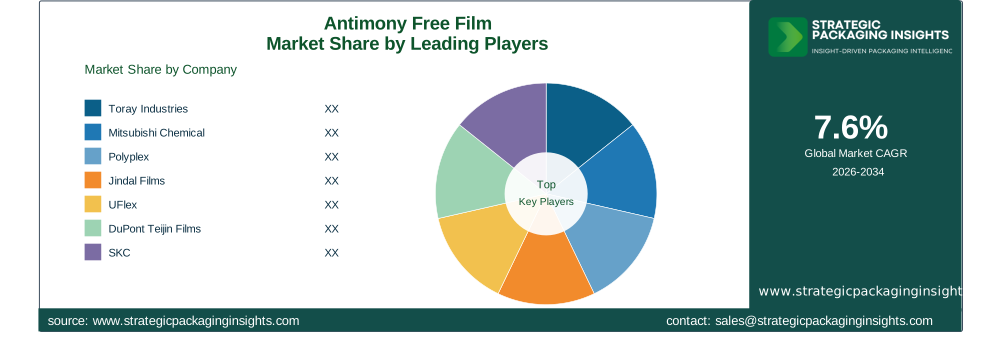
Toray Industries is a leading player in the Antimony Free Film market, known for its innovative product offerings and strong focus on research and development. The company has a significant market share and is continuously investing in new technologies to improve the performance and sustainability of its products. Mitsubishi Chemical is another major player, with a strong presence in the global market. The company is actively involved in developing advanced antimony-free film solutions that cater to various end-use industries, including food and beverage, healthcare, and pharmaceuticals.
Polyplex and Jindal Films are also key players in the Antimony Free Film market, known for their extensive product portfolios and strong distribution networks. These companies are focusing on expanding their market presence through strategic partnerships and collaborations with other industry players. UFlex, DuPont Teijin Films, and SKC are other notable players in the market, with a strong emphasis on innovation and sustainability. These companies are investing in research and development to create high-performance antimony-free films that meet the evolving needs of consumers and businesses.
Toyobo, Ester Industries, and Kolon Industries are also significant contributors to the Antimony Free Film market. These companies are leveraging their expertise in materials science and engineering to develop innovative film solutions that offer superior performance and environmental benefits. By focusing on product innovation and strategic partnerships, these companies are well-positioned to capitalize on the growing demand for antimony-free films and strengthen their market position.
Key Highlights
- The Antimony Free Film market is projected to grow from $3.66 billion in 2025 to $7.06 billion by 2034, at a CAGR of 7.6%.
- Increasing demand for sustainable and eco-friendly packaging solutions is driving market growth.
- Food and beverage industry is a major contributor to the demand for antimony-free films.
- Recycled PET is gaining traction as a preferred material for antimony-free film production.
- High production costs and lack of awareness are key challenges for market players.
- Key players include Toray Industries, Mitsubishi Chemical, Polyplex, Jindal Films, and UFlex.
- Innovative product development and strategic partnerships are key strategies for market expansion.
- Asia Pacific is expected to witness significant growth due to rising demand for sustainable packaging.
- Stringent regulations on hazardous materials in packaging are propelling market demand.
- Advancements in manufacturing technologies are expected to drive market growth.
Top Countries Insights
In the Antimony Free Film market, the United States is a key player, with a market size of approximately $1.2 billion and a CAGR of 6%. The country's strong focus on sustainability and environmental regulations is driving the demand for antimony-free films. The food and beverage industry, in particular, is a major contributor to market growth, as companies seek to comply with stringent packaging standards and consumer preferences for eco-friendly products.
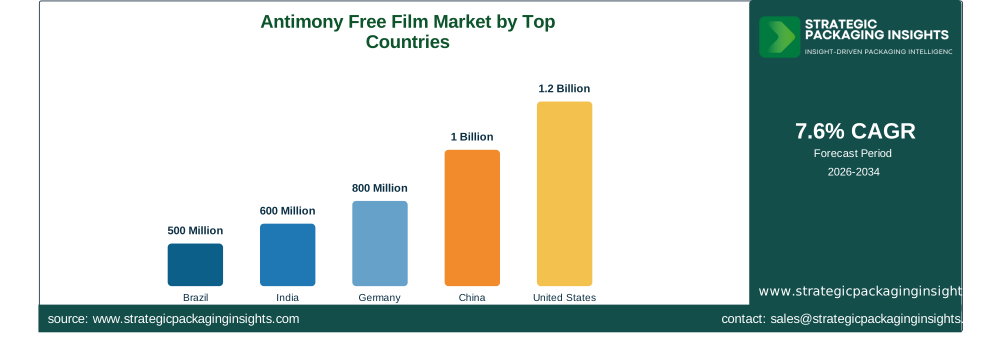
China is another significant market for antimony-free films, with a market size of around $1 billion and a CAGR of 8%. The country's rapid industrialization and growing consumer awareness about environmental issues are fueling the demand for sustainable packaging solutions. Additionally, government initiatives to promote the use of recycled materials in packaging are expected to drive market growth in the coming years.
Germany is a leading market in Europe, with a market size of approximately $800 million and a CAGR of 7%. The country's strong emphasis on sustainability and circular economy principles is driving the adoption of antimony-free films. The food and beverage industry is a major end-user, with companies focusing on reducing their environmental footprint and complying with stringent packaging regulations.
India is emerging as a key market for antimony-free films, with a market size of around $600 million and a CAGR of 9%. The country's growing middle-class population and increasing consumer awareness about environmental issues are driving the demand for sustainable packaging solutions. Additionally, government initiatives to promote the use of eco-friendly materials in packaging are expected to boost market growth.
Brazil is a significant market in Latin America, with a market size of approximately $500 million and a CAGR of 7%. The country's strong focus on sustainability and environmental regulations is driving the demand for antimony-free films. The food and beverage industry is a major contributor to market growth, as companies seek to comply with stringent packaging standards and consumer preferences for eco-friendly products.
Antimony Free Film Market Segments Insights

Material Type Analysis
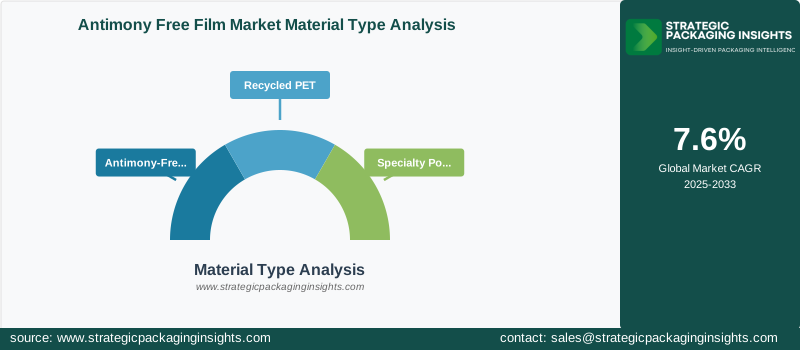
The Antimony Free Film market is segmented by material type into antimony-free PET, recycled PET, and specialty polyester. Antimony-free PET is gaining popularity due to its excellent barrier properties and safety for food contact applications. The increasing demand for sustainable packaging solutions is driving the adoption of antimony-free PET, particularly in the food and beverage industry. Recycled PET is also witnessing significant growth, as it aligns with the global trend towards circular economy and resource efficiency. Manufacturers are increasingly incorporating recycled PET into their production processes, which is expected to drive market growth. Specialty polyester films are also gaining traction, offering enhanced performance characteristics such as improved clarity and durability.
The demand for antimony-free films is further driven by the stringent regulations imposed by governments worldwide to reduce the use of hazardous materials in packaging. As a result, manufacturers are focusing on developing innovative film solutions that comply with these regulations while offering superior performance. The increasing investments in research and development activities to improve the performance and cost-effectiveness of antimony-free films are expected to create lucrative opportunities for market players in the coming years. Additionally, the rise of e-commerce and online food delivery services has created a surge in demand for durable and safe packaging solutions, further boosting the demand for antimony-free films.
Application Analysis
The Antimony Free Film market is segmented by application into food packaging, pharma packaging, beverage labels, and lidding. Food packaging is a major application area for antimony-free films, driven by the increasing demand for safe and sustainable packaging solutions. The food and beverage industry is a major contributor to market growth, as companies seek to comply with stringent packaging standards and consumer preferences for eco-friendly products. Pharma packaging is another significant application area, with the growing need for high-performance packaging materials in the pharmaceutical and healthcare sectors.
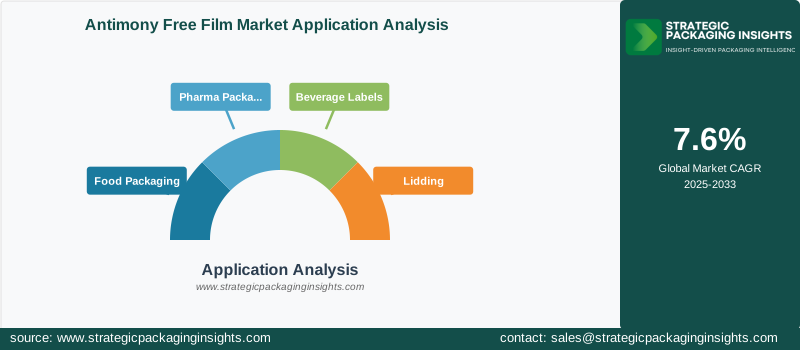
Beverage labels and lidding are also important application areas for antimony-free films, offering excellent barrier properties and durability. The rise of e-commerce and online food delivery services has further fueled the demand for antimony-free films, as these platforms require durable and safe packaging solutions to ensure the safe delivery of products. Manufacturers are focusing on developing innovative film solutions that cater to the evolving needs of consumers and businesses, offering enhanced performance characteristics such as improved clarity and durability.
Film Type Analysis
The Antimony Free Film market is segmented by film type into clear, metallized, and barrier films. Clear films are gaining popularity due to their excellent clarity and transparency, making them ideal for packaging applications where product visibility is important. The increasing demand for sustainable packaging solutions is driving the adoption of clear films, particularly in the food and beverage industry. Metallized films are also witnessing significant growth, offering enhanced barrier properties and aesthetic appeal. These films are widely used in applications such as beverage labels and lidding, where durability and visual appeal are important considerations.
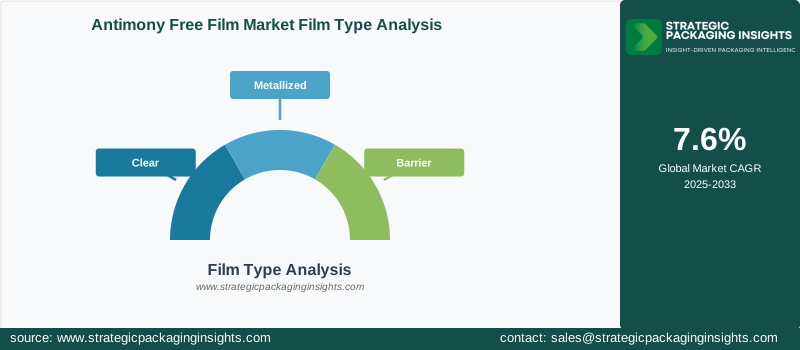
Barrier films are another important segment, offering superior protection against moisture, oxygen, and other environmental factors. The growing need for high-performance packaging materials in the food and pharmaceutical industries is driving the demand for barrier films. Manufacturers are focusing on developing innovative film solutions that offer enhanced barrier properties while complying with stringent regulations on hazardous materials in packaging. The increasing investments in research and development activities to improve the performance and cost-effectiveness of barrier films are expected to create lucrative opportunities for market players in the coming years.
End Use Analysis
The Antimony Free Film market is segmented by end use into food, healthcare, beverage, and converters. The food industry is a major end-user of antimony-free films, driven by the increasing demand for safe and sustainable packaging solutions. The growing consumer awareness about environmental issues and the stringent regulations imposed by governments worldwide are propelling the demand for antimony-free films in the food industry. The healthcare sector is another significant end-user, with the growing need for high-performance packaging materials in the pharmaceutical and healthcare sectors.
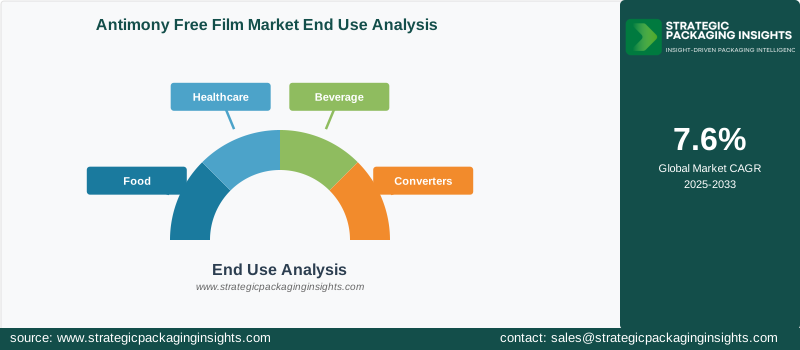
The beverage industry is also a major contributor to market growth, as companies seek to comply with stringent packaging standards and consumer preferences for eco-friendly products. Converters are another important end-user segment, focusing on developing innovative film solutions that cater to the evolving needs of consumers and businesses. The increasing investments in research and development activities to improve the performance and cost-effectiveness of antimony-free films are expected to create lucrative opportunities for market players in the coming years.
Antimony Free Film Market Segments
The Antimony Free Film market has been segmented on the basis ofMaterial Type
- Antimony-Free PET
- Recycled PET
- Specialty Polyester
Application
- Food Packaging
- Pharma Packaging
- Beverage Labels
- Lidding
Film Type
- Clear
- Metallized
- Barrier
End Use
- Food
- Healthcare
- Beverage
- Converters
Region
- Asia Pacific
- North America
- Latin America
- Europe
- Middle East & Africa




