


Anti-Static Liner Market Outlook
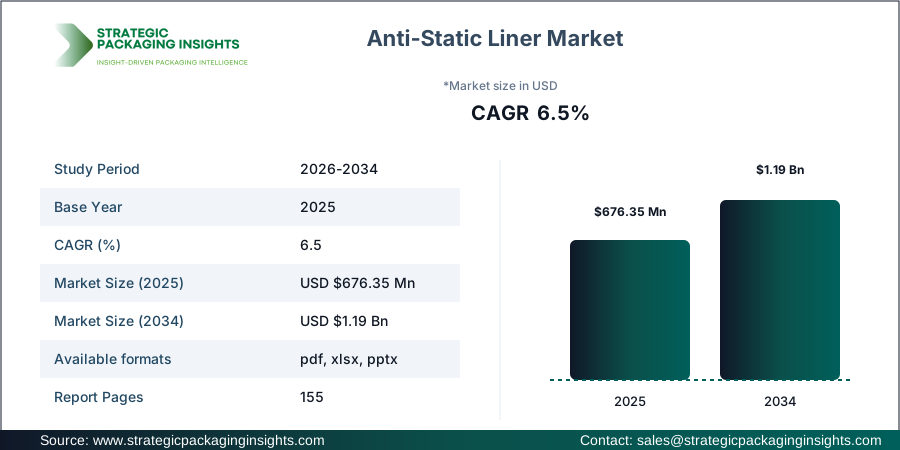
The Anti-Static Liner market was valued at $676.35 million in 2025 and is projected to reach $1.19 billion by 2034, growing at a CAGR of 6.5% during the forecast period 2026-2034. This market is witnessing significant growth due to the increasing demand for protective packaging solutions in various industries such as electronics, chemicals, and pharmaceuticals. The rise in electronic device manufacturing and the need for safe transportation of sensitive components are key drivers for the market. Additionally, the growing awareness about the importance of preventing electrostatic discharge (ESD) in industrial applications is further propelling the demand for anti-static liners.
Despite the promising growth prospects, the Anti-Static Liner market faces certain challenges. Regulatory constraints and the need for compliance with stringent safety standards can pose hurdles for market players. However, the potential for innovation in material technology and the development of eco-friendly and cost-effective solutions offer significant growth opportunities. The market is also expected to benefit from the increasing adoption of anti-static liners in emerging economies, where industrialization and technological advancements are on the rise.
Report Scope
| Attributes | Details |
| Report Title | Anti-Static Liner Market Size, Future Growth and Forecast 2034 |
| By Product Type | Anti-Static Bag Liners, Container Liners, Drum Liners |
| By Material Type | LDPE, HDPE, Metallized Film, Conductive Polymer |
| By Application | Electronics, Chemicals, Pharma |
| By End Use | Semiconductor, Electronics, Industrial, Logistics |
| Region | Asia Pacific, North America, Latin America, Europe, Middle East & Africa |
| Base Year | 2025 |
| Historic Period | 2018-2024 |
| Forecast Period | 2026-2034 |
| Number of Pages | 155 |
| Customization Available | Yes* |
Opportunities & Threats
The Anti-Static Liner market presents numerous opportunities for growth, particularly in the development of advanced materials that offer enhanced protection against electrostatic discharge. Innovations in material science, such as the use of conductive polymers and metallized films, are expected to drive market expansion. These materials not only provide superior anti-static properties but also offer additional benefits such as durability and environmental sustainability. Furthermore, the increasing demand for electronics and semiconductor components in emerging markets presents a lucrative opportunity for manufacturers to expand their presence and capture a larger market share.
Another significant opportunity lies in the customization of anti-static liners to meet specific industry requirements. As industries such as pharmaceuticals and chemicals continue to evolve, there is a growing need for tailored packaging solutions that address unique challenges. Companies that can offer customized anti-static liners with specific properties, such as chemical resistance or temperature stability, are likely to gain a competitive edge. Additionally, the trend towards sustainable packaging solutions is driving the demand for eco-friendly anti-static liners, opening up new avenues for growth in the market.
However, the market is not without its threats. One of the primary challenges is the fluctuating cost of raw materials, which can impact the profitability of manufacturers. The reliance on petroleum-based materials such as LDPE and HDPE makes the market vulnerable to price volatility in the oil industry. Moreover, the presence of stringent regulations regarding the use of certain materials in packaging can pose compliance challenges for manufacturers. Companies need to navigate these regulatory landscapes carefully to avoid potential penalties and ensure continued market access.
Drivers & Challenges
The Anti-Static Liner market is driven by several key factors, including the rapid growth of the electronics industry and the increasing need for protective packaging solutions. As the demand for electronic devices continues to rise, so does the need for effective packaging that can prevent damage from electrostatic discharge. Anti-static liners play a crucial role in safeguarding sensitive electronic components during transportation and storage, thereby driving their adoption across the industry. Additionally, the growing awareness about the importance of ESD protection in industrial applications is further fueling market growth.
Another significant driver is the increasing focus on sustainability and environmental responsibility. With consumers and industries alike becoming more conscious of their environmental impact, there is a growing demand for eco-friendly packaging solutions. Anti-static liners made from recyclable materials or those that offer biodegradability are gaining traction in the market. This trend is encouraging manufacturers to invest in research and development to create innovative products that meet both performance and environmental standards, thereby driving market expansion.
Despite these drivers, the market faces several challenges that could hinder its growth. One of the primary challenges is the high cost associated with the production of advanced anti-static materials. The development of materials that offer superior anti-static properties while being environmentally friendly can be expensive, which may limit their adoption, especially among cost-sensitive customers. Additionally, the market is highly competitive, with numerous players vying for market share. This intense competition can lead to price wars and margin pressures, making it challenging for companies to maintain profitability.
Market Share Analysis
The competitive landscape of the Anti-Static Liner market is characterized by the presence of several key players who are actively engaged in product innovation and strategic partnerships to strengthen their market position. Protective Packaging Corporation, Desco Industries, and Teknis are some of the leading companies in the market, known for their extensive product portfolios and strong distribution networks. These companies have established themselves as reliable providers of high-quality anti-static liners, catering to a diverse range of industries including electronics, chemicals, and pharmaceuticals.
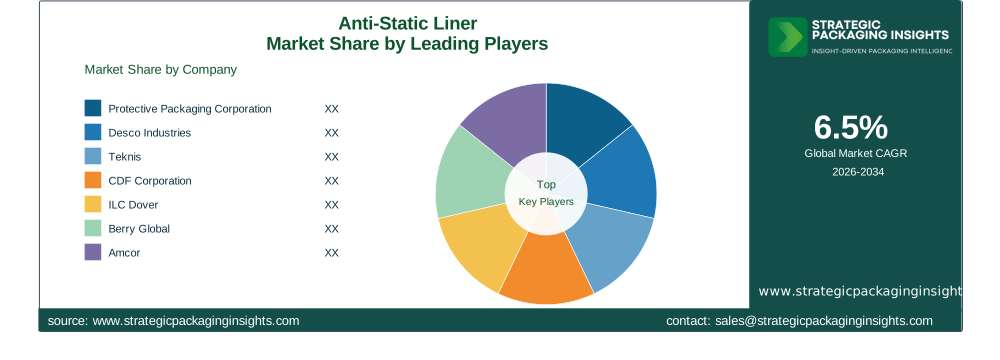
Protective Packaging Corporation holds a significant market share, attributed to its focus on developing innovative packaging solutions that meet the evolving needs of its customers. The company has a strong presence in North America and Europe, where it continues to expand its product offerings and enhance its customer service capabilities. Desco Industries, another major player, is renowned for its expertise in ESD control products and solutions. The company's commitment to quality and compliance with industry standards has earned it a loyal customer base across various sectors.
Teknis, a prominent player in the European market, is known for its advanced anti-static packaging solutions that cater to the electronics and semiconductor industries. The company's emphasis on research and development has enabled it to introduce cutting-edge products that address the specific requirements of its clients. CDF Corporation and ILC Dover are also key players in the market, recognized for their innovative approaches to packaging design and material technology. These companies are focused on expanding their global footprint through strategic collaborations and acquisitions.
Berry Global, Amcor, and Greif are other notable companies in the Anti-Static Liner market, each with a unique value proposition. Berry Global is a leader in sustainable packaging solutions, offering a range of eco-friendly anti-static liners that appeal to environmentally conscious customers. Amcor, with its extensive global presence, leverages its expertise in packaging innovation to deliver high-performance anti-static solutions. Greif, known for its industrial packaging products, has a strong focus on customer-centric solutions that enhance product safety and reliability.
Key Highlights
- The Anti-Static Liner market is projected to grow at a CAGR of 6.5% from 2026 to 2034.
- Increasing demand for electronics and semiconductor components is driving market growth.
- Innovations in material technology, such as conductive polymers, are enhancing product performance.
- Customization of anti-static liners to meet specific industry needs is a key trend.
- Eco-friendly and sustainable packaging solutions are gaining traction in the market.
- Regulatory compliance and safety standards are critical factors for market players.
- Fluctuating raw material costs pose a challenge to market profitability.
- North America and Europe are leading markets due to advanced industrial infrastructure.
- Emerging economies present significant growth opportunities for market expansion.
Top Countries Insights
In the Anti-Static Liner market, the United States stands out as a leading country, with a market size of approximately $250 million and a CAGR of 5%. The country's advanced electronics industry and strong focus on ESD protection drive the demand for anti-static liners. Additionally, stringent regulatory standards and a well-established industrial infrastructure contribute to the market's growth. The presence of major market players and continuous innovation in packaging solutions further bolster the United States' position in the global market.
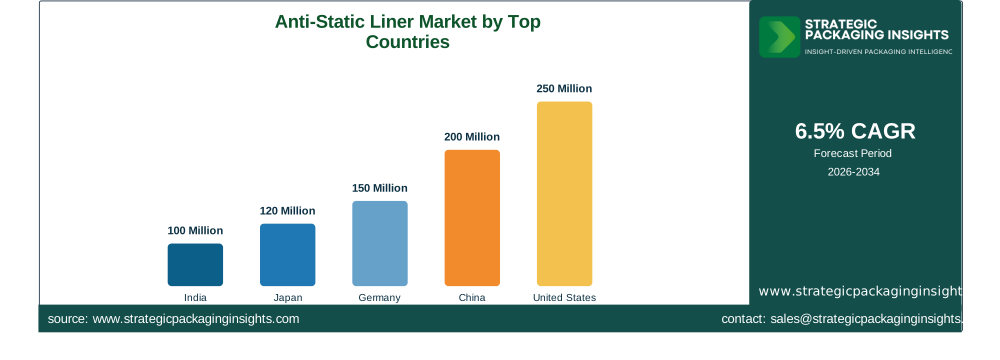
China is another key player in the Anti-Static Liner market, with a market size of around $200 million and a CAGR of 8%. The rapid industrialization and expansion of the electronics manufacturing sector in China are significant growth drivers. The country's focus on technological advancements and increasing investments in research and development are expected to enhance the quality and performance of anti-static liners. Moreover, the growing awareness about ESD protection in industrial applications is fueling market demand.
Germany, with a market size of approximately $150 million and a CAGR of 6%, is a prominent market for anti-static liners in Europe. The country's strong industrial base and emphasis on quality and safety standards drive the demand for high-performance packaging solutions. Germany's focus on sustainability and eco-friendly packaging is also contributing to market growth, as companies seek to reduce their environmental impact while ensuring product safety.
Japan, with a market size of about $120 million and a CAGR of 7%, is a key market in the Asia Pacific region. The country's advanced electronics and semiconductor industries are major consumers of anti-static liners. Japan's commitment to innovation and technological excellence is reflected in the development of cutting-edge packaging solutions that meet the stringent requirements of its industries. The country's focus on sustainability and environmental responsibility further supports market growth.
India, with a market size of approximately $100 million and a CAGR of 9%, is an emerging market with significant growth potential. The country's expanding electronics manufacturing sector and increasing investments in infrastructure development are driving the demand for anti-static liners. India's focus on enhancing its industrial capabilities and adopting advanced packaging solutions is expected to propel market growth in the coming years.
Anti-Static Liner Market Segments Insights

Product Type Analysis
The Anti-Static Liner market is segmented by product type into anti-static bag liners, container liners, and drum liners. Anti-static bag liners are widely used in the electronics industry for packaging sensitive components, providing protection against electrostatic discharge. The demand for these liners is driven by the increasing production of electronic devices and the need for safe transportation of delicate components. Container liners, on the other hand, are gaining popularity in the chemical and pharmaceutical industries, where they are used to prevent contamination and ensure product integrity during transit. Drum liners are essential in industrial applications, offering protection against static build-up and ensuring the safe handling of hazardous materials.
The market for anti-static bag liners is expected to witness significant growth due to the rising demand for consumer electronics and the increasing adoption of smart devices. As manufacturers focus on enhancing product safety and reducing the risk of ESD damage, the demand for high-quality anti-static bag liners is anticipated to rise. Container liners are also projected to experience robust growth, driven by the expanding chemical and pharmaceutical sectors. The need for secure and contamination-free packaging solutions is a key factor contributing to the demand for container liners. Drum liners, with their ability to provide effective ESD protection in industrial settings, are expected to maintain steady growth, supported by the increasing focus on workplace safety and regulatory compliance.
Material Type Analysis
The Anti-Static Liner market is categorized by material type into LDPE, HDPE, metallized film, and conductive polymer. LDPE and HDPE are commonly used materials due to their cost-effectiveness and versatility. These materials offer good anti-static properties and are widely used in various applications, including electronics and industrial packaging. Metallized films, known for their superior barrier properties and conductivity, are gaining traction in the market. They provide enhanced protection against ESD and are preferred in applications where high-performance packaging is required. Conductive polymers, although relatively new, are emerging as a promising material due to their excellent conductivity and environmental benefits.
The demand for LDPE and HDPE anti-static liners is expected to remain strong, driven by their widespread use in the electronics and industrial sectors. These materials offer a balance of performance and affordability, making them a popular choice among manufacturers. Metallized films are anticipated to witness significant growth, supported by the increasing demand for high-performance packaging solutions in the electronics and semiconductor industries. The superior conductivity and barrier properties of metallized films make them ideal for applications where maximum protection is required. Conductive polymers, with their potential for innovation and sustainability, are expected to gain market share as manufacturers seek eco-friendly alternatives to traditional materials.
Application Analysis
The Anti-Static Liner market is segmented by application into electronics, chemicals, and pharma. The electronics segment is the largest consumer of anti-static liners, driven by the need to protect sensitive components from electrostatic discharge. The rapid growth of the electronics industry, coupled with the increasing production of consumer electronics and semiconductor devices, is fueling the demand for anti-static liners. In the chemicals sector, anti-static liners are used to prevent contamination and ensure the safe handling of hazardous materials. The growing emphasis on safety and regulatory compliance in the chemical industry is driving the adoption of anti-static liners.
The pharmaceutical industry is also a significant consumer of anti-static liners, where they are used to protect sensitive products from contamination and ensure product integrity. The increasing focus on quality and safety in pharmaceutical packaging is contributing to the demand for anti-static liners. As the pharmaceutical industry continues to expand, driven by the growing demand for healthcare products and services, the need for high-quality packaging solutions is expected to rise. The electronics segment is projected to maintain its dominance in the market, supported by the continuous innovation and technological advancements in the industry.
End Use Analysis
The Anti-Static Liner market is segmented by end use into semiconductor, electronics, industrial, and logistics. The semiconductor and electronics industries are the primary consumers of anti-static liners, driven by the need to protect sensitive components from electrostatic discharge. The rapid growth of these industries, coupled with the increasing production of electronic devices and semiconductor components, is fueling the demand for anti-static liners. In the industrial sector, anti-static liners are used to prevent static build-up and ensure the safe handling of hazardous materials. The growing emphasis on workplace safety and regulatory compliance is driving the adoption of anti-static liners in industrial applications.
The logistics sector is also a significant consumer of anti-static liners, where they are used to protect products during transportation and storage. The increasing focus on supply chain efficiency and product safety is contributing to the demand for anti-static liners in the logistics industry. As the logistics sector continues to expand, driven by the growth of e-commerce and global trade, the need for high-quality packaging solutions is expected to rise. The semiconductor and electronics industries are projected to maintain their dominance in the market, supported by the continuous innovation and technological advancements in these sectors.
Anti-Static Liner Market Segments
The Anti-Static Liner market has been segmented on the basis ofBy Product Type
- Anti-Static Bag Liners
- Container Liners
- Drum Liners
By Material Type
- LDPE
- HDPE
- Metallized Film
- Conductive Polymer
By Application
- Electronics
- Chemicals
- Pharma
By End Use
- Semiconductor
- Electronics
- Industrial
- Logistics
Region
- Asia Pacific
- North America
- Latin America
- Europe
- Middle East & Africa




