


Anti Scratch Film Market Outlook
The Anti Scratch Film market size was valued at USD 1.1 billion in 2025 and is anticipated to reach USD 1.8 billion by 2034, growing at a CAGR of 5.80% during the forecast period according to Strategic Packaging Insights. The market is witnessing significant growth due to the increasing demand for durable and protective films in various applications such as consumer electronics, automotive interiors, and furniture laminates. Companies like 3M and Nitto Denko are at the forefront, leveraging advanced technologies to enhance product durability and performance. The rising consumer preference for scratch-resistant surfaces in high-touch areas is driving the demand for anti-scratch films, making them an essential component in modern product design.
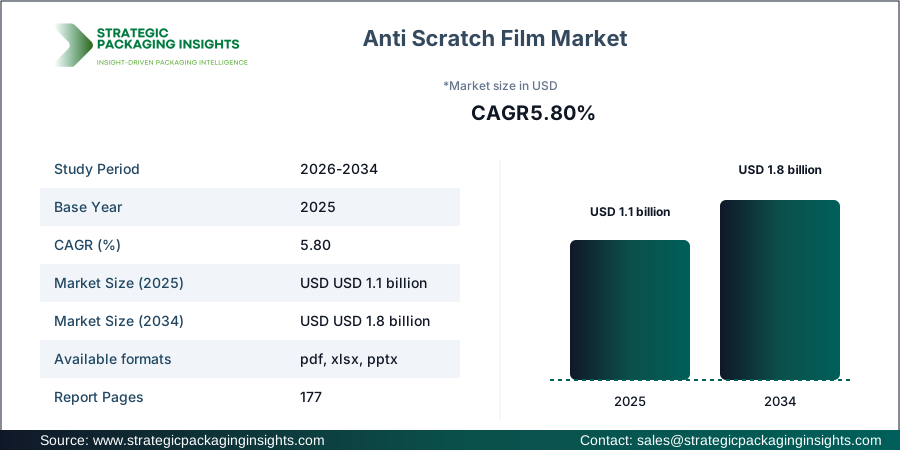
One of the most impactful drivers of the Anti Scratch Film market is the growing emphasis on product longevity and aesthetic appeal. As consumers become more discerning, the demand for products that maintain their appearance over time has surged. This trend is particularly evident in the consumer electronics sector, where devices are frequently handled and thus prone to scratches. Government regulations promoting sustainable and durable materials further bolster this demand. For instance, initiatives aimed at reducing electronic waste encourage manufacturers to adopt protective films that extend product life, thereby aligning with environmental goals. This regulatory support, coupled with technological advancements by companies like Toray and Kimoto, is expected to sustain market growth over the coming years.
Report Scope
| Attributes | Details |
| Report Title | Anti Scratch Film Market Size, Future Growth and Forecast 2034 |
| By Material | PET-Based Hard-Coated, PC-Based, TPU (Self-Healing), PMMA |
| By Coating | Hard Coat (2H-4H), Ultra Hard Coat (>4H), Anti-Fingerprint / Oleophobic Combo |
| By Application | Consumer Electronics Displays, Automotive Interior & Displays, Appliance Surfaces, Furniture Laminates, Optical Lenses |
| By Region | North America (U.S., Canada, Mexico), Europe (Germany, UK, France, Italy, Spain, Rest of Europe), Asia Pacific (China, India, Japan, South Korea, Australia, Rest of Asia Pacific), Latin America (Brazil, Argentina, Rest of Latin America), Middle East & Africa (GCC Countries, South Africa, Rest of MEA) |
| Base Year | 2025 |
| Historic Period | 2018-2024 |
| Forecast Period | 2026-2034 |
| Number of Pages | 177 |
| Customization Available | Yes* |
Sustainability & Circular Economy Analysis
Sustainability initiatives and circular economy practices are increasingly shaping the Anti Scratch Film market. The integration of recyclable materials and eco-friendly innovations is becoming a standard in the industry, as companies strive to reduce their carbon footprint and meet consumer expectations for sustainable products. The use of lightweight packaging and reusable materials not only minimizes waste but also enhances the overall environmental profile of products. Companies like Lintec and SKC are investing in research and development to create films that are not only durable but also environmentally friendly, aligning with global sustainability goals.
These sustainability trends are influencing packaging design and manufacturing processes significantly. The shift towards eco-friendly materials is prompting manufacturers to rethink their supply chain strategies, focusing on sourcing sustainable raw materials and optimizing production processes to reduce waste. This transition is supported by regulatory frameworks that encourage the adoption of sustainable practices, such as extended producer responsibility (EPR) schemes. As a result, companies are increasingly prioritizing investments in sustainable technologies and practices to maintain competitiveness and comply with evolving regulations.
Moreover, consumer preferences for sustainable products are driving market dynamics, compelling companies to innovate and differentiate their offerings. The emphasis on reducing the carbon footprint and enhancing product recyclability is leading to the development of new materials and coatings that meet these demands. This focus on sustainability not only enhances brand reputation but also opens up new market opportunities, as consumers increasingly favor brands that demonstrate a commitment to environmental stewardship. As such, sustainability is becoming a key factor in strategic decision-making for packaging manufacturers and brand owners alike.
Packaging Value Chain & Supply Chain Analysis
The packaging value chain for Anti Scratch Films is complex, involving multiple stakeholders from raw material suppliers to end-users. Raw material sourcing is a critical component, as the availability and cost of materials like PET and PC directly impact production capabilities and pricing strategies. Packaging converters and manufacturers play a pivotal role in transforming these materials into finished products, utilizing advanced machinery and technologies to ensure high-quality output. Companies like Gunze and Tekra are known for their robust manufacturing processes and strategic partnerships that enhance supply chain efficiency and resilience.
Logistics and distribution channels are equally important in the packaging supply chain, as they determine the speed and efficiency with which products reach the market. Efficient inventory management and transportation strategies are essential to minimize costs and ensure timely delivery. The global nature of the Anti Scratch Film market necessitates a well-coordinated supply chain that can adapt to regional variations in demand and regulatory requirements. Localization strategies are increasingly being adopted to mitigate risks associated with global sourcing and enhance supply chain resilience.
Recycling networks and procurement strategies are also integral to the packaging value chain, particularly in the context of sustainability. Companies are investing in recycling technologies and establishing partnerships with recycling firms to enhance the recyclability of their products. This not only aligns with environmental goals but also meets consumer expectations for sustainable packaging solutions. As the market continues to evolve, strategic partnerships and collaborations will be key to maintaining competitiveness and driving innovation in the Anti Scratch Film industry.
Opportunities & Threats
The Anti Scratch Film market presents numerous opportunities for growth, driven by technological advancements and increasing consumer demand for durable products. The rise of smart devices and the proliferation of touchscreens in various applications create a significant demand for protective films that enhance device longevity and user experience. Companies that invest in research and development to innovate and improve film performance stand to gain a competitive edge. Additionally, the growing automotive industry, with its emphasis on high-quality interiors and displays, offers a lucrative market for anti-scratch films, particularly in emerging economies where vehicle ownership is on the rise.
Another opportunity lies in the expansion of the furniture and appliance sectors, where aesthetic appeal and durability are key selling points. As consumers seek products that maintain their appearance over time, the demand for anti-scratch films in these applications is expected to grow. Furthermore, the increasing focus on sustainability and eco-friendly products presents an opportunity for companies to differentiate themselves by offering films made from recyclable materials. This aligns with consumer preferences and regulatory requirements, providing a pathway for companies to enhance their market position and brand reputation.
However, the market also faces threats, particularly from the volatility of raw material prices and the availability of substitutes. Fluctuations in the cost of key materials like PET and PC can impact profit margins and pricing strategies. Additionally, the development of alternative protective solutions, such as coatings and laminates, poses a threat to the traditional anti-scratch film market. Companies must continuously innovate and adapt to changing market conditions to mitigate these threats and maintain their competitive advantage.
Drivers & Challenges
The primary drivers of the Anti Scratch Film market include the increasing demand for durable and aesthetically pleasing products across various industries. The consumer electronics sector, in particular, is a major driver, as the proliferation of smartphones, tablets, and other devices necessitates protective solutions that enhance product longevity. The automotive industry also contributes significantly to market growth, with the rising demand for high-quality interiors and displays driving the adoption of anti-scratch films. Companies like MacDermid Autotype are leveraging these trends to expand their product offerings and capture new market segments.
Technological advancements and innovations in film manufacturing processes are also key drivers, enabling companies to produce films with enhanced durability and performance. The development of self-healing films and advanced coatings that offer superior scratch resistance is attracting significant interest from manufacturers and consumers alike. These innovations not only improve product quality but also open up new applications and markets for anti-scratch films, further driving market growth.
Despite these drivers, the market faces several challenges, including regulatory compliance and the need for continuous innovation. Stringent regulations regarding material safety and environmental impact require companies to invest in research and development to ensure compliance and maintain competitiveness. Additionally, the rapid pace of technological change necessitates ongoing investment in innovation to keep up with evolving consumer preferences and industry standards. Companies must navigate these challenges effectively to sustain growth and capitalize on emerging opportunities in the Anti Scratch Film market.
Market Share Analysis
The competitive landscape of the Anti Scratch Film market is characterized by the presence of several key players, each striving to capture a significant share of the market. Companies like 3M, Nitto Denko, and Toray are leading the market with their extensive product portfolios and strong global presence. These companies are known for their innovative solutions and commitment to quality, which have helped them establish a strong foothold in the market. Their strategic investments in research and development, coupled with robust distribution networks, enable them to meet the diverse needs of customers across various industries.
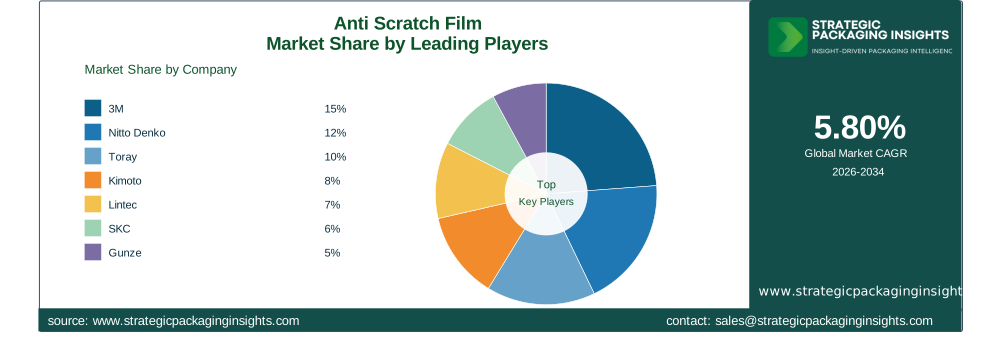
3M, for instance, is renowned for its advanced film technologies and has a significant market share due to its focus on innovation and customer-centric solutions. Nitto Denko, another major player, is recognized for its high-performance films and coatings, which are widely used in consumer electronics and automotive applications. Toray, with its expertise in material science, offers a range of anti-scratch films that cater to different industry requirements, further strengthening its market position.
Other notable companies in the market include Kimoto, Lintec, and SKC, each contributing to the market's growth through their unique offerings and strategic initiatives. Kimoto is known for its specialized films that offer superior scratch resistance, while Lintec focuses on sustainable solutions that align with environmental goals. SKC, with its global reach and diverse product range, continues to expand its market presence by catering to the growing demand for high-quality protective films.
Gunze, Tekra, and MacDermid Autotype are also key players in the market, each bringing their expertise and innovation to the forefront. Gunze's focus on high-performance films and coatings has earned it a reputation for quality and reliability. Tekra, with its extensive distribution network, ensures that its products reach a wide customer base, while MacDermid Autotype's emphasis on research and development drives its competitive edge. These companies, along with others like Arisawa, play a crucial role in shaping the market dynamics and driving growth in the Anti Scratch Film industry.
Key Highlights
- Market Size: The Anti Scratch Film market was valued at USD 1.1 billion in 2025 and is projected to reach USD 1.8 billion by 2034.
- Growth Rate: The market is expected to grow at a CAGR of 5.80% during the forecast period.
- Leading Companies: Key players include 3M, Nitto Denko, Toray, and Kimoto.
- Material Segment: PET-Based Hard-Coated films are gaining traction due to their durability.
- Application Growth: Consumer Electronics Displays and Automotive Interiors are major growth areas.
- Regional Insights: Asia Pacific is expected to witness the highest growth rate.
- Sustainability Focus: Increasing emphasis on eco-friendly and recyclable materials.
Anti Scratch Film Market Segments Insights

By Material Analysis
The material segment of the Anti Scratch Film market is diverse, with PET-Based Hard-Coated films leading the charge due to their superior durability and cost-effectiveness. These films are widely used in consumer electronics and automotive applications, where scratch resistance is paramount. PC-Based films, known for their clarity and toughness, are also gaining popularity, particularly in high-end applications where optical quality is crucial. TPU (Self-Healing) films offer a unique advantage with their ability to repair minor scratches, making them ideal for applications where aesthetics are critical. PMMA films, while less common, provide excellent optical properties and are used in specialized applications where clarity and scratch resistance are required.
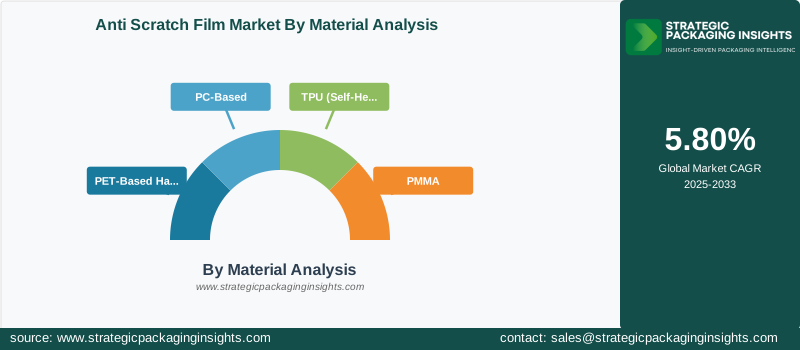
As consumer demand for durable and aesthetically pleasing products continues to rise, the material segment is expected to witness significant growth. Companies are investing in research and development to enhance the performance of these materials, focusing on improving scratch resistance, clarity, and environmental sustainability. The development of new materials and coatings that offer superior performance and align with sustainability goals is a key trend in this segment. As a result, the material segment is poised for robust growth, driven by technological advancements and evolving consumer preferences.
By Coating Analysis
The coating segment of the Anti Scratch Film market is characterized by a range of options, each offering distinct advantages. Hard Coat (2H-4H) films are widely used due to their balance of cost and performance, providing adequate scratch resistance for most applications. Ultra Hard Coat (>4H) films, on the other hand, offer superior protection and are favored in high-end applications where durability is critical. The Anti-Fingerprint / Oleophobic Combo coatings are gaining traction, particularly in consumer electronics, where maintaining a clean and smudge-free surface is essential.
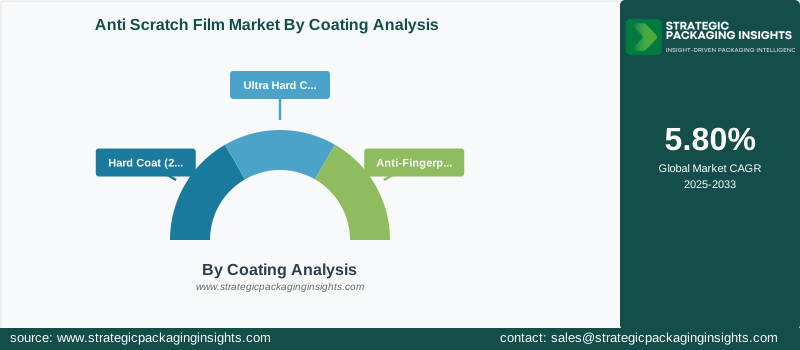
Innovation in coating technologies is a key driver of growth in this segment, as companies strive to enhance the performance and functionality of their products. The development of advanced coatings that offer improved scratch resistance, clarity, and ease of cleaning is a major focus for manufacturers. As consumer expectations for product durability and aesthetics continue to rise, the demand for high-performance coatings is expected to grow. This trend is further supported by regulatory requirements and sustainability initiatives, which encourage the adoption of coatings that are both effective and environmentally friendly.
By Application Analysis
The application segment of the Anti Scratch Film market is diverse, with consumer electronics displays and automotive interiors being the primary drivers of demand. The proliferation of smartphones, tablets, and other electronic devices has created a significant market for protective films that enhance device longevity and user experience. In the automotive sector, the demand for high-quality interiors and displays is driving the adoption of anti-scratch films, particularly in emerging economies where vehicle ownership is on the rise.
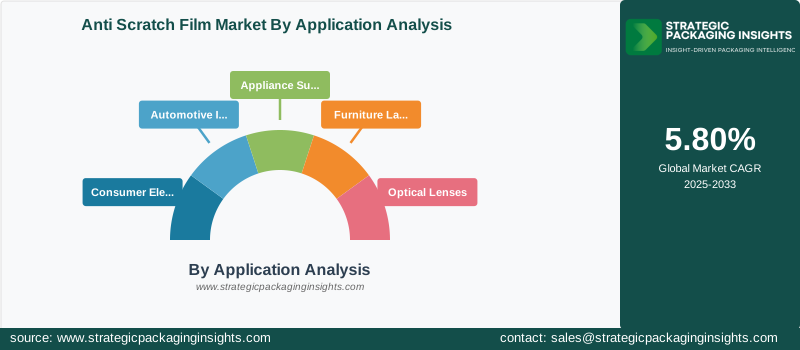
Other applications, such as appliance surfaces, furniture laminates, and optical lenses, also contribute to market growth, as consumers seek products that maintain their appearance over time. The increasing focus on sustainability and eco-friendly products presents an opportunity for companies to differentiate themselves by offering films made from recyclable materials. This aligns with consumer preferences and regulatory requirements, providing a pathway for companies to enhance their market position and brand reputation.
Anti Scratch Film Market Segments
The Anti Scratch Film market has been segmented on the basis ofBy Material
- PET-Based Hard-Coated
- PC-Based
- TPU (Self-Healing)
- PMMA
By Coating
- Hard Coat (2H-4H)
- Ultra Hard Coat (>4H)
- Anti-Fingerprint / Oleophobic Combo
By Application
- Consumer Electronics Displays
- Automotive Interior & Displays
- Appliance Surfaces
- Furniture Laminates
- Optical Lenses
By Region
- North America (U.S., Canada, Mexico)
- Europe (Germany, UK, France, Italy, Spain, Rest of Europe)
- Asia Pacific (China, India, Japan, South Korea, Australia, Rest of Asia Pacific)
- Latin America (Brazil, Argentina, Rest of Latin America)
- Middle East & Africa (GCC Countries, South Africa, Rest of MEA)




