


Anti-counterfeit Pharmaceutical Packaging Market Outlook
The Anti-counterfeit Pharmaceutical Packaging market was valued at $107.79 billion in 2025 and is projected to reach $247.99 billion by 2034, growing at a CAGR of 9.7% during the forecast period 2026-2034. This market is driven by the increasing need to protect pharmaceutical products from counterfeiting, which poses significant risks to patient safety and brand integrity. The rise in global pharmaceutical sales, coupled with stringent regulations mandating the use of anti-counterfeit technologies, is further propelling market growth. Additionally, advancements in technology, such as the integration of RFID and holograms, are enhancing the effectiveness of anti-counterfeit measures, thereby boosting demand.
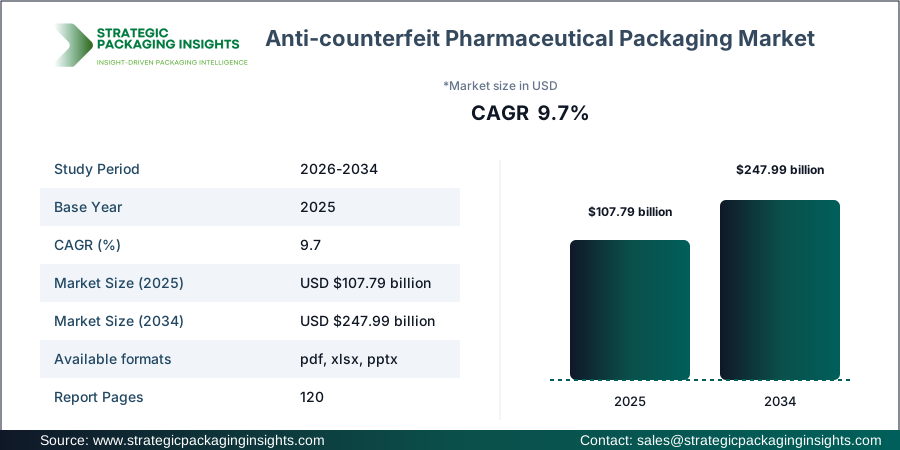
Despite the promising growth trajectory, the market faces challenges such as high implementation costs and the complexity of integrating advanced technologies into existing packaging systems. Regulatory compliance across different regions also presents a hurdle, as companies must navigate varying standards and requirements. However, the potential for growth remains substantial, driven by increasing awareness among consumers and manufacturers about the importance of secure packaging. The market is poised for expansion as companies invest in research and development to innovate cost-effective and efficient anti-counterfeit solutions.
Report Scope
| Attributes | Details |
| Report Title | Anti-counterfeit Pharmaceutical Packaging Market Size, Future Growth and Forecast 2034 |
| Technology | RFID, Holograms, Tamper-evident |
| Component | Labels, Seals |
| Product | Blister, Bottles |
| End Use | Rx, OTC |
| Region | Asia Pacific, North America, Latin America, Europe, Middle East & Africa |
| Base Year | 2025 |
| Historic Period | 2018-2024 |
| Forecast Period | 2026-2034 |
| Number of Pages | 120 |
| Customization Available | Yes* |
Opportunities & Threats
The Anti-counterfeit Pharmaceutical Packaging market presents significant opportunities, particularly with the growing emphasis on patient safety and regulatory compliance. As governments worldwide tighten regulations to combat counterfeit drugs, pharmaceutical companies are increasingly adopting advanced packaging solutions. This trend is creating a fertile ground for innovation, with companies investing in new technologies such as blockchain and IoT to enhance traceability and security. Additionally, the rising demand for over-the-counter (OTC) drugs, which are more susceptible to counterfeiting, is driving the need for robust packaging solutions, offering lucrative opportunities for market players.
Another opportunity lies in the expansion of the pharmaceutical industry in emerging markets. As these regions experience economic growth and improved healthcare infrastructure, the demand for pharmaceuticals is rising, leading to increased adoption of anti-counterfeit packaging. Companies that can tailor their solutions to meet the specific needs of these markets stand to gain a competitive edge. Furthermore, the growing consumer awareness about the risks associated with counterfeit drugs is prompting manufacturers to invest in packaging that assures authenticity, thereby driving market growth.
However, the market is not without its threats. The high cost of implementing advanced anti-counterfeit technologies can be a deterrent for small and medium-sized enterprises. Additionally, the rapid pace of technological advancements means that companies must continuously innovate to stay ahead of counterfeiters, which can be resource-intensive. The complexity of integrating new technologies into existing supply chains also poses a challenge, as does the need to comply with diverse regulatory standards across different regions.
Drivers & Challenges
One of the primary drivers of the Anti-counterfeit Pharmaceutical Packaging market is the increasing incidence of counterfeit drugs, which poses significant risks to public health and safety. Governments and regulatory bodies worldwide are implementing stringent measures to combat this issue, thereby driving demand for advanced packaging solutions. The pharmaceutical industry's focus on maintaining brand integrity and ensuring patient safety is also a key driver, as companies seek to protect their products from counterfeiting through innovative packaging technologies.
Technological advancements are another major driver, with innovations such as RFID, holograms, and tamper-evident seals enhancing the effectiveness of anti-counterfeit measures. These technologies not only improve the security of pharmaceutical products but also offer benefits such as improved supply chain visibility and traceability. The integration of digital solutions, such as blockchain and IoT, is further transforming the market, enabling real-time monitoring and verification of products, which is crucial in preventing counterfeiting.
Despite these drivers, the market faces several challenges. The high cost of implementing advanced anti-counterfeit technologies can be prohibitive for some companies, particularly small and medium-sized enterprises. Additionally, the complexity of integrating these technologies into existing packaging systems can pose operational challenges. Regulatory compliance is another significant challenge, as companies must navigate a complex landscape of standards and requirements that vary across regions. The need for continuous innovation to stay ahead of counterfeiters also adds to the challenges faced by market players.
Market Share Analysis
The competitive landscape of the Anti-counterfeit Pharmaceutical Packaging market is characterized by the presence of several key players who are driving innovation and growth. Companies such as Avery Dennison, CCL Industries, and UPM Raflatac are leading the market with their advanced packaging solutions that incorporate cutting-edge technologies. These companies are investing heavily in research and development to enhance their product offerings and maintain a competitive edge. The market is also witnessing strategic collaborations and partnerships as companies seek to expand their reach and capabilities.
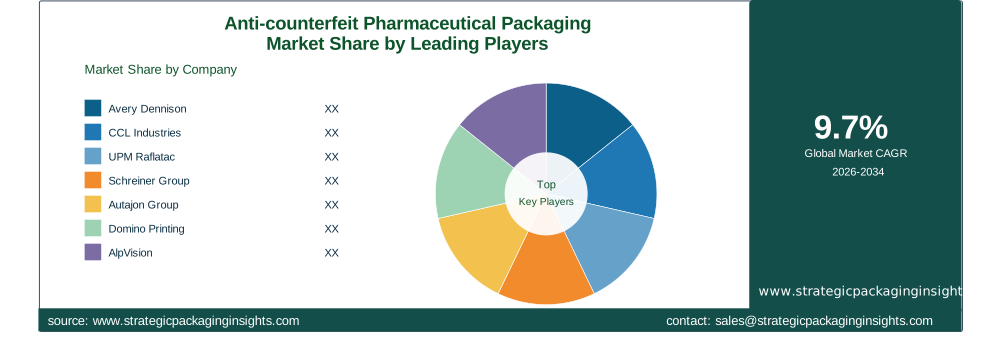
Avery Dennison is a prominent player in the market, known for its innovative labeling solutions that incorporate RFID and other advanced technologies. The company's focus on sustainability and innovation has positioned it as a leader in the anti-counterfeit packaging space. CCL Industries, another major player, offers a wide range of packaging solutions that cater to the pharmaceutical industry's needs. The company's global presence and extensive product portfolio make it a key competitor in the market.
UPM Raflatac is recognized for its high-quality labeling solutions that enhance the security and traceability of pharmaceutical products. The company's commitment to sustainability and innovation has earned it a strong reputation in the market. Schreiner Group, known for its expertise in security and functional labels, is also a significant player, offering solutions that protect against counterfeiting and tampering. Autajon Group, Domino Printing, and AlpVision are other notable companies contributing to the market's growth with their innovative packaging solutions.
Systech and TraceLink are leading the way in digital solutions, offering platforms that enhance supply chain visibility and product authentication. These companies are leveraging technologies such as blockchain and IoT to provide comprehensive anti-counterfeit solutions. Optel, known for its traceability solutions, is also a key player, helping pharmaceutical companies ensure the authenticity and safety of their products. The competitive landscape is dynamic, with companies continuously innovating to address the evolving challenges of counterfeiting.
Key Highlights
- The Anti-counterfeit Pharmaceutical Packaging market is projected to grow at a CAGR of 9.7% from 2026 to 2034.
- Technological advancements such as RFID and holograms are enhancing the effectiveness of anti-counterfeit measures.
- Stringent regulations and increasing consumer awareness are driving demand for secure packaging solutions.
- The market is witnessing significant growth opportunities in emerging markets with expanding pharmaceutical industries.
- High implementation costs and regulatory compliance are key challenges faced by market players.
- Companies are investing in research and development to innovate cost-effective and efficient anti-counterfeit solutions.
- Strategic collaborations and partnerships are shaping the competitive landscape of the market.
- Digital solutions such as blockchain and IoT are transforming the market by enhancing traceability and security.
- The rise in global pharmaceutical sales is a major driver of market growth.
- Companies are focusing on sustainability and innovation to maintain a competitive edge.
Top Countries Insights
In the Anti-counterfeit Pharmaceutical Packaging market, the United States stands out as a leading country, with a market size of approximately $35 billion and a CAGR of 8%. The country's stringent regulatory framework and high consumer awareness levels drive the demand for advanced packaging solutions. The presence of major pharmaceutical companies and a robust healthcare infrastructure further bolster market growth. However, the high cost of implementing advanced technologies remains a challenge for some companies.
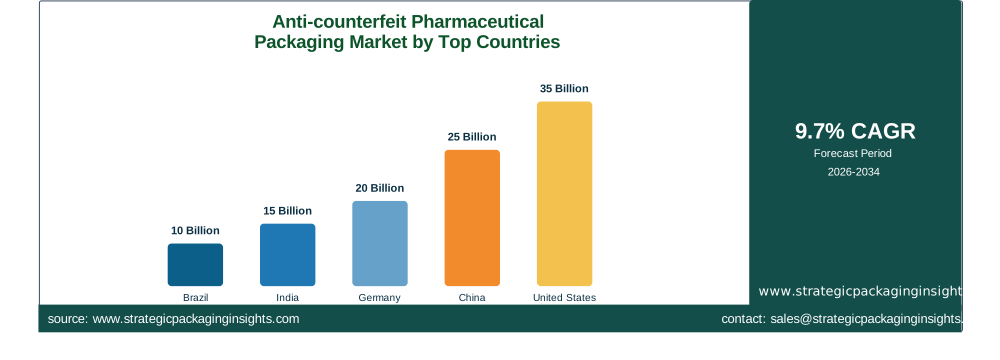
China is another key player in the market, with a market size of around $25 billion and a CAGR of 12%. The country's rapidly expanding pharmaceutical industry and increasing government initiatives to combat counterfeiting are significant growth drivers. The adoption of advanced technologies such as RFID and blockchain is also on the rise, enhancing the security and traceability of pharmaceutical products. However, regulatory compliance and the complexity of integrating new technologies pose challenges.
Germany, with a market size of approximately $20 billion and a CAGR of 9%, is a prominent market in Europe. The country's strong focus on innovation and sustainability, coupled with stringent regulations, drives demand for anti-counterfeit packaging solutions. The presence of leading pharmaceutical companies and a well-established healthcare system further contribute to market growth. However, the high cost of advanced technologies can be a barrier for smaller companies.
India, with a market size of about $15 billion and a CAGR of 14%, is experiencing significant growth in the anti-counterfeit pharmaceutical packaging market. The country's expanding pharmaceutical industry and increasing government efforts to combat counterfeiting are key growth drivers. The adoption of advanced technologies is also on the rise, although regulatory compliance and cost remain challenges for some companies.
Brazil, with a market size of approximately $10 billion and a CAGR of 10%, is a notable market in Latin America. The country's growing pharmaceutical industry and increasing consumer awareness about the risks of counterfeit drugs drive demand for secure packaging solutions. However, economic challenges and regulatory compliance can pose hurdles for market players.
Anti-counterfeit Pharmaceutical Packaging Market Segments Insights

Technology Analysis
The technology segment of the Anti-counterfeit Pharmaceutical Packaging market is pivotal, with RFID, holograms, and tamper-evident technologies leading the charge. RFID technology is gaining traction due to its ability to provide real-time tracking and authentication of pharmaceutical products. This technology enhances supply chain visibility and helps in preventing counterfeiting by enabling quick verification of product authenticity. Holograms, on the other hand, offer a visually appealing and secure method of packaging, making it difficult for counterfeiters to replicate. The demand for tamper-evident technologies is also on the rise, as they provide an additional layer of security by indicating any unauthorized access to the product.
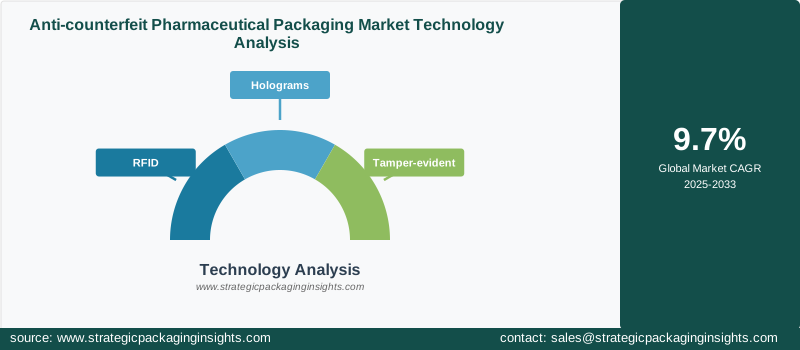
These technologies are being increasingly adopted by pharmaceutical companies to comply with stringent regulatory requirements and to protect their brand integrity. The integration of digital solutions such as blockchain and IoT with these technologies is further enhancing their effectiveness, providing comprehensive anti-counterfeit solutions. However, the high cost of implementing these advanced technologies can be a barrier for some companies, particularly small and medium-sized enterprises. Despite this, the technology segment is expected to witness significant growth, driven by the increasing need for secure and reliable packaging solutions.
Component Analysis
The component segment of the Anti-counterfeit Pharmaceutical Packaging market includes labels and seals, which play a crucial role in ensuring the security and authenticity of pharmaceutical products. Labels are a key component, providing essential information about the product and enabling quick verification of its authenticity. The use of advanced labeling technologies such as RFID and holograms is on the rise, enhancing the security and traceability of pharmaceutical products. Seals, on the other hand, provide an additional layer of protection by indicating any tampering or unauthorized access to the product.
The demand for these components is driven by the increasing need for secure packaging solutions to combat counterfeiting. Pharmaceutical companies are investing in advanced labeling and sealing technologies to comply with regulatory requirements and to protect their brand integrity. The integration of digital solutions such as blockchain and IoT with these components is further enhancing their effectiveness, providing comprehensive anti-counterfeit solutions. However, the high cost of implementing these advanced technologies can be a barrier for some companies, particularly small and medium-sized enterprises. Despite this, the component segment is expected to witness significant growth, driven by the increasing need for secure and reliable packaging solutions.
Product Analysis
The product segment of the Anti-counterfeit Pharmaceutical Packaging market includes blister packs and bottles, which are widely used in the pharmaceutical industry. Blister packs are a popular choice due to their ability to provide a high level of protection and security for pharmaceutical products. They are tamper-evident and offer a convenient way to package and dispense medications. Bottles, on the other hand, are commonly used for liquid medications and offer a secure and reliable packaging solution.
The demand for these products is driven by the increasing need for secure packaging solutions to combat counterfeiting. Pharmaceutical companies are investing in advanced packaging technologies to comply with regulatory requirements and to protect their brand integrity. The integration of digital solutions such as RFID and holograms with these products is further enhancing their effectiveness, providing comprehensive anti-counterfeit solutions. However, the high cost of implementing these advanced technologies can be a barrier for some companies, particularly small and medium-sized enterprises. Despite this, the product segment is expected to witness significant growth, driven by the increasing need for secure and reliable packaging solutions.
End Use Analysis
The end-use segment of the Anti-counterfeit Pharmaceutical Packaging market includes prescription (Rx) and over-the-counter (OTC) drugs, both of which are susceptible to counterfeiting. The demand for anti-counterfeit packaging solutions is particularly high in the Rx segment, as these drugs are often targeted by counterfeiters due to their high value. Pharmaceutical companies are investing in advanced packaging technologies to protect their products and to comply with regulatory requirements.
The OTC segment is also experiencing significant growth, driven by the increasing demand for these drugs and the rising awareness about the risks of counterfeit products. The integration of digital solutions such as RFID and holograms with these products is further enhancing their effectiveness, providing comprehensive anti-counterfeit solutions. However, the high cost of implementing these advanced technologies can be a barrier for some companies, particularly small and medium-sized enterprises. Despite this, the end-use segment is expected to witness significant growth, driven by the increasing need for secure and reliable packaging solutions.
Anti-counterfeit Pharmaceutical Packaging Market Segments
The Anti-counterfeit Pharmaceutical Packaging market has been segmented on the basis ofTechnology
- RFID
- Holograms
- Tamper-evident
Component
- Labels
- Seals
Product
- Blister
- Bottles
End Use
- Rx
- OTC
Region
- Asia Pacific
- North America
- Latin America
- Europe
- Middle East & Africa




